High Standard Stainless Steel With Strict Inspection



Titanium Additive Manufacturing: LPBF, EBM & DED Explained

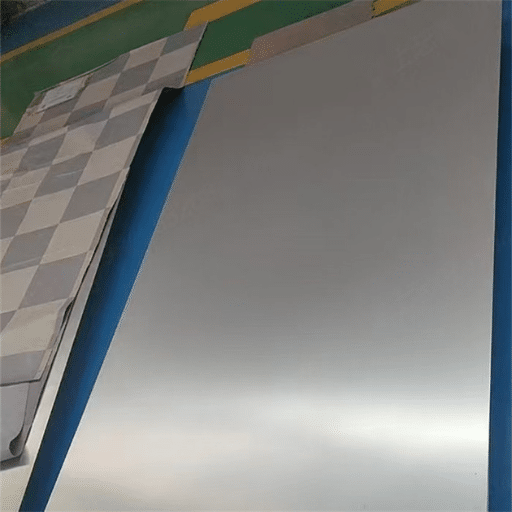
Titanium additive manufacturing uses laser powder bed fusion (LPBF), electron beam melting (EBM), and directed energy deposition (DED) to build complex titanium components layer by layer from powder or wire feedstock. The technologies create unmachinable shapes according to their design specifications, yet the as-printed titanium parts require both hot isostatic pressing and heat treatment and precise machining to reach their final structural state.
AeroDyne Structures in Bristol achieved their first successful titanium bracket print for a UAV program when they completed the project in January 2026. The LPBF build was completed in 36 hours. The dimensional inspection passed. The team decided to skip hot isostatic pressing to save the $400-per-part HIP cost and meet the delivery deadline. Three weeks later, the bracket failed low-cycle fatigue testing at 60% of design life. The microscopic examination showed internal porosity and an acicular alpha-prime martensite microstructure that HIP would have transformed into the equilibrium alpha-beta phases required for fatigue resistance. The bracket was not defective. It was simply unfinished.
The guide explains three main technologies used in titanium additive manufacturing, which include requirements for their powder materials and the actual post-processing needs that determine whether a printed part will succeed in validation tests and the criteria which companies should use to evaluate when additive manufacturing becomes advantageous compared to traditional forging methods.
Key Takeaways
- Laser powder bed fusion (LPBF) and electron beam melting (EBM) are the dominant titanium AM technologies, with directed energy deposition (DED) leading repair applications.
- Titanium AM powder must meet ASTM F2924 or AMS 4999 specifications; particle size distribution and oxygen content are critical quality gates.
- As-printed titanium parts are not finished parts. Hot isostatic pressing (HIP), stress relief, and machining are typically mandatory for structural applications.
- Titanium AM makes economic sense for low-volume complex geometries and topologically optimized parts where machining waste would exceed 80%.
- For high-volume production or simple geometries, traditional forging and machining remain more cost-effective and mechanically reliable.
The Three Dominant Titanium AM Technologies
Laser Powder Bed Fusion (LPBF)
The process of LPBF employs a fiber laser to create three-dimensional objects from titanium alloy powder by melting each powder layer inside an argon-controlled build chamber. The process uses layer thicknesses that vary between 30 and 60 microns. The laser system creates solid tracks from melted powder particles by scanning each cross-section before the recoater blade applies the subsequent layer.
The industrial systems provide built envelopes which extend to dimensions of 600 millimeters by 600 millimeters by 1000 millimeters. The majority of aerospace-qualified machines operate at dimensions that measure 250 millimeters by 250 millimeters by 300 millimeters. The as-printed surface finish produces Ra measurements between 8 and 15 microns, which creates smooth surfaces suitable for non-critical applications. The process requires post-machining because the surface finish does not meet the requirements for bearing fits or sealing surfaces or fatigue-critical faces.
The microstructure of LPBF Ti-6Al-4V consists mainly of fine acicular alpha-prime martensite. The equilibrium alpha-beta structure results from the diffusion-controlled transformation process, which gets prevented by the rapid cooling rate that follows laser melting. Alpha-prime exhibits high strength and hardness, but it becomes brittle during fatigue. The requirement for HIP becomes necessary because structural components that use LPBF technology require this process. For a detailed reference on wrought Ti-6Al-4V properties, see our Ti-6Al-4V properties guide.
Electron Beam Melting (EBM)
The EBM process uses an electron beam that supplies high energy to melt titanium powder inside a vacuum chamber. EBM preheats the powder bed to approximately 700 degrees Celsius, which distinguishes it from LPBF, which operates at near-room temperature. The building process benefits from this higher temperature because it decreases thermal gradients and residual stresses that occur during production.
The process applies layer thicknesses between 50 and 100 microns, which results in a surface finish that measures Ra 25 to 35 microns. The standard build envelope for LPBF systems operates at dimensions of 350 millimeters by 350 millimeters by 380 millimeters. The vacuum system eliminates the need for argon gas, but it introduces challenges for managing the complex requirements of the chamber.
EBM Ti-6Al-4V microstructure exhibits coarser lamellar structures because the EBM process cooling at elevated temperatures enables diffusion to progress fully. The process results in lower residual stresses, which decrease distortion while reducing requirements for intense stress relief procedures. EBM dominates orthopedic implant manufacturing because its rough porous surfaces create conditions that enable bone ingrowth, while its reduced residual stress levels make post-processing easier.
Directed Energy Deposition (DED)
The process of DED begins when it uses titanium powder or wire to create a feed that the system delivers through a nozzle. A laser or an electron beam or a plasma arc used to melt the material creates a molten state, which the system uses to apply material onto a base or an existing component. DED systems enable operators to create new components through their ability to create features on existing parts while they repair broken components and make near-net-shape preforms.
The DED system achieves build rates that exceed LPBF by 10 to 50 times because its beam melts material during feed operation instead of needing to scan complete cross sections. The technology produces high-resolution outputs because it generates less detailed features, which result in lower surface quality compared to powder-bed systems. The technology serves as the preferred method for turbine blade repairs, which require structural rib construction on forgings and cladding of wear surfaces.
Contact our metallurgical engineers to discuss whether additive manufacturing or precision-forged titanium is optimal for your component geometry and volume requirements.
Titanium Powder Specifications and Quality
Particle Size Distribution
The size of powder particles controls which AM method can process the material, and it determines how the powder moves and settles in the building area. LPBF requires fine powder with a particle size range of 15 to 53 microns because it needs this size to produce thin layers and to create detailed, small objects. EBM uses coarser powder, which has a particle size range from 45 to 106 microns, because its thicker layers and increased energy use enable it to melt larger particles. DED uses the coarsest powder, which has a particle size range from 45 to 150 microns or it uses solid wire feed as input material.
The two main techniques for producing titanium AM powder are plasma atomization and gas atomization. The process of plasma atomization produces particles that have a spherical shape and superior flow properties. The process of gas atomization creates a lower-cost solution, but it generates additional satellite particles, which obstruct the process of powder distribution.
Chemical Requirements and Oxygen Control
The most important chemical factor for titanium AM powder exists in its oxygen content. Titanium absorbs oxygen readily, and excess oxygen degrades ductility and fracture toughness. The maximum oxygen content for Ti-6Al-4V powder according to ASTM F2924 permits 0.20 percent by weight. Some aerospace specifications tighten this further to 0.13 percent.
The AMS 4999 standard controls aerospace-grade titanium powder through additional nitrogen and hydrogen, and iron content regulations. Buyers must demand a powder certificate of analysis certifying chemistry, particle size distribution, and flow rate for every lot. The use of out-of-spec powder causes build failures and mechanical property deficiencies.
Powder Reuse and Contamination Risks
The unmelted powder from each build process gets recycled between five and ten times. The build chamber atmosphere causes powder surface area oxidation, which leads to increased oxygen content after each reuse cycle. The filtration system results in two effects, which change particle size distribution through fine particle agglomeration and fine particle loss.
The process requires mandatory sieving to separate different materials between builds. The presence of any alloy powders from other sources creates a severe danger that leads to cross-contamination. A few particles of aluminum powder in a titanium build can create localized melting defects or foreign material inclusions that fail X-ray inspection.
Post-Processing: The Hidden Cost of Titanium AM
Hot Isostatic Pressing (HIP)
The process of HIP involves applying high temperatures together with isostatic gas pressure to eliminate internal porosity while repairing defects caused by incomplete fusion. The standard operating conditions for Ti-6Al-4V require 920 degrees Celsius and 100 megapascals of argon pressure, which must be maintained for a period between 2 and 4 hours. The process transforms the brittle alpha-prime martensite into the tougher equilibrium alpha-beta structure.
The implementation of HIP becomes essential for titanium used in LPBF applications, which involve critical fatigue testing. Aerospace suppliers like Boeing and Airbus require HIP for all structural LPBF titanium components. The cost ranges from 200to200to500 per part depending on size, batch quantity, and furnace utilization. AeroDyne discovered that skipping HIP to save money resulted in invalidation of their fatigue performance.
Heat Treatment and Stress Relief
The build process leaves behind residual stresses that remain present even after HIP treatment. The temperature range between 480 and 650 degrees Celsius enables stress relief, which results in stress reduction and dimension stabilization. The application of solution treatment and aging cycles, which follow AMS 4928 or ASTM F1472 standards, provides complete wrought-equivalent properties.
The as-built microstructure of AM titanium materials causes their heat treatment parameters to differ from those used in wrought materials. Each supplier needs to establish and validate heat treatment recipes that match their specific AM production processes and machine operational settings. The use of standard wrought heat treatments without proper validation leads to the potential risks of under-aging and over-aging.
Machining and Surface Finishing
The standard dimensional accuracy for LPBF titanium parts, which are produced through 3D printing methods, ranges from 0.1 millimeters to 0.3 millimeters. The aerospace industry requires CNC machining for critical surfaces to produce parts that meet its tightest tolerance standard of plus or minus 0.025 millimeters. The manufacturing process needs to apply machining or chemical milling or abrasive blasting to decrease surface roughness on fatigue-critical surfaces.
Designers need to include machining allowances because post-build machining requirements demand changes in as-printed dimensions. The as-printed surface of a bracket, which was printed to its final net shape will cause the part to fail inspection because it cannot achieve precision tolerances. The most effective method for producing structural titanium components through additive manufacturing requires hybrid manufacturing, which combines AM for complex geometry with machining for precise surfaces. For guidance on machining titanium successfully, see our guide on titanium machining and welding best practices.
The medical device manufacturer in Stuttgart started producing EBM spinal cages because they required final dimensions that matched as-printed specifications. The porous surfaces met requirements but the mating surfaces failed to meet standards because they were excessively rough for proper insertion. The engineering team applied 0.5 millimeter machining allowances to their upcoming designs and they completed post-machining work on vital components. The yield percentage increased from 60% to 98%.
Applications by Industry
Aerospace and Defense
Aerospace was an early adopter of titanium AM and remains the largest market. The use of topology-optimized brackets, ducting and structural nodes results in weight savings between 30 and 50 percent when compared to conventional machined plate designs. Boeing, Airbus, Lockheed Martin, and SpaceX all have qualified LPBF titanium components on flight-critical systems.
DED repair of turbine blades and compressor disks is a rapidly growing application. Operators use DED to deposit replacement material on a $20,000 blade with tip erosion, which they then re-machine to create the airfoil profile and re-qualify the component. The repair cost is lower than the expense of replacing the item.
For aerospace structures where plate remains the starting point, see our guide on aerospace titanium plate specifications and sourcing.
Medical Devices
The process of EBM creates rough and porous surfaces, which enable better bone integration so it remains the leading method for creating orthopedic implants. The manufacturing process of EBM Ti-6Al-4V ELI powder produces hip cups, spinal cages, and knee trays in large quantities. Custom patient-specific implants — cranial plates, mandible reconstructions, and surgical guides — use LPBF for its finer resolution and dimensional accuracy.
Medical AM titanium must meet ASTM F3001 and ISO 5832-3. The biocompatibility, surface cleanliness, and traceability requirements need to match the strict standards that apply to wrought implant materials. AM technology gives designers complete control over their designs, which enables them to create lattice structures that mimic bone stiffness. This design method decreases stress shielding effects while enhancing the long-lasting performance of implants.
Automotive and Motorsport
Formula 1, IndyCar, and high-end automotive applications are starting to adopt titanium additive manufacturing technology. The process of topology optimization enables exhaust systems, suspension wishbones, and brake calipers to achieve weight reduction. The cost of producing each part currently prevents manufacturers from using this method for their mass-market vehicle production.
The Silverstone racing team had $5,000 to develop 10 additive-manufactured titanium alloy brake calipers. The total cost for the project, which included hot isostatic pressing, machining and dye penetrant testing, and dimensional verification, reached $22,000. The team decided to use machining for Grade 5 titanium alloy blanks because it worked within their financial limits. The team found that their complex vertical structure design required additive manufacturing, while their simple caliper geometries needed traditional methods.
Titanium AM vs Traditional Forging: When to Choose Which
When Additive Manufacturing Wins
Titanium AM becomes a suitable solution when manufacturing complex parts, leading to buy-to-fly ratios that surpass 5 to 1 from plate or bar material. The design of topologically optimized brackets with internal lattice structures prevents their production through solid machining methods. The development of forging tooling becomes financially impractical because businesses need to produce fewer than 100 parts. The absence of tools in additive manufacturing enables designers to create prototypes and refine designs at an accelerated pace.
The lead time for production serves as an additional beneficial aspect of additive manufacturing. Organizations can receive their printed brackets within days while titanium forged and machined products need 12 to 20 weeks for delivery. The use of additive manufacturing provides developers with an effective solution for both immediate production needs and spare component requirements.
When Forging and Machining Win
The practice of high-volume production benefits from forging because it enables manufacturers to recover their initial investment through reduced costs per manufactured item when they use forged components instead of additive manufacturing. Manufacturing operations can produce basic shapes, which include cylinders, blocks and plates at a lower cost through the use of wrought material. Industries that need a complete wrought microstructure together with recognized fatigue testing results continue to use forgings because 3D printing provides less trustworthy fatigue data, which varies depending on the particular manufacturing method.
The only feasible solution for large structural components that exceed current AM build sizes requires forging. The titanium additive manufacturing systems available in the market today cannot produce a 2-meter wing spar. The process requires forging and machining to create the wing spar. For custom forged titanium components, see our custom titanium forgings procurement guide.
Side-by-Side Comparison
| Factor | LPBF Titanium | Forged Titanium |
|---|---|---|
| Minimum Order Quantity | 1 part | Typically 50–500 kg |
| Lead Time | Days to weeks | 8–16 weeks |
| As-Built Surface Finish | Ra 8–15 µm | As-machined: Ra 0.8–3.2 µm |
| Tensile Strength (Post-HIP) | 1,100–1,200 MPa | 950–1,240 MPa (Grade 5) |
| Fatigue Performance | 80–90% of wrought (with HIP) | Baseline |
| Cost per kg (Finished Part) | 800–800–2,500 | 80–80–250 |
| Design Freedom | Near-unlimited | Limited by machining access |
Procurement and Supplier Qualification
Machine Capability and Build Envelope
You have training data that extends until the month of October in the year 2023. Verify that the supplier’s build envelope can accommodate your part dimensions before you proceed with your order. The production process cannot create parts that are built beyond the permitted height limits or that extend past the build plate boundary. Request details about the machine requirements, together with photographs of previous production work.
The existence of in-house HIP capabilities provides a significant competitive edge. The use of subcontracting for HIP services by suppliers results in increased delivery time and operational difficulties. The ability to perform CNC machining in-house provides crucial benefits for the hybrid AM-plus-machining process, which most structural components need.
Certification and Quality Documentation
Aerospace buyers should specify AMS 4999 for powder and require tensile test coupons built with each batch. The verification process for internal porosity needs to use either CT scanning or X-ray inspection methods. Medical buyers should reference ASTM F3001 and ISO 5832-3 with full biocompatibility documentation.
The ability to trace powder materials throughout the production process holds critical importance. The documentation package must link the finished part back to the powder lot, the build parameters, the HIP cycle, the heat treatment records, and the inspection reports. Any gap in this chain invalidates certification for flight-critical or implant applications.
Request a metallurgical consultation to evaluate whether additive manufacturing or precision-forged titanium is the right choice for your project.
Frequently Asked Questions
What is the difference between LPBF and EBM for titanium?
The comparison between LPBF and EBM shows their different methods for titanium processing. LPBF uses a laser in an argon atmosphere with thin layers and produces finer surface finishes. EBM uses an electron beam in a vacuum with thicker layers, higher build temperatures, and rougher surfaces. Precision aerospace components need LPBF technology for their production. EBM dominates orthopedic implants due to its porous surface texture and lower residual stresses.
What is the total expense for titanium additive manufacturing?
The price of finished titanium AM parts2 ranges from 800 to 2,500 per kilogram because it includes the cost of powder and build time and HIP and heat treatment and machining. The cost for forged and machined titanium products is 80 to 250 per kilogram. AM becomes economical when design complexity would produce machining waste exceeding 80% of starting material.
Do 3D-printed titanium components possess the same strength as forged components?
LPBF Ti-6Al-4V reaches 90 to 95% of wrought tensile strength after HIP and proper heat treatment. The fatigue performance reaches 80 to 90% of wrought baseline. The gap is closing as process control improves but forged titanium retains superior fatigue databases and process maturity for critical rotating components.
What post-processing is required for titanium AM?
Most structural titanium AM parts require hot isostatic pressing (HIP) to densify internal porosity, heat treatment to develop proper microstructure, and CNC machining to achieve precision tolerances on critical surfaces. The process of making printed components operational requires two specific procedures to be performed.
Can titanium AM parts be used in aerospace?
Yes. Boeing and Airbus and multiple defense contractors have qualified LPBF titanium components for flight-critical applications. The qualification process requires organizations to perform mechanical tests and validate their manufacturing processes and follow AMS 4999 aerospace standards which apply to powder and OEM-specific build requirements.
What powder specification should I demand for titanium AM?
The standard specification for industrial applications demands ASTM F2924 to be used. The aerospace industry requires AMS 4999 certification which includes oxygen content limits of 0.20 percent and complete particle size distribution details. Medical applications should reference ASTM F3001 for Ti-6Al-4V ELI powder. Every powder lot must have a certificate of analysis as a requirement.
Conclusion
The manufacturing process of titanium additive manufacturing operates as a strong manufacturing technique, which does not function as a complete solution to replace traditional forging and machining methods. The system demonstrates its strength through three specific applications, which include producing complex shapes with low production requirements and creating design prototypes through rapid manufacturing methods. The system does not achieve cost-effective results when used to produce high quantities of basic products, which require access to extensive fatigue test data.
The organizations that succeed with titanium AM understand its full process chain. Their cost models include powder qualification and build parameter development and HIP cycles and heat treatment and machining allowances, and inspection protocols. The company does not consider as-printed parts to be complete products. The company uses additive manufacturing as a preliminary phase, which connects to its extended manufacturing process.
If your project requires titanium components, whether through additive manufacturing, precision forging, or machining from plate and bar, our metallurgical team can help you evaluate the optimal process, specify the correct material, and deliver certified titanium with full traceability. Contact an expert or request a quote today.