High Standard Stainless Steel With Strict Inspection



Titanium Alloys Guide: Grades, Properties & Applications

The engineers who built the Curiosity Mars rover wheels faced a traditional materials engineering challenge when they created the wheel design. The team selected aluminum as their final material choice because titanium provides superior strength-to-weight ratio. The team selected aluminum because Martian conditions make titanium materials become brittle while aluminum materials permit thinner designs for protection against sharp rock impacts. The lesson is clear: titanium alloys are exceptional materials which require specific grade selection for each use case.
The lesson holds equal importance for our planet. The incorrect titanium grade selection will result in performance issues and budget overruns and project delivery delays when you select materials for aircraft engine casings or surgical implants or offshore desalination plants. This guide provides technical information in combination with procurement details which will assist you in making the correct first selection.
You will learn how titanium alloys are classified, which grades excel in which environments, and how to verify that your supplier delivers certified, traceable material. If you need help translating these specifications into a firm quote, contact our metallurgical team for a consultation.
What Are Titanium Alloys?
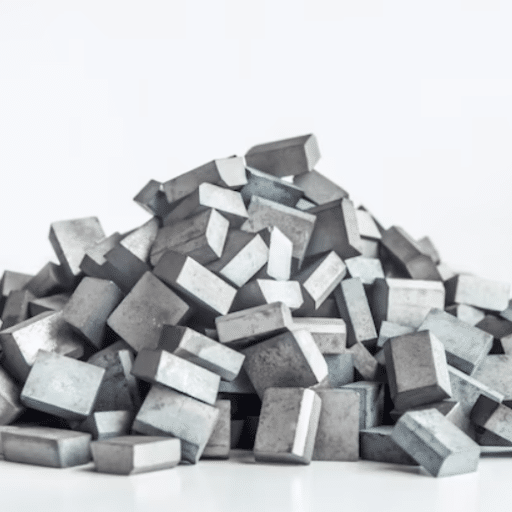
Titanium alloys are metals composed primarily of titanium combined with elements like aluminum, vanadium, molybdenum, nickel, or palladium. These additions alter the crystal structure, mechanical properties, and corrosion resistance to suit specific engineering demands.
Pure titanium already delivers an impressive combination of low density (4.51 g/cm³) and excellent corrosion resistance thanks to a stable titanium dioxide (TiO₂) passive layer. Alloying takes those baseline virtues and amplifies them:
- Strength-to-weight ratio: Ti-6Al-4V achieves tensile strengths above 900 MPa while weighing roughly 45% less than steel.
- Corrosion resistance: Certain grades outperform even high-end stainless steels in seawater and chloride environments.
- Biocompatibility: Titanium is non-toxic and supports osseointegration, making it the standard for permanent implants.
- High-temperature stability: Selected near-alpha alloys retain strength up to 550°C, though titanium generally yields to nickel-based or cobalt-based superalloys beyond that threshold.
That last point is worth repeating. Titanium is not a universal replacement for steel or aluminum. In abrasive wear applications, hardened steel outlasts titanium. Above 550°C, nickel-based superalloys such as Inconel 718 become the safer choice. And for applications where absolute stiffness dominates, steel’s higher elastic modulus wins. Understanding these boundaries is the first step toward smart specification. For a direct comparison of titanium against another common material, see our detailed analysis of titanium vs stainless steel.
Titanium Alloy Classifications: Alpha, Alpha-Beta, and Beta
Titanium’s crystal structure changes according to variations in temperature and different alloying elements. Pure titanium at room temperature exists in a hexagonal close-packed (HCP) structure known as alpha (α). The material changes into a body-centered cubic (BCC) structure, which is referred to as beta (β) after reaching 882°C. Engineers have three main categories to work with because alloying elements between two phases stabilize one phase at room temperature.
Alpha (α) and Near-Alpha Alloys
Alpha-stabilizing elements like aluminum raise the temperature at which the beta phase forms. The result is a stable alpha structure at room temperature.
- Characteristics: Excellent weldability, good creep resistance at elevated temperatures, and strong corrosion resistance.
- Limitations: Non-heat-treatable (strength comes from work hardening), lower room-temperature strength than alpha-beta alloys.
- Best for: High-temperature engine components, chemical processing equipment, and applications requiring extensive welding.
Near-alpha alloys contain small amounts of beta-stabilizers. They retain most of alpha’s advantages while offering modest improvements in strength and heat resistance up to roughly 550°C.
Alpha-Beta (α-β) Alloys
These alloys contain both alpha-stabilizers (usually aluminum) and beta-stabilizers (usually vanadium). They are the most widely used titanium alloys.
- Characteristics: Heat-treatable, excellent balance of strength and ductility, good fatigue resistance.
- Limitations: More challenging to weld than alpha alloys; heat-affected zones require careful control.
- Best for: Airframe structures, engine compressor discs, landing gear, and medical implants.
Ti-6Al-4V (Grade 5) dominates this category and accounts for roughly 50–60% of all titanium usage worldwide. Its versatility makes it the default choice unless a specific property requirement points elsewhere.
Beta (β) and Near-Beta Alloys
Beta-stabilizing elements like molybdenum, vanadium, and chromium suppress the alpha phase, allowing the BCC structure to remain at room temperature.
- Characteristics: Excellent formability in the solution-treated condition, heat-treatable to very high strengths, deep hardenability in large sections.
- Limitations: Higher density than alpha or alpha-beta alloys; more complex heat treatment requirements.
- Best for: High-stress aerospace components, heavy-section forgings, and springs.
For applications that demand the formability of alpha-beta alloys with improved elevated-temperature performance, Grade 9 titanium (Ti-3Al-2.5V) offers a compelling middle ground.
| Classification | Crystal Structure | Heat Treatable | Weldability | Typical Use Case |
|---|---|---|---|---|
| Alpha (α) | HCP | No | Excellent | Chemical processing, high-temp engine parts |
| Near-alpha | Mostly HCP | Limited | Very good | Aerospace engines (up to 550°C) |
| Alpha-beta (α-β) | Mixed HCP/BCC | Yes | Moderate | Airframes, implants, general engineering |
| Beta (β) | BCC | Yes | Moderate to good | High-stress springs, landing gear, forgings |
Commercially Pure Titanium Grades 1–4
Before discussing alloyed grades, it is important to understand commercially pure (CP) titanium. These grades contain no intentional alloying additions. Their properties vary based on interstitial content—primarily oxygen, iron, and nitrogen.
As the grade number increases from 1 to 4, strength rises and ductility falls:
- Grade 1: The softest and most ductile CP grade. It offers the best formability and corrosion resistance, making it ideal for chemical processing equipment, marine anodes, and architectural applications.
- Grade 2: The workhorse of the CP family. It strikes the best balance of strength, weldability, and corrosion resistance. You will find it in aerospace ducting, medical implants where extreme strength is unnecessary, power generation components, and marine hardware.
- Grade 3: Higher strength than Grade 2 with moderate ductility. Used in industrial and aerospace applications where slightly greater mechanical performance is required.
- Grade 4: The strongest CP grade. It can be cold-formed with care and is chosen for aerospace fasteners, surgical instruments, and high-stress medical components where biocompatibility matters more than the elevated strength of alloyed grades.
When CP Grades Beat Grade 5
Procurement teams sometimes assume that Grade 5 (Ti-6Al-4V) is always the superior choice. That is not true. CP Grade 2 often outperforms Grade 5 in:
- Reducing acid environments: Where Grade 5 can suffer from preferential attack on the beta phase, Grade 2’s single-phase structure resists more uniformly.
- Forming operations: Deep drawing, bending, and spinning are far easier with Grade 1 or Grade 2.
- Cost-sensitive corrosion applications: CP grades cost significantly less per kilogram and still deliver decades of service in seawater.
If your application demands maximum corrosion resistance or extensive cold forming, a CP grade may be the smarter specification.
Alloyed Titanium Grades: Engineering Performance
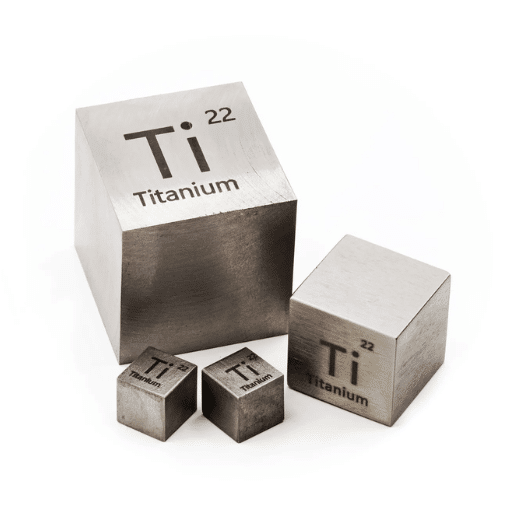
Alloying transforms titanium from a corrosion-resistant metal into a high-performance engineering material. Here are the grades that matter most for industrial procurement.
Grade 5 (Ti-6Al-4V)
Grade 5 is the most common titanium alloy on the market. It contains 6% aluminum and 4% vanadium, producing an alpha-beta microstructure.
- Density: 4.43 g/cm³
- Tensile strength: 895–1,170 MPa (depending on heat treatment)
- Yield strength: 828–1,100 MPa
- Key standards: ASTM B348, AMS 4928, MIL-T-9046
The company achieved its present market position through its strategic business decisions. The material Grade 5 provides unmatched strength together with lightweight properties and combined weldability and corrosion resistance, which requires proper shielding for use. The material appears in aircraft structures and turbine blades, landing gear, medical implants, racing components and marine hardware.
The medical device startup with which we collaborated used standard Grade 5 specifications for their initial hip implant prototype design. The metallurgical team from our company demonstrated during the design review process that Grade 5 met biocompatibility standards, but the FDA and orthopedic community now prefer Ti-6Al-4V ELI (Grade 23) for use in permanent load-bearing implants. The startup switched to Grade 23, which they obtained through complete ASTM F136 mill certifications and heat-number traceability, and they successfully passed their initial regulatory inspection without any violations.
Grade 7 (Ti-0.15Pd)
Grade 7 is chemically similar to Grade 2 but with a small addition of palladium (0.12–0.25%). That tiny addition dramatically improves corrosion resistance in reducing acid environments.
- Best for: Chemical processing, desalination plants, and power generation where reducing acids or chlorides are present.
- Standard: ASTM B348, ASTM B337
Grade 9 (Ti-3Al-2.5V)
Grade 9 sits between CP Grade 4 and Grade 5 in strength. It contains 3% aluminum and 2.5% vanadium.
- Tensile strength: ~620 MPa
- Key advantage: Better cold formability than Grade 5, usable at moderately higher temperatures than CP grades.
- Best for: Aerospace tubing, bicycle frames, orthopedic cables, and sports equipment.
For a deep dive into this versatile grade, see our dedicated guide to Grade 9 titanium (Ti-3Al-2.5V).
Grade 12 (Ti-0.3Mo-0.8Ni)
Grade 12 offers strength slightly above Grade 3 with enhanced corrosion resistance, particularly in chloride environments.
- Best for: Heat exchangers, chemical processing vessels, and desalination systems.
- Advantage: Combines CP-like corrosion performance with modest strength improvements at a lower cost than Grade 5.
Grade 23 (Ti-6Al-4V ELI)
Grade 23 is the “Extra Low Interstitial” version of Grade 5. It restricts oxygen, nitrogen, iron, and carbon to lower levels.
- Tensile strength: ~860 MPa (slightly lower than standard Grade 5)
- Key advantage: Higher fracture toughness, enhanced ductility, superior fatigue resistance, and improved weldability.
- Standards: ASTM F136, ISO 5832-3
- Best for: Critical medical implants (hip stems, knee replacements, spinal hardware), aerospace structural components requiring maximum damage tolerance.
For permanent implants, Grade 23 is now the industry standard. For surgical instruments or temporary devices, standard Grade 5 remains acceptable and more economical. If you are sourcing material for medical device manufacturing, our guide to medical grade titanium covers ASTM F136 certification requirements in detail.
Beta Alloys (Grade 19, Grade 21, and others)
Beta alloys such as Ti-3Al-8V-6Cr-4Mo-4Zr (Beta C, Grade 19) and Ti-15V-3Cr-3Al-3Sn (Grade 15V-3Cr-3Al-3Sn) offer:
- Exceptional strength-to-weight ratios after aging
- Deep hardenability in thick sections
- Excellent formability in the solution-treated condition
They are specified for high-stress springs, landing gear, and aerospace forgings where uniform properties through large cross-sections are mandatory.
Titanium Alloys by Industry Application
The global titanium alloy market is projected to reach USD 6.47 billion in 2026, growing at a compound annual growth rate of roughly 4.7–6.5%. Aerospace dominates demand, but medical applications are expanding fastest.
Aerospace & Defense
Aerospace consumes 51–68% of all titanium alloy demand. Modern aircraft like the Boeing 787 and Airbus A350 use titanium for more than 15% of their structural weight.
- Engine components: Compressor blades, discs, and casings operate at temperatures up to 400–550°C, where near-alpha and alpha-beta alloys excel.
- Airframes: Landing gear, fuselage frames, and fasteners leverage titanium’s strength-to-weight ratio.
- Fuel efficiency impact: Replacing steel with titanium in airframe structures typically reduces weight by 40%, translating to a 3–5% improvement in fuel burn over the aircraft lifecycle.
Defense applications are accelerating. Military ground vehicles and naval vessels are substituting steel with titanium to improve range and payload. A recent U.S. Department of Defense grant awarded USD 47.1 million to expand domestic titanium production capacity.
For buyers focused on aerospace plate and sheet specifications, our aerospace titanium plate sourcing guide details AMS 4928 and MIL-T-9046 requirements.
Medical Device Manufacturing
Medical is the fastest-growing end-use segment for titanium alloys, expanding at approximately 7.1% CAGR.
- Orthopedic implants: Hip and knee replacements, spinal cages, and bone screws rely on Grade 23 (Ti-6Al-4V ELI) for its fatigue resistance and biocompatibility.
- Dental implants: Ti-6Al-4V and CP Grade 2 titanium dominate the dental implant market due to osseointegration performance.
- Surgical instruments: Non-magnetic, sterilizable, and corrosion-resistant—CP Grade 2 and Grade 4 are common choices.
The 2025 medical titanium alloy market is estimated at USD 762 million and is projected to exceed USD 1.24 billion by 2032.
Marine & Chemical Processing
Titanium’s resistance to seawater corrosion makes it invaluable for marine and chemical infrastructure.
- Desalination plants: Grade 2 and Grade 12 titanium tubing withstand chlorides and brine with service lives exceeding 30 years.
- Offshore platforms: Propeller shafts, heat exchangers, and subsea pipelines use CP grades and Grade 12 to resist pitting and crevice corrosion.
- Chemical reactors: Grade 2, Grade 7, and Grade 12 handle sulfuric acid, hydrochloric acid, and chloride salt environments where stainless steels fail prematurely.
For environment-specific alloy selection, refer to our guide on titanium alloys for marine and chemical processing.
Automotive & Transportation
High-performance and racing applications use titanium for:
- Exhaust systems and valves (heat resistance + weight reduction)
- Suspension springs (beta alloys)
- Connecting rods and fasteners
Mass-market automotive adoption remains limited by cost, but electric vehicle manufacturers are evaluating titanium for battery enclosure lightweighting.
Industrial & Energy
Power generation and industrial processing use titanium in:
- Heat exchangers and condensers
- Pressure vessels and piping
- Nuclear power plant components (corrosion resistance in aqueous environments)
Machining, Welding & Fabrication Considerations
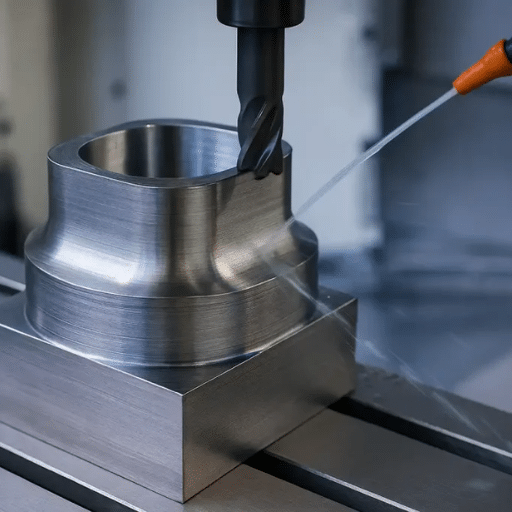
Titanium alloys are unforgiving in the machine shop. Ignore their unique behavior, and you will burn through tooling budgets and scrap expensive workpieces.
Machining Challenges
Titanium’s thermal conductivity is roughly 6–7 W/m·K—about one-sixth that of steel. Heat concentrates at the cutting interface instead of dissipating through the chip or workpiece.
A Midwest machine shop came to us after ruining three sets of high-speed steel inserts on a Ti-6Al-4V aerospace fitting. Our metallurgical team recommended three changes:
- Switch to carbide or ceramic inserts with aluminum-titanium-nitride (AlTiN) coatings.
- Reduce surface speed to roughly 30–60 m/min for roughing and 15–30 m/min for finishing.
- Increase machine rigidity and apply high-pressure coolant directly at the cutting edge.
Tool wear dropped by 60%, and surface finish improved from Ra 3.2 to Ra 0.8. The lesson: titanium demands respect. You need a rigid setup, the right carbide tools, and generous coolant.
Additional best practices:
- Use climb milling to minimize work hardening.
- Maintain sharp tools; dull edges generate heat and accelerate failure.
- Minimize dwell time; never let the tool rub against the workpiece.
- Chip evacuation: Titanium chips are flammable at high temperatures. Keep them moving away from the cut with adequate coolant flow.
Welding Requirements
Titanium welds beautifully—provided you shield it completely from oxygen, nitrogen, and hydrogen. Any contamination above trace levels causes embrittlement and cracking.
Essential welding practices include:
- Inert gas shielding: Use high-purity argon (99.999%) for both the weld pool and the back side of the joint.
- Trailing shields: Maintain argon coverage behind the torch as it moves to protect the cooling weld.
- Cleanliness: Grind, acetone-wipe, and handle with nitrile gloves. Oil, grease, and moisture are enemies.
- Color inspection: A proper titanium weld should be silver or straw-colored. Blue, gray, or white indicates contamination and compromised mechanical properties.
Additive Manufacturing
Laser Powder Bed Fusion (LPBF) and Electron Beam Melting (EBM) are transforming titanium component production. Additive manufacturing can reduce material waste (buy-to-fly ratio) by up to 60% for complex aerospace parts.
However, printed titanium almost always requires post-processing:
- Hot Isostatic Pressing (HIP) to close internal porosity
- Heat treatment to optimize microstructure
- Surface finishing to achieve required roughness and fatigue performance
Wire-based Directed Energy Deposition (DED) is gaining traction for large structural repairs and components where Powder Bed Fusion is too slow or expensive. For a deeper exploration of these technologies, see our article on titanium additive manufacturing.
Standards, Certifications & Quality Assurance
In the titanium supply chain, the paperwork is often worth more than the metal itself. Without verified certifications, you cannot prove alloy grade, traceability, or compliance.
Key Standards for Buyers
ASTM B348: The foundational standard for titanium bars, billets, and wire. It defines chemical composition limits, mechanical property requirements, and dimensional tolerances.
ASTM F67: Governs unalloyed titanium for surgical implant applications. If you are buying CP grades for medical devices, demand compliance with this standard.
ASTM F136: Specifies wrought Ti-6Al-4V ELI for surgical implants. This is the standard that distinguishes medical-grade Grade 23 from standard aerospace Grade 5.
AMS 4928: The aerospace specification for Ti-6Al-4V bars, forgings, and rings. Aerospace prime contractors typically require AMS certification.
MIL-T-9046: Military specification for titanium sheet, strip, and plate. Still referenced in defense procurement.
ISO 5832-3: International standard for titanium alloy implant materials. Essential for medical device manufacturers selling into global markets.
NACE MR0175 / ISO 15156: Required for oil and gas applications involving sour gas (hydrogen sulfide) environments.
Traceability and Verification
Every batch of certified titanium should arrive with:
- Mill test report (MTR): Confirms chemical composition and mechanical properties.
- Heat number: Links the material back to the original melt batch.
- Certificate of conformance: States compliance with the specified standard (ASTM, AMS, etc.).
Red flags that should stop a procurement team in their tracks:
- Missing or incomplete mill certificates
- Heat numbers that cannot be traced to the mill
- Prices significantly below market rate (often indicate counterfeit or downgraded material)
- Suppliers who cannot explain their testing protocols
If your application involves human safety—aerospace, medical, or offshore—never accept uncertified titanium. The cost of a material failure far exceeds any savings on the purchase price.
Selecting a Titanium Alloy Supplier
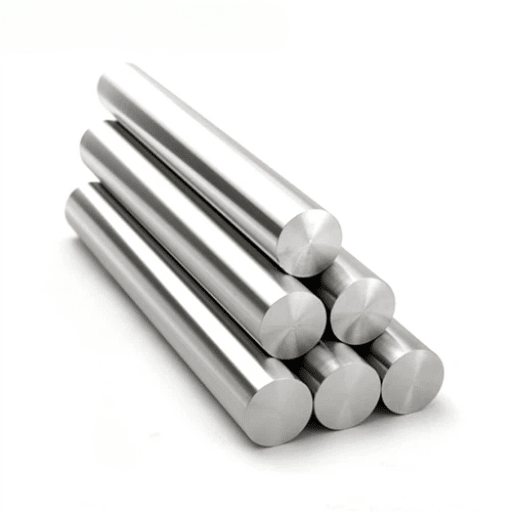
Choosing the right alloy is only half the battle. Choosing the right supplier determines whether that alloy arrives on time, on spec, and fully certified.
What to Look For
ISO 9001 Certification: This is the baseline for any serious supplier. It demonstrates a systematic approach to quality management, not just occasional testing.
In-House Testing Capabilities: Spectral analysis verifies that the chemical composition matches the specification. Mechanical testing confirms tensile strength, yield strength, and hardness. A supplier with in-house testing can resolve discrepancies faster than one who outsources everything.
Custom Manufacturing Options: Not every project fits a standard catalog item. Look for suppliers who can deliver custom chemical compositions, forged shapes, and precision-cut dimensions. Our custom titanium forging services are designed for exactly these requirements.
Global Logistics Experience: International titanium procurement involves export licenses, customs documentation, and specialized packaging. A supplier with proven global freight forwarding experience will prevent customs delays and in-transit damage.
Responsive Engineering Support: You should be able to reach a metallurgical engineer—not just a salesperson—when questions arise about grade selection, heat treatment, or welding parameters.
Jiangsu Zhonggongte’s Approach
We combine ISO 9001 certified manufacturing with advanced spectral analysis and full traceability documentation. Our engineering team consults directly with your designers to confirm grade selection, and our logistics team manages packaging, documentation, and delivery to facilities worldwide.
Whether you need standard Grade 5 bar stock or a custom-forged beta alloy component, we can deliver certified material with the documentation your quality department demands.
Request a quote from our metallurgical team today, or contact us to discuss your specific titanium alloy requirements.
Frequently Asked Questions
Is titanium magnetic?
The metallic element titanium together with its common commercial alloys display paramagnetic behavior which results in them showing extremely weak magnetic attraction toward magnetic fields while they lose all magnetic power after the magnetic field disappears. The non-magnetic characteristics of titanium make it suitable for use in medical implants which require MRI compatibility and for electronic enclosures which need protection from magnetic fields.
Is titanium stronger than stainless steel?
The answer to the question depends on the specific definition used to measure strength. High-strength stainless steels achieve superior absolute tensile strength when compared to titanium because they exhibit better tensile strength per unit area. Titanium offers better specific strength because it provides strength-to-weight ratio advantages while weighing 45% less than steel. The aerospace industry and medical device manufacturers consider titanium to be their optimal material for applications where weight matters most.
What is Grade 5 titanium used for?
The most widely used titanium alloy in industry exists as Grade 5 titanium which has the chemical composition Ti-6Al-4V. The material finds its application in aircraft structures and engine components and landing gear and medical implants and dental implants and marine hardware and racing components and chemical processing equipment.
Can titanium alloys be welded?
Welding of titanium alloys is possible to execute but requires special protection measures which demand usage of high-purity argon as inert gas throughout the welding process. The weld area needs protection from oxygen and nitrogen contamination which requires shielding for both its front and back sections. The heat-affected zone requires post-weld heat treatment because it needs stress relief and property restoration.
How do I verify implant-grade titanium?
The mill test report (MTR) needs to show compliance with ASTM F136 for Ti-6Al-4V ELI or ASTM F67 for unalloyed titanium. The documentation must include a traceable heat number and certificate of conformance. The absence of these documents makes it impossible to distinguish implant-grade titanium from lower-grade material through visual inspection.
Conclusion
NASA’s decision to use aluminum for the Curiosity rover wheels is a powerful reminder: titanium alloys are exceptional, but they are not the answer to every engineering challenge. The key to success is matching the right grade to the right environment, fabrication method, and certification requirement.
Here are the essential takeaways:
- Choose CP grades (1–4) when corrosion resistance, formability, or weldability matters more than peak strength.
- Specify Grade 5 (Ti-6Al-4V) for the majority of high-strength aerospace, medical, and marine applications.
- Upgrade to Grade 23 (Ti-6Al-4V ELI) for permanent load-bearing implants where fracture toughness and fatigue resistance are critical.
- Respect titanium’s machining and welding requirements—rigid setups, carbide tooling, and inert-gas shielding are non-negotiable.
- Never compromise on certifications. Mill test reports, heat numbers, and standards compliance (ASTM, AMS, ISO) protect your project and your reputation.
If you are ready to source certified titanium alloys for your next project, our metallurgical engineers are here to help. Contact us today to discuss your specifications, request a quote, or verify certification requirements for your application.