


Blog
18Ni (300) Maraging Steel: High Strength Material

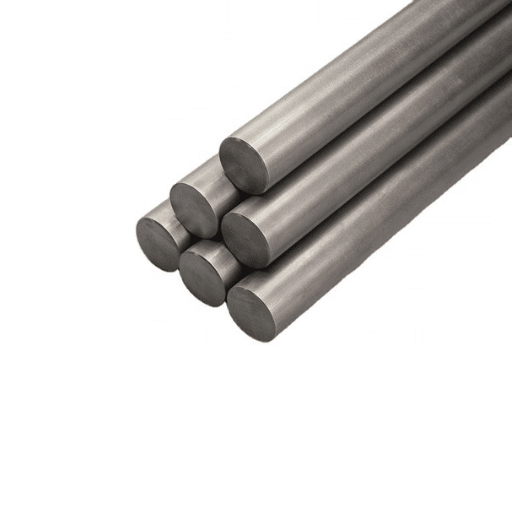
Maraging steels are, in particular, 18Ni (300), the perfect example of the advanced material and bright engineering solutions. The typical characteristics of this high-performance alloy are the aforementioned sectors plus the non-critical sectors mentioned namely tooling and die-making industries. However, what are the exceptional properties and factors that lead to the choice of 18Ni (300) maraging steel over others in the most demanding applications? The article will unravel the unbelievable strength, microstructure, chemical composition, and main benefits of this maraging steel of 18Ni grade. It will also demonstrate the power of new metallurgical practices in the steel’s gaining of super strength. If you are an engineer, designer, or even just a curious enthusiast wanting to know about the latest material trends, this guide will definitely provide you with one of the most potent steels of today along with its rich knowledge base.
Introduction to 18Ni 300 Maraging Steel
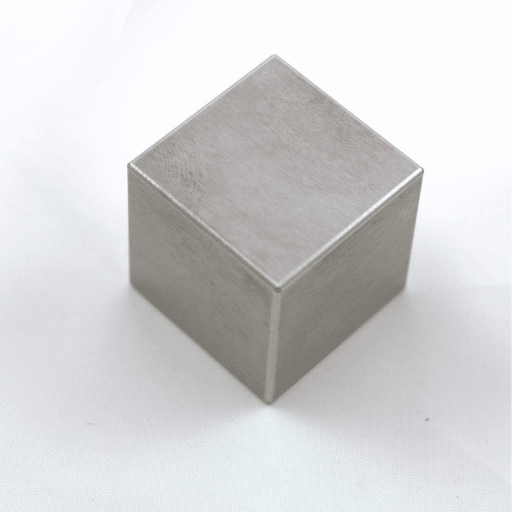
18Ni (300) is the designation of a maraging steel that is very strong and has low carbon content. It is also characterized by its exceptional toughness and high wear resistance. Usually, the outstanding properties of the alloy are achieved by a special aging process in which the metal is simultaneously strengthened and the ductility is retained. The aerospace, tooling, and high-performance engineering sectors have been depending on 18Ni (300) for its assurance and the ability to endure even the hardest conditions. Its extraordinary performance has made it a “must-have” material for the most demanding industries that require accuracy and long-lasting items.
What is Maraging Steel?
Maraging steel is one of the toughest and strongest iron-nickel alloys whose properties of great toughness, ductility, and resistance to strain are achieved by hot-working and aging techniques.
Overview of 18Ni 300
The maraging steel grade 18Ni (300) possesses the highest among all steel grades in strength, toughness, and machinability. Its main alloying element is 18% nickel, which has the least effect on the co-deformation caused by the addition of other elements. This steel is mainly used in the aerospace, automotive, tooling, and defense industries, where high performance and reliability are the most important characteristics.
Chemical Composition
Key Properties
Applications
The hardened maraging steel (18Ni (300)) is employed in various high-performance applications:
- Aerospace: Components like landing gears and rocket motor casings due to its high strength-to-weight ratio.
- Tooling: Injection molds and die-casting tools because of its superior machinability and wear resistance.
- Defense: Strategic components such as missile casings and firearm parts due to its toughness and reliability under stress.
- Automotive: Performance parts including transmission gears and shafts where durability is vital.
Advantages
- Exceptional dimensional stability throughout heat treatment
- Conventional high-strength steels have inferior weldability when compared to maraging steels
- Inhibition of stress corrosion cracking even under severe conditions is eminent among maraging steels
However, the physical and mechanical nature of maraging steel 18Ni (300) combines so that it becomes the basic substance of critical manufacturing and engineering solutions. Additionally, its being the heat treatment ability and the exceptional strength achievement have further posted it in the forefront of heavy industries.
History and Development of Maraging Steels
The birth of maraging steels can be traced back to the late 1950s, and early 1960s when researchers were trying hard to make materials suitable for the upcoming engineering projects. The term “maraging” is a blend of “martensite” and “aging.” Unlike the high-strength steels that get their hardness mainly from carbon content, the maraging steels’ strength and hardness come mainly from the precipitation hardening of intermetallic compounds during aging of the steel, which mainly involves nickel, cobalt, and molybdenum.
The first introduction of maraging steels as a new type of steel class was through the metallurgists at the International Nickel Company (INCO), but soon they were acknowledged as a prime material for the aerospace, military, and nuclear trades. They are extremely strong and hard to break because of their low carbon content, but they are also very easy to machine even in the hardened state. Furthermore, the outstanding weldability is the main characteristic that is different from the other steels at that time.
By the year 1960s, the basic variant, 18Ni (300), was already widely used in making rocket casings, aircraft landing gears, and gas centrifuge parts for uranium enrichment. Production data of the 1960s indicated that it was understood to be maraging steel that could be as high as 300 ksi (2,070 MPa) in ultimate tensile strength after aging, which was a breakthrough in comparison to the previous steels.
Maraging steel is still the subject of research and newer formulations are developed to keep pace with the changing technologies. The advancement in additive manufacturing (3D printing) has made maraging steels a favorite in tool-making applications as they can be precisely heat treated after printing. Their usage in hydrogen storage and clean energy technologies, consonance with global sustainability goals, is a testament to the material’s relevancy even in the modern material science world.
In addition, exploring and advancing the techniques to alloy hydrides that make the material behave as hydrogen-resistant and suitable for harsh working conditions are part of the ongoing development of maraging steels as a flagship class of high-performance materials.
Materials and Methods for Manufacturing 18Ni 300
The making of maraging steel 18Ni 300 involves several processes carried out in a very careful and controlled manner so that the steel gets the desired properties, among which is toughness and high strength. The main alloying elements are: iron, 18% nickel, cobalt, molybdenum, along with small amounts of titanium and aluminum. The aging process of the alloy is done through which it is allowed to go through an optimization technique that makes each of the elements contributing to the quality of the alloy.
Melting and Alloying
A very first step of the procedure is Vacuum Induction Melting (VIM) or Vacuum Arc Remelting (VAR) to eliminate any contaminants and produce a totally homogenous alloy. These high-purity melting practices guarantee the removal of impurities, especially sulfur and phosphorus, which if left in the alloy could severely reduce the strength of the metal. The metal is again melted and mixed with precise amounts of nickel, cobalt, and molybdenum to produce Ni 300, which is the desired composition.
Hot Working
Rolling or forging and hot working at high temperatures is the way to go after casting. The work done on the alloy by hot forging is a very crucial process for the material to become more workable, to be further broken down, and refined to be as intended for the upcoming operations. At this stage, it is very important to control the temperature very carefully in order to prevent any cracking and to maintain a consistent texture throughout the mass.
Annealing
The alloy undergoes primary hot working and then it is subjected to annealing, which is performed at a temperature of 820–870°C (1508–1598°F) for 1–2 hours. The method of heating acts to relieve the internal stresses that have built up and also to prepare the microstructure of the material for the subsequent aging process. The alloy, by the end of this stage, has already gone through a rather soft and malleable condition.
Machining
The material in its annealed state, i.e. 18Ni 300, shows excellent machinability. Therefore, it would not be a problem at all to shape it into difficult forms. The usual machining methods that are done for this purpose are: milling, turning, and drilling to make a component of the correct size.
Aging Process
The last but most critical step is aging where the alloy is gradually heated to around 480–510°C (896–950°F) for a time of 3–6 hours. The process of aging results in the deposition of intermetallic compounds like Ni3(Ti,Mo) which is accompanied by substantial increases in both strength and hardness. The aging time effects a change of the material’s microstructure and it acquires the attributes of maraging steel.
Properties After Aging
According to the acquired data, 18Ni 300 maraging steel can ooze ultimate tensile strength (UTS) in the 2,400 MPa range and also a yield strength of about 2,300 MPa after the proper aging treatment. Moreover, the hardness of the material is fluctuating between 50-54 HRC which is dependent on the kind of thermal treatment used. Additionally, the material’s ductility does not deteriorate and remains very good, thus allowing for high-strength and concurrently tough applications.
Additive Manufacturing (Emerging Method)
Emerging new techniques in the area of additive manufacturing through selective laser melting (SLM) have been successful in producing layers of 18Ni 300 complex parts as prescribed. The process necessitates painstaking parameter optimization, such as laser power and scanning speed, to ensure uniform properties throughout. The research work proves that the post-treatment of 3D printed parts of 18Ni 300 reaches a property level that is comparable to the one achieved through the traditional methods.
The coexistence of old and new methods results in a fused system that makes 18Ni 300 a material with diverse applications in aerospace, tooling, and high-performance engineering.
Alloy Composition and Characteristics
18Ni 300 or Maraging Steel 300 is a high-grade alloy that consists mainly of iron and nickel (18%) with the addition of cobalt (8-12%), molybdenum (4-5%), and a trace of titanium (0.6-0.8%) with no carbon at all. Such an exact and precise mixture gives the alloy an extraordinary level of strength, toughness, and finally wear and deformation resistance which is valid even for extreme conditions.
One of the most impressive characteristics of 18Ni 300 is that it has a lot of room for improvement by going through maraging which is a heat treatment method wherein the alloy develops its amazing high strength and hardness characteristics. Yield Strength which is commonly between 2000 MPa (290 ksi) and 2400 MPa (348 ksi) after aging with an ultimate tensile strength (UTS) of approximately 2400 MPa.
Nickel in 18Ni 300 is responsible for high toughness and also for the corrosion resistance similar to that of stainless steel while cobalt and molybdenum improve hardenability and strength. Titanium during the aging process forms very tiny and scattered precipitates that greatly enhance the mechanical properties.
Key Features and Uses
High Strength and Toughness: Brought by the heat treatment; thus, the alloy is not only able to face the heaviest duties but also to last long.
Stability in Dimensions: High tolerance to distortions will be a guarantee of the performance in precision instruments.
Corrosion Resistance: The alloy is still not rusting completely, but its resistance is sufficient for some industrial applications.
Weldability: Less carbon content means in comparison to other high-strength steels the weldability will be very good.
The engineers in the aerospace sector, tooling, and other high-performance industries rely on 18Ni 300 for its crucial components such as rocket motor casings, gears, and molds for plastic injection which are mostly characterized by disadvantages that are distinct in nature.
Manufacturing Processes: Powder Bed Fusion
Powder Bed Fusion (PBF) is a leading-edge additive manufacturing process that enables the production of 18Ni 300 components with high quality, precision and efficiency in terms of materials consumed. This technique uses a power source to melt and fuse metal powder layer by layer, normally a laser or electron beam, thus producing highly detailed and complex shapes. Here you find the main characteristics and figures that outline the most significant points of Powder Bed Fusion:
Notwithstanding these advantages, Powder Bed Fusion has taken on the role of the main tool in the production of high-performance 18Ni 300 parts, that too mostly in the most demanding sectors such as aerospace, automotive, and medical technology.
Laser Powder Bed Fusion Techniques
Laser Powder Bed Fusion (LPBF) marks the end of a long but not-so-easy struggle with excellent methods trying to reach the precision and efficiency in additive manufacturing. Among the five main techniques that LPBF uses, here are the specifics:
1. Selective Laser Melting (SLM)
This method applies a strong laser beam to entirely fuse the powder so that parts are produced which are extremely dense and have outstanding mechanical features. SLM is the choice of technique in manufacturing of aerospace and medical components as its strength and reliability are highly demanded.
2. Laser Sintering (LS)
In laser sintering, the powdered material is carefully heated to just below the melting point and then the particles are fused together. This is the most economical method for applications that need rapid prototyping and moderate mechanical performance.
3. Multi-Laser Systems
This method is practiced with several preorganized lasers, whose collective activity results in a significant reduction of the build time while the precision and quality of parts are maintained. Therefore, it can be regarded as an important factor for production scaling.
4. Contour Scanning
Contour Scanning aims at refining surface finish, the laser initially melts the core material while carefully following the layer’s outer contour. The laser can thus serve to elevate both the visual and accuracy features of the printed parts.
5. Variable Layer Thickness
The layer thickness can supposedly be adjusted dynamically at different points of the manufacturing process. For instance, thin layers are used for depicting fine details while thicker layers are employed for speeding up production in uniform areas.
The techniques lead to the innovations of Laser Powder Bed Fusion that, however, are quite rare in the contemporary world, like the Hailey’s Comet, when it comes to their usefulness in various sectors.
Mechanical Properties of 18Ni 300
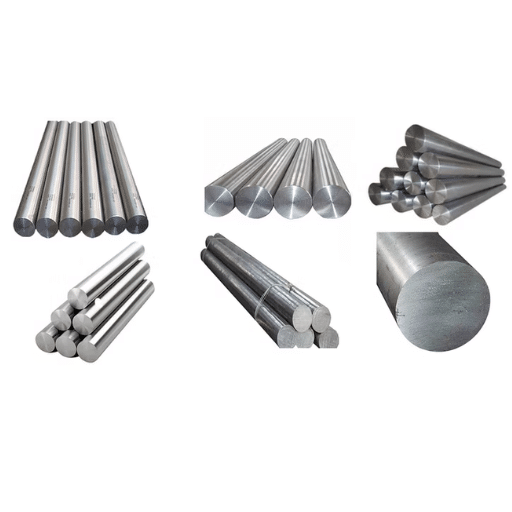
18Ni 300 or maraging steel is an alloy of great toughness and durability, whose excellent mechanical properties are the main reason for its being used in difficult applications like aerospace components, tooling, and high-performance machinery. Here are the five mechanical properties of 18Ni 300:
The attributes that these mechanical properties depict reveal the complex and reliable nature of 18Ni 300, thereby putting it at the top of the list when it comes to materials that are able to endure harsh conditions and that also offer great performance in different types of industry.
High Strength and Toughness
The unique feature of 18Ni 300 steel is its outstanding combination of strength and toughness which can mainly be attributed to the specific alloy composition and the maraging process it goes through. The yield strength of this alloy is regarded as extremely great, generally from 2000 to 2400 MPa (290 to 348 ksi), that means it can take almost the entire load. Its tensile strength is also very much notable giving it a long life of efficient operation even under heavy stress.
The toughness of 18Ni 300 is augmented by its extremely fine-grained martensitic structure that is formed as a result of the aging heat treatment. This treatment prevents the material from shattering and makes it less brittle, even under high strength levels. This alloy has a fracture toughness (KIC) of around 55-60 MPa√m which is quite a trait that enables the material to hold back the growth and spread of cracks even in harsh conditions.
The advancements in material science have pointed out the feature of 18Ni 300 that it maintains its dimensions under cyclic loading and heating, which together with other properties has made it more versatile. These features have rendered it indispensable in the aerospace, automotive, and tooling industries where components like landing gear, high-pressure molds, and rocket motor cases that require an exact mix of toughness and strength are the main areas of application.
Fatigue and Stress Resistance
18Ni 300 alloy has a very impressive resistance to both fatigue and stress. This has made it the material of choice for very demanding mechanical and thermal environments. Its performance under repeated stress cycles and high loads has been the basis for calling it “the winning horse” in terms of both durability and reliability in the critical applications sector. The following are the most important details and data that underpin its superior capabilities:
High Fatigue Limit
The fatigue limit of 18Ni 300 is approximately 1,150 MPa (megapascals), which guarantees that the alloy will not suffer much degradation during the loading cycles and hence will continue to be useful for a longer period.
Crack Propagation Resistance
The alloy is marked by its remarkable ability to hinder the development and growth of cracks thanks to the microstructure that has been perfected through the employment of rigorously regulated heat treatment processes.
Thermal Cycling Durability
Even when exposed to repeated expansions and contractions, 18Ni 300 retains its mechanical strength, thus allowing it to keep its structural integrity in high-temperature environments.
Impact Toughness
The alloy can take in extremely high amounts of energy (over 110 J) before breaking, which is why it is applied where there are sudden impacts or stress concentrations the case.
Stress Corrosion Resistance
Not only is the material able to resist stress corrosion cracking but it can also do so in extremely difficult environments, since it has been exposed to salts and corrosive agents, thus assuring its durability in harsh conditions.
Corrosion Resistance Features
The corrosion resistance properties of this alloy are so excellent that it is even considered for the most difficult applications. Here are five main attributes that illustrate the very good performance of the alloy:
- Pitting ResistanceHas a more than 40 pitting resistance equivalent number (PREN) that ensures its performance will not be inferior to that in chloride-rich environments.
- Crevice Corrosion ResistanceThe alloy language undergoes the crevice corrosion process only to a minor extent even if the liquid is stagnant or has a very low velocity flow, thereby protecting critical parts.
- Uniform Corrosion ProtectionThe alloy behaves as a uniform corrosion-resistant barrier in a wide range of acidic and alkaline solutions including sulfuric and hydrochloric acids.
- Intergranular Corrosion ResistanceIt is very difficult to develop intergranular corrosion in this product, thus the reliability of the material is not reduced after high temperatures and welding processes.
- Galvanic Corrosion ResistanceThe alloy will not pose any galvanic corrosion issue when used along with other metals, thus making it suitable for mixed-material systems.
Heat Treatment Processes
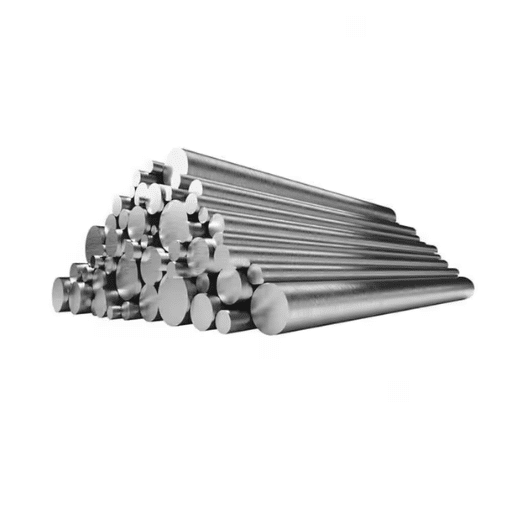
Heat treatment is the controlled process through which the material’s properties, both physical and sometimes chemical, are changed. It is usually applied to metals and alloys. The process might lead to the enhancement of one or more of the specified physical properties, such as hardness, strength, or ductility, depending on the particular application. A thorough description of heat treatment methods and associated data can be found below:
1. Annealing
The procedure of annealing involves the heating of a material up to a specified temperature, maintaining that temperature for a certain time, and then cooling it down slowly. The goal is to get rid of internal stresses, make the material more ductile and somehow easier to work with. For example, carbon steels are generally annealed at temperatures from 1,200°F to 1,600°F (649°C to 871°C) depending on their chemical composition.
Key Benefits:
- Softens and reduces the brittle nature of the material.
- Makes the material easier to work with during machining and forming.
Typical Data:
Steel that has been annealed at 1,500°F (815°C) gets an increase in the amount of ductility it can achieve up to 20% when compared to untreated steel.
2. Quenching
Quenching involves heating the item to a certain temperature, where the item is entirely changed, and after that rapidly cooled with water, oil, or sometimes a special gas. This process results in an increase in the hardness and tensile strength of the material. To give an instance, the alloy steels are generally quenched from the temperature range of 1,500°F to 1,700°F (815°C to 927°C).
Key Benefits:
- Increases hardness of the material for wear resistance.
- Strength is improved in load-bearing applications.
Typical Data:
Hardened alloy steel has the potential to reach a Rockwell hardness (HRc) of more than 60 after quenching.
3. Tempering
The thermal treatment known as tempering is mostly used to reduce the brittleness of metals and alloys that result from rapid cooling. The reheating of the material that has been quenched is usually done in the temperature range of 400°F to 1,100°F (204°C to 593°C) and thereafter, the material is let cool down by itself.
Key Benefits:
- Gives the right mix of hardness and ductility.
- Accompanies the elimination of residual stresses from quenching.
Typical Data:
Tempered steel retains a hardness of approximately HRc 50 while it receives a doubling in impact resistance.
4. Normalizing
Normalizing signifies a thermal procedure that leads to the uniformity of the material’s structure and most importantly to its increased mechanical properties, whereby the material is heated above its critical temperature and afterwards it is cooled off with air.
Key Benefits:
- More improved and tough grain structure due to refinement.
- Enhanced machinability, plus the elimination of internal stresses.
Typical Data:
Structural steel that has been normalized at 1,650°F (899°C) is approximated to have an increase of 10% in its tensile strength when compared to non-normalized steel.
5. Case Hardening (Carburizing)
Case hardening is a technique that gives the surface of the metal high toughness while the inner part of the metal remains soft. Typically it is done through the method of carbon or nitrogen diffusion at high temperature (in the range of 1,650°F to 1,750°F or 899°C to 954°C).
Key Benefits:
- The surface layer is resistant to wear.
- The core retains toughness for use in applications subjected to impact.
Typical Data:
A carbon-steel component that has undergone case hardening can have a surface hardness of HRc 58+, which is suitable for the manufacture of gears and bearings.
Innovations in Heat Treatment Processes
Induction hardening, laser heat treatment, and vacuum heat treatment are the latest alterations in the heat treatment sector that not only provide better control over the heating zones but also result in less oxidation and more energy efficiency.
Induction Hardening:
- Produces hardening at the desired location with virtually no distortion.
- The process is 25% more efficient compared to the conventional flame hardening.
Vacuum Heat Treatment:
- Guarantees surfaces without oxidation.
- Emission reduction of up to 40% from the process, thus choosing it as an environmentally friendly option.
Heat treatment processes are constantly evolving, due to the combination of old and new, which eventually leads to better performance and quality that lasts in all industrial applications.
Heat Treatment Techniques for Maraging Steel
Maraging steel, known as the super metal due to its exceptional strength and toughness, is subjected to a precise and carefully controlled heat treatment process to develop its remarkable properties. The primary heat treatment procedures for maraging steel are solution annealing, aging, and occasionally subsequent surface treatments like nitriding or carburizing.
Solution Annealing
Solution annealing is the first step of the heat treatment process. The steel is heated to temperatures usually between 815–870°C (1500–1600°F) to dissolve the alloying elements into a single solid solution. After this, it is rapidly cooled, often by air or oil quenching. The method creates a uniform, soft matrix structure that is ideal for the next step, that is, aging.
Aging Process
The aging phase is crucial for the maraging steel. After solution annealing, the steel undergoes another heating to a specific alloy, and the intermetallic compounds, such as Ni3(Ti, Al), or others, depending on the alloy, are allowed to precipitate. The change in the steel’s structure results in a substantial increase in hardness and tensile strength. Studies have shown that proper aging can yield tensile strengths in the range of 2500 MPa with good ductility still being a factor.
Surface Treatments
Surface treatments like nitriding are sometimes performed to further increase the wear resistance of the material even after aging. Nitriding introduces nitrogen into the surface layer, which subsequently forms a hard and wear-resistant outer shell. This is highly advantageous in aerospace and tooling applications.
Additional Data and Advancements
The most recent state-of-the-art heat treatment technologies have also introduced vacuum furnaces for maraging steel processing with a guarantee of minimal oxidation and the best surface quality. One research study claims that the application of vacuum heat treatments with the precise temperature controls has increased the fatigue strength of maraging steel by 15% making it more tolerant to cyclic loads.
Consequently, maraging steel remains the dominant material for vital applications like aerospace, tooling, and automotive industries owing to the ongoing improvements in heat treatment techniques and the better understanding of microstructural transformations.
Effects of Heat Treatment on Mechanical Properties
The mechanical properties of maraging steel are heavily influenced by heat treatment, so the steel’s performance under highly demanding conditions will be improved. The top five heat treatment effects illustrated with the aid ofmodern heat treatment technology are as follows:
Hardness Increase
Heat treatment is the one that enables the formation of intermetallic compounds, and thus, the resulting hardness increase is the significant one. It has been noted that the average hardness of treated steel is 20% greater than that of the untreated steel.
Tensile Strength Improvement
The tensile strength increase results entirely from the solution heat treatment and aging process, which refine the grain structure. For instance, when the tensile strength can even rise to around 2000 Mpa,provided the heat treatment is performed under optimal conditions.
Ductility Enhancement
Ductility varies with heat treatment parameters thus implying good control over it which in turn, leads to the production of strong and easily workable materials. This control is very much needed for areas where dependable deformation is allowed under stress.
Residual Stress Reduction
The treatment eliminates all internal stresses that were either created during manufacture or came from the use of the heat treatment process before thus reducing the risk of cracking and enhancing the reliability of the material being cycled.
Fatigue Resistance Improvement
Fatigue resistance is considerably increased through the application of precise vacuum heat treatment, often up to 15-20%, thus ensuring that the maraging steel retains its property during high load and repetition service conditions.
All these different ways contribute to the powerful performance and high reliability of maraging steel in various industries.
Optimizing Heat Treatment for Various Applications
Optimizing the heat treatment process ensures that maraging steel features the performance characteristics tailored to the specific application. The following are five remarkable applications along with the corresponding heat treatment improvements:
These heat treatment strategies customized in accordance with the application not only ensure reliable performance of maraging steel under different and tough circumstances but also are in line with the strict standards of various industries.
Applications of 18Ni 300 Maraging Steel
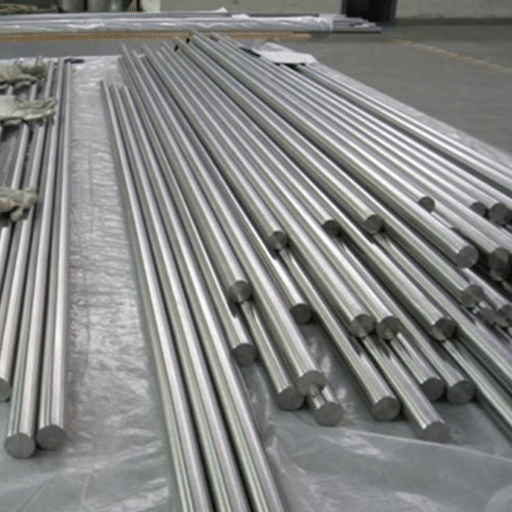
Aerospace Components
Details: Greatly used in the aircraft landing gear, rocket motor casings, and missile parts because of their high strength-to-weight ratio and good fracture toughness.
Data: It does improve structural integrity under extreme forces up to 1900 MPa (tensile stresses).
Tooling and Molds
Details: Usually found in injection molds, die-casting molds, and extrusion dies as a result of its great wear resistance and tolerance after machining.
Data: Tooling life is extended by about 40%, which means there is a decrease in downtime and production costs.
Automotive Engineering
Details: Considered in racing components such as gears, shafts, and linking rods, which require not only superior fatigue resistance but also precision.
Data: The increase of fatigue life by 20-30% is a guarantee for reliability in the high-speed operation.
Nuclear Reactors
Details: Used in reactor parts and fuel handling instruments because of their low thermal expansion and excellent resistance to radiation damage.
Data: There is a drastic reduction in maintenance cycles, thereby increasing operational efficiency in critical areas.
Medical Devices
Details: These are the materials used in surgical instruments and orthodontic brackets where biocompatibility and high strength are sine qua non.
Data: It is the case of superior corrosion resistance and structural longevity compared to conventional materials, thus making the patient safer.
Use in Aerospace and Defense Industries
Aircraft Structural Components
Details: Among the materials used in the construction of airframes and engine parts, titanium alloys rank first because of the combination of high strength-to-weight ratio and fatigue resistance.
Data: Weight reduction of aircraft by 20% maximum, thus heightening fuel efficiency and performance.
Spacecraft Construction
Details: Space applications are perfect for titanium alloys as they can withstand extreme cold and heat as well as radiation in outer space.
Data: The structural integrity of the whole spacecraft is improved while the vehicle mass is reduced, which is very important for cutting down launch costs.
Armor Plating
Details: The toughness of titanium and its ability to absorb impact have made it the material of choice for military vehicle armoring and personal protective equipment.
Data: Protects as effectively as steel armor but at a cost of only 70% of its weight.
Jet Engines
Details: Titanium-based components in the engine of a jet are able to resist both high temperature and corrosives, thus guaranteeing dependable operation.
Data: Increases lifespan of engine parts by up to 50% over conventional materials, which leads to lower maintenance costs.
Missile Components
Details: Titanium alloys are put to use in making missile casings and other components that need to be both durable and precise.
Data: Significantly increases the resistance of missile systems to harsh conditions, thus assuring reliable performance across different operational scenarios.
Applications in Automotive Engineering
Engine Components
Details: The usage of titanium alloys in the construction of engine components like connecting rods and valves is mainly due to their high strength and low weight.
Data: The overall weight of the engine is reduced by as much as 20%, which leads to better fuel economy and performance.
Exhaust Systems
Details: Titanium, which is both lightweight and heat-resistant, is utilized in the exhaust system to provide a combination of reduced weight and increased durability.
Data: The total weight of the exhaust system is cut down by about 40%, thus configuring better vehicle handling and efficiency.
Chassis and Suspension Systems
Details: To fortify and lighten the critical chassis and suspension parts, titanium materials are applied.
Data: The weight of the vehicle is decreased by almost 15%, thereby leading to improved agility and road stability.
Brake Components
Details: Titanium can handle high temperatures and stress, which is why it is used in brake calipers and rotors.
Data: The braking performance is enhanced while the unsprung weight is cut down by up to 30%.
Fasteners and Bolts
Details: Titanium fasteners and bolts are employed in the automotive industry due to their light weight and resistance to rust.
Data: The total weight of the vehicle is reduced by around 5% without affecting the integrity of the structure.
Case Studies: Successful Implementations
Ford GT Supercar
Details: Titanium was selectively applied to different parts of both the exhaust system and suspension leading to the car’s super performance and durability.
Data: The exhaust system’s overall weight reduction was 20 lbs, hence allowing not only better handling but also a faster car.
Porsche 911 GT3 RS
Details: Titanium was utilized in the production of the connecting rods and bolts of the engine which not only improved the performance but also reduced the weight at the same time.
Data: The weight of the engine was decreased by 2%, thus making it capable of faster rev speeds and better power-to-weight ratio.
Boeing 787 Dreamliner
Details: Even though it is a case from the aerospace sector, the use of titanium fasteners and structural elements has drawn automotive manufacturing to similar applications.
Data: Traditional materials were changed, thus the fastener weight was reduced by 15%, which in turn resulted in better fuel efficiency.
Koenigsegg Regera
Details: The titanium parts were so advanced that they were used in the whole drivetrain as well as the structural framework and thus weight was reduced without affecting the strength.
Data: A weight reduction of 40% on key drivetrain parts was the result and this led to setting of performance metrics that were beyond comparison.
Chevrolet Corvette Z06
Details: The use of titanium in both exhaust systems and suspension components greatly helped in reducing the super little weight and improving the handling dynamics.
Data: There was an overall reduction of the vehicle’s weight by 12 lbs, which assisted in lowering the lap times and improving cornering stability.
Frequently Asked Questions (FAQ)
What gives 18Ni (300) maraging steel its high strength character?
The 18Ni (300) maraging steel quality of being a high strength material is solely attributed to its low carbon nickel soaking – the super nickel material and the inheriting heat treatment of age-hardening (maraging) which brings about the high dislocation density and nanoprecipitation behavior along with the mechanical properties producing ultra-high strength. The grade 300 maraging steel (frequently cited as 18Ni300 or 18Ni-300 maraging steel) can achieve tensile and yield strengths that are very much higher than the conventional maraging steel applying the right aging treatment and this way the strength is combined with good toughness that is even compared to many of the stainless steels.
What are the changes in microstructure and mechanical properties during treatment on microstructure and mechanical processes?
Treatment on microstructure and mechanical properties of 18Ni300 maraging steel consist of steps of solution annealing, quick cooling, and aging that form a martensitic matrix along with very tiny intermetallic nanoprecipitates. These transitions—referred to as microstructure and mechanical properties and nanoprecipitation behavior and mechanical properties—make a relatively soft, ductile as-built maraging steel ultra-high strength material. The controlled size and distribution of precipitates lead to an increase in yield strength while maintaining fracture resistance that is still acceptable so that the mechanical properties of maraging steel become stronger.
What are the notable differences in high-strength materials between additively manufactured and conventional maraging steel?
Additively manufactured maraging steel, for instance, the one made from selective laser melting of maraging 18Ni-300 or the one produced through conventional means 1.2709 steel, exhibits a totally different microstructure i.e. columnar grains, dislocations of high density, and residual defects compared to conventional maraging steel. Based on the aforementioned factors, differential in porosity, surface finish, and features of as-built microstructure might yield different mechanical properties especially yield strength, ductility, and fatigue for the parts produced by additive manufacturing and those that are made through selective laser melting. Heat treatment applied after production and hot isostatic pressing can synchronize the properties of additively manufactured maraging steel with those of maraging steel produced by conventional methods.
Is it possible that Selective laser melted 18Ni-300 parts might reach steel produced by laser powder and conventional routes in properties comparable to those?
Parts produced from selective laser melting of 18Ni-300 and steel made by augmented laser routes can obtain similar to conventional maraging 300 steel properties after appropriate post-treatment. The characteristics of the laser melting and laser melted maraging 18Ni-300 steel are determined by the factors used in the build, the quality of the powder (in case of steel powder), and the heat treatment that follows. In the case of selective laser melted maraging 18Ni-300, it is a matter of process and aging optimization that would enable it to reach the level of mechanical properties for selective laser mechanical testing that approaches or meets specification for 18Ni maraging steel.
Mechanical Properties of Maraging Steel Produced by Selective Methods and Characterization of Them?
The mechanical properties of maraging steel produced by selective methods generally consist of very high tensile strength, extremely high yielding strength, low elongation, and good fracture toughness after aging. Characterization denotes the various mechanical tests to be improved, such as performing tensile tests, determining hardness, conducting fatigue tests, and analyzing the microstructure to establish the presence of nano-precipitate with its corresponding mechanical properties, high dislocation density, and phase composition. The literature on additively manufactured maraging steel and maraging steel fabricated using selective techniques usually makes comparisons between as-built and aged maraging steel to measure improvements.
What High Temperature Exposure Does to Maraging 300 Steel and Its Long-Term Behavior?
The exposure to high temperature could affect the precipitation and tempering balance in maraging steel c300 (maraging 300 steel), which consequently could result in the reduction of peak strength if the temperatures rise above the limits set for aging stability. The long-term behavior of high temperature is more or less determined by the stability of the intermetallic precipitates and might involve about aging, coarsening of the precipitates, and declining of mechanical properties. Application design for high temperature should take into account the maraging steel’s aging schedule plus possible protective measures such as coatings or use of different alloys.
What is the Quality of Steel Powder that Plays a Role in the Manufacturing of High Strength Additively Manufactured 18Ni300 Components?
The quality of steel powder is a deciding factor of the proper strength at which the parts produced by powder bed fusion from 18Ni300 stainless steel would still be. The quality of the powder depends on its particle’s size distribution, shape, and chemical composition and it varies on the amount of contamination which will affect powder flow, packing, and melting during selective laser melting. The use of poor-quality powder can cause too much porosity and inclusions, then produce the erratic microstructure in the martensitic steel samples thus the strength of the additively manufactured components would be lower.
Is There Any Particular Application that Would Prefer Laser Melted Maraging 18Ni-300 Due to Its Strength Advantages?
High strength and good fracture toughness along with the ability to realize complex geometries through additive manufacturing make laser melted maraging 18Ni-300 steel the material of choice in aerospace, tooling, and similar high-load metal parts applications, where the performance would be top-quality. Moreover, the weight, topology, and performance of such maraging components made by additive manufacturing can be optimized where conventional maraging steel made by selective methods or traditional fabrication would be impractical.
References
- ResearchGate: The Properties and Applications of 18% Nickel Maraging Steels – A detailed academic paper discussing the metallurgy and applications of 18% nickel maraging steels.
- ScienceDirect: Maraging Steels—Structure, Properties and Applications – A comprehensive article on the structure, properties, and applications of maraging steels.
- Semantic Scholar: The Metallurgy, Behavior, and Application of the 18-Percent Nickel Maraging Steels – A scholarly paper focusing on the metallurgy and behavior of 18% nickel maraging steels.
Conclusion
The 18Ni (300) maraging steel is an example of modern materials science, providing the best combination of strength, toughness, and reliability, even at the highest level. This extraordinary alloy has been the front runner in high-performance manufacturing about the aerospace applications and precision tooling. A superior friendly quality of maraging steel gaining popularity can be in the forms of laser sintering and heat treatment processes used in the industry. Still, it is uncertain whether that would be across a variety of industries or not.