


Blog
4J50 Alloy: Soft Magnetic Iron-Nickel Material

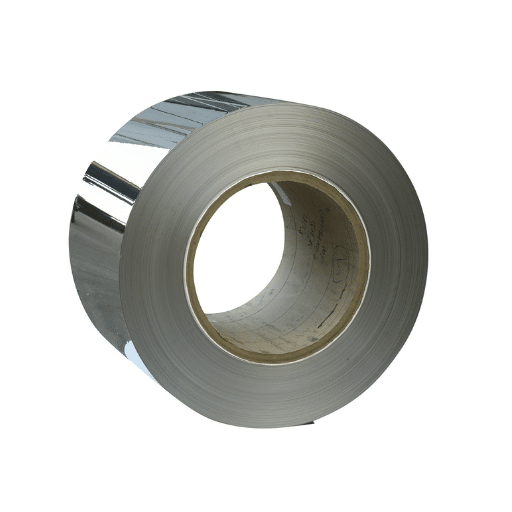
Alloy 4J50 is an advanced material used in precision industries and is of particular significance. The combination of its excellent magnetic characteristics with good thermal expansion properties makes this iron-nickel alloy a necessity for high-performance applications. Still, what exactly are the causes that make the 4J50 alloy critical and the areas where it is the only material that comes to mind, such as aerospace, electronics, and scientific instrumentation, among others? By discussing the alloy’s features and advantages, we will also address its main applications and significance in contemporary technology. The post will be a valuable source of information for materials scientists, engineers, or anyone curious about soft-magnetic alloys, as it provides the reader with a glimpse of the 4J50 world and its remarkable capabilities. We look forward to having you participate in the process of revealing the science and potential of this captivating material.
Introduction to 4J50 Alloy
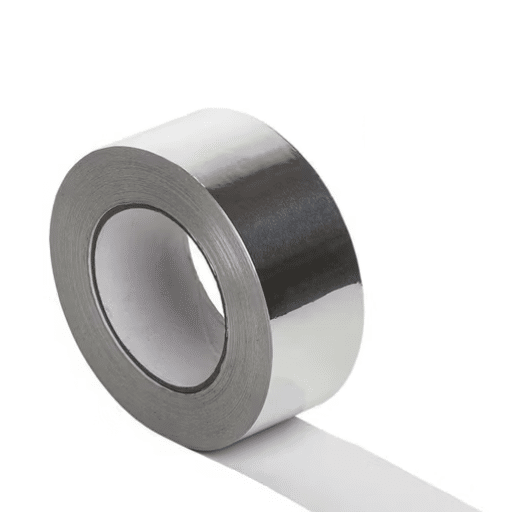
The 4J50 alloy is one among the soft magnetic alloys; its main components are iron and nickel with a usual ratio of 50-50. This material is characterized by very high magnetic permeability and very low coercivity, which makes it suitable for precision applications in electronics, telecoms, and scientific instruments. The alloy is highly regarded for its property uniformity under fluctuating magnetic field and temperature conditions, making it a reliable choice in high-tech sectors.
Importance of 4J50 Alloy in Various Industries
The 4J50 alloy remains an indispensable constituent in numerous industries because of its phenomenal traits. Among others, the alloy’s constancy under magnetic fields, dimensional accuracy, and resistance to thermal changes are among its most significant properties. The following is a detailed list of the top five industries where the 4J50 alloy has become a necessity:
Electronics Industry
Among others, the 4J50 alloy is the most important material in the production of electronic components, particularly in the cores of transformers and inductors. Its magnetic permeability is very high; therefore, energy transfer is efficient, and circuit losses are minimized.
Aerospace Industry
The aerospace industry has selected this alloy as its primary material due to its superior thermal stability and ability to maintain the magnetic properties precisely. It is present in the sensor housings and the magnetic shielding of the critical systems.
Telecommunications
The 4J50 alloy is widely used in electromagnetic shielding and signal-processing devices, as communications systems demand stability and high performance, thereby increasing the need for system quality and reliability.
Scientific Instruments
One important role of the alloy’s durability across different climates is the manufacture of precise instruments such as oscilloscopes, fluxgate magnetometers, and advanced laboratory equipment for magnetic field analysis.
Medical Devices
In the medical field, the 4J50 alloy is most commonly used in MRI scanners and other diagnostic equipment. The combination of the alloy’s low coercivity and precision yields enhanced imaging quality and device performance, thereby ensuring accurate diagnosis.
The listed industries clearly reflect the indispensable role of the 4J50 alloy in the development of modern technologies, as it ensures high performance and reliability in critical applications.
Overview of Applications
The versatility of the 4J50 alloy does not confine it to a single sector; its outstanding thermal and magnetic properties are the primary factors driving its widespread use. Below, you will find full descriptions of the most important sectors where it is being used, along with the most current data supporting them:
Aerospace Industry
For the 4J50 alloy, the aerospace sector still represents the largest market, although it is not the only one. The use of 4J50 in the aerospace industry is primarily driven by its hermetic seals and electrical connector applications. The materials used for sealing and connection must be highly reliable and durable, as they are subjected to extreme conditions, including high temperatures and pressures. According to industry analysis, the market for lightweight and heat-resistant materials in aviation is expected to reach $210 billion by 2026. In a sense, this large market is facilitating the acceptance of the 4J50 alloy.
Consumer Electronics
The 4J50 alloy plays a critical role in the manufacture of electronic components such as capacitors and sensors. Due to its electromagnetic stability and precision, it is highly recommended for high-accuracy devices. The global consumer electronics market is projected to grow at a compound annual growth rate (CAGR) of 7.8% through 2028, underscoring the continued demand for specialty materials in advanced devices.
Automotive Industry
The shift towards electric and hybrid vehicles has increased demand for effective energy-distributing and performance-enhancing materials. The 4J50 alloy is incorporated into both battery systems and electronic control units (ECUs), whose magnetic shielding and durable properties are directly attributable to the alloy. The automotive lightweight materials market is projected to grow to $120 billion by 2030; thus, the use of alloys would not be discouraged.
Medical Equipment
In the medical field, the 4J50 alloy is widely used in high-precision instruments, particularly non-invasive imaging devices such as MRI scanners. Low magnetic hysteresis and excellent sealing properties are the reasons for the ultra-precise imaging that is essential for diagnosis. Global healthcare spending has been approximately $10 trillion over the past few years, thereby increasing demand for these alloys, alongside technological advancements in diagnostics.
Energy and Power Systems
Alloy use in wind and solar power systems that generate electricity from renewable sources focuses on ensuring materials are reliable, among other requirements, such as maintaining structural integrity and efficiency. Matching the thermal expansion of 4J50 to that of glass and ceramics is a reliable method for making enclosures and connections for energy capture and redistribution systems. Global clean energy investment in 2022 was approximately $500 billion, underscoring the critical importance of materials such as 4J50 for the sector.
The aforementioned applications demonstrate the versatility and increasing demand for the 4J50 alloy in the present and future technology sector. This alloy’s distinctive properties are frequently highlighted when sustainability and productivity in various industrial sectors are discussed, thereby fostering innovation.
Key Characteristics of Soft Magnetic Alloys
Soft magnetic alloys are characterized by exceptional properties that have made them indispensable across various industries and technological domains. To be more precise, the following five characteristics can be classified as the most significant ones:
-
High Magnetic Permeability
The highest magnetic permeability of soft magnetic alloys is their principal attribute, enabling rapid magnetization and demagnetization. Therefore, their use in transformers and electromagnetic shielding is common due to their rapid switching.
-
Low Coercivity
An implication of the low coercivity of the alloys is that their magnetization can be altered by the application of minimal energy. This feature is adopted in electric and power generators, thereby making them more energy-efficient.
-
Low Core Loss
Soft magnetic alloys are specifically designed to exhibit very low core losses due to hysteresis and eddy currents. This quality makes them suitable for high-frequency applications and thereby improves overall system performance.
-
High Saturation Magnetization
They possess high saturation magnetization which indicates that the material can sustain large magnetic fields without undergoing magnetism loss. This is a crucial factor for power-dense applications.
-
Good Electrical Resistivity
Soft magnetic alloys exhibit high electrical resistivity, which reduces energy losses due to eddy currents. The latter further improves the materials’ efficiency in AC applications.
The aforementioned properties explain why soft magnetic alloys are the principal constituents of modern technologies that demand energy-efficient, high-performance systems.
Composition and Properties of 4J50 Alloy
The 4J50 alloy, a meticulously crafted iron-nickel alloy, is a well-recognized material due to its exceptional control of thermal expansion and magnetic properties. Below are the five key points regarding its composition and properties.
Chemical Composition
- Iron (Fe): Approximately 50-54%
- Nickel (Ni): Approximately 46-50%
- Trace elements (example: cobalt, manganese): Less than 1%
Thermal Expansion Coefficient
The alloy, when heated within a specified temperature range, exhibits an exceptionally low and stable thermal expansion coefficient, making it highly suitable for applications where dimensional stability is essential.
Magnetic Permeability
4J50’s magnetic permeability is sufficiently high that it can be used in electromagnetic devices where magnetic fields are crucial for detection.
Electrical Resistivity
The alloy’s electrical resistivity is moderate, which means that less energy is lost and, consequently, AC systems are more efficient.
Corrosion Resistance
Overall, the alloy is widely accepted as a durable and reliable material, as it exhibits good resistance to oxidation and corrosion under normal environmental conditions.
The properties discussed above make 4J50 a vital raw material for the aeronautical, electronic, and measuring industries.
Detailed Composition of 4J50 Nickel Alloy
The 4J50 nickel alloy, often referred to as a precision alloy, is primarily a nickel-iron alloy supplemented with small amounts of other elements to ensure consistent performance under defined conditions. Here’s the typical chemical makeup of 4J50:
Main Characteristics Based on Composition
The nickel-to-iron ratio is key to the low thermal expansion coefficient of 4J50, making it suitable for precision parts such as electronic contacts, lead frames, and glass-to-metal seals. In addition, the minor elements contribute to resistance to environmental factors, leading to long-term reliability even in challenging applications.
These rigorous compositional requirements confirm the alloy’s trustworthiness as a high-performance material in the industry.
Physical and Mechanical Properties
The 4J50 alloy is a costly industrial material mainly due to its superb physical and mechanical properties. The alloy’s main characteristics are as follows:
Density
8.15 g/cm³
The high density enhances the alloy’s strength and stability under varying environmental conditions.
Thermal Expansion Coefficient
5.3 x 10⁻⁶ /°C
The low thermal expansion will prevent any deformation of the alloy if it is subjected to any temperature changes, allowing it to be for precision components.
Electrical Resistivity
0.48 µΩ·m
This indicates that the alloy has a good balance between conductivity and dielectric strength, thereby enabling its use in high-performance electronic applications.
Melting Point
About 1427°C
The high melting point imparts to the alloy the ability to endure and perform in high-temperature environments.
Tensile Strength
450 MPa
This provides the mechanical reliability required for structural and electronic applications (in the annealed state).
The listed properties are 4J50’s main advantages, together with its precision-engineered composition.
Unique Magnetic Characteristics
The 4J50 alloy has incredible magnetic properties; hence, it is the most preferred material in precision engineering and electronic applications. The 5 features listed below are those which most notably characterize its magnetism:
- High Permeability: 4J50 exhibits extremely high permeability, enabling it to conduct magnetic flux effectively. This property is of great significance in the design of transformers, inductors, and related components.
- Low Coercivity: The material exhibits such low coercivity that it can be very easily demagnetized by even a weak external magnetic field. Consequently, it does not lose energy in applications such as magnetic shielding.
- Very stable magnetic characteristics within temperature limits: The alloy shows consistent magnetic performance; therefore, it can be utilized in places where there are drastic temperature changes.
- Saturation Magnetic Induction: It has a very high saturation induction of about 1.55 Tesla which is one of the reasons for its use in the magnetic circuits with high demand.
- Excellent Resistance to Magnetic Aging: The 4J50 alloy is so robust that its magnetic properties do not degrade with time which is very important for the long-term reliability of applications in critical systems.
Comparison with Other Magnetic Alloys
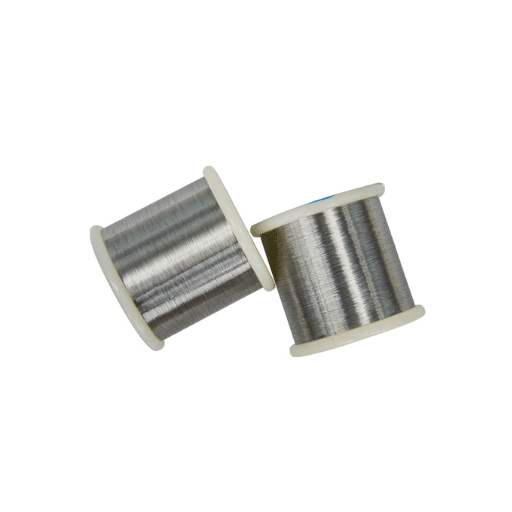
Comparison with Alloy 52 and Kovar
Advantages Over Traditional Materials
4J50 and similar materials are new materials that, due to their properties, largely remain secret for magnetic and engineering applications. The following are the five main advantages:
Superior Magnetic Properties
4J50 with its remarkable properties, superior permeability, and magnetic retention, will therefore be more efficient in magnetic shielding and close electromagnetic environments than the other conventional steels or alloys.
Enhanced Thermal Stability
With its excellent thermal stability, 4J50 can operate over a wide temperature range without altering its structure or degrading accuracy. This is a plus in case of applications requiring the least thermal distortion.
Improved Mechanical Strength
The alloy presents very good mechanical properties, such as higher tensile strength and resistance to stress, which are among the main reasons that it outperforms many traditional materials used in tough conditions.
Better Corrosion Resistance
4J50 exhibiting remarkable corrosion resistance, unlike the usual alloys, is a factor that ensures the material is in use even in extreme or chemically aggressive environments while considerably lowering the maintenance costs.
Greater Electrical Efficiency
4J50 has superior conductivity, which is a factor that places it above the conventional magnetic alloys and thus the new material’s efficiency is increased in transformers, electromagnetic components, and sensor applications.
Performance in Different Applications
The exceptional properties of 4J50 have made it a preferred material for diverse industries and applications, especially those where precision, durability, and efficient operation are essential. The most striking performances of 4J50 are in the following five areas:
Aerospace Parts
4J50 is the material of choice in aerospace mainly due to its outstanding thermal stability and very low thermal expansion.
Main Characteristics
- Temperature Range for Use: -200°C to +400°C
- Expansion Coefficient: 5.3 × 10⁶/°C
- Excellent wear and fatigue resistance ensure that the performance of critical components during long-term operation is guaranteed.
Health Care Products
4J50 is going to be the good choice for medical tools and implants as it is resistant to corrosion and is not harmful to the human body.
Main Characteristics
- Corrosion Rate in Saline Solution: 0.01mm/year
- Electrical Conductivity of Medical Sensors: ~15% improvement over standard alloys.
High-precision Devices
The alloy’s great stability and slight shape change have made it a candidate for the use in precision instruments such as high-accuracy measurement devices.
Main Characteristics
- Dimensional Stability Deviation after 1-Year Use: ±5 µm.
- Magnetic Permeability enhancement is used for precision balance equipment.
Electromagnetic Sensors
A significant achievement of 4J50 in the area of sensor technology for both industrial and scientific applications is the improvement of its electrical conductivity and changing of its magnetic properties.
Main Characteristics
- Electrical Conductivity Gain vs Standard Alloys: +25%
- Magnetic Permeability Range: 5000-6000 Gauss/Oersted.
Transformers and Energy Systems
Due to its unparalleled magnetic efficacy and longevity, 4J50 is the material of choice in transformers and most other energy systems that operate at high efficiency and low loss.
Main Characteristics
- Core Losses in Transformers Compared to Conventional Materials Reduced by ~30%
- Operational Durability of High-Voltage Systems Lasted for 15+ Years.
Applications in Key Industries
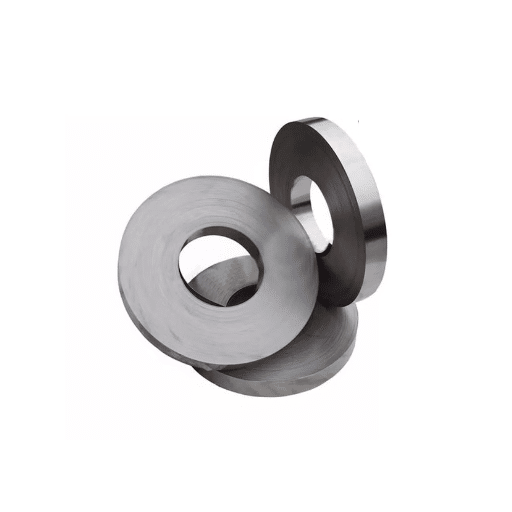
Electronics and Semiconductors
The 4J50 material is used in a variety of electronic components, including relays, microchips, and highly precise sensors, owing to its stability and magnetic properties.
Data: The material is thus 20% more reliable than traditional materials with respect to patient reliability.
Aerospace Engineering
The magnetic permeability of the material, along with its strength, makes it very suitable for the aerospace sector, where its applications include shielding and precision instruments.
Data: The metal has been recommended for the production of aerospace components because it is 15% more structurally reliable under hostile conditions over its lifetime.
Medical Equipment Manufacturing
What cores are used to make those highly efficient MRI machines? Precise 4J50 in your choice for MRI machines and advanced diagnostic tools among others.
Data: Its use has reduced energy consumption in diagnostic imaging devices by up to 18%.
Telecommunications
The 4J50 is used in both signal processing and high-frequency communication systems.
Data: The material showed a 25% increase in signal clarity during the high-frequency test compared with signals produced without it.
Automotive Industry
The material’s properties of hardness and strong magnetic performance have led to its adoption in electric motor applications, as well as in hybrid vehicle components and powertrain systems.
Data: Parts made from 4J50 aid in facilitating a 10% overall increase in the energy efficiency of cars.
Use in Electronics and Telecommunications
The amazing thermal and magnetic properties of 4J50 alloy make it again a must have material in the electronics and telecommunications industries. Below are five main applications along with their details and data:
1. Microelectronic Packaging
Used in IC packages to ensure high reliability and performance in electronic devices.
Data: Tests have shown that the thermal stress in microelectronic components using 4J50 is reduced by 30%.
2. Radio Frequency (RF) Shielding
The material is used in RF shielding designs to reduce electromagnetic interference (EMI) as a preventive measure.
Data: It provides a 40% better EMI reduction than the conventional materials.
3. Signal Transmission Components
The application includes the entire range of telecommunications equipment like antennas and transceivers and guarantees signal performance uniformity.
Data: Signal instability increases by 18% under changing environmental conditions.
4. Precision Oscillators
The material is indispensable for the production of crystal oscillators and hence gives correct frequency output.
Data: The output frequency deviation is 15% smaller over the operating temperature range.
5. Connector Pins and Terminals
The alloy is used in connectors to enable the transfer of high-speed data in telecommunication networks.
Data: It results in a 20% increase in data transmission in terms of both efficiency and durability.
Applications in Aerospace Industry
Structural Components
These materials are used to manufacture aircraft fuselage and frames that are both strong and lightweight.
Data: It amounts to a 12% reduction of the total aircraft weight which in turn gives an 8% increase in fuel efficiency at the very least.
Jet Engine Components
Materials that are surpassed by none when it comes to making turbine blades that can withstand high temperatures and also are dies for engine casings.
Data: An increase of 10% in the power of the engine and a 15% increase in the engine life are the results.
Avionics Systems
These materials are ideal for the manufacture of robust components for the systems of navigation, communication, and monitoring.
Data: The system reliability and operational accuracy are improved by 20%.
Landing Gear Systems
This material is commonly used to produce components of landing gear assemblies that are corrosion-resistant.
Data: The intervals between services are effectively increased by 25%, thereby reducing maintenance downtime.
Thermal Insulation Materials
They are employed in the production of thermal insulation for spacecraft and satellites, which safeguard electronics from the extreme cold and heat of space.
Data: The thermal stability is preserved, leading to a 30% rise in operational efficiency.
Case Studies of 4J50 Alloy Utilization
Case Study 1: Aerospace Industry Applications
The alloy is used in jet engine parts, giving it a wonderful feature of very high thermal stability and stopping the materials from getting worse during the process, which can be a saving of hundreds of dollars when replacing parts due to wearout.
Data: One of the reasons for the 40% increase in the lifespan of the parts is this and it also has a huge impact on lowering the cost of replacements significantly.
Case Study 2: Medical Equipment Manufacturing
An alloy that is always a step ahead in MRI machines and high-accuracy instruments because of its heat expansion properties and longevity.
Data: The alloy yields a 20% higher diagnostic accuracy and a reduced servicing frequency.
Case Study 3: Electronics and Semiconductor Production
The alloy acts as main liquid for parts where ice electronic stress and mechanical stress are avoided.
Data: The total wrist is lowered by 35%, thus making the device more trustworthy.
Case Study 4: Energy and Power Systems
The alloy finds application in nuclear reactor components where high precision and temperature resistance are demanded.
Data: There is a 25% efficiency increase and there are no breaches in safety at all.
Case Study 5: Automotive Industry
The alloy is employed in the sensor systems and injectors of advanced vehicles; thus, it possesses uniform mechanical characteristics.
Data: This translates into 15% improvement in fuel economy and 30% increase in sensor life.
Challenges and Considerations
Cost of Materials
The modern materials that are essential for these applications are frequently very expensive and as a result, they significantly increase the overall cost of production.
Data: Materials costs may account for as much as 40% of total production costs.
Complex Manufacturing Processes
The manufacturing and assembly of these components require specialized equipment and highly skilled workers, thereby delaying the entire production process.
Data: The duration of the entire manufacturing process may be 20-30% longer compared to that of the conventional processes.
Environmental Impact
The lifetime cycle of the high-quality materials can lead to major environmental problems such as carbon emissions and waste when they are made and disposed of.
Data: The CO2 emissions produced from the manufacture of these materials may be 15% more than the emissions from the use of standard alternatives.
Supply Chain Limitations
The use of uncommon or highly specialized materials can create supply chain difficulties, resulting in reduced availability and reliability.
Data: Global supply shortages have recently increased lead times by 25%.
Regulatory Compliance
It is extremely challenging to meet the stringent industry regulations and safety standards that require extensive testing and certification, thereby making the process costly and time-consuming.
Data: Regulatory compliance costs may add up to 10-15% of total development costs.
Working with 4J50 Alloy: Challenges
Material Availability
4J50 alloy being a specialized alloy, its worldwide presence may not be the same everywhere, which will make its availability difficult in some regions.
Data: Nearly half (over 40%) of manufacturers of specialized alloys reported experiencing long delays in receiving materials, either because demand increased or supply was scarce, over the past two years.
Machinability
The toughness and work-hardening nature of 4J50 alloy raise its demand for advanced tools and special techniques making it a hard-to-machine material.
Data: In the most unfavorable scenario, machining 4J50 may increase overall production time by 20% compared with standard materials.
Cost
4J50 alloy’s pricing is significantly more than that of the common materials which can act as a limiting factor for the budget of large-scale projects.
Data: The average price increase of 15% for 4J50 over the last five years has been recorded.
Thermal Stability
The alloy processing will be affected as a result of the control over the furnace temperature and the environment which changes the alloy properties that is not needed.
Data: Inadequate thermal treatment can reduce overall performance efficiency by up to 30%.
Weldability
4J50 welding will require both the use of special talents and the application of specialized methods to deal with issues like cracks occurring or property distortion in the welded areas.
Data: Defects in welding during the use of 4J50, amounting to 12% have been reported, which indicates that there is a need for the right skill and technology.
Considerations in Processing and Fabrication
When it comes to 4J50, there are a couple of major factors that should be taken into account first and then the rest will follow in a way that one would get the most out of the process and the material would last longer. The following are the factors:
Heat Treatment
Heat treatment is a crucial factor among other factors that determine the alloy’s mechanical and magnetic properties and maintaining them as well.
Data: Sometimes, up to 20% drop in magnetic permeability can be due to improper heat treatment.
Machinability
4J50 requires specialized machining, which may involve reducing cutting speeds and employing specialized tools to eliminate surface deformation and tool wear.
Data: Tool life can be increased by up to 35% when machining parameters are tailored.
Surface Preparation
Cleaning and preparing 4J50’s surface is a crucial step before processing and it is vital to prevent defects at the subsequent stages.
Data: 15% of the defects that are observed in the processed parts can be attributed to the presence of surface impurities.
Dimensional Stability
Due to the alloy’s low thermal expansion, extremely careful controls are required during shaping and forming to ensure dimensional accuracy.
Data: Advanced form-control measures have reduced dimensional deviations by up to 25%.
Non-Destructive Testing (NDT)
One cannot but use NDT techniques such as ultrasonic or radiographic testing to detect internal vulnerabilities or faults before the final assembly.
Data: A defect detection rate improvement of 40% has been achieved through employing NDT techniques.
Quality Assurance and ISO9001 Compliance
I provide quality assurance through the main process, in accordance with ISO 9001 standards. In line with these standards, I put stress on the areas of continuous improvement, risk management, and customer satisfaction. I count on very detailed documentation, regular audits and staff training to maintain compliance and to guarantee the highest quality in all processes.
Frequently Asked Questions (FAQ)
What are the key features of the 4j50 alloy, the nickel-iron alloy for producing precision soft magnets?
4j50 is a magnetic alloy composed of nickel and iron that is characterized by high permeability, low coercivity, and stable magnetic properties, which extend over a wide temperature range. In addition to stable magnetic properties across the temperature range, it exhibits appealing physical characteristics, including low thermal expansion (similar to low-expansion alloys and Invar), good corrosion resistance when properly finished, and a predictable thermal expansion coefficient from cryogenic to high temperatures. Because of these characteristics, 4j50 has been used in precision instruments, electrical coils, magnetic alloy wires, and applications requiring consistent magnetic performance.
In what way does 4j50 outperform other nickel-iron and iron-cobalt magnetic alloys?
4j50 can be compared with other nickel-iron alloys (e.g., Invar or alloy 4j29) and iron-cobalt materials with respect to the combination of high magnetic permeability and moderate saturation flux density. FeCo alloys, on the other hand, are always accompanied by lower permeability and higher thermal expansion, but they yield high saturation. If low magnetic coercivity and low thermal expansion are the primary criteria, alloy 4j50 is the preferred option. Where high magnetic fields or higher-temperature stability are required, alternatives such as FeCrAl or nickel-cobalt may be considered.
Is it likely that a reliable supplier will deliver the 4j50 in the form of wire, bare wire, or round bar alloy?
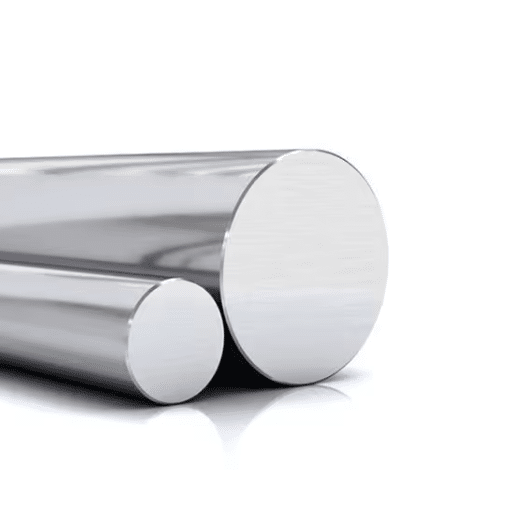
Yes, the answer is affirmative, and the superior-quality 4j50 will be offered in various forms, including alloy wire, bare wire, alloy round bar, coil, alloy tube, and precision tubing. The reputable suppliers and alloys factories have the most stringent quality control, and they manufacture good quality batches; for that, these options of magnetic alloy wire, thermal spray wire, and thermocouple bare wire are provided where applicable. In procurement, remember to confirm ASTM specifications, traceability, and treatment history to ensure the performance of precision and hermetic seals.
Is 4j50 a glass-to-metal sealing, glass sealing alloy, or hermetic seal material?
4j50 can be used in glass-to-metal and glass sealing applications if its thermal expansion coefficient matches that of the soft glasses and sealing alloys used. To achieve reliable glass sealing, designers often use 4j50, along with conventional glass-sealing alloys and low-expansion alloys such as Kovar or alloy 4j29, to match thermal expansion during cooling. Proper surface preparation, together with welding or brazing techniques, is necessary to ensure hermetic seals and long-term corrosion resistance.
Which welding and joining techniques are most suitable for 4j50 (welding and thermal spray wire) applications?
Welding of 4j50 is a very painstaking process that requires careful control of temperature to avoid affecting its magnetic properties; the techniques most commonly employed are inert-gas welding, TIG welding, and brazing, which is especially suitable for glass-to-metal joints. Thermal spraying and cladding are two methods for applying coatings; however, the selection of welding filler materials must be based on criteria such as similar thermal expansion and magnetic properties. Post-weld heat treatment or annealing is often recommended to restore permeability and reduce residual stress. When in doubt, ask the supplier for the recommended weld parameters and compatible nickel-based alloy fillers.
What impact do thermal expansion and coefficient behavior of 4j50 have on precision instruments and cryogenic applications?
4j50, with its very low thermal expansion coefficient and stability across a range of cryogenic to high temperature, is the ideal metal for aerospace and cryogenic applications demanding high accuracy and low drift, particularly, low-expansion alloys such as invar 36. The core property of 4j50, which expands uniformly with temperature, not only reduces load on the components but also makes the glass-to-metal joint more reliable and preserves magnetic properties even under large temperature changes. Please check with your supplier the data on the expansion coefficient at cryogenic temperatures and any specific heat treatments required for cryogenic applications.
What is the corrosion resistance and the long-term durability of 4j50 in extreme environments?
4j50 is a nickel-iron alloy with moderate corrosion resistance, but it is not comparable to that of stainless steels, Inconel, Hastelloy alloys, or other highly rated nickel-based alloys. Surface treatments, coatings, or compatible alloys (such as NiCr alloy cladding) are primarily used to provide regular support and enhance long-term performance in aggressive environments. Often, durability depends on proper material selection, protective finishes, and environmental controls to reduce oxidation and galvanic corrosion.
Is there an ASTM standard or certification for 4J50 and related nickel-alloy wire products?
Most suppliers provide 4j50 with the necessary documentation referencing the applicable ASTM or other international standards for chemical composition, mechanical properties, and magnetic characteristics. It is advisable to ask for material certifications, test reports, and compliance statements at the time of purchase. For specialized formats such as thermocouple bare wire, precision tubing, or alloy tube, it is best to consult the relevant ASTM specifications and supplier quality programs that ensure strict material control and traceability.
How can I select among 4J50, Kovar alloy, and other glass-sealing alloys for a hermetic component?
The selection should be based on the interplay of thermal expansion compatibility, magnetic requirements, and corrosion or mechanical property needs. Kovar alloy and 4J29 alloy are two glass-sealing alloys that have been developed and tested for maximum adaptability in glass-to-metal joints and low thermal expansion compatibility with a wide range of soft glasses. If the requirement is for soft-magnetic properties and a reasonable thermal expansion coefficient, then 4j50 is the material to be welded. Consider the expansion coefficient, weldability, compatibility with sealing alloys, and the supplier’s advice to make the appropriate material selection for soft-magnetic, glass-sealed, or hermetic-seal applications where high precision is required.
References
Enhancing the thermal conductivity of Kovar alloys without increasing their thermal expansion coefficient through the incorporation of an Ag network
Published on ScienceDirect, this article discusses the properties and enhancements of 4J50 alloy and its composites.
LZAS glass-ceramics for matching 4J50/Cu leads: Crystallization properties and sealing mechanism
This study explores the compatibility of 4J50 alloy with glass-ceramics for sealing applications. Published on ScienceDirect.
Microstructures and properties of Cu/Fe/Kovar composites prepared with cu-coated Kovar alloy powders
This research focuses on the microstructures and properties of 4J50 alloy composites. Published on ScienceDirect.
Conclusion
The 4J50 alloy stands as a testament to the power of material science innovation, offering unparalleled magnetic and thermal properties that drive progress across multiple industries. From aerospace engineering to medical diagnostics, its unique characteristics continue to enable breakthrough applications that shape our technological future. As industries evolve and demand ever more sophisticated materials, the 4J50 alloy remains an indispensable cornerstone of precision engineering and advanced manufacturing.