High Standard Stainless Steel With Strict Inspection



Nickel-Based Superalloys Guide: Grades, Specs & Applications (2026)

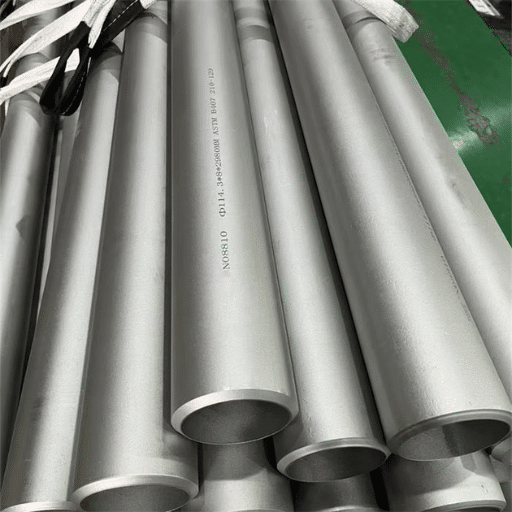
The jet engine on a commercial aircraft operates at temperatures that would melt ordinary steel within seconds. Inside the combustion chamber, gases reach 1,500°C (2,732°F). The only materials that survive these conditions are nickel-based superalloys, engineered over decades to maintain strength where everything else fails.
For procurement managers and materials engineers, selecting the right nickel superalloy is not a theoretical exercise. It is a procurement decision that affects safety, performance, and total cost of ownership across decades of service. The wrong grade leads to premature failure. The right grade, sourced with proper certification, keeps turbines running and chemical plants operating without interruption.
This guide covers the nickel-based superalloys that power critical industries in 2026. We examine Inconel 718, Inconel 625, Hastelloy C-276, and single-crystal alloys like CMSX-4. We explain the science behind gamma prime strengthening, compare manufacturing methods, and outline the AMS specifications that separate certified aerospace material from uncertified stock. Our metallurgical team supplies these alloys globally with full traceability, and we wrote this guide to help you make informed procurement decisions.
What Are Nickel-Based Superalloys?
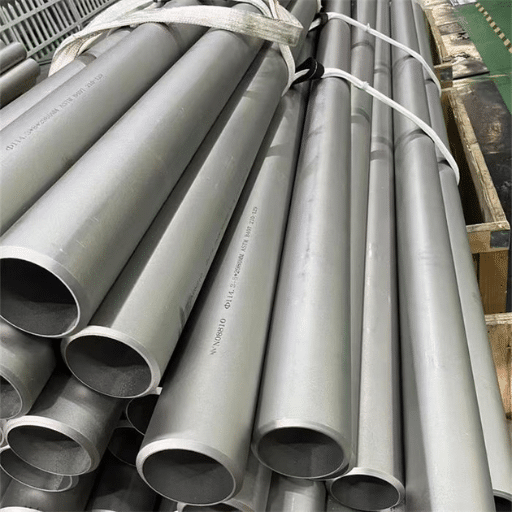
Nickel-based superalloys are high-performance materials engineered to maintain mechanical strength and oxidation resistance at temperatures exceeding 1,000°C (1,832°F). Nickel serves as the base element, typically comprising 50-70% of the alloy by weight. Chromium, cobalt, molybdenum, aluminum, and titanium join the matrix in carefully controlled ratios to create properties that no single metal can achieve alone.
The face-centered cubic (FCC) crystal structure of nickel remains stable at elevated temperatures. This stability gives superalloys their fundamental advantage over iron-based or titanium alloys in extreme heat. When engineers add aluminum and titanium, they trigger the formation of the gamma prime (γ’) phase, a nano-scale precipitate that blocks dislocation movement and prevents deformation under stress.
Aerospace accounts for the largest share of global nickel superalloy consumption. Turbine blades, discs, combustion chambers, and fasteners in modern jet engines rely almost exclusively on these materials. Power generation, chemical processing, oil and gas, and nuclear industries follow closely, each demanding alloys tailored to specific corrosion, pressure, and thermal cycling conditions.
Chemical Composition and Key Alloying Elements
Nickel superalloy performance depends on precise chemistry. A deviation of 0.5% in aluminum content can alter gamma prime volume fraction and shift creep properties measurably. The table below summarizes the principal elements and their functions.
| Element | Weight % | Primary Function |
|---|---|---|
| Nickel (Ni) | 50-70 | Base matrix; FCC stability at high temperature |
| Chromium (Cr) | 15-25 | Oxidation resistance; protective chromia (Cr₂O₃) layer |
| Cobalt (Co) | 0-20 | Hot corrosion resistance; stabilizes γ matrix |
| Molybdenum (Mo) | 2-10 | Solid-solution strengthening; creep resistance |
| Tungsten (W) | 0-10 | Solid-solution strengthening; high-temperature hardness |
| Aluminum (Al) | 3-6 | γ’ (Ni₃Al) phase formation; oxidation resistance |
| Titanium (Ti) | 1-5 | γ’ (Ni₃Ti) phase formation; precipitation hardening |
| Niobium (Nb) | 0-5 | Strengthens Inconel 718 through γ” phase |
Chromium forms a self-healing oxide layer on the alloy surface. At concentrations above 15%, this layer resists oxidation even during thermal cycling. Aluminum complements chromium by forming alumina (Al₂O₃), which remains stable at temperatures where chromia begins to degrade.
Cobalt and molybdenum operate through solid-solution strengthening. They distort the nickel lattice and make dislocation motion more difficult. Molybdenum also improves resistance to reducing acids, which explains its high concentration in corrosion-resistant grades like Hastelloy C-276.
Trace elements matter. Hafnium improves castability in single-crystal alloys. Rhenium, added at 3-6% in advanced grades like CMSX-4, slows diffusion at grain boundaries and extends creep life by up to 30%. Carbon and boron, measured in parts per million, control grain boundary strength in polycrystalline alloys.
Inconel 718: The Aerospace Workhorse
Inconel 718 dominates the nickel superalloy market. It accounts for roughly 35% of all superalloy production by weight, and for good reason. No other nickel alloy matches its combination of high-temperature strength, weldability, and cost-effectiveness.
Composition: 50-55% Ni, 17-21% Cr, 4.75-5.5% Nb, 2.8-3.3% Ti, 0.65-1.15% Al, balance Fe with controlled Mo and Co.
Key Properties:
- Tensile strength: 1,240 MPa (180 ksi) at room temperature
- 0.2% yield strength: 1,034 MPa (150 ksi)
- Maximum continuous service temperature: 650-700°C (1,200-1,292°F)
- Excellent weldability compared to other precipitation-hardened superalloys
- Good oxidation resistance up to 980°C (1,800°F) in intermittent service
Inconel 718 owes its strength to two precipitation phases. The gamma prime (γ’) phase forms from Ni₃(Al, Ti). The gamma double-prime (γ”) phase forms from Ni₃Nb. The γ” phase provides the primary strengthening contribution in the standard heat-treated condition, while γ’ stabilizes the microstructure during long-term exposure.
Heat Treatment: Solution treatment at 954-980°C followed by a two-step aging cycle produces optimal properties. The first age at 718°C precipitates γ”. The second age at 621°C stabilizes the structure. Suppliers must document every heat treatment step on the material test report (MTR). Deviations in temperature or hold time alter mechanical properties and may disqualify material for aerospace use.
Applications:
- Turbine discs and compressor blades in jet engines
- Liquid-fueled rocket components
- Nuclear reactor core internals
- Cryogenic storage tanks (retains toughness at -253°C)
- High-performance fasteners and springs
Aerospace Specification: AMS 5662 defines the solution-treated and aged condition for Inconel 718 bar, forgings, and rings. AMS 5596 covers sheet, strip, and plate. Procurement teams should verify that every lot carries an MTR with full chemical analysis, mechanical test results, and heat treatment documentation. Learn more about Inconel 718 properties and applications.
Inconel 625: Corrosion Resistance Leader
When the environment turns corrosive, Inconel 625 becomes the alloy of choice. Its high molybdenum and niobium content creates exceptional resistance to pitting, crevice corrosion, and stress corrosion cracking in chloride-bearing environments.
Composition: 58% Ni min, 20-23% Cr, 8-10% Mo, 3.15-4.15% Nb, balance Fe with controlled Co.
Key Properties:
- Tensile strength: 930 MPa (135 ksi) in annealed condition
- Excellent fabricability; readily formed and welded
- Superior resistance to seawater and brine
- Service temperature range: cryogenic to 980°C (1,800°F)
- Virtually immune to chloride stress corrosion cracking
Inconel 625 achieves strength through solid-solution hardening rather than precipitation hardening. The high niobium and molybdenum content distorts the nickel lattice without requiring a complex aging cycle. This gives 625 two practical advantages: it remains ductile and weldable in the as-supplied condition, and it does not suffer from heat-affected zone cracking during welding.
Applications:
- Marine exhaust systems and propeller blades
- Chemical processing equipment (reactors, distillation columns)
- Flue gas desulfurization scrubbers
- Nuclear fuel element cladding
- Aerospace ducting and engine exhaust liners
- Oil and gas downhole equipment
For chemical processing applications, Inconel 625 often outperforms stainless steels and even some Hastelloy grades in mixed acid environments. The alloy resists sulfuric acid at concentrations up to 60% and temperatures to 80°C. In phosphoric acid, it performs well across the full concentration range.
Hastelloy C-276: The Chemical Processing Standard
Hastelloy C-276 sets the benchmark for corrosion resistance in aggressive chemical environments. Developed by Haynes International, this nickel-molybdenum-chromium alloy resists oxidizing and reducing acids, pitting, and stress corrosion cracking in environments that destroy lesser materials within weeks.
Composition: 54-60% Ni, 14.5-16.5% Cr, 15-17% Mo, 3-4.5% W, 2.5% Co max, balance Fe.
Key Properties:
- Tensile strength: 790 MPa (115 ksi) in annealed condition
- Resists sulfuric acid at all concentrations and temperatures
- Withstands hydrochloric acid, phosphoric acid, and wet chlorine gas
- Low carbon content (0.010% max) minimizes carbide precipitation during welding
- Excellent resistance to crevice corrosion and pitting
The key to C-276 performance lies in its tungsten addition. Tungsten complements molybdenum to enhance resistance to localized corrosion. The low carbon and silicon contents prevent sensitization during welding, so the alloy retains full corrosion resistance in the as-welded condition without requiring post-weld heat treatment.
Applications:
- Chemical reactor vessels and heat exchangers
- Pollution control scrubbers
- Pulp and paper bleaching equipment
- Pharmaceutical processing vessels
- Waste treatment incinerators
- Offshore platform splash-zone components
Procurement teams specifying Hastelloy C-276 should demand ASTM B575 certification for plate and sheet, or ASTM B574 for bar. Every delivery should include a certificate of analysis verifying carbon content below 0.010% and full compliance with the UNS N10276 specification.
Single-Crystal Alloys: CMSX-4 and Directional Solidification
The most demanding turbine blade applications require single-crystal superalloys. By eliminating grain boundaries entirely, these alloys achieve temperatures 100-150°C higher than their polycrystalline counterparts.
CMSX-4 is the most widely deployed single-crystal alloy in commercial aviation. Its composition includes 61.7% Ni, 9.0% Cr, 6.0% Co, 6.0% Mo, 6.0% W, 5.6% Al, 1.0% Ti, 3.0% Re, 6.5% Ta, and 0.1% Hf. The rhenium addition slows diffusion and extends creep life dramatically.
Manufacturing Process: Directional solidification pulls the molten alloy slowly through a temperature gradient. A helical selector (pigtail) allows only one crystal orientation to survive. The result is a blade with no grain boundaries perpendicular to the principal stress axis. CMSX-4 blades operate at metal temperatures exceeding 1,100°C (2,012°F) in modern turbofan engines.
René N5, developed by GE Aviation, represents the next generation. It adds 5% rhenium and 6% tantalum while reducing chromium to 7% to improve phase stability. René N5 blades power the GE90 and GEnx engines on Boeing 777 and 787 aircraft.
The manufacturing cost of single-crystal blades is 10-20 times higher than conventionally cast equivalents. Each blade requires vacuum investment casting, precision grinding, and ceramic thermal barrier coating. For industrial gas turbines, polycrystalline alloys like Inconel 738 or directionally solidified Mar-M 247 offer a cost-effective compromise.
Gamma Prime Strengthening: The Science Behind the Strength
The extraordinary high-temperature strength of nickel superalloys comes from a nano-scale precipitate called gamma prime (γ’). This phase has the chemical formula Ni₃(Al, Ti) and forms coherently within the nickel matrix during controlled aging.
Coherency matters. Because the γ’ crystal lattice matches the surrounding γ matrix, dislocations cannot easily bypass the precipitate. The mismatch is small, only about 0.5%, but it creates enough strain to pin dislocation motion. At temperatures up to 0.7 times the melting point, γ’ remains stable and continues to obstruct deformation.
The volume fraction of γ’ ranges from 20% in lower-strength grades to 70% in advanced turbine alloys. Higher fractions increase strength but reduce ductility. Heat treatment controls the size and distribution of γ’ particles. An optimal particle size of 50-200 nanometers produces the best balance of strength and toughness.
In single-crystal alloys, γ’ forms cuboidal particles aligned with the matrix. The regular arrangement maximizes strengthening efficiency. In polycrystalline alloys like Inconel 718, γ’ forms spherical particles that provide more isotropic properties. The γ” phase in 718 forms as disk-shaped precipitates on {100} planes, giving the alloy its exceptional yield strength.
Creep Resistance and High-Temperature Performance
Creep is the slow, permanent deformation of a material under constant stress at high temperature. For a turbine blade rotating at 10,000 RPM under centrifugal load, creep determines service life. A blade that elongates by 1% may contact the engine casing and cause catastrophic failure.
Nickel superalloys resist creep through multiple mechanisms:
- Gamma prime precipitation blocks dislocation climb and glide at temperatures up to 1,000°C.
- Solid-solution strengthening from Mo, W, and Re creates lattice friction that slows atomic diffusion.
- Grain boundary strengthening in polycrystalline alloys uses carbon and boron to pin boundaries and prevent sliding.
- Single-crystal elimination of grain boundaries removes the weakest link entirely.
Creep Data: Inconel 718 exhibits a creep rupture life of approximately 100 hours at 650°C and 620 MPa. CMSX-4 achieves 1,000 hours at 1,050°C and 200 MPa. These numbers explain why single-crystal alloys command premium prices for hot-section components.
For design engineers, Larson-Miller parameters correlate creep data across temperatures and stresses. Suppliers should provide creep curves or Larson-Miller master curves for any alloy intended for load-bearing high-temperature service.
Oxidation and Corrosion Resistance
High-temperature oxidation destroys unprotected metals within hours. Nickel superalloys survive because they form protective oxide scales that act as diffusion barriers.
Chromia (Cr₂O₃) scales form at chromium concentrations above 12%. They protect against oxidation in air and combustion gases up to approximately 900°C. Above this temperature, chromia becomes volatile and loses protective capacity.
Alumina (Al₂O₃) scales take over at higher temperatures. Aluminum concentrations above 3% promote alumina formation, which remains stable past 1,200°C. This is why high-aluminum alloys like René N5 outperform high-chromium alloys in the hottest turbine sections.
Hot corrosion occurs when sulfur and sodium contaminants deposit on blade surfaces and flux the protective oxide. Marine and industrial environments are particularly aggressive. Cobalt-bearing alloys show better hot corrosion resistance than nickel alloys because cobalt sulfates are more stable and less destructive. This property explains why cobalt-based superalloys like Stellite remain essential for certain combustion environments despite nickel alloys dominating most turbine applications.
For chemical corrosion, the alloy selection depends on the specific environment. Chloride environments favor Inconel 625 or Hastelloy C-276. Reducing acids favor high-molybdenum grades. Oxidizing acids require high chromium. Our metallurgical engineers can analyze your specific process chemistry and recommend the optimal grade.
Manufacturing Methods: Cast, Wrought, and Additive
Nickel superalloy components reach their final form through three primary routes. Each method produces different microstructures, mechanical properties, and cost profiles.
Vacuum Investment Casting produces complex shapes like turbine blades and vanes. Molten alloy pours into ceramic molds under vacuum to prevent oxidation. Directional solidification and single-crystal growth extend this process for advanced aerospace components. Cast alloys typically exhibit 10-15% lower tensile strength than wrought equivalents but offer superior creep resistance due to coarser grain structures.
Wrought Processing includes forging, rolling, and extrusion. Inconel 718 and Waspaloy reach their highest strength through thermomechanical processing. Forging breaks up cast segregation and refines grain size. AMS 5662 forgings require multiple reduction steps with carefully controlled temperatures between 930°C and 1,065°C.
Additive Manufacturing (AM) builds components layer by layer from powder. Laser powder bed fusion (LPBF) and electron beam melting (EBM) produce near-net-shape parts with internal cooling channels impossible to machine conventionally. Inconel 718 and Inconel 625 dominate metal AM for aerospace. However, AM superalloys often show anisotropic properties and require hot isostatic pressing (HIP) to close internal porosity. Certification for flight-critical AM components remains limited as of 2026.
AMS, ASTM, and Military Specifications
Certified material begins with the right specification. Procurement teams should never accept generic “Inconel 718” without referencing the controlling standard.
Key Aerospace Specifications:
| Alloy | Bar / Forging | Sheet / Plate | Tube | Casting |
|---|---|---|---|---|
| Inconel 718 | AMS 5662 | AMS 5596 | AMS 5589 | N/A |
| Inconel 625 | AMS 5666 | AMS 5599 | AMS 5581 | N/A |
| Waspaloy | AMS 5704 | AMS 5544 | AMS 5586 | N/A |
| Hastelloy C-276 | ASTM B574 | ASTM B575 | ASTM B622 | N/A |
| CMSX-4 | N/A | N/A | N/A | proprietary |
AMS 5662 for Inconel 718 specifies:
- Chemical composition limits for 22 elements
- Solution treatment at 954-980°C
- Double aging: 718°C/8h + 621°C/8h
- Minimum tensile strength: 1,240 MPa
- Minimum yield strength: 1,034 MPa
- Hardness: 36-44 HRC
What to Demand from Your Supplier:
- Material Test Report (MTR) with full chemical analysis
- Mechanical test results (tensile, hardness, impact where required)
- Heat treatment documentation with furnace charts
- Lot traceability back to the melt
- AS9100 or ISO 9001 supplier certification
- DFARS compliance for U.S. defense applications
Uncertified material risks project failure. A European valve manufacturer learned this in 2023 when a batch of supposedly AMS-compliant Inconel 625 failed spectral analysis. The nickel content was 3% below specification. The entire lot was rejected, causing a four-month project delay. Our ISO 9001 certified processes prevent these failures through incoming inspection, in-process testing, and final verification before shipment.
Nickel vs Cobalt Superalloys: How to Choose
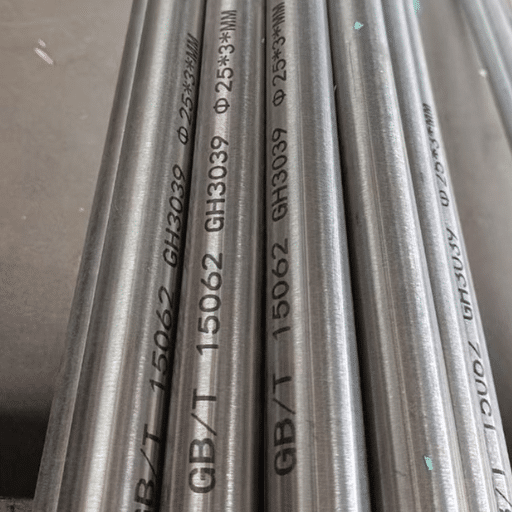
Nickel and cobalt superalloys serve overlapping but distinct roles. Understanding the differences prevents costly material misselection.
Choose Nickel When:
- Maximum temperature exceeds 800°C and creep resistance is critical
- The application requires precipitation hardening (γ’) for high strength
- Weight savings matter; nickel alloys are 5-10% lighter than cobalt equivalents
- Additive manufacturing or welding is required
- The component is a structural turbine blade, disc, or fastener
Choose Cobalt When:
- Hot corrosion or sulfidation is the primary failure mode
- Wear resistance matters more than creep resistance
- The application involves sliding contact or erosion
- Hardfacing or weld overlay protects a substrate
- The component operates below 900°C with severe surface degradation
Many advanced designs use hybrid approaches. A turbine blade may use an Inconel 718 body with a Stellite hardfacing coating on the tip to resist oxidation and wear. This combination use the best properties of both alloy families. Learn more about cobalt-based superalloys and their specific aerospace applications.
Procurement Guide: Sourcing Certified Nickel Superalloys
Sourcing nickel superalloys for critical applications requires more than comparing prices. The following checklist protects your project from material failures and supply chain disruptions.
Supplier Qualification:
- Verify ISO 9001 or AS9100 certification
- Request references from aerospace or nuclear clients
- Confirm in-house metallurgical testing capability
- Check for dual-source raw material agreements
Documentation Requirements:
- Certificate of Analysis (COA) with full chemistry
- Material Test Report (MTR) with mechanical properties
- Heat treatment records with furnace charts
- Mill test report with melt number and lot traceability
- Export documentation (if applicable)
Red Flags:
- Prices 20%+ below market average
- Refusal to provide MTR or COA
- Vague references to “meets specification” without documentation
- No metallurgical engineering support available
- Inability to explain heat treatment history
Lead Time Planning: Standard mill orders for Inconel 718 bar stock run 12-16 weeks. Forged rings and custom shapes extend to 20-26 weeks. Maintaining strategic inventory of common sizes reduces project risk. Our Jiangsu facility stocks Inconel 718, Inconel 625, and Hastelloy C-276 in standard plate, bar, and tube sizes with 24-hour quotation turnaround.
2026 Market Outlook
The global nickel superalloy market reached approximately $10.2 billion in 2026, growing at 5.8% CAGR. Aerospace drives 38% of demand, followed by power generation at 24% and chemical processing at 18%.
Commercial aviation backlog exceeds 14,000 aircraft worldwide. Each new-generation jet engine contains 1.5-2.5 tons of nickel superalloys. The transition to geared turbofans and open-rotor concepts will increase specific alloy consumption per engine.
Energy transition trends favor nickel superalloys. Hydrogen-fired gas turbines require higher combustion temperatures to achieve carbon-neutral power generation. Advanced ultra-supercritical (AUSC) coal plants target 700°C steam temperatures. Both trends demand alloys with superior creep resistance and steam oxidation resistance compared to current materials.
China represents the fastest-growing regional market at 11.5% CAGR. Domestic aerospace programs, nuclear expansion, and chemical industry growth drive demand. Our Wuxi facility positions us to serve this growth while maintaining export capacity for global clients.
Nickel Superalloy Grade Selection Matrix
Use this matrix as a starting point for material selection. Contact our metallurgical team for application-specific recommendations.
| Application | Primary Alloy | Alternate | Key Selection Factor |
|---|---|---|---|
| Turbine blades (aero) | CMSX-4 / René N5 | Inconel 738 | Maximum creep resistance |
| Turbine discs | Inconel 718 | Waspaloy | High strength + weldability |
| Combustion chambers | Inconel 625 | Hastelloy X | Oxidation + thermal fatigue |
| Chemical reactors | Hastelloy C-276 | Inconel 625 | Corrosion resistance |
| Fasteners / bolts | Inconel 718 | A-286 | Strength + relaxation resistance |
| Heat exchangers | Inconel 625 | Hastelloy C-276 | Chloride corrosion resistance |
| Oil & gas downhole | Inconel 718 | Inconel 725 | Sour gas resistance |
| Nuclear internals | Inconel 600 | Inconel 690 | Neutron irradiation stability |
| Medical implants | Inconel 625 | CoCr alloys | Biocompatibility + corrosion |
| Exhaust systems | Inconel 625 | Hastelloy X | Thermal cycling + oxidation |
Frequently Asked Questions
What is the best nickel superalloy for turbine blades?
For commercial aircraft engines, single-crystal alloys like CMSX-4 and René N5 offer the highest temperature capability, operating at metal temperatures exceeding 1,100°C. For industrial gas turbines, directionally solidified alloys like Mar-M 247 or polycrystalline Inconel 738 provide a cost-effective balance of performance and manufacturability.
What is the difference between Inconel 718 and Inconel 625?
Inconel 718 is a precipitation-hardened alloy optimized for high strength at temperatures up to 700°C. It requires heat treatment and excels in structural applications like turbine discs and fasteners. Inconel 625 is a solid-solution alloy with superior corrosion resistance, particularly in seawater and chemical environments. It requires no aging and welds more easily.
What temperature can Inconel 718 withstand?
Inconel 718 maintains useful strength up to 700°C (1,292°F) in continuous service. Short-term exposure to 980°C (1,800°F) is possible without catastrophic oxidation. For applications above 700°C, consider Waspaloy for discs or single-crystal alloys for blades.
How are single-crystal superalloys manufactured?
Directional solidification pulls molten alloy through a temperature gradient. A helical crystal selector allows only one crystal orientation to propagate into the blade mold. The process occurs under vacuum to prevent oxidation. Each blade requires ceramic core inserts for internal cooling channels and precision grinding to final aerodynamic shape.
What does AMS 5662 certify for Inconel 718?
AMS 5662 specifies the solution-treated and aged condition for Inconel 718 bar, forgings, and rings. It defines chemical composition limits, heat treatment parameters, and minimum mechanical properties including tensile strength (1,240 MPa) and yield strength (1,034 MPa). Material certified to AMS 5662 includes full traceability documentation.
Can nickel superalloys be welded?
Yes, but weldability varies by grade. Inconel 718 welds successfully with gas tungsten arc welding (GTAW) using Inconel 718 filler wire and proper preheat control. Inconel 625 offers the best weldability among high-strength nickel alloys. Single-crystal alloys generally cannot be welded; they are cast to near-net shape. Always follow qualified welding procedures (WPS/PQR) for aerospace or nuclear applications.
What is gamma prime strengthening?
Gamma prime (γ’) is an intermetallic precipitate with composition Ni₃(Al, Ti) that forms within the nickel matrix during controlled aging. These nano-scale particles block dislocation motion and prevent deformation at high temperatures. γ’ remains stable up to approximately 70% of the alloy melting point, making it the primary strengthening mechanism in turbine blade alloys.
How do I choose between Inconel and Hastelloy?
Select Inconel for high-temperature structural applications where strength and creep resistance dominate. Choose Hastelloy C-276 for aggressive chemical environments where corrosion resistance is the critical requirement. For mixed conditions involving both high temperature and corrosive chemicals, Inconel 625 often provides the best compromise.
Conclusion
Nickel-based superalloys enable the technologies that define modern civilization. Jet engines, power turbines, chemical reactors, and nuclear plants all depend on materials that refuse to yield under extreme heat, pressure, and corrosion.
Selecting the right alloy requires understanding your specific operating environment. Inconel 718 dominates structural aerospace applications. Inconel 625 leads in corrosive chemical and marine environments. Hastelloy C-276 survives the harshest acid exposures. Single-crystal alloys push the temperature boundary beyond 1,100°C for the most demanding turbine blades.
Equally important is sourcing certified material with proper documentation. AMS specifications, material test reports, and supplier certifications are not bureaucratic formalities. They are the safeguards that prevent uncertified material from reaching your production line.
Our metallurgical team at Jiangsu Zhonggongte supplies nickel-based superalloys with full certification, spectral analysis, and global logistics support. Whether you need standard Inconel 718 bar stock or a custom forging with exact chemistry, we deliver certified materials that meet your specifications.
Contact our engineering team to discuss your nickel superalloy requirements. We provide 24-hour metallurgical support, full MTR documentation, and competitive lead times for domestic and export orders.