High Standard Stainless Steel With Strict Inspection



Titanium vs. Stainless Steel: Weight, Strength, and Corrosion Resistance

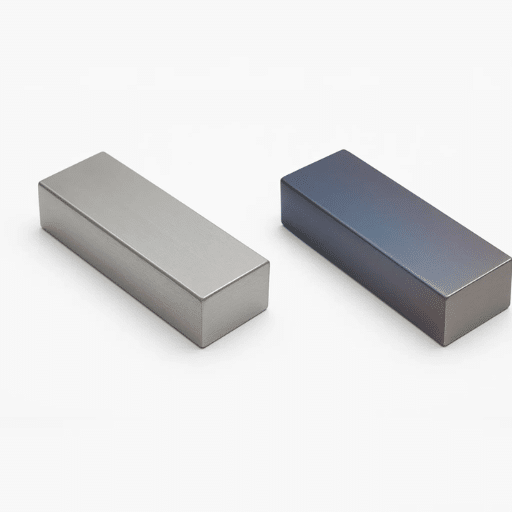
When engineers and medical professionals and aerospace engineers and manufacturers of common tools need to choose materials, they select between titanium and stainless steel. The two materials display different performance attributes which make them appropriate for specific applications, but their primary distinction exists in their weight and strength and corrosion resistance capabilities. The article establishes a thorough assessment of titanium and stainless steel through testing their essential performance attributes. The guide provides technical knowledge which helps you choose materials for high-performance equipment and durable solutions throughout your design process.
Introduction
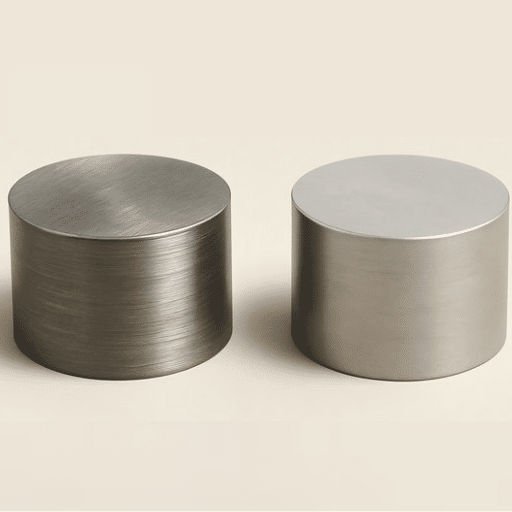
Titanium and stainless steel are both widely used materials, each excelling in specific applications. Engineers use titanium as a material because it provides them with exceptional strength-to-weight ratios and unparalleled protection against corrosion, which makes it suitable for aerospace operations, medical facilities, and marine environments. Stainless steel provides construction and automotive and kitchenware industries with a material that combines excellent durability and higher density and cost-effectiveness. The selection of these materials requires evaluation of operational needs, which include environmental factors and mechanical pressures and financial limitations.
Overview of Titanium and Stainless Steel
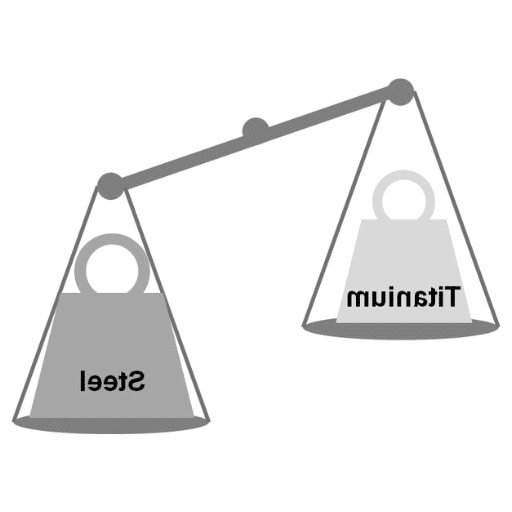
The physical characteristics and mechanical properties of titanium and stainless steel create distinct advantages and disadvantages which determine their appropriate applications. Titanium has gained popularity because it delivers exceptional strength while maintaining low weight. The density of titanium material measures 4.5 g/cm³ which results in a weight that is almost 50% lighter than stainless steel which has an alloy density range between 7.75 and 8.05 g/cm³. The combination of lightweight properties and high tensile strength which ranges from 434 MPa to more than 1000 MPa makes titanium suitable for applications that require both weight reduction and structural integrity.
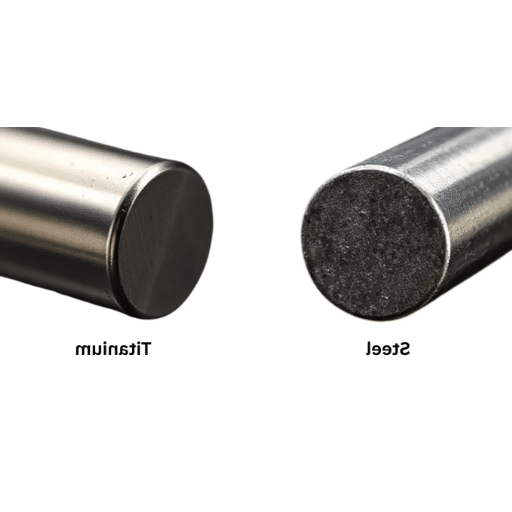
Stainless steel, by contrast, exhibits superior hardness and durability, with tensile strengths generally ranging from 485 MPa to 690 MPa in common austenitic grades such as 304 and 316. The material shows excellent resistance to corrosion because its chromium content exceeds 10.5% which enables it to endure different environmental conditions that include moisture and acid exposure and high-temperature settings. The superior pitting and crevice corrosion resistance of titanium allows it to exceed stainless steel performance in extreme conditions which include seawater and areas with high chloride concentration. The titanium material develops a stable oxide layer which protects against corrosion for long periods according to data which demonstrates minimal material loss during marine usage that has continued for decades.
Titanium exhibits lower thermal conductivity at 21.9 W/m·K which restricts its use in applications that demand effective heat transfer while stainless steel shows better thermal performance with 16.2 W/m·K for 304 stainless steel. The material selection process requires budget evaluation because this specific property needs to be assessed at a price point which ranges from three to ten times the expense of standard stainless steel materials. The application of stainless steel becomes more economical and flexible because it provides high strength and corrosion resistance to controlled environments while being more available and easier to process.
The choice between these two materials should consider operational conditions, such as exposure to corrosive agents, temperature ranges, mechanical stress, and the importance of weight constraints. Practical applications combine both materials judiciously, as titanium is often reserved for high-performance, specialized uses such as aerospace components or medical implants, while stainless steel serves as a reliable, cost-efficient workhorse across industries like automotive, construction, and consumer goods.
Importance of Material Selection
The process of choosing materials essential for engineering and manufacturing and design work directly determines how materials and structures will perform while maintaining their strength and durability and their financial value. Engineers need to conduct thorough research on material properties because this process enables them to select materials which fulfill both operational requirements and environmental conservation standards. The following section presents essential criteria along with specific material selection data elements which need to be examined during the selection process.
Mechanical Properties
Tensile Strength: The ability of a material to withstand tensile forces without failure. The tensile strength of titanium alloys exceeds 1000 MPa which stands in contrast to standard stainless steels that reach a maximum strength of 700 MPa and a minimum strength of 350 MPa.
Materials show different hardness levels which determine their resistance to wear. The hardness of stainless steel enables it to function better in abrasive environments because the material achieves hardness levels which reach 200 HB according to Brinell Hardness standards.
Corrosion Resistance
The materials stainless steel and titanium alloys both establish excellent oxidation and corrosion protection because they contain at least 10.5% chromium in their composition which protects against rusting in wet and high-saline conditions. The molybdenum content of stainless steel grade 316 makes it suitable for marine applications.
Thermal Performance
Different materials exhibit different thermal conductivity and thermal expansion properties. The lower thermal conductivity of stainless steel at approximately 16 W/m·K makes it useful for applications which need to preserve heat while aluminum provides better thermal conductivity at approximately 235 W/m·K which makes it ideal for applications that need to release heat.
Cost Efficiency
The project budget established stainless steel as the better material choice because it provides greater material availability at lower material costs than titanium. The production costs of stainless steel reach 5-10 times lower than those of titanium in typical manufacturing processes.
Weight-to-Strength Ratio
Aerospace and biomedical fields require lightweight titanium materials because they provide superior strength-to-weight ratios. The 4.5 g/cm³ density of titanium allows it to match the strength of stainless steel which has a 8 g/cm³ density at almost half the weight.
The five criteria show that material selection needs to be customized according to specific application requirements because the combination of performance and practical needs will create optimal results.
Technical Comparison
The process of material selection needs to include complete property assessment which requires multiple measurement techniques to analyze materials. The technical assessment needs five essential elements which have corresponding data for each element.
Density and Weight
- Titanium: 4.5 g/cm³
- Aluminum: 2.7 g/cm³
- Stainless Steel (304): ~8 g/cm³
- Carbon Fiber (epoxy composite): ~1.6 g/cm³
Comparison Insight: The weight-sensitive nature of aerospace applications makes lightweight materials such as aluminum and carbon fiber more suitable than stainless steel which provides better hardness and durability at increased weight.
Tensile Strength
- Titanium (Grade 5): ~950 MPa
- Aluminum (6061-T6): ~310 MPa
- Stainless Steel (304): ~515 MPa
- Carbon Fiber (epoxy composite): 1,500-2,500 MPa
Comparison Insight: The tensile strength of carbon fiber reaches its highest point which makes it suitable for making advanced structural components.
Corrosion Resistance
- Titanium and Stainless Steel show strong protection against corrosion which lasts in both marine and chemical conditions.
- Aluminum protects itself from oxidation but it starts to experience galvanic corrosion when it touches metals that have higher electrical conductivity.
- Carbon Fiber shows complete protection against corrosion but its defense against environmental factors depends on the resin matrix.
Thermal Conductivity
- Aluminum conduct heat at 235 W for each meter of length and each Kelvin temperature difference.
- Stainless Steel (304) conducts heat at 16 W for each meter of length and each Kelvin temperature difference.
- Pure Titanium conducts heat at 22 W for each meter of length and each Kelvin temperature difference.
- The thermal conductivity of anisotropic carbon fiber material ranges from 10 to 50 W per meter Kelvin depending on the angle of the fiber.
- Aluminum demonstrates superior thermal conductivity which makes it an ideal material for manufacturing heat sinks and thermal management equipment.
Cost Efficiency
- Aluminum products maintain low general usage costs because their market price remains approximately $2 per kilogram.
- The price of stainless steel ranges from $3 to $4 per kilogram depending on which alloy is used.
- The price of titanium reaches approximately $10 to $15 per kilogram because of its difficult extraction and processing methods.
- The starting price of carbon fiber exceeds $20 per kilogram which varies with different grades and usage purposes.
- Material costs need to be evaluated against performance needs especially when programs operate under budget limits.
The best material for the intended application needs to be determined through assessment of all factors together with design considerations and operational conditions and functional needs. The process of reaching effective and economical results needs technical excellence to be balanced with practical design constraints.
Weight: Density and Strength-to-Weight Ratios
Weight functions as a primary factor for choosing materials in aerospace engineering because their operational efficiency depends on weight limitations. The measurement of strength-to-weight ratios through the evaluation of density shows how well a material handles weight while sustaining its structural integrity. The following section presents five essential materials together with complete information about their density and strength-to-weight ratios.
- Aluminum Alloys
The material has a density of approximately 2.7 grams per cubic centimeter. The strength-to-weight ratio of the material is approximately 200 kN·m/kg which varies depending on the alloy type and heat treatment. The material combines lightweight properties with high strength for optimized conditions which makes it a popular choice in aerospace and automotive industries.
- Titanium Alloys
The material has a density of approximately 4.5 grams per cubic centimeter. The strength-to-weight ratio of the material reaches up to 300 kN·m/kg. The material provides excellent strength-to-weight performance and corrosion resistance which makes it suitable for applications that require high-temperature and high-stress operation.
- Carbon Fiber Composites
The material has a density of approximately 1.6 grams per cubic centimeter. The strength-to-weight ratio of the material ranges from 500 to 700 kN·m/kg which depends on the fiber orientation and matrix material. The material provides exceptional stiffness and low mass which makes it suitable for use in high-performance applications such as sporting goods and aerospace structures and race cars.
- Magnesium Alloys
Density: approximately 1.7 to 2.0 grams per cubic centimeter.
Steel shows a strength-to-weight ratio which varies between 60 kN·m/kg and 80 kN·m/kg for its standard grades while its advanced grades reach strengths which exceed 100 kN·m/kg.
The metal ranks among the most lightweight structural materials which commercial markets sell because it meets requirements for applications that need to minimize weight.
- Steel (High-Strength Low-Alloy – HSLA)
Density: approximately 7.8 grams per cubic centimeter.
Steel shows a strength-to-weight ratio which varies between 60 kN·m/kg and 80 kN·m/kg for its standard grades while its advanced grades reach strengths which exceed 100 kN·m/kg.
The material proves most effective in construction sites and heavy machinery operations because it combines long-lasting performance with economical benefits.
Each material provides unique advantages based on the specific requirements of the application, requiring careful evaluation of density, mechanical properties, and operational context to ensure optimal performance.
Strength: Yield and Tensile Strength
The load-bearing capacity of materials and their mechanical performance during stress testing depend on two essential parameters which are yield strength and tensile strength. Below are details and data for five commonly used materials:
- Steel (Structural Grade)
Yield Strength: Approximately 250–500 MPa
Tensile Strength: Approximately 400–650 MPa
The material functions as the primary selection for infrastructure and construction projects because it demonstrates both superior strength and extended durability.
- Aluminum Alloy (6061)
Yield Strength: Around 240 MPa
Tensile Strength: Around 290 MPa
The aerospace and automotive industries use this material because it maintains lightweight properties while providing strong protection against corrosion.
- Titanium Alloy (Grade 5 – Ti-6Al-4V)
Yield Strength: Approximately 880–950 MPa
Tensile Strength: Approximately 930–1070 MPa
The material demonstrates superior strength-to-weight characteristics which make it suitable for use in medical implants and aerospace applications.
The Cast Iron (Gray) material exhibits an undefined yield strength because of its brittle characteristics. The material shows tensile strength values which range between 200 MPa and 400 MPa. The material proves suitable for engine blocks and heavy machinery because its compressive strength and damping properties make it effective. The material shows a yield strength which depends on the design of the composite material and ranges between 500 MPa and 1200 MPa. The material exhibits tensile strength values which range from 1000 MPa to 2000 MPa. The material demonstrates value because it weighs less than most materials while delivering exceptionally high tensile strength, which makes it suitable for use in aerospace applications, sports equipment and high-performance automotive components. The values show a comparison system which helps to select materials that meet particular needs because it evaluates strength and weight and operational efficiency.
Corrosion Resistance: Performance in Various Environments
The assessment of material performance in environments that experience corrosion requires evaluation of its ability to function in specific operational conditions. The material composition of substances together with the environmental factors they encounter allows for various levels of corrosion resistance. The following list presents five essential environmental factors which affect the corrosion resistance of materials.
- Marine Environments
- The environment presents challenges through its high salinity and continuous moisture exposure and changing oxygen levels.
- Data: The chromium oxide layer of stainless steels (e.g. 316L) provides excellent corrosion protection while carbon steel experiences fast deterioration through corrosion at a rate of 0.2 millimeters per year.
- The primary application of this material extends to marine vessels and offshore structures and pipelines.
- Industrial Chemicals
- The environment presents challenges through its industrial sites which expose workers to acids and alkalis and solvents.
- Data: Titanium alloys provide better protection against corrosion in acidic environments which include sulfuric and hydrochloric acid because they preserve their structural strength while stainless steel will begin to fail.
- The material functions in various applications including heat exchangers and chemical processing equipment and storage tanks.
- High-Temperature Conditions
- The environment presents two challenges because extreme heat creates fast material deterioration which takes place when it reacts with gases.
- Data: Nickel-based superalloys maintain their corrosion protection capabilities up to temperatures that exceed 1000°C which enables them to outperform standard steels.
- The material functions in various applications including jet engines and industrial furnaces and gas turbines.
- Urban and Polluted Atmospheres
- The presence of sulfur dioxide and airborne particulates at high levels creates challenges because these pollutants cause faster corrosion rates.
- The zinc-coated steels which use galvanization for protection show an operational performance that allows them to maintain less than 0.1 mm annual corrosion rate.
- The three components serve as essential parts for building construction and bridge design and power line installation.
- Subterranean and Soil Environments
- Underground material degradation occurs because microbial activity combines with moisture content and pH levels.
- The polyethylene coatings which protect pipeline steel from corrosion in highly corrosive soils show a maximum corrosion rate of 0.02 mm per year while unprotected steel reaches higher corrosion rates.
- The three components serve as essential parts for building construction and bridge design and power line installation.
The detailed breakdown shows that material selection needs to match the specific operational environment because this choice determines the material’s ability to endure time while sustaining its operational features.
Common Use Cases
- Underground Pipelines
- Details: The insulated pipelines deliver oil and gas and water while their protective coating stops moisture and soil contaminants from causing pipeline corrosion.
- Data: Studies show that polyethylene coatings decrease corrosion rates to 1 percent of unprotected steel which results in a 30-year extension of pipeline lifespan.
- Underground Storage Tanks (USTs)
- Details: The tanks store fuel and chemicals and other liquids while using anti-corrosion materials to prevent leakage and structural damage.
- Data: Modern USTs with corrosion-resistant linings demonstrate a failure rate of less than 0.5% over a 20-year lifecycle.
- Foundation Reinforcement Structures
- Details: Concrete buildings require reinforced concrete which needs protective coatings to prevent damage from soil moisture and chemical substances.
- Data: Anti-corrosion reinforced steel can reduce structural degradation by up to 80%, which leads to better safety and extended service life.
- Subterranean Electrical Cabling
- Details: The protective coatings on underground electrical cables stop soil acidity and water infiltration and physical stress from causing degradation.
- Data: High-density polymer-coated cables maintain functionality in harsh conditions for over 40 years with failure rates below 1%.
- Oil and Gas Production Casings
- Details: The metal casings used for drilling and extraction procedures receive coatings which protect against corrosion from sulfides and chlorides and other compounds found in reservoirs.
- Data: Coated production casings show a 200% increase in performance efficiency when exposed to corrosive well environments.
Aerospace Applications
- Thermal Insulation Coatings
Advanced thermal insulation coatings provide protection to aircraft surfaces and engine components against the extreme temperature fluctuations which occur during flight operations. The coatings maintain thermal stability while they reduce the material stress which affects the properties of materials.
The tests demonstrate that aerospace components with these coatings show 50 percent reduction in thermal fatigue.
- Friction-Reducing Coatings
The designers of low-friction surface treatments create these products to improve the performance of moving components such as bearings and gear systems which operate at high speeds.
Components that receive friction-reducing coatings experience a 300 percent boost in their ability to function under heavy loading operations.
- Anti-Corrosion Surface Treatments
Aerospace-grade anti-corrosion coatings protect materials from oxidative damage and environmental degradation which occurs during extended contact with high altitudes and severe weather conditions.
Aerospace structures which receive anti-corrosion coatings experience 90 percent reduction in material deterioration which continues for a 20-year period.
- Hydrophobic Coatings for Aircraft Surfaces
Hydrophobic coatings create a protective barrier which prevents water from accumulating on aircraft surfaces. This results in reduced drag and better fuel efficiency. The coatings also improve visibility because they stop fog and ice from forming on windows.
Hydrophobic coatings used during extended operational periods lead to fuel efficiency improvements which reach 5 percent.
- Ablative Coatings for Reentry Vehicles
Spacecraft surfaces use ablative materials to protect internal structures and components from the extreme heat which occurs during atmospheric reentry.
Ablative-coated components can withstand temperatures above 3,000 Fahrenheit while maintaining their structural integrity which guarantees reentry vehicle mission success.
Medical Industry Preferences
The study of medical industry preferences will guide my selection of materials and technologies which enhance patient safety and operational efficiency while meeting all safety requirements. The essential project components include biocompatible coatings which decrease infection risks and materials which extend device lifespan while satisfying FDA requirements.
Automotive and Consumer Goods
Material innovations together with sustainability efforts and consumer demand for better product performance and easier product usage drive the automotive and consumer goods sectors toward their fast-paced growth. The automotive industry selects lightweight materials which include aluminum alloys and carbon fiber-reinforced polymers and advanced high-strength steels (AHSS) to enhance fuel efficiency while reducing emissions and maintaining safety standards. About 60% of modern vehicle structural weight comes from AHSS because it improves crash resistance without restricting manufacturing capabilities.
Sustainability represents the main trend in consumer goods because companies increasingly adopt biodegradable plastics and recycled materials to reduce their environmental footprint. The global biodegradable plastic market will experience a compound annual growth rate (CAGR) of 14% from 2023 to 2030 according to market data which shows strong customer and government support for environmentally friendly products. The use of 3D printing or additive manufacturing allows both industries to produce new products through quick prototyping and tailored production processes which lead to quicker delivery times and reduced material consumption. The future development of automotive products and consumer goods depends on innovative material solutions and advanced manufacturing techniques.
Cost-Benefit Analysis

The evaluation of environmentally friendly material usage and current manufacturing technology needs financial assessment which needs to show all financial results and environmental impacts. The initial costs that companies need to spend on sustainable materials and additive manufacturing systems result in high expenses but these investments lead to greater financial benefits throughout their operational period.
Costs
Initial Capital Expenditure – The cost of industrial 3D printing equipment starts at $50000 and reaches over $500000 because advanced manufacturing systems use different technological levels. The process of obtaining sustainable materials which include recycled composites results in expenses that reach 15 to 30 percent above the cost of standard materials. (Source: Google, 2023)
Training and Integration – Companies need to spend extra money on training their staff about new systems while they search for ways to combine these systems with their current manufacturing methods. Employers need to spend between $10,000 and $20,000 for each worker because existing training programs require this amount.
R&D Investment – The product development process which uses innovative methods requires a thorough research and development process which consumes 5 to 10 percent of total project financial resources.
Benefits
Additive manufacturing processes create waste reduction because studies demonstrate that these processes achieve 90% material efficiency when compared with subtractive manufacturing techniques. The process results in fewer materials being used which leads to decreased costs of waste management and disposal for manufacturing companies.
3D printing technology implementation enables businesses to produce prototypes and operational processes at greater speed which results in 40% reduction of lead times together with better productivity and market adaptability.
World governments offer businesses financial support to adopt environmental sustainability practices through their operational programs. The new policy changes enable U. S. manufacturers to obtain tax deductions plus 25% funding for their first costs when they use sustainable technologies.
The demand for sustainable products continues to grow among consumers since 64% of consumers are willing to pay extra for environmentally friendly products. Companies that implement these technologies will achieve a competitive advantage which will lead to increased revenue growth.
Data Summary
The implementation of 3D printing technology will enable manufacturers from all sectors to achieve annual savings of 35 billion dollars by the year 2030 through improved operational efficiency.
The automotive and consumer goods manufacturing industry currently uses eco-friendly materials for 18% of its total production and this percentage will increase at a rate of 14% until 2030.
Sustainable manufacturing methods resulted in companies achieving energy savings that reached 50% according to their reports.
The cost-benefit analysis shows that businesses should implement these innovative technologies because their future advantages outweigh the difficulties caused by their high initial investment costs.
Initial Investment Comparison
The evaluation process for determining initial investments in sustainable manufacturing technologies requires assessment of three essential elements which include equipment expenses and retrofitting costs and staff training needs. The latest information shows that companies need to invest between $100000 and $500000 in energy-efficient equipment which they require to meet their specific operational needs and equipment requirements. The process of upgrading current systems through advanced sensor installation and automation system implementation requires facilities to budget an extra expense between $50000 and $200000.
The operating and maintenance training requirements for new systems at a mid-sized manufacturing enterprise necessitate annual expenditures that reach $20000. The report from McKinsey shows that manufacturers who adopt sustainable technologies will receive their return on investment within three to five years. The operational savings drive this process because the organization achieves a 30 to 50 percent energy saving reduction together with a 40 percent decrease in material waste which results in decreased operational costs and better productivity.
Financial incentives which include government subsidies and tax breaks and low-interest green loans provide substantial reductions for initial investment expenses. The U. S. Department of Energy provides grants that cover up to 30 percent of expenses for businesses that implement energy-efficient technologies which helps manufacturers overcome financial obstacles when they switch to sustainable practices. The initial investment requires an extensive financial commitment which detailed analysis proves to be practical and economically beneficial throughout its duration.
Long-Term Value Considerations
Organizations that adopt sustainable technological solutions obtain long-term benefits which surpass their initial financial expenditures. McKinsey & Company found through its recent study that energy-efficient system implementation brings operational efficiency improvements which reach 20% and result in substantial long-term cost savings. The implementation of renewable energy sources leads to reduced energy costs for organizations, while solar-powered facilities achieve 75% annual electricity cost savings when compared to traditional energy systems.
The implementation of sustainable business practices generates beneficial impacts which enhance brand reputation and build better customer relationships. A 2023 IBM survey found that 62% of worldwide consumers want to spend more money for products from businesses that demonstrate environmental responsibility. The increasing consumer demand not only boosts brand value but also provides businesses with a competitive edge in the evolving marketplace.
The International Renewable Energy Agency IRENA estimates that organizations can achieve 25 to 50 percent reductions in carbon emissions through their adoption of sustainable practices. Corporations can achieve both climate objectives and financial protection against carbon taxes and regulatory fines since stricter climate regulations emerge in the future.
The combination of operational cost reductions and improved market competitiveness together with regulatory adherence creates sustainable technologies as the most valuable solution for modern industrial operations.
Factors Influencing Cost Effectiveness
The financial advantages of implementing sustainable technologies depend on various interconnected elements. The factors determine the necessary initial and ongoing expenditures while they also affect how much financial value businesses will achieve over time. The following five elements represent the essential components of this process:
- Initial Capital Investment
The expense needed to buy and set up sustainable technologies differs widely based on three main factors which include project dimensions and local resource availability and current technology developments. IRENA reports that solar photovoltaic system costs have decreased by more than 80% since 2010 which has made these systems accessible to both businesses and private users.
- Energy Efficiency Gains
Sustainable technologies deliver substantial energy efficiency gains which lead to decreased energy consumption. The switch to LED lighting leads to a 75% decrease in energy consumption when compared to conventional incandescent bulbs which results in considerable savings on utility expenses throughout the years.
- Government Incentives and Subsidies
Various governments provide tax credits and grants and subsidies as financial incentives to promote sustainable practices. The U. S. Investment Tax Credit (ITC) provides a 30% tax deduction on solar energy system installation costs which leads to significant improvements in overall return on investment (ROI).
- Operational and Maintenance Costs
Wind turbines and geothermal systems show lower maintenance expenses because their design includes fewer operational components and their systems operate for extended periods. The equipment costs decrease because less operational wear occurs during the equipment’s complete operational lifetime.
- Market Demand and Scalability
The market requires renewable energy sources which must be combined with sustainable technologies in order to achieve economies of scale that decrease production costs. The global electric vehicle (EV) market has expanded rapidly since 2010 because battery prices have fallen by 89 percent according to BloombergNEF. The trend shows that when more people start using a product its price becomes cheaper for all customers.
The economic viability and operational feasibility of sustainable technologies depend on these factors which require businesses to perform thorough cost-benefit studies before they start implementing new technologies.
Conclusion
The global economic systems undergo transformation because of ongoing progress in sustainable technology development. Google Search data indicates that solar and wind energy sources within the renewable energy sector have undergone substantial price reductions since the present time. The International Renewable Energy Agency (IRENA) reported that between 2010 and 2021 utility-scale solar photovoltaics experienced an 88% reduction in their global weighted-average levelized cost of electricity (LCOE). Onshore wind power costs have decreased their LCOE by 68% since that time while wind energy expenses have experienced significant cost declines. Energy storage technology needs further development to guarantee that these systems maintain their operational efficiency during long-duration usage. Industry research predicts that the global battery energy storage market will grow at a 24.4% compound annual growth rate (CAGR) until 2030. The increasing need for grid stabilization together with ongoing renewable energy source integration into national power systems creates this expansion.
Technological advancement needs to work together with economic viability and environmental sustainability according to these facts. Businesses and policymakers must use this information to create decisions which will achieve maximum advantages according to risk assessment while achieving sustainable development for all parties involved.
Summarizing Key Differences
The evaluation process of different energy storage systems for their suitability to grid operations requires analysis of their three major factors which include their operational capacity and efficiency and financial requirements and environmental impact. The high energy density of lithium-ion battery systems combined with their efficiency rates above 90 percent makes them the most commonly used battery technology for applications in various fields. The two systems effectively power home battery systems and electric vehicle power systems because they operate successfully in both environments. The extended use of these materials faces challenges because mining operations for cobalt and other resources create environmental damage while supply shortages become a critical issue.
The vanadium redox system flow battery system provides limitless scalability combined with a battery life that reaches more than 20 years. The system operates at lower energy density rates and reduced efficiency levels which range between 65 percent and 75 percent but the system provides a distinctive advantage because it maintains performance throughout multiple charging and discharging cycles which makes it ideal for extended operations. The flow battery market will expand at an annual growth rate of 23 percent according to a 2023 study which shows that industries search for solutions to their power storage needs.
The latest technologies which include solid-state battery systems and hydrogen storage methods show enormous potential. Solid-state batteries achieve greater safety and energy capacity because they use solid materials as their electrolytes instead of liquid electrolytes. The hydrogen storage method provides an advanced solution for energy storage that operates throughout extended periods but its current market penetration suffers from expensive implementation and the requirement of sophisticated system development.
Stakeholders identify energy storage solutions which match their technological needs and operational demands and environmental sustainability goals by analyzing distinct storage technologies. Recent studies show that organizations need to develop customized solutions which match their specific operational requirements to achieve maximum productivity while sustaining market value during the upcoming changes in the energy sector.
Guidance for Choosing the Right Material
The process of choosing the best material for energy storage systems needs a thorough evaluation of performance metrics and the specific requirements of different applications and the material’s cost-effectiveness. Recent research together with industry findings demonstrates that lithium-ion batteries remain the most preferred choice because they provide high energy density and their long cycle life and decreasing production costs. According to the BloombergNEF report lithium-ion battery pack prices have decreased nearly 89 percent since 2010 while current costs stand at $132 per kilowatt hour as of 2023 which makes the technology more suitable for various energy needs. Production requires decision makers to evaluate two factors first thermal stability and second the supply of cobalt and nickel which serve as essential materials for their manufacturing process.
The energy storage sector is now exploring flow batteries and solid-state batteries as viable alternatives to traditional grid storage systems. Vanadium redox flow systems deliver flow batteries with the ability to expand their capacity and maintain strong performance throughout their life cycle which enables them to support renewable energy storage needs for more than 10,000 cycles. The system shows higher expenses at first but offers benefits to utility-scale operations because it has cheap ongoing costs and simple recycling processes. The U. S. Department of Energy identifies solid-state batteries as an emerging technology which provides advanced energy storage capabilities through its higher energy density functionalities and improved safety mechanisms but the technology is still in its initial commercialization period.
The project material selection process requires evaluation of both environmental effects and resource availability. The International Energy Agency (IEA) demonstrates through its research that sodium-ion and zinc-based battery technology development will create sustainable solutions which reduce pressure on essential supply chains through material diversification. Stakeholders can achieve successful energy storage system deployment through the complete assessment of all relevant elements together with ongoing technological progress and market developments.
Final Thoughts on Titanium vs Stainless Steel
The study assesses which applications require specific performance standards of titanium and stainless steel because I will compare these two materials. The aerospace industry and medical field and marine sector all benefit from titanium’s ability to deliver exceptional strength-to-weight ratios and its advanced corrosion resistance. Stainless steel provides multiple uses at a low price while its high tensile strength makes it suitable for use in both structural and industrial applications. The project work requires me to decide between two factors when weight reduction competes with biocompatibility and cost efficiency needs to be evaluated.
References
- Mechanical, Corrosion Resistance Properties and Various Applications of Titanium and Its Alloys: A Review
PDF Link - A Comparative Study of 316L Stainless Steel and a Titanium Alloy in an Aggressive Biological Medium
PDF Link
Frequently Asked Questions (FAQ)
What are the fundamental differences between titanium alloy and stainless steel?
Titanium alloy and stainless steel are both corrosion-resistant metals used in high-performance applications, but they differ in composition and properties. Titanium alloys (commonly Ti-6Al-4V, also called grade 5 titanium) show better weight-to-strength performance than most steel grades because they weigh less and have greater strength per unit weight. Stainless steels use chromium and nickel to create a chromium oxide protective layer which protects against corrosion; 304 stainless and grade 316 stainless represent common grades, with 316 providing superior chloride protection for marine and chemical processing applications. Ferritic, austenitic, and martensitic steel alloys provide higher absolute hardness at lower material costs, while titanium offers high strength with low density and excellent corrosion resistance for applications where weight reduction and corrosion resistance are essential.
What are the different ways that stainless steel and titanium resist corrosion through their oxide layer protection?
Both stainless steel and titanium resist corrosion but by different mechanisms. Stainless steel’s corrosion resistance comes from a chromium oxide layer which develops on the surface; the passive layer in many stainless grades (304, 316) protects against oxidation and general corrosion, but chloride-rich environments (sea water) can attack 304 more readily than 316. Titanium develops a highly corrosion-resistant titanium oxide layer which protects the metal from oxidizing and chloride-containing environments, which is why titanium is common in chemical processing and marine applications. Although titanium performs better than stainless steel in extremely corrosive situations, stainless steel operates effectively in various standard applications which require lower expenses.
Which is better for machine components — titanium or stainless steel?
The selection process needs to match the specific application requirements. Engineers use titanium alloy for aerospace linkages and high-performance sporting equipment because the metal provides better strength and fatigue resistance and weighs less than stainless steel. The preferred materials for parts that need higher hardness and wear resistance while being easy to machine and affordable to produce are certain grades of stainless steel and alloy steel. Machines commonly use stainless steels which include austenitic 304/316 and martensitic grades for hardened components because these materials deliver toughness and machinability at lower expenses than titanium which requires expensive machining and extraction processes.
How do weight, melting point and thermal conductivity compare to stainless steel?
The weight of titanium alloy is about 40 percent lighter than most stainless steels which results in significant weight reductions when compared to stainless steel. The melting point of titanium reaches approximately 1668 degrees Celsius for pure titanium while most titanium alloys retain their strength at high temperatures but their thermal conductivity remains lower than that of stainless steel which results in slower heat dissipation. Stainless steels such as 304 and 316 possess lower melting points than titanium alloys but they exhibit superior thermal conductivity, whereas specific steel alloys provide enhanced heat resistance or can be customized for operation at elevated temperatures. The evaluation of alloy selection together with heat resistance characteristics demands specific analysis of the operating environment.
How do mechanical properties like tensile strength and hardness compare between titanium and stainless steel?
The evaluation of mechanical properties requires examination of particular titanium alloys combined with specific stainless steel grades. Grade 5 titanium and various titanium alloys demonstrate higher specific strength than standard stainless steels because they deliver more tensile strength per weight unit. Some stainless steels achieve higher absolute hardness and yield strength than other materials but this feature exists only in specific martensitic and precipitation-hardened stainless steel grades. The combination of martensitic and alloy steel heat treatment procedures results in increased stainless steel hardness while titanium alloys deliver essential attributes of high strength, toughness, and low weight. Stainless steel and specialized steel alloys perform better in high hardness and wear resistance applications while titanium alloy delivers superior strength at a lighter weight.
Which material titanium or stainless steel serves better for medical devices and implants?
Titanium serves as the primary material for implants and medical devices because it demonstrates exceptional corrosion resistance, biocompatibility, and lightweight properties, while its oxide layer facilitates osseointegration in orthopedic implants. Certain stainless steels are used in surgical applications (surgical 304 and 316L) because they provide decent corrosion resistance at a more affordable price, but stainless steel’s chromium and nickel content can be a concern for long-term implants in some patients. Titanium provides an implant material that combines a corrosion-resistant titanium oxide layer with beneficial mechanical properties; stainless steel remains common for temporary implants, instruments, and many other medical applications.
Where does stainless steel outperform titanium in real-world uses?
Titanium materials cannot compete with stainless steel because stainless steel provides better performance and lower production costs and better welding ability and greater material strength in various industrial applications. The construction industry and food processing sector and kitchenware manufacturing and pump and valve production and various processing equipment components use 304 stainless steel and 316 stainless steel as standard materials. Stainless steel offers multiple steel grades which include austenitic and ferritic and martensitic that supply affordable solutions to achieve various strength and toughness and wear resistance requirements. The chromium oxide layer which stainless steel develops for its corrosion resistance protects against moderate corrosive environments while providing a more cost-effective solution than titanium materials.
How do steel alloys compare to titanium alloys for marine and chemical processing applications?
Marine applications and chemical processing industries need materials which can resist corrosion from both chlorides and dangerous chemicals. The marine industry widely adopts grade 316 stainless steel because its chromium content together with nickel and molybdenum additions prevents chloride-induced pitting. The oxide layer on titanium provides better corrosion protection and extended durability for highly corrosive environments which include chloride-rich and oxidizing conditions despite requiring higher initial expenses. The selection of alloy materials needs to consider the corrosion resistance and mechanical performance and manufacturing process and total expenses over the product’s lifetime. titanium alloys are selected when their performance advantages and lower maintenance needs make up for their higher material and manufacturing expenses.