


Blog
Maraging Steel Hardening Mechanism: How It Achieves Ultra-High Strength

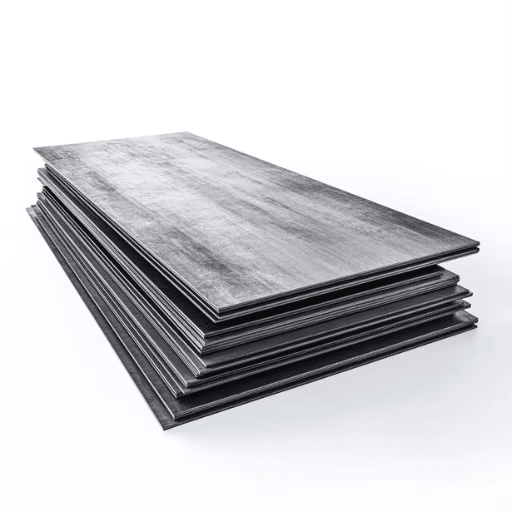
The material which develops tensile strengths beyond 2,000 MPa starts its existence as a soft material which workers can machine similarly to certain aluminum alloys. The situation appears to be impossible. The situation exists because maraging steel follows this behavior until it reaches its final heat treatment process. Engineers who understand this contradiction possess superior capabilities which help them choose materials for building aerospace landing gear systems and missile casings and high-performance tooling systems.
The selection of materials determines the success or failure of a critical project which you already understand. A complete description of the maraging steel hardening mechanism is necessary for you to assess different grades and check supplier heat treatment methods and explain why this alloy costs more than others. The guide provides you with information about nanoscale precipitation physics and cobalt and molybdenum functions and supplier requirements needed to become a qualified supplier.
The content of this presentation includes three heat treatment phases and intermetallic precipitation strengthening process and advanced duplex aging techniques and mechanical properties which vary by grade and real-world applications and a procurement checklist which helps buyers find certified materials.
Need exact heat treatment parameters for your grade? Explore our complete maraging steel heat treatment guide for temperature charts and timing specifications.
What Is Maraging Steel?
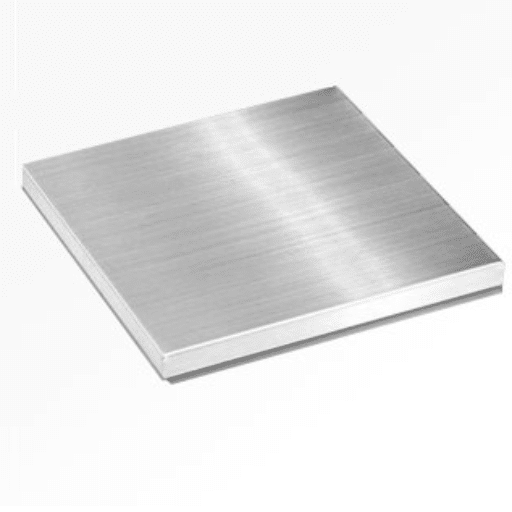
Maraging steel refers to a group of iron-nickel alloys which possess exceptional strength and maintain low carbon content. The term itself functions as a unifying term which combines the two processes of martensite formation and aging that lead to stronger materials. Maraging steels differ from typical high-strength steels which use carbon content and quick cooling methods to create their hard martensite because they contain only minimal carbon. The material achieves its exceptional strength through the precipitation process which generates nanoscale intermetallic compounds in a ductile martensitic matrix.
The typical composition of materials shows the following range:
- Nickel (Ni): 17-19% — forms the soft, ductile martensite matrix
- Cobalt (Co): 7-12% — reduces molybdenum solubility, accelerating precipitation
- Molybdenum (Mo): 3-5% — forms critical intermetallic precipitates
- Titanium (Ti): 0.3-1.4% — forms Ni3Ti precipitates and scavenges residual carbon
- Aluminum (Al): 0.1-0.3% — forms Ni3Al precipitates in certain grades
- Carbon (C): <0.03% — kept extremely low to eliminate carbide formation
The as-quenched martensite displays unexpected softness because of negligible carbon content. The material features straightforward machining capabilities and it can be welded without preheating while showing minimal changes during the last aging process. The unique characteristics of maraging steel make it essential for manufacturing large and intricate aerospace forgings which need to maintain precise dimensions after undergoing heat treatment.
The year 2023 saw Dr. Elena Voss lead the materials team for a satellite launch vehicle program when she encountered a problem she had seen before. She required the structural fittings to withstand launch loads which exceeded 2,000 MPa but the design needed machining from completely hardened material. She specified 18Ni-300 maraging steel. Her team machined the fittings in the soft condition, performed the aging cycle, and achieved final dimensions within 0.02 mm of specification. No grinding corrections were needed.
At Jiangsu Zhonggongte, we manufacture and supply maraging steel which has been specifically developed to meet performance requirements through precise composition adjustments. Our metallurgical engineers use spectral analysis to test each production batch which enables us to confirm that we meet your required Ni and Co and Mo specifications.
The Three-Step Maraging Steel Heat Treatment Process
The maraging steel heat treatment process follows a carefully controlled sequence. The microstructure undergoes complete transformation during each step of the process. You can assess supplier capabilities and solve performance problems by learning these steps.
Step 1: Solution Annealing
The steel undergoes heating to 820-870°C (1,508-1,598°F) which lasts for 1-3 hours. The process causes all alloying elements to dissolve into a single austenite phase which creates a homogeneous austenite phase. The treatment process eliminates all existing precipitates and segregations. The initial microstructure becomes uniform through this process while the steel reaches its softest form which is most suitable for machining.
Step 2: Quenching
The steel undergoes rapid cooling through either air cooling or water quenching methods. The austenite undergoes transformation through a diffusionless shear process which produces soft lath martensite with a body-centered cubic (BCC) crystal structure. The low carbon content in this martensite results in ductile and tough material instead of hard and brittle material. The martensite start temperature (Ms) lies between 200-300°C which results in complete transformation at room temperature.
Step 3: Aging
The process requires reheating of quenched steel to 480-510°C (896-950°F) which lasts for 3-6 hours. The nanoscale intermetallic precipitates form uniform martensitic matrix when low-temperature aging begins. The hardness progresses from 30-40 HRC to 48-52 HRC. The yield strength reaches a value between 1,800-2,000 MPa.
Dimensional stability stands as the main benefit. The material experiences minimal distortion and residual stress because hardening proceeds through slow temperature-controlled diffusion at low temperatures. Companies can achieve ultra-high strength heat treatment with accurate dimensional control when they process large complex parts.
Planning a custom forging project? Our custom alloy manufacturing services deliver precision-forged maraging steel components ready for your exact heat treatment specifications.
The Science of Precipitation Strengthening
The main method which causes maraging steel to become hardened steel uses precipitation hardening which people also know as age hardening. This process takes place inside the already existing martensitic structure. Your need to investigate the aging process and its resulting phases because they create exceptional properties through their interaction with dislocations.
The Key Precipitates
The supersaturated martensite decomposes into various intermetallic compounds during aging which form distinct ordered structures.
- Ni3Mo: A metastable, orthorhombic phase that forms early in the aging cycle. It serves as the primary strength component for cobalt-molybdenum materials including C300.
- Ni3Ti (eta-phase): A stable, hexagonal phase with an acicular morphology. It shows dominance in titanium-rich materials which do not contain cobalt.
- Ni3Al (beta-NiAl): A B2 ordered phase which delivers major strengthening capabilities to aluminum-containing maraging stainless steels that lack cobalt.
- Fe2Mo (Laves phase): A hexagonal intermetallic compound which develops during over-aging or when Mo content is high. Recent studies discovered that the Laves phase provides stronger matrix reinforcement than Ni3Mo and Ni3Ti in some 13Ni materials.
Carbide formation gets almost total prevention because carbon exists in such small amounts. The hardening process results completely from the presence of these ordered intermetallic compounds.
How Precipitates Strengthen the Matrix
The soft martensite contains uniform distribution of these nano-precipitates throughout its entire structure. The particles function as barriers which prevent dislocations from moving through the crystal lattice because dislocations represent line defects that permit plastic deformation. Two primary mechanisms operate simultaneously:
- Dislocation Shearing: At the smallest precipitate sizes dislocations can pass through the particles. The process demands additional energy because the slip plane behind the dislocation needs complete reconstruction of its ordered crystal structure. The strength increase in copper-modified maraging steels occurs through three different mechanisms where modulus strengthening provides the highest contribution while coherent strain strengthening and chemical strengthening follow behind it.
- Orowan Bypassing: The aging process causes precipitates to grow slightly which results in loss of coherency with the matrix. Dislocations must use a bowing mechanism to create loops which prevent them from passing through the barriers. This creates challenges for further deformation processes.
The material becomes highly resistant to deformation because the precipitates prevent dislocation glide movements. The material achieves ultra-high yield strength because its martensitic matrix maintains excellent ductility and toughness.
The Critical Role of Molybdenum
Molybdenum does more than create precipitates through its chemical reactions. The material establishes all three aspects which determine the growth rate and shape and durability of its strengthening microstructure. A study which appeared in the Journal of Materials Research and Technology (2025) showed that Mo-enriched particles function as nucleation sites which create Ni3Ti through a heterogeneous process. The process increases nucleation at 480°C during aging because it creates smaller and denser precipitates which develop from the precipitation process.
Mo moves to the Ni3Ti/matrix boundary through the process of segregation. The physical barrier which exists between two substances prevents precipitate particles from growing during both long-term aging and high-temperature conditions. The Ni3Ti and Ni3Mo particles in peak-aged 18Ni-350 steel distribute evenly throughout the material which results in ultimate tensile strength of approximately 2,163 MPa.
James Park, who works as a senior materials engineer for an offshore equipment manufacturing company, received a delivery of peak-aged maraging 350 material from a new vendor, but the Charpy impact values showed a 30% decrease from the required standards. The microstructural analysis showed that the material contained precipitates which had grown to an excessive size. The root cause of the problem occurred because the aging furnace temperature fluctuated, which resulted in premature growth of the Ni3Ti and Ni3Mo phases. He switched to a supplier which provided complete traceability of heat treatment processes and offered certified testing of mechanical properties. The problem vanished.
Advanced Heat Treatment Strategies
The industry standard continues to use conventional solution annealing together with single-step aging as its main method. The latest research developed new protocols which enable performance improvements that exceed traditional performance boundaries.
Duplex Aging
Duplex aging involves a pre-aging step at a lower temperature — typically around 370°C — which leads into final aging process that occurs at 480°C. The lower-temperature step creates Mo-rich clusters which develop into Ni3Mo precursors. The particles function as nucleation sites that create smaller Ni3Ti during the subsequent higher-temperature process.
The results show impressive findings. Duplex-aged maraging steel displays a yield strength of 2,093 MPa together with a fracture toughness of 77 MPa·m^1/2^. This breaks the conventional strength-toughness trade-off that has long constrained ultra-high-strength steels. The safety-critical aerospace structures require engineers to create construction design which uses thinner sections and decreases weight while enhancing damage tolerance.
Direct Aging for Additively Manufactured Parts
Additive manufacturing (AM) of maraging steel — via selective laser melting (SLM) or laser powder bed fusion (LPBF) — has experienced rapid growth. The manufacturing process of AM provides parts which can bypass high-temperature solution treatment and directly enter the aging process. Research shows that direct-aged 18Ni-300 achieves comparable hardness and tensile strength to solution-plus-aged material, with slightly better ductility.
Advanced thermal history engineering takes this further. The researchers induce reverted austenite formation by cooling deposited layers through controlled cooling until they reach Ms temperature. The metastable austenite undergoes transformation through mechanical load which results in a TRIP (Transformation-Induced Plasticity) effect that enhances both strength and uniform elongation. The aerospace industry has begun to use AM maraging steel for constructing rib-web structures engine cases and satellite components.
Maraging Steel Properties by Grade
Four primary wrought grades exist, which scientists use to determine their strength through testing, which shows their nominal strength values in ksi. The higher numbers show that the material contains more cobalt and molybdenum, which leads to increased precipitate volume and material strength.
|
Grade |
Yield Strength (MPa) |
Tensile Strength (MPa) |
Elongation (%) |
Hardness (HRC) |
Typical Fracture Toughness |
|---|---|---|---|---|---|
|
18Ni-200 |
~1,400 |
~1,500 |
10-12 |
45-48 |
Very high |
|
18Ni-250 |
~1,700 |
~1,800 |
8-10 |
48-50 |
High |
|
18Ni-300 |
~1,900 |
~2,000-2,275 |
4-8 |
48-52 |
Moderate-high |
|
18Ni-350 |
~2,200+ |
~2,400+ |
3-5 |
52-60 |
Moderate |
The data has been transformed into its present form through the synthesis of AMS specifications and GS Alloy and Modulus Metal technical datasheets. The aerospace workhorse functions with maximum efficiency at Grade 300 because it provides perfect strength and reasonable toughness, which customers can obtain through its established supply chain for landing gear and rocket motor cases and aircraft structural fittings. The strength of Grade 350 increases but the material loses some of its toughness and ductility characteristics. Grade 250 serves as the optimal option for situations that require better fatigue resistance and fracture toughness than the need for maximum strength.
The spectral analysis and mechanical testing procedures at Jiangsu Zhonggongte enable us to validate that every batch meets its specific grade requirements. Our ISO 9001 testing process includes assessments of tensile strength, hardness, and ductility which we conduct before we issue product certification and dispatch the items.
Applications in Aerospace, Defense, and Tooling
The special combination of characteristics that results from the maraging steel hardening process creates an essential alloy for multiple critical industrial applications.
Aerospace and Defense
The aerospace sector uses approximately 35 percent of all maraging steel which the United States produces. The main uses of maraging steel include the following applications:
- Rocket and missile motor casings: The material provides both high strength-to-weight ratio and strength maintenance until approximately 400°C.
- Aircraft landing gear: The material shows resistance to fatigue and crack development when exposed to repetitive stress.
- Structural fittings and slat tracks: The material shows machining ability during its soft state yet achieves extreme strength after its aging process.
- Satellite launch vehicles: The system offers damage tolerance while maintaining dependable operation at extreme internal pressure levels.
According to QY Research, the global maraging steel market was valued at626millionin2024andisprojectedtoreach626millionin2024andisprojectedtoreach884 million by 2031 growing at a 5.3 CAGR. The production of additive manufacturing grades experiences rapid growth because industries require lightweight materials which meet certified flight standards.
High-Performance Tooling
Maraging steel maintains its dimensional stability during aging operations which makes the material suitable for three different applications. The material serves three different functions which include:
- Injection molding dies and punches
- High-strength die-casting tools
- Precision extrusion dies
- Racing and motorsports components
The soft initial condition allows complex cavity machining. The tool undergoes aging which results in a hardness level above 50 HRC while the original geometries used for tight-tolerance manufacturing remain intact.
What to Look for in a Maraging Steel Supplier
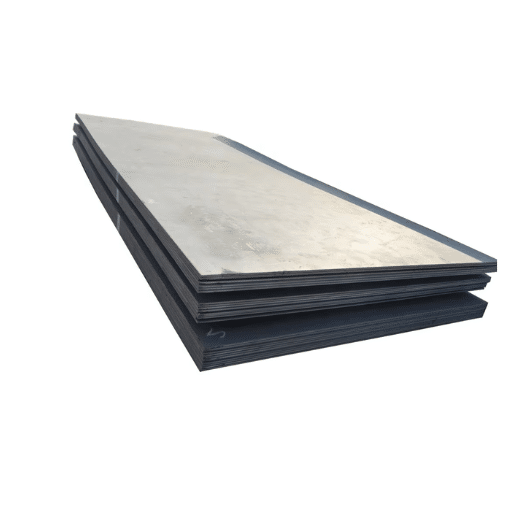
Not every supplier can deliver maraging steel with the consistency that aerospace and defense applications demand. When you assess potential partners, you should evaluate them according to these specific criteria.
Certified Quality and Full Traceability
ISO 9001 certification requires ISO 9001 certification and complete documentation that tracks all materials from their initial state to the final product. The certification of every batch must include documents that prove the chemical makeup and physical characteristics and thermal treatment methods. Safety-critical applications require complete traceability as an absolute requirement.
Verified Heat Treatment Consistency
The difference between peak-aged and over-aged microstructures can be a matter of 10-15°C or 30 minutes in the aging furnace. Your supplier needs to provide proof through their temperature control system and established thermal measurement system that they operate their equipment according to their documented soak times. Request mechanical testing results which represent the samples processed through your heat lot.
Custom Composition Control
Some projects require slight adjustments to standard grades — for example, tighter titanium ranges or modified cobalt levels for specific toughness targets. The supplier can handle these requirements because direct manufacturing control enables them to do so. Standard distributors cannot.
Global Logistics Expertise
International aerospace programs often use maraging steel as their primary material. The supplier should handle all export paperwork and customs regulations and industrial-grade packaging while maintaining your operational schedule.
Need certified maraging steel with guaranteed traceability? Contact our metallurgical experts to discuss your exact grade, specification, and delivery requirements. We respond to technical inquiries within 24 hours.
Conclusion
Maraging steel achieves its incredibly strong properties through a process that differs entirely from the way traditional carbon steels achieve their strength. The maraging steel hardening mechanism depends on the precipitation of nanoscale intermetallic compounds which include Ni3Ti and Ni3Mo that form within a soft low-carbon martensitic matrix. This two-step process of solution annealing followed by low-temperature aging produces a material with 2,000+ MPa tensile strength, excellent toughness, and exceptional dimensional stability.
Here are the key takeaways:
- Low carbon is the foundation: The <0.03% carbon content eliminates brittle carbides and enables machining, welding, and minimal distortion during aging.
- Molybdenum serves multiple functions because it: Mo forms strengthening precipitates, nucleates finer Ni3Ti, and inhibits coarsening at the precipitate-matrix interface.
- Pre-aging at 370°C followed by 480°C aging can achieve 2,093 MPa yield strength with 77 MPa·m^1/2^ fracture toughness through duplex aging.
- The material properties of 18Ni-300 provide an optimal combination of strength and toughness for aerospace applications while 250 and 350 serve more specialized needs.
- Supplier quality control is critical: Inconsistent aging parameters can ruin microstructure and mechanical properties. ISO 9001 certification should be mandatory together with spectral analysis and complete traceability requirement.
Our engineering team is prepared to assist you with your upcoming project that requires certified maraging steel which meets your exact specifications and will be delivered to you on time all over the world. Request a quote today and get a response from our metallurgical experts within 24 hours.