High Standard Stainless Steel With Strict Inspection



Grade 5 Titanium (Ti-6Al-4V): Properties, Uses & Machining Guide

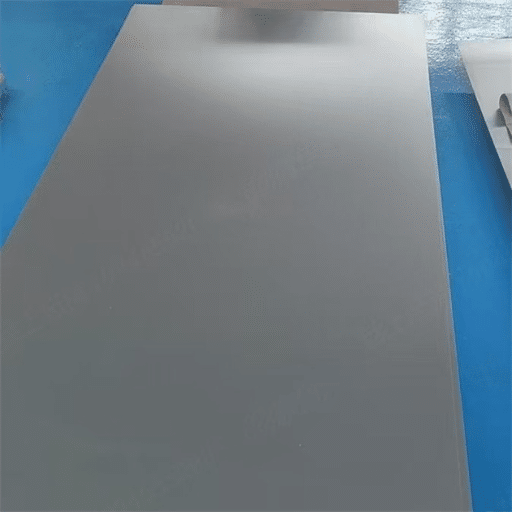
The alpha-beta alloy known as grade 5 titanium, which engineers understand best, serves as the most familiar titanium alloy for engineers. This material, which powers aircraft engines and supports surgical implants and resists seawater corrosion, lasts more than 100 years when used in place of steel. The titanium metal Grade 5 exists as a widely known material but manufacturers frequently misidentify its specifications while making products and they mistake it for its medical-grade counterpart, Grade 23 ELI.
The confusion results in financial losses. The wrong grade of permanent implant needs to be specified before your submission will receive approval from regulators. The machine will exceed its tooling budget within days when operators try to process it as if it were aluminum. The usage of uncertified material for aerospace assembly parts will create a risk of component failure during crucial operational phases.
This guide delivers the technical specifications, fabrication guidance, and procurement insight you need to use grade 5 titanium with confidence—from the machine shop to the regulatory file. If you need help translating these requirements into a firm quote, contact our metallurgical team for a consultation.
What Is Grade 5 Titanium?

Grade 5 titanium is an alpha-beta alloy with the nominal chemical composition Ti-6Al-4V—roughly 90% titanium, 6% aluminum, and 4% vanadium, plus tightly controlled interstitial elements. Its UNS designation is R56400. The aluminum stabilizes the alpha phase, while the vanadium stabilizes the beta phase, producing a dual-phase microstructure at room temperature.
Featured snippet definition: Grade 5 titanium (Ti-6Al-4V) is an alpha-beta titanium alloy containing 6% aluminum and 4% vanadium. It is the most widely used titanium alloy worldwide, valued for its high strength-to-weight ratio, excellent corrosion resistance, and heat-treatability.
This alloy dominates the market for good reason. Its strength-to-weight ratio rivals many structural steels at roughly 60% of the density. It resists pitting and crevice corrosion in chloride environments where stainless steels struggle. It responds well to heat treatment, allowing engineers to tune strength and ductility for specific applications. And perhaps most importantly, it benefits from a mature, well-established global supply chain.
For a broader overview of how titanium alloys are classified and where Grade 5 fits into the family, see our complete guide to titanium alloys.
Grade 5 Titanium Properties
Understanding the numbers behind grade 5 titanium is essential for smart specification. Here is what the data says.
Mechanical Properties
| Property | Annealed | STA (Solution Treated & Aged) |
|---|---|---|
| Tensile strength | 895–930 MPa | 1,100–1,200 MPa |
| Yield strength | 828–870 MPa | 1,000–1,100 MPa |
| Elongation | 10–15% | 8–10% |
| Hardness (HV) | 280–330 | 340–380 |
| Elastic modulus | ~114 GPa | ~114 GPa |
Sources: AZOM Materials Database, Smiths High Performance Datasheet
The annealed condition offers the best balance of strength and ductility for general engineering. When maximum strength is required—think high-stress aerospace fasteners or racing components—solution treatment and aging (STA) pushes tensile strength above 1,100 MPa. That comes at the cost of some ductility, so the application must tolerate reduced elongation.
Physical Properties
- Density: 4.43 g/cm³ (roughly 56% of steel)
- Melting point: ~1,660°C (3,020°F)
- Maximum sustained service temperature: ~400°C (750°F)
- Thermal conductivity: 6.7–7.3 W/m·K
- Thermal expansion coefficient: 8.6 × 10⁻⁶ /°C (20–100°C)
That low thermal conductivity is a double-edged sword. It makes Grade 5 an excellent thermal barrier in certain applications, but it also explains why machining generates so much heat at the cutting edge. We will return to that challenge in the fabrication section.
Compared to commercially pure Grade 2 titanium, Grade 5 offers roughly twice the tensile strength with only a modest density penalty. Against 316 stainless steel, it matches or exceeds strength while cutting weight by nearly half. For a direct comparison of titanium against stainless steel, see our detailed analysis of titanium vs stainless steel.
Grade 5 vs. Grade 23 ELI: When to Specify Each
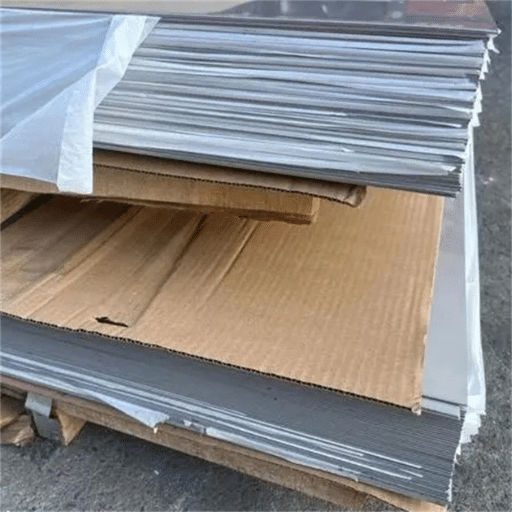
Grade 23 (Ti-6Al-4V ELI) is the Extra Low Interstitial variant of Grade 5. It restricts oxygen, nitrogen, iron, and carbon to lower levels. The result is slightly reduced strength but significantly higher fracture toughness, ductility, and fatigue resistance.
The Medical Decision Framework
The permanent load-bearing implants which include hip stems and knee replacements and spinal cages now use Grade 23 as their standard material. The improved fatigue resistance enables a component to endure more than 20 years of loading which will occur millions of times throughout its lifetime.
The standard Grade 5 provides full suitability for surgical instruments and dental abutments and temporary devices while offering lower costs. The price of Grade 23 material exceeds standard Grade 5 by 40 to 60 percent because of its stricter purity standards and additional certification needs.
Certification Distinctions
- Grade 5: ASTM B348, AMS 4928, MIL-T-9046
- Grade 23: ASTM F136, ISO 5832-3
The medical device startup which we supported first selected standard Grade 5 as the material for their hip implant prototype. Our metallurgical team showed during design review that Grade 5 biocompatibility exists but the FDA and orthopedic professionals now prefer Grade 23 ELI as the standard material for permanent implants. The startup switched to Grade 23, sourced material with full ASTM F136 mill certifications and heat-number traceability, and passed their first regulatory inspection without a single finding. One engineer said that the documentation process had a higher value than the actual physical metal.
For a deeper dive into medical-grade certification requirements, see our medical grade titanium guide.
Fabrication and Processing
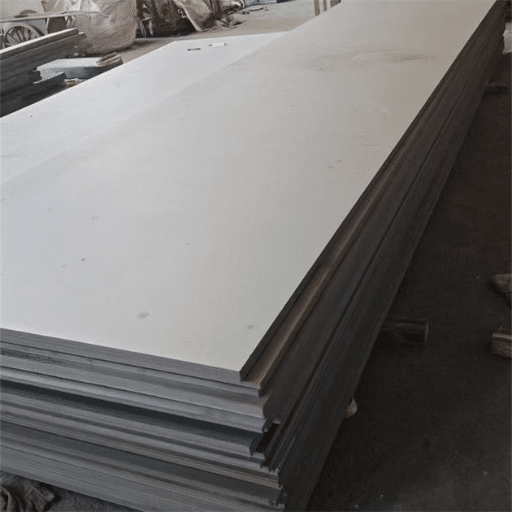
Grade 5 titanium rewards careful fabrication. Rush the process, and you will pay for it in scrap, rework, or premature failure.
Machining
The same low thermal conductivity that makes Grade 5 attractive thermally also makes it challenging to machine. Heat concentrates at the cutting edge rather than dissipating through the chip or workpiece. Titanium also work-hardens rapidly if cutting parameters are too aggressive.
Successful machining comes down to three principles:
- Rigid workholding: You need a beefy lathe or rigid VMC setup. Any vibration accelerates tool wear and produces poor surface finish.
- Carbide tooling with advanced coatings: Solid carbide inserts with AlTiN or TiAlN coatings outperform high-speed steel by wide margins. A Midwest machine shop we work with switched from HSS to cryogenic-cooled carbide tooling for Ti-6Al-4V, rigidized their workholding, and reduced tool wear by 60% while improving surface finish.
- Conservative speeds with aggressive feeds: Typical cutting speeds range from 30–60 m/min with feeds of 0.15–0.25 mm/tooth. High-pressure coolant or through-spindle coolant is strongly preferred. Trochoidal milling toolpaths help manage heat by keeping the tool engaged consistently rather than plunging in and out.
Safety note: Titanium chips are flammable, especially fine dust from grinding. Keep a Class D fire extinguisher nearby and avoid open flames near swarf.
Welding
Grade 5 titanium can be welded, but it demands strict inert-gas protection. Titanium is extremely sensitive to oxygen, nitrogen, and water vapor at elevated temperatures. Contamination produces brittle alpha case that cracks under load.
Best practices include:
- Shielding gas: Use 99.999% pure argon. No exceptions.
- Filler wire: ERTi-5 per AWS A5.16 matches the base metal chemistry.
- Trailing shields and back-purging: Protect the weld face, root, and heat-affected zone until the metal drops below ~400°C.
- Preheat: ~93°C for thick sections helps reduce residual stress.
- Post-weld stress relief: 480–650°C for 1–4 hours relieves residual stresses and improves dimensional stability.
- Color inspection: Silver or straw-colored welds indicate proper shielding. Blue, gray, or white indicates contamination—and a compromised joint. As professional welders say: “If the titanium weld turns anything darker than straw, you’ve contaminated it and the joint is compromised.”
For more detailed welding parameters, refer to our dedicated titanium machining & welding guide.
Heat Treatment
The heat treatment you specify depends on the performance priorities of the application:
- Mill anneal / duplex anneal (700–800°C): Relieves residual stress from processing, improves ductility, and creates a uniform microstructure. This is the default condition for most bar, plate, and sheet products.
- Solution treatment & aging (STA: 925–950°C solution + 450–550°C aging): Maximizes strength for high-stress aerospace and racing components.
- Beta anneal (1,000–1,050°C): Produces a transformed beta microstructure with excellent creep resistance and fracture toughness. Specify this for applications requiring damage tolerance at elevated temperatures.
Additive Manufacturing
Ti-6Al-4V is the most widely used titanium alloy in additive manufacturing. Laser powder bed fusion (LPBF) and electron beam melting (EBM) both produce near-net-shape parts from pre-alloyed powder.
However, as-printed parts are not finished parts. Mandatory post-processing almost always includes:
- Hot isostatic pressing (HIP) to close internal porosity
- Heat treatment to achieve the desired microstructure and mechanical properties
- Surface finishing to meet fatigue and dimensional requirements
For large aerospace repairs, wire-fed directed energy deposition (DED) offers faster build rates and lower powder costs than powder bed fusion. Learn more in our overview of titanium additive manufacturing.
Grade 5 Titanium Applications by Industry
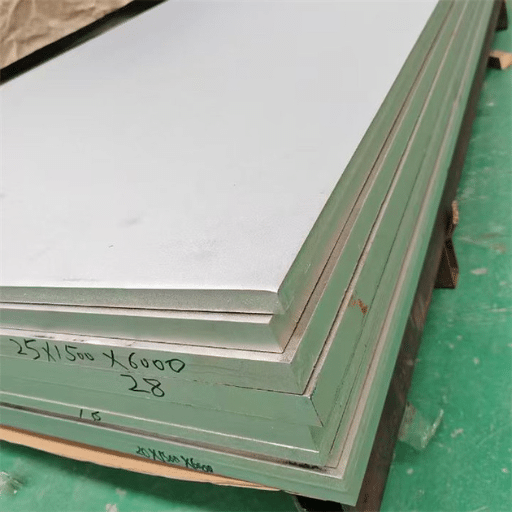
Grade 5 titanium appears wherever engineers need high strength, low weight, and reliable corrosion resistance.
Aerospace
Aerospace is the largest consumer of Grade 5. Using Ti-6Al-4V in aircraft structures can reduce airframe weight by up to 30% compared to steel, translating to a 3–5% improvement in fuel burn over the aircraft lifecycle.
Typical aerospace components include:
- Airframe structural brackets and frames
- Engine compressor blades and discs
- Landing gear and fasteners
- Hydraulic tubing and ducting
For buyers focused on aerospace plate and sheet specifications, our aerospace titanium plate sourcing guide details AMS 4928 and MIL-T-9046 requirements.
Medical
In the medical field, Grade 5 serves non-permanent and semi-permanent applications:
- Surgical instruments and tools
- Dental abutments and temporary orthopedics
- External fixation hardware
For permanent implants, Grade 23 ELI has largely superseded standard Grade 5 due to superior fatigue resistance and regulatory acceptance.
Marine
Seawater is aggressively corrosive, yet Grade 5 thrives in it. Common marine applications include:
- High-strength fasteners and bolts
- Propeller shafts and rudder stocks
- Subsea valves and pumps
- Desalination plant pressure vessels
Automotive
Mass-market automotive use remains limited by cost, but high-performance and racing applications rely on Grade 5 for:
- Racing exhaust systems and valves
- Suspension components and connecting rods
- High-strength fasteners in engines
Industrial
Chemical processing plants use Grade 5 where commercially pure grades lack the strength for high-pressure service:
- Pressure vessels and reactors
- Heat exchanger tube sheets
- High-pressure piping and flanges
TC4 and Global Sourcing Considerations
If you source titanium from Chinese suppliers, you will encounter the designation TC4. TC4 is the Chinese GB/T 3620.1 equivalent to Grade 5. The nominal chemical composition is identical: roughly 6% aluminum and 4% vanadium.
However, identical chemistry does not mean identical certification. For aerospace and medical applications, you must verify that the material meets the specific standards your project requires:
- Aerospace: Demand AMS 4928 or MIL-T-9046 compliance with full mill test reports (MTRs).
- Medical: Insist on ASTM F136 or ISO 5832-3 for implant-grade material.
- General engineering: ASTM B348 is typically sufficient, but always confirm with your design authority.
An aerospace importer we assisted was qualifying a new Chinese supplier for a Tier 1 airframe program. The supplier offered TC4 bar stock at an attractive price, but their initial documentation only referenced GB/T 3620.1. The buyer asked us to help him get third-party equivalence testing and AMS 4928 certification. The additional paperwork added three weeks to the procurement cycle but it prevented a costly rejection downstream.
When evaluating any supplier, look for:
- ISO 9001 quality management certification
- Spectral analysis reports verifying exact composition
- Mill test reports with heat numbers for full traceability
- Export documentation and compliance with destination-country import requirements
Conclusion
Grade 5 titanium (Ti-6Al-4V) is the workhorse of the titanium world for good reason. It delivers an exceptional balance of strength, low weight, and corrosion resistance across aerospace, medical, marine, and industrial applications.
Here are the key takeaways:
- Grade 5 accounts for 50–60% of all titanium usage because it hits the sweet spot of performance and availability.
- Annealed Grade 5 offers 895–930 MPa tensile strength; STA pushes that above 1,100 MPa for demanding applications.
- For permanent implants, specify Grade 23 ELI with ASTM F136 certification—not standard Grade 5.
- Machining requires rigid setups, carbide tooling, and conservative speeds to manage heat and avoid rapid tool wear.
- Welding demands 99.999% argon shielding, trailing shields, and back-purging to prevent contamination and alpha-case formation.
- TC4 is chemically equivalent to Grade 5, but certification standards differ—always verify documentation for regulated industries.
If you are ready to source certified grade 5 titanium for your next project, our metallurgical team can help you verify specifications, select the right heat treatment condition, and arrange precision cutting or custom forging. Request a quote today and get a response within 24 hours.