High Standard Stainless Steel With Strict Inspection



Carbon Steel Grades Guide: Properties and Selection

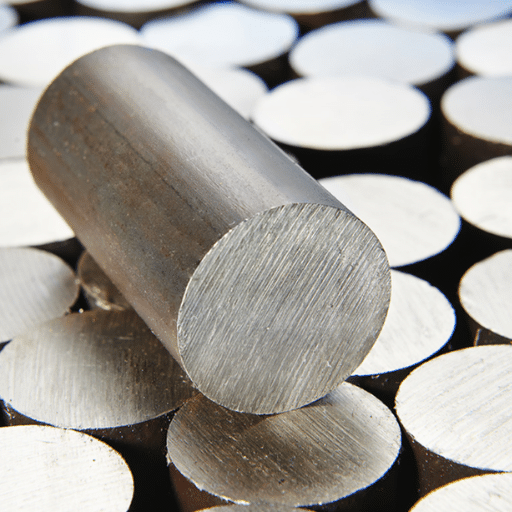
As an engineer, manufacturer, or industry expert, it is essential to be familiar with the various classifications of carbon steel to select the right materials for a given application. Carbon steel is a material known for its versatility and strength, and it is produced in many grades, each with its own unique molecular makeup and physical properties. The purpose of this article is to clear up the confusion surrounding the classification of carbon steel by providing a detailed description of its main characteristics, applications, and the factors that influence the choice of the grade for your project. Hence, if we are talking about the construction of buildings, the production of machines, or the making of tools, then this blog will be an excellent source of expert knowledge regarding the fundamental distinctions between low, medium, and high-carbon steel grades, which will definitely help you in making the right choices in every situation.
Introduction to Carbon Steel
Carbon steel is the most common alloy, consisting mainly of iron and carbon, along with small amounts of other elements that differ according to the particular grade. The primary benefit of carbon steel is its wide application across many industries, including construction, manufacturing, and automotive. Its strength, durability, and malleability properties are determined by the amount of carbon it contains. Low-carbon steel is usually softer and more machinable; medium-carbon steel offers even strength and flexibility; and high-carbon steel provides excellent hardness for the most demanding applications. Thus, these different types of carbon steel ensure that the metal is always available for a wide range of engineering and industrial tasks.
The Significance of Understanding Carbon Steel Grades
Knowing the different grades of carbon steel is very important, as each grade has specific properties that suit various industrial needs, making it easy to choose the right material for a given application. Carbon steel is usually classified by its carbon content, which directly affects its strength, hardness, weldability, and machinability. The American Iron and Steel Institute (AISI) created a standardized numbering system to differentiate carbon steel grades, providing a reliable, consistent reference for design, production, and quality control.
Five Most Common Carbon Steel Grades
1. AISI 1018
Carbon Content: About 0.18%
Features: Provides excellent welding and machining, with a good finish. It is commonly used in the production of cold-formed parts such as bolts, shafts, pins, and other machine parts.
Applications: Good for low-stress situations where performance and ease of fabrication are key.
2. AISI 1045
Carbon Content: About 0.45%
Features: A perfect blending of strength and durability with a noose of moderate machinability. After treatment, the hardness of this type of steel is higher than that of the low-carbon ones.
Applications: Good for use in vehicles, gears, axles, and machine tools.
3. AISI 1060
Carbon Content: Approximately 0.6%
Features: A high carbon content gives the steel durability and a long life, but on the flip side, the high carbon content makes it more difficult to weld and shape.
Applications: Springs, knives, and blades are areas where this steel is used, as hardness is the primary concern.
4. AISI 1095
Carbon Content: Roughly 0.95%
Features: Super high carbon content; this grade has all the qualities needed for edgeless, sharp cuts and durability against wear; however, it becomes more brittle and less machinable at the same time.
Applications: Good for cutting tools, springs, and strong wires.
5. AISI 1215
Carbon Content: About 0.09%
Features: Classed as free-machining steel due to the addition of sulfur or phosphorus, which has improved its machinability. It is soft and not for heat treatment.
Applications: High-speed machining and parts such as bushings, spindles, and fittings.
There is a great variety of specifications and performance traits among the different grades, which necessitates a thorough understanding of these classifications if one wishes to achieve material selection optimization and the realization of engineering objectives.
Overview of Carbon Steel as a Material
Carbon steel, as the name suggests, is a majorly made metallic material that is an iron and carbon alloy with imperceptible amounts of other elements such as manganese, silicon, copper, and the like that are deduced from specific requirements. The primary property of carbon steel is its carbon, which usually ranges from 0.05% to 2.0% by weight.
The properties of steel directly influence its hardness, strength, ductility, and weldability, making it a universal material for different industries.
Properties of Carbon Steel
Carbon steel exhibits mechanical properties that enable it to undergo a high degree of adaptability. Some of the significant properties are:
- Tensile Strength: Tensile strength ranges from 400 MPa in low-carbon steel to more than 1000 MPa in high-carbon steel. Thus, it is a perfect fit for use in making components that must withstand high loads and require durability.
- Ductility: Low-carbon steel has greater ductility, and therefore, steel takes less effort to be formed into complicated shapes by means of rolling or forging operations. On the other hand, high-carbon steel gives up ductility for increased strength and hardness.
- Machinability: Free-machining carbon steel, which often contains additives such as sulfur, is designed for high-speed machining.
- Weldability: Low-carbon steel is very weldable, but higher carbon content reduces weldability due to increased crack susceptibility.
Types of Carbon Steel
Based on the carbon content, carbon steel is usually classified into three main types:
Low-Carbon Steel (Mild Steel)
It has 0.05% to 0.25% carbon and is most accessible in terms of price and it can be used in areas requiring superior weldability. The most common applications are in the construction of buildings, the manufacture of automotive parts, and the laying of pipelines.
Medium-Carbon Steel
With a carbon content of 0.3% to 0.6%, this steel type offers a good compromise between strength and ductility and is often used to make components such as axles, shafts, and gears.
High-Carbon Steel
This steel has a carbon content of 0.6% to 2.0%, which gives it super-hardness and high strength but poor ductility. It is used for tools, cutting instruments, springs, and parts under high stress.
Applications of Carbon Steel
The flexibility of carbon steel ensures its demand across a wide range of industries. The following are the significant areas of application:
- Construction: It is used in structural frameworks, beams, and bars due to its strength and low cost.
- Automotive Manufacturing: It is widely used for engine parts, frames, and body panels, balancing performance with cost-effectiveness.
- Tools and Machines: High-carbon steels are indispensable in the manufacture of cutting tools, drill bits, and industrial blades.
- Energy Sector: They are used to make pipelines, pressure vessels, and heat exchangers.
Latest Developments in Carbon Steel
Carbon steel technology is being developed to improve strength and workability through alloying and processing methods. The ultra-high-strength of carbon steel is an attribute being developed for the automotive and infrastructure sectors, where it will provide a better strength-to-weight ratio. Besides that, the sustainability projects have made it easier for companies dealing with carbon steel to incorporate recycled materials and energy-saving processes into manufacturing, thereby undoubtedly lessening their carbon footprint.
Understanding the detailed characteristics and applications of carbon steel would be beneficial for manufacturers and engineers to make informed material selection decisions and meet the industry’s changing demands.
Applications of Carbon Steel in Various Industries
1
Building Construction
In building sites, very much, almost everyone chooses carbon steel for its strength and solid sculpture back, which is far more affordable. It is typically applied in the manufacture of structural elements, including but not limited to beams, columns, and rebars. Based on statistics and reports, construction steel (also frequently called structural steel) is approximately half carbon steel worldwide, especially because structures such as high-rises, bridges, and plants are mostly made of this type.
2
Car Manufacturing Industry
Car manufacturing plants also use carbon steel to produce parts for passenger vehicles, including outer panels, frames, and even engine components. The comfort with which this material can be machined and its high resistance to wear and tear make it preferable in such cases. This way, there will be more medium-carbon steel, for example, which is customarily employed in spur gears and axles for its stiffness and ductility. Globally, more than 60 million tonnes of carbon steel are used annually in the machining of car parts and related products.
3
Power Industry
Carbon steel is an essential component in many areas of energy construction, including energy-transport pipelines, offshore oil platforms, and drilling devices. Moreover, turbines and power plant components are made from these steels that contain High Carbon. The 2023 report from the International Energy Agency (IEA) stated that over 40% of all pipes in use worldwide were made of carbon steel. This structurally adaptable alloy is weldable and pressure-resistant.
4
Industrial Growth within the Manufacturing Sector
The Manufacturing Sector also uses a lot of carbon steel to construct tools, machinery, and equipment. For instance, high-carbon tools such as cutting blades, drill bits, drill bit tips, and dies are renowned for their unbeatable hardness and resistance to wear. The use of carbon steel in the global manufacturing sector exceeds 70 million tons per year, which meets its high demand almost all the time.
5
Space and Aircraft Construction
Although aerospace applications typically do not favor the use of alloys such as aluminum and titanium, which are relatively heavy, there are specific components and parts in construction that need to be very strong, and that is where carbon steel fits in. It can be constructed out of launch pads, support equipment, and mechanical fixtures. Moreover, with enhanced heat-treatment capabilities, the application of carbon steel in a specific category of aerospace high-strength fasteners has evolved. It is estimated that the materials that are used in aerospace ground support systems containing sufficiently high levels of carbon steel make up approximately 5% of the total weight of the materials used in that system.
Understanding Carbon Steel Grades

Based on the amount of carbon present, carbon steels are divided into four basic categories: low-carbon steel, medium-carbon steel, high-carbon steel, and very high-carbon steel. There are separate types to meet different applications and performance needs across industries, including aerospace.
Low Carbon Steels (Mild Steels)
In this type, the carbon content is low, ranging from 0.05% to 0.3%. It has good machining, ductility, and weldability. As such, it is not the strongest of the carbon steels and therefore tends to be used where strength is not particularly important, such as structural applications, piping, and earth retention.
Property:
Ultimate Strength: 400–550 MPa (Approx)
Aerospace uses: working platforms, general-purpose fasteners, and non-structural components.
Medium Carbon Steel
This grade, as a rule, contains 0.3% – 0.6% carbon, which offers a medium strength-to-ductility compromise (better strength than mild steels with high toughness). The hardness and wear resistance of medium-carbon steel can be increased through heat treatment (quenching and tempering), enabling such parts to withstand some loads and stresses.
Main Characteristics:
Tensile Strength: approximately 600-750 MPa
Aerospace uses include gears, axles, and precision-ground handling tools, among others.
High Carbon Steel
This is carbon steel grades included some carbon content range between 0.6% – 1.0%. The alloy is best to be used in situations where strength is mandatory and wear is predictable. They have lower ductility than others in this section; therefore, they are best used in the high-strength range. However, this type of alloy can be somewhat brittle in the as-cast condition; therefore, it requires careful handling to reduce brittleness.
Main Characteristics:
Tensile Strength: approximately 700-900 MPa.
Aerospace uses: high-strength fasteners, cutting tools, among others.
Ultra High Carbon Steel
A carbon content greater than 1.0 % makes high-carbon or ultra-high-carbon steel extremely hard and strong. Due to its brittleness and difficulty in machining, its applications are limited; however, in the aerospace industry, for example, it provides strength to parts subject to heavy loading and friction.
Basic Information:
Ultimate Strength: more than 900 MPa (with a wide range of variability with regard to the processing)
Uses in Aerospace: Restricted to respective ranges, such as tool systems creation and hard parts.
Super-Alloys and New Developments
Modern alloying practices have introduced trace amounts of chromium, vanadium, and molybdenum into plain carbon steel to improve its strength-to-weight ratio and corrosion resistance. Besides, contemporary heat-treatment methods, such as controlled-environment annealing and vacuum hardening, have enabled carbon steel to be used in the construction of ground-support and tooling systems that advanced alloys are used for.
Within the realm of industrial practice, specific carbon steel grades are given the possibility of enduring extremely aggressive environments where even high-alloy steel, Ultem or PEEK can not be allowed.
Summary Table of Carbon Steel Grades
Understanding these distinct grades of carbon steel and their properties is critical for their effective application in aerospace and other high-performance industries.
What Defines Carbon Steel Grades?
Carbon steel grades refer to the amount of carbon embedded in the material, which, in turn, affects physical characteristics such as strength, hardness, ductility, and the steel’s applications across different industries.
Carbon Content and Its Impact on Steel Properties
The carbon content of any carbon steel grade is a significant parameter that plays a key role in defining its mechanical and physical properties, including strength and appropriate applications. Changes in carbon content result in significant variations in strength, hardness, ductility, and even the material’s weldability. The following is how the carbon content will affect the properties of steel:
Low Carbon Steel (Below 0.3% Carbon)
Properties: It can be bent easily and welded very effectively and the machine is not complex to machine since the carbonation level is quite low. Such a group of steels is noted not for their high strength or high hardness, but as for their good plasticity and ease of forming.
Applications: Construction fabrics, vehicle bodies, and gas or water pipes.
Data: Ultimate stress varying from 400 MPa to 550 MPa; however, the composition generally depends on the relative weight of the other alloying elements.
Medium Carbon Steels (from 0.3% to 0.6% Carbon)
Properties: A compromise between stiffness and plasticity. Medium carbon steels have greater hardness and toughness than low carbon steels but they are less weldable. Such properties can be improved by heat treatment.
Applications: for example, in railway lines, crankshafts, gears, and manufacturing.
Data: After heat treatment the tensile strength is usually between 580 and 780 MPa
High Carbon Steel (0.6% ÷ 1.0% Carbon content)
Properties: Even though high carbon steel grades are stronger and resistant to abrasions, they have less ductility and thus toughens the material up to which welding can no longer be achieved. Such steels are suitable for wear conditions.
Applications: Cutting implements, devices for absorbing forces, and wires of high strength.
Data: The ultimate tensile strength after treatment exceeds 1000 MPa.
Very High Carbon Steel (1.0% and above up to 2.0% Carbon Content)
Properties: this can result in maximum hardness with supreme wear resistance. These carbon steel grades are made brittle and hence, treated through suitable operations, such as quenching and annealing, to create usable materials.
Applications: Knives used in food preparation and other heavy-machinery tools that are repeatedly used very often.
Data: The tensile strength of this material starts at 1100 MPa or above, depending on the manufacturing process.
Ultra Low Carbon Steel (less than 0.015% Carbon)
Characteristics: Good for deep draw ability and resistance to the environment. Primarily, the utility of such steels is due to reasons, in addition to the addition of further alloying elements such as nickel and chromium.
Applications: Fabrication of stainless steel, electrical steel, and food-contact equipment.
Data: The tensile strength of these materials is between 300 and 400 MPa, and the strength is improved mainly in terms of corrosion.
Steel Grade Chart for Carbon Steel Grades
Notes on Carbon Steel Properties
- Different levels of carbon: There is a general understanding that increasing the carbon content of steel increases its strength and hardness but also reduces its ductility and weldability.
- Heat Treatments: There is clear evidence that specific heat treatments, such as hardening and annealing, can significantly alter the mechanical properties of carbon steels, including yield and ultimate tensile strength.
- Machinability: Then there are specific grades of steel, such as 12L14, that are produced with additional elements, such as lead, to enhance machinability.
A thorough examination of this graph enables one to select the appropriate material based on industrial requirements and the mechanical and structural performance of specific carbon steel grades. Furthermore, when selecting a particular steel grade, it is imperative to consider technical design and post-quenching conditions/tolerances.
Common Carbon Steel Grades

Based on the proportion of carbon in carbon steel and, to a certain degree, other added alloying ingredients, a classification is made. Each grade has different mechanical and structural properties depending on its respective and preferred application areas. Herein, some carbon steel grades are worth mentioning as they are the ones most often used and provide relevant details concerning their properties:
1. Low Carbon Steel (Mild Steel): Such as AISI 1018, A36
Amount of Carbon Content: Approximately 0.05-0.30%.
Characteristic Features:
- It is easy to machine and weld.
- It has good ductility and toughness.
- It is soft, though can be hardened using carburizing or other heat treatment methods.
Practical Case Studies:
- Structural profiles like I-beams, channels, and angles.
- Automotive components such as body parts and frames.
2. Medium Carbon Steels – AISI 1045, 1141
Amounts of Carbon: Ranges from about 0.31 wt. % to 0.60 wt. %.
Physical Features:
- More powerful and hits more beats than low-carbon steel.
- It is a minimal material for welding and forming; however, it is good at sustaining thermal treatments (e.g., quenching and tempering).
Use-cases:
- Sections of the equipment, like spindles, pinions, and drive couplings.
- Forged automotive links, for instance, lateral links with spar housings and crankshafts.
3. Carbon Steel, Hard: AISI 1095, AISI 1080
Carbon Content: About 0.6 to 1.0% of the weight.
Features:
- Remarkable levels of hardness and strength upon hardening.
- Does not bend much and is hard to machine.
- Extremely rugged, therefore suitable for making tools for cutting.
Examples of Use:
- Knives, blades, and hand tools are cutting tools.
- Springs and strong wires.
4. Perfectly Hard Carbon Steel
Carbon Content: More than 1.0%.
Features:
- Very strong to the extent of being fragile.
- Consequently, it is restricted to specific uses, as the material is challenging to suture and develops a brittle strength.
Application Examples:
- Industries that engineer tough materials, such as tool steels and other high-strength apparatus, apply the ultra-prescriptive approach to such construction methods.
Comparison Table of Common Carbon Steel Grades
Choosing an appropriate grade for a specific use requires engineering assessment that considers the anticipated loading condition, the surrounding conditions and any need for treatment of the structure after construction (i.e., galvanising and annealing) with the mechanical properties of the steel. Industrial processes call for the proper choice of materials so as to guarantee performance, safety, and economical designs.
Low-Carbon Steel: Properties and Applications
Plasticity
Property: The high plasticity of low-carbon steel makes it ideal for bending, rolling, or extending in tension; most of the deformation of this metal can be easily performed.
Application: Such materials are used to provide macroscopic elements, including deformation of wire, steel wire brackets, pylons, levers, tensioner cores, operating balls of surplus, and steel rollers for tension bandage.
How to attain structural units with welds in pure iron
Property: As low carbon steel does not contain significant deleterious and cracking carbides the cracking tendencies are reduced.
Application: Widely used within the construction industry for such things as structural support, pipelines, bridges, and any other situation where welds are expected to carry loads.
Corrosion Resistance (medium)
Property: Nowadays, people rarely use simple carbon steel grades on their own, as they cannot resist corrosion – they are protected with coatings that shield them from harsh environmental conditions.
Application: Most often, these are used as hot-dip galvanized metal sheets for roofing and other outdoor structures, and for applications that may be exposed to such environments.
Machinability
Property: Low-carbon steel can be easily cut, drilled, or shaped due to its high machinability, resulting in less tool wear.
Application: For machined components where highly accurate dimensions are required, the components can be manufactured out of Low AD Carbon, it is a suitable material for fasteners, bolts, machine parts, etc.
Economical and Easily Accessible
Property: Mild steel can be acquired affordably because of its simple chemical properties and abundance, enabling it to be widely used across various sectors.
Application: The main use and application of this material is in the mass manufacture of household items such as appliances, furniture and hardware of various kinds.
These factors, coupled with better malleability, constitute the most acceptable variation of carbon steel grades for most industrial applications, considering the serviceability, economic efficiency and the convenience of use of the materials.
Medium-Carbon Steel: Benefits and Typical Uses
Strength and Durability
According to the carbon content classification, medium-carbon steel, with a carbon content of 0.3% to 0.6%, is much stronger and more resistant to damage than low-carbon steel. That is why it is best for more strenuous operations that have a higher probability of wear and tensile stress.
Heat Treatability
Because of its carbon content, this steel grade offers excellent potential for heat treatment to improve its properties, as discussed in this chapter. In particular, special processes such as water quenching and oil-tempering enable increasing the hardness and strength of such a product, which is mainly done when the working conditions are most suitable.
High Performance Applications
Medium-carbon steel can be used in high-performance components; rigid parts, such as transportation axles, crankshafts, and gears, employ this metal because there is a compromise between workability and rigidity, both of which are demanded by such critical elements.
Shock Absorption Properties
From bars and plates fabricated from hot-rolled medium-carbon steel: medium-carbon steel has high-performance shock-absorbing properties due to its strengthening structure. Therefore, it may be used as one of the components of railway track materials and parts of heavy-duty machines operating under substantial dynamic loads.
Structural Applications
Though only moderate-strength material, medium-carbon steel clicks every time, which is why many industries use these carbon steel grades as construction elements; bridges and vaults are just a few examples.
High-Carbon Steel: Characteristics and Industry Applications
One of these is high-carbon steel, which has a higher carbon content, usually about 0.6–1.0%, and, as a result, has greater strength and hardness but less ductility than other steel types. Such steel type is commonly used where the effects of wear and high-intensity stresses are of utmost importance. Below is an enumeration of its most exits features and fields of application:
The hardness and wear resistance of the alloy are particularly high
High carbon steel grades are also used in applications where tools and cutting instruments such as drills, saw blades, and knives are needed due to the high carbon content, making them more complicated and more wear-resistant.
Poor weldability
Unlike ordinary carbon steel, high-carbon steel is more difficult or even impossible to weld due to its higher carbon content, so special methods and equipment are usually employed to join these materials. Washig sa welding of structures containing high –carbon steel requires the introduction of this factor.
High compression capacity
The higher the compressive strength, the more resistant high-carbon steel is to extreme loads, which is why this material is extensively used in the construction of heavy-duty springs and tension or music wires, among other applications.
Automobile Parts Applications
High-carbon steel is commonly used in the automotive industry for components such as gears, crankshafts, and axles, all of which require enhanced strength and wear resistance to ensure safety.
Appropriate For Die-Industrial Manufacturing Tools
Due to its anti-wear properties and inelasticity, it is suitable for making dies, punches, and other tooling equipment for mass fabrication applications.
Despite the inevitable negative features such as low ductility and hard machinability, the high-carbon steel grades retain their importance in many heavy-duty sectors due to the specific ratios of strength, hardness, and wear resistance obtained.
Selecting the Right Carbon Steel Grade
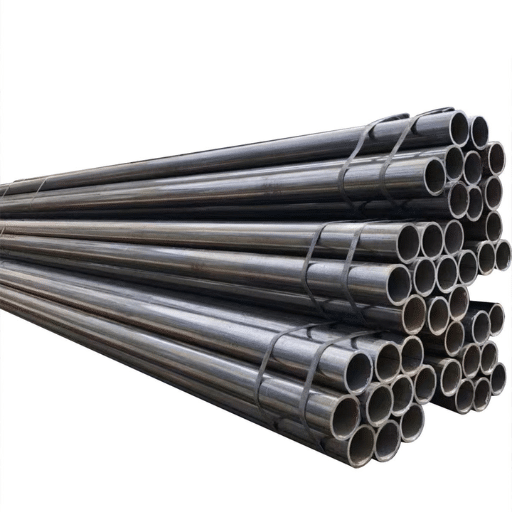
One must consider a wide range of factors before selecting a carbon steel grade suitable for a particular application—such factors as mechanical properties, carbon content, workability, and certain environmental operating conditions. Carbon steel is grouped into three classes based on its carbon content: low-carbon steel (also known as mild steel), medium-carbon steel, and high-carbon steel. Each group or level has specific advantages and disadvantages.
Low Carbon Steel (Mild Steel)
This grade falls within the carbon content range of 0.05% to 0.25%, making it very weldable, ductile and easy to work with the machines. The tensile strength of this grade is generally between 400 and 550 MPa. Its excellent formability and cost make it the most common type of steel used in automotive panels, structural elements such as beams, and piping.
Medium Carbon Steel
Medium-carbon steels, which contain 0.25–0.60% carbon, are intermediate in strength and ductility. Moreover, its tensile strength can be engineered to approach 700 MPa through heat treatment. It finds application in gears, axles, railway tracks, etc., where high strength is required.
High Carbon Steel Grade
The carbon content can reach 1.0% or higher, and these steels are called high-carbon steels. These steels have excellent hardness and wear resistance, which is why they are used for tool and die manufacturing, high-speed steel (HSS) production, and so on. However, these high-carbon steels are less machinable and tend to become brittle when poorly heat-treated. Typical tensile strengths of these steels are above 800 MPa after heat treatment.
Details to Take Care Of
To ensure appropriate carbon steel grades are selected, the following aspects are to be taken into account in great detail:
- Strength versus Flexibility: Medium- and high-carbon steels suit structures with high tensile properties. Flexibility and torsional strength, on the other hand, call for low-carbon steel.
- Weldability: Due to its lower carbon content, low-carbon steel makes welding easier than high-carbon steel, which may need to be heated first because of its hardness.
- Corrosion Resistance: Other carbon steel grades are devoid of corrosion resistance, as is the case with ordinary carbon steels, but this is enhanced by employing other grades of steel that are coated or alloyed with elements such as chromium in corrosive environments.
- Applications in High Temperature Regions: In high-temperature or high-stress environments, alloyed carbon steels such as AISI 4340 are preferred due to their ability to withstand thermal fatigue.
Manufacturers can compare the carbon steel grades belonging to a particular project in relation to its balancing requirements in a very efficient way if they use testing data, such as yield strength, malleability and microscopic compositional analysis, in moderation.
Factors to Consider When Choosing a Steel Grade
Steel grade selection for a given application should be made very carefully after a comprehensive evaluation of various parameters to achieve the desired level of performance, longevity and cost of the structure or product components. The following five considerations will be discussed below:
1. The Materials and Mechanisms
The mechanical properties of steel —tensile strength, yield strength, hardness, and ductility —determine whether a steel grade is appropriate for a specific application. For example, the yield point for structural steel such as ASTM A36 is usually lower —around 36,000 psi —and is therefore suitable for use in building construction.
2. The Components of the Steel Alloys and Chemical Composition
Elements such as some carbon, chromium, nickel, manganese, and any additional elements alter some properties of steel. Hypereutectoid carbons result in tough, strong steels but poor weldability. This is why medium and low carbon steel grades 0.05 To 0.25% carbon are preferred for construction due to ease of fabrication and anti-corrosion properties.
3. Protection Against Corrosion
Applications that involve moist conditions, chemical exposure, or other extreme conditions need materials with high corrosion resistance. Chromium-containing stainless steel grades, 304 and 316 in particular, have a minimum chromium content of 10.5%, which forms a protective oxide layer, significantly improving corrosion resistance.
4. Resistance to High Temperatures and Heat Dissipation
It is needed for steel with high heat-resistant properties for use at high temperatures, such as in industrial ovens, other hot areas, and power stations. In this case, grades such as AISI 310 or heat-treated alloy steels tend to have better thermal resistance and conductivity than ordinary carbon steel grades.
5. Shaping and Cutting Steel
Various steel grades also exhibit different degrees of ease of machining, forming, and joining. Low carbon level steel is softer and thus easier to work. On the other hand, high-carbon and alloy grades are rather difficult to machine and weld, hence special techniques may be required. It is also essential to consider machineability ratings when choosing materials for precision parts.
Careful consideration of these factors, along with attention to the variables unique to a given project, will ensure the chosen steel grade is feasible from both performance and economic perspectives for engineers and manufacturers.
Common Carbon Steel Grades Chart for Selection
I would recommend considering the following chart as a concise guide to common carbon steel grades, their properties, and typical applications. This overview will help streamline the selection process based on your project’s requirements:
This classification enables you to efficiently evaluate grades by aligning material properties with your specific production and performance needs.
Practical Tips for Selecting the Right Carbon Steel
When considering carbon steel grades applicable to the job, there are not only advantages and disadvantages of each but also purely economical reasons to support a particular grade. Improvements are often scrutinized based on five overarching principles, as shown below:
- 1
Identify Specific Strength and Hardness Needs
Take for instance, high carbon steel grades such as 1060 (approximately 0.6 carbon content) plenty of strength and wear resistance can be achieved; therefore, perfect for cutting tools or springs, whereas low carbon steels such as A36 (containing not more than 0.25% of carbon) are successful at the reality of ductility and less strength.
- 2
Determine the Level of Weldability and Formability
If your work relies entirely on the welding or shaping capabilities of a metal, choose a low-carbon steel such as A36. These steels provide excellent weldability, and good formability without weak structures, hence they can be used in many construction applications.
- 3
Assess the Extent of the Need for Corrosion Resistance
In humid or corrosive environments, it is advisable to use carbon steel grades that have protective coatings or modification by the addition of another chemical element to enhance the mechanical properties of the steel in Singapore. Carbon steel, on its own, has feeble corrosion resistance, but coatings and treatments can help prevent corrosion and extend the product’s service life.
- 4
Evaluate the Working Environment, Including Stress and Temperature
Various factors, such as temperature, pressure, and stress, should be considered when selecting materials. Medium- to high-carbon strength steels such as 1045, 1060, and the like are used in components that operate under high pressure or mechanical loads. Consider the Impact of the Cost and the Performance, Similarly to the above Factors
- 5
Consider Cost and Performance Balance
The success of any project depends on how well the material performance requirements are met at minimal cost. Even though high-strength, durable steels can be used, they are pricier and do not bend easily during fabrication. When performance requirements are not very high, universal and inexpensive varieties such as A36 would suffice.
Considering all of this information, it is possible to select the suitable carbon steel grade of materials for the intended purpose of the project, and ensure a stable and practical design of the completed project.
Trends and Innovations in Carbon Steel
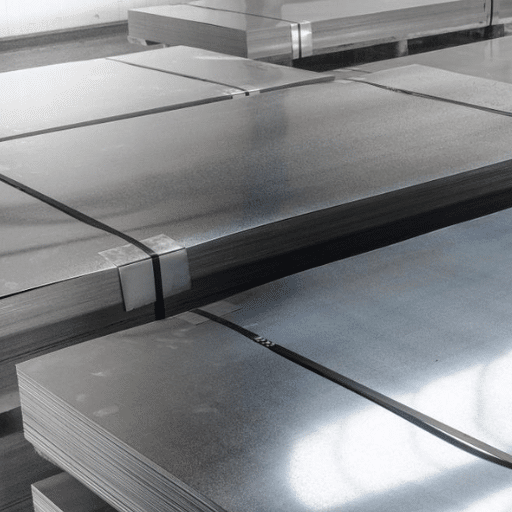
Technological advancements and sustainability efforts continue to serve the interests of the carbon steel industry by enhancing efficiency, effectiveness, and environmental safety. Among the leading trends today is the incorporation of cutting-edge manufacturing processes, such as additive (three-dimensional) manufacturing, which allows the creation of parts from carbon steel grades in shapes with the desired accuracy while reducing material waste. Such innovation has taken over such industries as automotive and aerospace, where light yet strong parts are necessary.
Another key progress is toward achieving green steel manufacturing. Steel-making is apparently one of the largest sources of carbon dioxide emissions. As a result, a change must be expected within the steel industry, which is why environmental steel for environmental conservation, particularly regarding its production, has developed. For example, in addition to conventional blast furnaces, steel processors have the option of new hydrogen direct reduction (HDR) technologies. Note that initial applications have shown that this technique can reduce carbon dioxide emissions by almost 90%; thus, it is an environmentally efficient production method.
The reversible alteration in iron’s crystal structure ensures the versatility of carbon steel grades across different temperatures. Nonetheless, these transformations are relatively quick and reversible. In addition, iron promotes changes in the atomic arrangement at any temperature. This characteristic helps to generalize the carbon content of different carbon steels with varied lengths and temperatures.
One of the major advances in materials science, especially in steel, was enabled by microalloyed steel grades. These are low-carbon steels that have added micro amounts of alloying compounds such as vanadium or niobium, making the steel bar mechanically stronger without having to increase carbon content unnecessarily. This progressive trend was designed to help satisfy the need for lightweight, high-strength materials for carrying structures. From the viewpoint of industrial development, in high-performance microalloyed steels alone, a 5.3% CAGR from 2021 is anticipated in the availability of these architectures for use in load- and freight-solving applications.
There is also advancements coming from digitization. Steel-producing plants have even integrated the Internet of Things (IoT) and Artificial Intelligence (AI), enabling real-time monitoring and control of steel production processes and, consequently, reducing defects and increasing efficiency. The quality and properties of the material, as well as the diameter, such as tensile strength, are commonly monitored by smart sensors to ensure consistent quality across each batch.
All these factors signal the findings in the carbon steel industry. Thanks to new technologies and eco-friendly measures, carbon steel is gaining momentum and cannot be replaced across various sectors of life.
Recent Advancements in Carbon Steel Production
Significant improvement in the production of carbon steel grades during the past few years has been occasioned by changes in science of materials as well as improvements in production processes. One example is the incorporation of electric arc furnaces (EAFs), which have better energy efficiency than traditional blast furnaces and are environmentally friendly because they enable the use of old scrap metal. Statistics from the industry indicate that EAFs currently account for about 30 percent of the world’s steel production, and the trend over the years is set to continue, as the business world moves towards reducing environmental concerns.
AI & Machine Learning
One more important trend is the integration of machine learning and artificial intelligence (AI) to control processes and maximize production. Predictive analytics are used to control and regulate variables such as temperature, pressure, and chemical composition to achieve material precision and minimize waste. As in companies that employ AI systems, this allows productivity to increase by close to 20% with minimal cost.
Advanced Alloy Development
Along with the development of alloys, it has also been possible to reduce the resistance of high-carbon steel grades, making them very strong and corrosion-resistant while reducing their weight by enhancing the strength of such materials. This allows the application of carbon steel even in industries that require it in deep-water facilities, such as the aeronautics and renewable energy industries. Research publications have suggested that these new alloys improve mechanical properties by 15% to 30% and provide a competitive advantage in niche markets.
Enhanced Coating Technologies
Finally, advances have been made in the field of coating technologies as well, which has enabled the use of carbon steel parts and accessories for more extended periods without compromising their structural composition. This has been achieved through modern coatings, which provide enhanced resistance to external agents such as moisture and heat, and have been adopted in industries such as automobiles and buildings.
Such technological advances in global steel activities are all good signs of shifting industrial operations from counterproductive to sustainable and, even more decisively, towards low-cost, high-quality carbon steel grades. All the tendencies point not only to improved capabilities but also to the integration of industry into environmental goals in a broader perspective. Which does more to enable the industry for the future?
Emerging Applications of Carbon Steel in Modern Engineering
In our everyday life, carbon steel is distributed into plenty of new practical spheres, but still its widespread use in contemporary engineering spheres plausibly explains these phenomena. The ingenuity and adaptability of the engineering industry have several facets when it comes to using carbon steel, including how this ordinary material can undergo various enhancements and mechanical conditioning for a given project, or simply be selected based on the project’s scale and cost, among other factors. Here are five essential applications along with relevant data and insights provided herein:
Infrastructure Development
Carbon steel is widely used for the construction of bridges, dwellings and railways too. As regards its internal structure, which provides it extremely high bearing –tensile—and anticorrosion properties, it is also suitable for applications where the member is subjected to heavy loads or harsh environments. High-strength carbon steel accounts for more than 60% of the materials used in modern bridge construction, especially in seismically active zones, according to industry data.
Renewable Energy Sector
The need to use carbon steel, especially for wind turbine and solar panel frames, is on the rise across sectors of the renewable energy industry. Given the 15% demand growth for wind energy, it is clear that carbon steel holds a very significant position for larger turbines, simply because of its ruggedness and its ability to withstand dynamic loads. Its recyclability is one factor that enhances sustainability in clean energy projects, among others.
Ultra-light Spirit & Roll Spaces
Wherever there is a new automotive design, be sure that carbon steels, which are lighter yet high-strength, are present and will serve fuel economy and crash-safety purposes. For example, investments in DP carbon steel grades help the automobile industry eliminate up to 25% of vehicle weight, without the adverse effects of safety. As much can be demonstrated in the electric vehicle’s chassis, even further, in the sense that some of the ways applied for structural efficiency focus more on the performance characteristics than on the weight.
Pipeline and Offshore Development
The majority of the instrumentation, such as pipeline systems and marine structures, in the oil and gas industry is made of carbon steel. One of the reasons it is widely used in transportation in harsh environments is that it does not change its mechanical properties at high or low temperatures or pressures. In recent years, pipe-grade steels with higher tensile strength, such as carbon steel grades X70 and X80, have become very popular; on large construction sites, these pipes are used in over 80% of underground pipelines.
Additive Manufacturing (AM) and 3D Printing
In recent years, there have been remarkable changes in the properties of pre-existing carbon steel powders used in 3D printing. This technology enables the development of parts with complex shapes in a short time, with specified mechanical characteristics. A review of the respective markets shows that the use of carbon steel materials for engineering purposes, including aerospace and biomedicine, via 3D printing is expanding at 20% per year.
These novel use cases clearly highlight the central role of carbon steel grades in advancing engineering technology across sectors. Its versatility and efficiency remain the contributing factors for its integration in traditional technologies and modern state-of-the-art as well.
Future Outlook for Carbon Steel Materials
The prospects for carbon steel materials appear bright due to technological developments and growth in areas where it can be employed. The increasing demand in construction, automotive, infrastructure, energy, and a few other industries has been predicted to stimulate growth in carbon steel grades, particularly the global carbon steel market. This growth is anticipated at a CAGR of around 3.6% from 2023 to 2030. Particularly, high-strength low-alloy carbon steel in this case has its demand increasing because of its excellent mechanical performance while retaining a decrease in weight, in the form of structural engineering in the form of eco-friendly considerations.
Additive Manufacturing Growth
Even emerging technologies, such as additive manufacturing, are altering the picture of carbon steel usage. Carbon steel components that are intricately shaped and specifically formed can now be manufactured by means of 3D printing, enhancing manufacturing output and cutting down material overuse. It is noteworthy that the metal 3D printing market, in which carbon steel is becoming increasingly common, is expected to exceed $5 billion by 2030, indicating the rapid pace of its expansion.
Sustainable Production
Furthermore, the need to go green and cut costs is causing the advancement of technology for the manufacture of carbon steel. Methods such as electric arc furnace EAF type steelmaking, which employs scrap steel that is recycled, thereby cutting down CO2 emissions to a considerable extent, are now gaining ground. Companies intend to reduce carbon emissions to at least 50% by 2050 to fulfill the environmental objectives set by most nations, without the leadership of the Kyoto Protocol.
Renewable Energy Applications
Amidst growing demand, carbon steel grades play a key role in resolving construction replacement and transition challenges. An example is the material’s essential use in wind turbine production and energy transportation pipelines, underscoring its importance in the rapid rise of the renewable energy industry. More research and enhancement in its corrosion composting, lightweight design, and other desired characteristics is anticipated, thus extending the range of the use of carbon steel grades in further decades.
Frequently Asked Questions (FAQ)
How does one guide oneself in understanding carbon steel grades and properties accompanying such ones?
A reference document on carbon steel grades has different basis types of carbon steel, namely, low carbon steel prognosis, updated Steel Chapter 25-2, and updated Steel Chapter 25-2. The contents include the characteristics of each class, which, in turn, depend on the amount of carbon added to the matrix steel. Selecting the appropriate carbon steel grade is easy once one understands its properties.
Do steel grades differ due to various carbon contents in them?
One essential parameter in understanding carbon steel is its carbon content. If there is 0.3 or lower carbon in the steel that is considered low carbon or mild, it is more pliable, whereas if it has 0.3 – 0.6, it is medium and it has moderate strength and moderate ductility. Any carbon content above 0.6% is considered high-carbon steel; it has very high corrosion resistance but very low formability. Therefore, it is not unusual for someone to choose steel based on its carbon content.
What are the available carbon steel grades generally employed in construction?
The grades of carbon steel commonly used in construction include the following: psychoëlektrik mild steel, structural steel, and tool steel mild steel, among others. Mild steel, or low-carbon steel, is mainly used in general mechanical construction because it is soft. Structural steel, on the other hand, can have either more or less carbon content and is used for strength. It is mainly used to create durable tools.
I focus on a particular area of civil engineering. How can I learn about the other carbon steel types available in this area?
The selection of the most appropriate grade of carbon steel for a given construction is determined by the required mechanical properties. Strength, hardness, and wear resistance should also be considered. High-carbon steel may be instrumental in applications that require high strength and toughness. Low-carbon steel is more useful for applications that require flexibility and weldability. Always consult the steel grade chart for properties and available grades to help you select the best grade.
How do low-carbon steels and high-carbon steels differ?
Contained in low-carbon steel is approximately five to three-hundredths of calcium, which gives it excellent weldability and formability, but lower strength compared to high-carbon steel. Having more than 60% carbon content makes steel high-carbon steel, giving it greater rigidity and strength, which is good for high-abrasive applications. The other difficulty is that high-carbon steel is present, tensile, and hard to weld.
What are the characteristics of medium carbon steel?
Carbon steel is categorized into various groups depending on its carbon content. Medium-carbon steel grades range from 0.3% to 0.6% carbon to balance hardness and flexibility. Therefore, it can withstand a reasonable amount of wear and tear which is why it is commonly used for automotive and machinery parts. In terms of mechanical behaviour, medium carbon steel has better toughness and higher strength as compared to low carbon steel, therefore, it finds a number of uses.
Which industries make use of high-carbon steel?
Due to the strength and wear resistance of high-carbon steel, it finds its application in the manufacture of various tools, knives and cutting instruments. When durability and sharpness are the primary concerns, such materials are preferable. Moreover, high-carbon steels can be subjected to heat-treatment in order to increase hardness for more diverse uses in both industrial and civil settings.
Why does it matter if a steel has an alloy as opposed to a carbon one?
Steel is an iron-carbon alloy with additional alloying elements, such as chromium, nickel, and molybdenum, that enhance its structural strength and corrosion resistance. On one hand, carbon steel is, in essence, iron that has been alloyed with carbon, but on the other, the composition of the alloy steel makes it possible to carry out work better in elevated temperatures and aggressive environments. As such, when choosing the appropriate steel for a particular application, alloy steel may be a much more favorable option than ordinary carbon steel grades.