High Standard Stainless Steel With Strict Inspection



Titanium Grade 9 (Ti-3Al-2.5V): Properties Guide

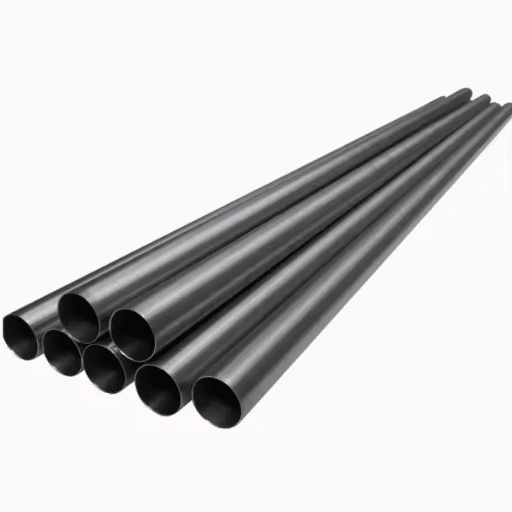
Titanium Grade 9 (Ti-3Al-2.5V) is undoubtedly one of the best materials in modern engineering and worldwide design. Those of the main properties being titanium’s great strength-to-weight ratio, excellent anti-corrosion properties, and superior weldability over other titanium alloys, this material has been used by various industry areas like aerospace, automotive, medical, and even sports equipment. This detailed guide illustrates the uniqueness of Titanium Grade 9 and provides a closer look at the particular applications made possible by its distinct characteristics.
Introduction to Grade 9 Titanium
Titanium Grade 9 or Ti-3Al-2.5V is a titanium alloy with prominent characteristics including lightness, high tensile strength and great resistance to corrosion. Titanium Grade 9 is a titanium alloy made from blending pure titanium with aluminum (3%) and vanadium (2.5%) to get the desirable properties of the alloy along with the license to good forming properties. The alloy is mainly used in aircraft and space vehicle parts, sporting goods, chemical processing, etc. The alloy is so versatile that it can be safely used in both high-performance and harsh applications.
Definition of Titanium Grade 9
Titanium Grade 9, also referred to as Ti-3Al-2.5V, is one of the titanium alloys that reveal the greatest combination of strength, corrosion resistance, and workability. The alloy’s primary components are approximatively 3% aluminum (Al) and 2.5% vanadium (V), which boost the alloy’s mechanical performance but make it less pliable and easier to work with than before. Titanium Grade 9 is referred to as a “half alloy” since its strength is intermediate between that of commercially pure titanium and that of Grade 5, the strongest titanium alloy.
Key Properties of Titanium Grade 9
- Density: ~4.48 g/cm³
- Tensile Strength (annealed): 620 MPa (90 ksi)
- Yield Strength (annealed): 483 MPa (70 ksi)
- Elongation at Break: ~20%
- Corrosion Resistance: Excellent, especially in environments with saltwater and chlorides
- Operating Temperature: Suitable for continuous use at temperatures up to ~315°C (600°F)
Applications of Titanium Grade 9
The main reason for the alloy’s use can be traced back to its good strength-to-weight ratio and corrosion resistance, which are highly demanded in the following sectors:
🚀 Aerospace Industry
Production of lightweight structural components, tubes and ducts.
🏎️ Automotive Sector
Exhaust systems for high-end sports cars and performance vehicles
⚽ Sports Equipment
Bicycle frames, shafts for golf clubs, and quality performance gear.
⚗️ Chemical Processing
Exchangers, pipes, and vessels for highly corrosive chemicals.
🌊 Marine Applications
Made from seawater environments requiring superb anti-corrosion properties.
Advantages of Titanium Grade 9
The main factors for choosing this alloy are its easy forming, welding, and machining capabilities. Moreover, the alloy still preserves its excellent strength and environmental resistance. Besides its general use in Titanium Grade 9, the material has also incredible fatigue resistance surviving long time periods in dynamic systems. Overall, Titanium Grade 9 is a universal material, i.e., it is light enough for engineering applications but at the same time possesses the strength and high performance needed for stringent requirements.
General Uses of Ti-3Al-2.5V
Aerospace Components
Ti-3Al-2.5V has carved out a prominent place in the aerospace industry due to the remarkable fusion of its attributes, i.e., strength, low weight, and high resistance to fatigue. It is applicable in hydraulic tubing, wing structures, and fuselage components where both hardness and lightweight are crucial.
Automotive Applications
This alloy is increasingly replacing high-performance systems in the automotive field, such as suspension components, exhaust systems, and engine parts. The weight property of the alloy leads to less fuel usage without sacrificing strength.
Sports Equipment
Ti-3Al-2.5V is utilized in the sports industry primarily for making high-end bicycles, golf clubs, and tennis rackets because its lightweight, durability, and resistance to corrosion provide the best choice for equipment used under harsh conditions.
Medical Industry
The alloy’s biocompatibility and corrosion resistance make it great for use in medical devices and implants, including surgical tools, orthopedic pins, and dental instruments, where reliable, long-term performance is critical.
Marine Applications
Due to its excellent resistance to corrosion in seawater, Ti-3Al-2.5V is frequently assigned for marine environments by producing components like propeller shafts, underwater pipelines, and submarine parts, ensuring their durability even in harsh conditions.
Importance of Titanium Alloys
Titanium alloys with their brilliant and varied properties are of great importance in different industrial sectors. They are among the most important materials in the industry due to their high strength-to-weight ratio, resistance to corrosion, and tissue compatibility. They are used in various applications where performance and durability are the main concerns.
✈️ Aerospace Industry
Titanium alloy, mainly Ti-6Al-4V, is the backbone of the aerospace industry and is used extensively in jet engines, airframes, and landing gear parts. They withstand very high temperatures and their high strength makes them very suitable for these applications. Using titanium parts can reduce the total aircraft weight and, in some cases, this can lead to up to 20% reductions in fuel consumption.
🏥 Biomedical Applications
The non-toxicity of titanium in the human body combined with its non-corrosive property make it an ideal material for medical implants and devices, e.g. hip replacements, dental implants, and surgical instruments. Research has revealed that titanium alloys account for around 95% of hip implants.
⚡ Energy Sector
In power generation, titanium alloys are used where the highest corrosion resistance is required, e.g., in nuclear power plants’ heat exchangers. In oil and gas production, the property of titanium that inhibits corrosion as a result of seawater enhances the lifespan of pipes and structural components in offshore areas.
🚗 Automotive Industry
In the case of high-performance and luxury car applications, titanium components such as exhaust systems are becoming common to reduce weight and improve efficiency. In motorsports, where lightness and strength lead to better speed and performance, the use of titanium alloy wheels and fasteners is another example.
🧪 Chemical Processing
Titanium alloys are necessary in chemical processing, as their strength against harsh chemicals and acids is significant. They are used in heat exchangers, reactors, and storage tanks in petrochemicals and fertilizers sectors, thus ensuring safety and durability even in aggressive environments.
Chemical Composition of Titanium Grade 9
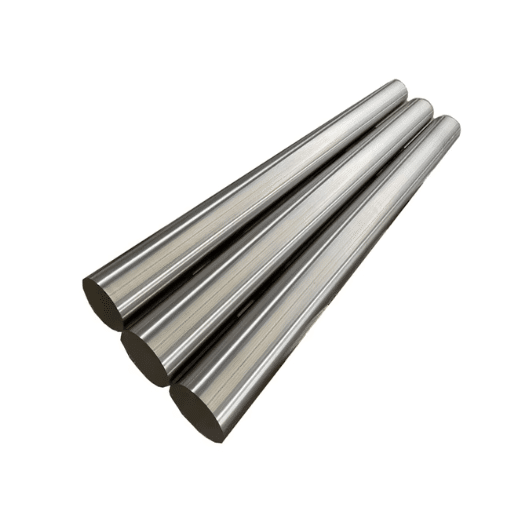
The main factors for choosing this alloy are its easy forming, welding, and machining capabilities. Moreover, the alloy still preserves its excellent strength and environmental resistance. Besides its general use in Titanium Grade 9, the material has also incredible fatigue resistance surviving long time periods in dynamic systems. Overall, Titanium Grade 9 is a universal material, i.e., it is light enough for engineering applications but at the same time possesses the strength and high performance needed for stringent requirements.
| Element | Composition (%) |
|---|---|
| Titanium (Ti) | Balance |
| Aluminum (Al) | 2.5 – 3.5 |
| Vanadium (V) | 2.0 – 3.0 |
| Iron (Fe) | ≤ 0.25 |
| Oxygen (O) | ≤ 0.15 |
| Carbon (C) | ≤ 0.08 |
| Nitrogen (N) | ≤ 0.03 |
| Hydrogen (H) | ≤ 0.015 |
The alloying process brings us Titanium Grade 9, which is a medium-strength alloy and serves as a bridge between the low-strength commercially pure titanium grades and high-strength alloys like Grade 5 (Ti-6Al-4V). When used together, aluminum and vanadium contribute to the alloy’s overall strength, but ion implanting and shortwave radiation resistance even under extreme temperatures remain good. The extremely low content of impurities such as hydrogen, oxygen, and nitrogen guarantees very low chemical instability and high resistance to cracking, even in very harsh environments.
Overview of UNS R56320
UNS R56320, also known as Ti-6Al-4V ELI (Extra Low Interstitial), is a top-grade titanium alloy mainly utilized in situations where strength, trustworthiness, and biocompatibility are of utmost priority. The term “ELI” shows that the alloy has been made to an extent that it will contain very little interstitial elements like oxygen, carbon, and iron, which in turn, will increase the alloy’s toughness and ductility, at the same time, keep its excellent corrosion resistance.
Chemical Composition (Typical)
- Titanium (Ti): Balance
- Aluminum (Al): 5.5% – 6.5%
- Vanadium (V): 3.5% – 4.5%
- Iron (Fe): ≤ 0.25%
- Oxygen (O): ≤ 0.13%
- Carbon (C): ≤ 0.08%
- Hydrogen (H): ≤ 0.0125%
- Nitrogen (N): ≤ 0.05%
The management of alloying elements with high precision is the key to delivering superior mechanical and physical properties.
Key Properties
Strength and Toughness
Ti-6Al-4V ELI is capable of providing very high tensile strength (~120 ksi) and fracture toughness even at cryogenic temperatures thereby making it fit for the most demanding applications.
Corrosion Resistance
The alloy benefits its great resistance to corrosion in marine and chemical environments by the formation of a layer of oxide that is natural to the alloy thus guaranteeing it a long life in rough conditions.
Biocompatibility
UNS R56320 is the best choice for medical and dental implants due to its high compatibility with human tissue and resistance to body fluids.
Lightweight
The density of this alloy is about 4.43 g/cm³, which gives it a very high strength-to-weight ratio making it ideal for aerospace and high-performance applications.
Common Applications
- Medical Devices: Surgical instruments, orthopedic implants (hip and knee replacements), and dental implants
- Aerospace Components: Aircraft engine parts, structural components, and space exploration systems
- Automotive: High-performance vehicle components such as springs and rods
- Marine: Propeller shafts and underwater parts requiring seawater resistance
UNS R56320 (Ti-6Al-4V ELI) continues to reign as a premier material in advanced engineering and innovation owing to its remarkable combination of mechanical properties, biocompatibility, and corrosion resistance.
Detailed Chemical Composition
UNS R56320 (Ti-6Al-4V ELI) is a titanium alloy with excellent reliability and accuracy in demanding applications. The “ELI” designation refers to “Extra Low Interstitial,” achieved through strict purity and chemistry control.
| Element | Typical Composition (%) | Maximum Allowable (%) |
|---|---|---|
| Titanium (Ti) | Balance | — |
| Aluminum (Al) | 6.00 | 6.25 |
| Vanadium (V) | 4.00 | 4.25 |
| Oxygen (O) | ≤ 0.13 | 0.13 |
| Carbon (C) | ≤ 0.08 | 0.08 |
| Nitrogen (N) | ≤ 0.03 | 0.03 |
| Hydrogen (H) | ≤ 0.0125 | 0.0125 |
| Iron (Fe) | ≤ 0.25 | 0.25 |
| Other Residual Elements (Each) | ≤ 0.10 | 0.10 |
The specific proportions of aluminum and vanadium contribute to the alloy’s exceptional strength and ductility, whereas lower amounts of oxygen, carbon, and nitrogen as interstitial impurities result in higher fracture toughness and biocompatibility. Besides, the combination of such properties makes UNS R56320 a perfect choice for the applications demanding both mechanical performance and corrosion resistance, namely, in aerospace, medical, and marine industries.
Comparative Analysis with Other Titanium Grades
| Parameter | Grade 9 (Ti-3Al-2.5V) | Grade 5 (Ti-6Al-4V) | Grade 1 | Grade 2 | Grade 4 |
|---|---|---|---|---|---|
| Strength | Moderate strength, higher than CP titanium | High strength, twice that of Grade 9 | Low strength | Moderate strength | Highest strength (CP grades) |
| Formability | Excellent, can be cold-worked | Poor, requires hot forming | Excellent | Good | Moderate |
| Corrosion Resistance | Excellent, suitable for harsh environments | Good, resistant to seawater and chemicals | Excellent | Excellent | Excellent |
| Applications | Aerospace, medical, marine, automotive | Aerospace, medical implants, automotive | Chemical processing, marine | Aerospace, marine, chemical | Aerospace, marine, medical |
| Temperature Resistance | Moderate, suitable for higher temperatures | High, withstands up to 500°C | Low | Low | Moderate |
| Cost | Cost-effective for precision applications | Higher due to alloying and processing | Low | Moderate | Moderate |
Mechanical Properties of Ti-3Al-2.5V
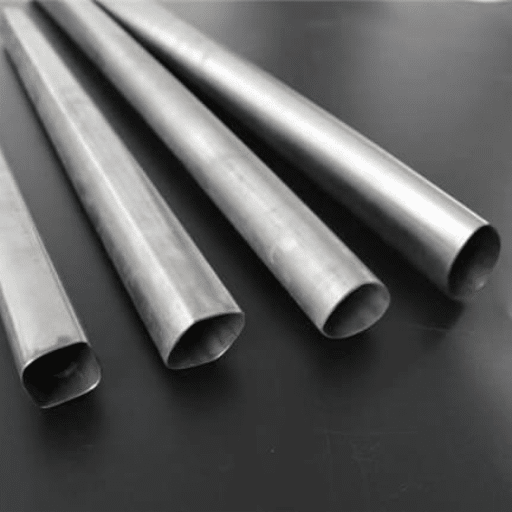
Ti-3Al-2.5V, commonly referred to as “Grade 9 titanium,” is one of the most used titanium alloys and is characterized by a very good combination of three properties, namely, strength, lightness, and softness. This is the reason it is regarded as a middle-grade titanium which is placed between the pure titaniums and the likes of Ti-6Al-4V. The most important mechanical properties of Ti-3Al-2.5V are the following:
Tensile Strength
The tensile strength of this alloy is highly significant and often located in the range between 620 MPa (90 ksi) and 830 MPa (120 ksi) depending on the kind of heat treatment and processing; hence the alloy maintains a remarkable ability to resist stretching under tension.
Yield Strength
The yield strength shows a variation of around 480 MPa (70 ksi) to 620 MPa (90 ksi) which is the reason why it is extensively used in producing modern high-performance mechanical parts that can bear moderately high-intensity stresses without being too brittle.
Elongation
Ti-3Al-2.5V is very elastic with elongation rates of about 10-20% which indicates that it is very ductile and that its elongation differs depending on the state of the material (annealed or otherwise), allowing the alloy to be deformed to a great extent without rupture.
Density
Ti-3Al-2.5V has a density of 4.48 g/cm³, which gives it a very low weight in comparison to steel; this property is one of the reasons for its application in several areas such as aerospace and cycling equipment where weight is an important factor.
Modulus of Elasticity
The alloy has a modulus of about 100 GPa which is pretty much the same as other titanium alloys, allowing it to be more resistant to impacts than most other tantalum and titanium alloys.
Fatigue Strength
It exhibits a high fatigue life even in corrosive environments which implies that it is a reliable material for applications that experience frequent load reversals and thus become prone to fatigue crack growth.
Applications of Ti-3Al-2.5V
Ti-3Al-2.5V has been significantly employed in many industries because of its remarkable mixture of properties like strength, high corrosion resistance, and low weight. The areas of its employment are:
- Aerospace: Supplies hydraulic tubing, fuel systems, and structural parts
- Medical Devices: Implantable devices, particularly dental and orthopedic ones, thanks to its biocompatibility
- Sports Equipment: Bicycles and golf clubs where weight savings and strength are crucial
- Marine Applications: Seawater resistant equipment and components
The mechanical properties of this material combined with its weldability and its excellent fatigue resistance have made Ti-3Al-2.5V a strong and reliable material in various fields.
Strength and Durability
Ti-3Al-2.5V is widely accepted for its exceptional toughness and durability, which is the main reason this material is selected for the most demanding applications. Below are five crucial features that demonstrate its impressive mechanical performance:
High Tensile Strength
The tensile strength of Ti-3Al-2.5V is at least 800 MPa, which allows the alloy to take on huge stress without breaking and that is one of the main factors leading to its wide use in applications that carry loads.
Excellent Fatigue Resistance
This metal shows very good fatigue resistance, that is, it can withstand the cycling of stress being applied and released indefinitely, especially in such areas as aerospace or automotive.
Corrosion Resistance
The alloy is often regarded as totally corrosion-resistant even under the most challenging situations, such as when it comes into contact with saltwater or chemicals, which is a factor that prolongs its use in the marine and medical fields.
High Strength-to-Weight Ratio
Ti-3Al-2.5V has a density around 4.48 g/cm³, which means that it is the mixture of light materials and very high strength, thus helping one to reduce the weight of the equipment without any loss in performance.
Thermal Stability
The material’s ability to hold up its good mechanical shape at high temperatures has made it a dependable resource in an environment with a high-temperature turbine engine or heat exchanger.
These properties forever give the edge to Ti-3Al-2.5V in demanding applications with the requirement of strength, durability, and reliability.
Fatigue Resistance
Ti-3Al-2.5V is highly resistant to fatigue, which is a great advantage for applications that have to deal with cyclic loading and repeated stresses. The resistance ensures a long life even under harsh conditions. Below are the five major talking points and data proof bearing testament to the fatigue resistance of Ti-3Al-2.5V:
- High Endurance Limit
Ti-3Al-2.5V has a room temperature endurance limit of about 450 MPa, thus allowing it to go through endless rounds of stress without any major decline in quality. - Crack Propagation Resistance
The alloy’s microstructure is such that it hinders the propagation of cracks, hence its application in fatigue-critical sectors such as aerospace parts and medical devices. - Thermal Fatigue Strength
It retains good fatigue resistance even at high temperatures, thus ensuring that the performance in hot conditions such as airplane frames or engine compressors is reliable. - Corrosion Fatigue Behavior
The excellent corrosion resistance of Ti-3Al-2.5V allows for the reduction of material degradation in the stress corrosion cracking process in the presence of moisture or aggressive compounds. - Long Lifespan Under Variable Loads
Continuous testing has revealed that Ti-3Al-2.5V can endure millions of cycles before failure, therefore being appropriate for applications with variable or unpredictable stress patterns.
These characteristics place Ti-3Al-2.5V firmly among the top choices in sectors that prioritize durability and long-lasting performance.
Weldability and Fabrication Techniques
Ti-3Al-2.5V, being the titanium alloy with the best weldability, is allowed to be applied in critical areas. Its physical and mechanical properties and the structural soundness after joining permit multi-purpose applications. The gas tungsten arc welding (GTAW_ which is also referred to as TIG welding is considered the most common method of welding this alloy. It offers very good control of the process and minimizes the exposure of the weld area to the atmosphere which helps in reducing contamination during welding.
Key Welding Considerations
Proper inert gas shielding, especially with argon, and clean oxide-free surfaces are the main factors that guarantee successful welding of Ti-3Al-2.5V. Studies have indicated that it is compulsory to cover the weld area with 100% inert gas during the process to avoid oxidation which could weaken and shorten the life of the material. In some cases, post-weld heat treatments are not required due to the stable nature of the alloy; however, in some applications, they would serve to increase the resistance to fatigue.
Fabrication Properties
Ti-3Al-2.5V is characterized from the fabrication point of view by very good malleability, allowing cold forming and shaping of complex geometries without the danger of cracking or even fracturing. It can be stressed and be subjected to extrusion, rolling, and bending processes without any deterioration of mechanical properties. The data points out that the low Young’s modulus (about 105 GPa) gives high flexibility during forming, making the alloy suitable for aircraft tubing, medical devices, and high-performance sports equipment.
⚠️ Machining Challenges
Machining of Ti-3Al-2.5V does give rise to some difficulties related to its low thermal conductivity which in turn may result in heat build-up at the cutting tip. Proper cooling systems and carbide as a tool material not only promote machining but also increase the life of the tool. In general, if the appropriate techniques and considerations are put in place, the weldability and fabrication attributes of Ti-3Al-2.5V create a professional and dependable choice for the most progressive engineering applications.
Physical and Thermal Properties
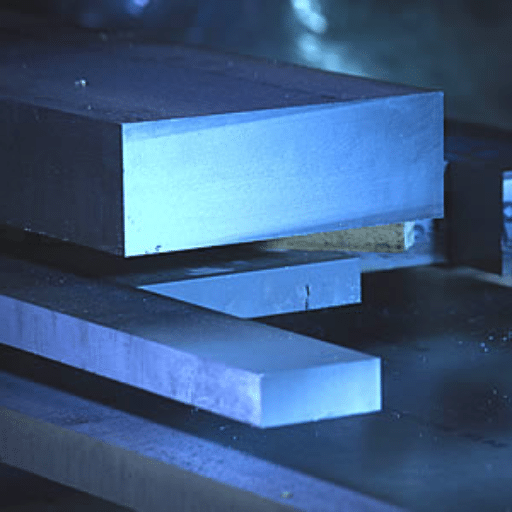
The Ti-3Al-2.5V titanium alloy brings together the rarest combination of features that are weight-saving, very high strength, and resistance to corrosion making it a clear-cut asset in a whole lot of engineering applications. The alloy density is approximately 4.48 g/cm³ which means that there is a significant reduction in weight when compared to steel or other heavier but less strong and durable materials.
Thermal Conductivity and Expansion
The thermal conductivity of Ti-3Al-2.5V is said to be very low at approximately 7.2 W/m·K. This property helps to keep the material strong during high temperatures but it can also lead to accumulating heat during machining.
The coefficient of thermal expansion is about 8.6 x 10⁻⁶ /K, which is good enough to get stable sizes even with varying temperatures.
Strength and Elasticity
This alloy has a tensile strength varying from 620 MPa up to 895 MPa depending on which kind of heat treatment and manufacturing processes have been used. The material has an elastic modulus of about 105 GPa which means that it can be extended without losing its mechanical properties. These characteristics indicate that the material is just what is needed for the demanding use in the aerospace and automotive sectors.
Temperature Resistance
The melting point for Ti-3Al-2.5V is about 1,660°C (3,020°F), thus the alloy is well suited for use in high-temperature areas. It would take about 300°C to 400°C for the material to lose almost all its mechanical properties and to become untrustworthy under thermal strain.
Corrosion Resistance
Ti-3Al-2.5V has the same oxidation and corrosion resistance properties as titanium alloys and additionally, it is particularly resistant if it is exposed to salty or chemically aggressive media. This being the case, the alloy’s longevity in marine and industrial uses is increased.
It is a combination of all those properties that makes Ti-3Al-2.5V still a very popular material in the industries where high performance is a must even under harsh environmental conditions.
Density and Specific Weight
The alloy Ti-3Al-2.5V has a density of approximately 4.48 g/cm³, that is almost one-half of the density of steel. One of the factors that brought about its great specific strength and therefore, it is used in the lightweight areas where the reduction of weight is the top priority but at the same time the mechanical performance cannot be sacrificed. It is a perfect mixture of strength and lightness, which can very efficiently transform the needs of various industries into reality.
Heat Resistance and Conductivity
Ti-3Al-2.5V presents outstanding heat resistance and thermal conductivity attributes and these make it a very good material for high-temperature applications. The following are the main characteristics:
🔥 High Operating Temperature
Ti-3Al-2.5V can withstand the maximum temperature of approximately 800°F (427°C) before the start of considerable loss of its mechanical properties.
⚡ Thermal Conductivity
The thermal conductivity stands at around 7.6 W/m·K, which is inferior to that of steel but still acceptable for the specific application.
🛡️ Oxidation Resistance
The alloy at high temperatures possesses excellent resistance to oxidation and can endure environments with heat variation.
📏 Low Thermal Expansion
Ti-3Al-2.5V has a low thermal expansion coefficient, minimizing deformation possibility due to high temperatures.
🔧 Thermal Stability
Ti-3Al-2.5V maintains structural stability throughout a wide temperature range, ensuring durability in aircraft parts and heat exchangers.
These characteristics display not only its capability of surviving in harsh thermal stress conditions but also its effective performance.
Thermal Expansion Characteristics
The thermal expansion characteristics of Ti-3Al-2.5V render it a material that can easily be used in applications for extremely high or low temperature conditions. The five main aspects along with the data points regarding its thermal expansion property are as follows:
1
Low Coefficient of Thermal Expansion
Ti-3Al-2.5V has a very low coefficient of thermal expansion that is around 8.8 µin/in°F (15.8 µm/m°C). This characteristic helps to lower the amount of material deformation during thermal changes.
2
Wide Temperature Range
The property of thermal expansion in Ti-3Al-2.5V is constant over the entire temperature range of -320°F to 600°F (-196°C to 315°C), thus providing material stability in the most unfavorable conditions.
3
Dimensional Stability
Because of low thermal expansion, it is easy to acquire precise dimensions when using Ti-3Al-2.5V for the manufacture of precision instruments and aerospace structures.
4
Resistance to Thermal Cycling
The material has great resistance to thermal cycling which means that the chances of material fatigue or failure due to heating and cooling are tremendously reduced.
5
Compatibility with Other Materials
The thermal expansion characteristics of Ti-3Al-2.5V are similar to those of several other materials. Thus, the material can function efficiently within composite systems without causing stress or distortion.
The characteristics provided above make Ti-3Al-2.5V a perfect candidate for high-performance and thermally sensitive engineering applications.
References
ASTM International
Properties of Titanium for Industrial Applications with Emphasis on Ti-3Al-2.5 V. This source provides a detailed comparison of Ti-3Al-2.5V (ASTM Grade 9) with other titanium grades and nickel-base alloys.
SpringerLink
Effect of heat treatments on the mechanical properties of Ti-3Al-2.5 V alloy. This article discusses the mechanical properties of Ti-3Al-2.5V and its position between unalloyed titanium and Ti-6Al-4V.
MDPI (Multidisciplinary Digital Publishing Institute)
Experimental evaluation of surface roughness, burr formation, and tool wear during micro-milling of titanium grade 9 (Ti-3Al-2.5 V). This research highlights the industrial applications and machining characteristics of Titanium Grade 9.
Frequently Asked Questions (FAQ)
Summary
Ti-3Al-2.5V (Grade 9) is the epitome of the finest combination of qualities such as strength, formability, and corrosion resistance, which is the reason for its indispensable presence in the fields of aerospace, medical, marine, and sporting applications. Its excellent cold-working properties, superb weldability, and incredible fatigue resistance make it a versatile choice for demanding engineering challenges where both reliability and performance are critical aspects.