


Blog
Seamless Pipe vs. Welded Pipe: Differences and Selection

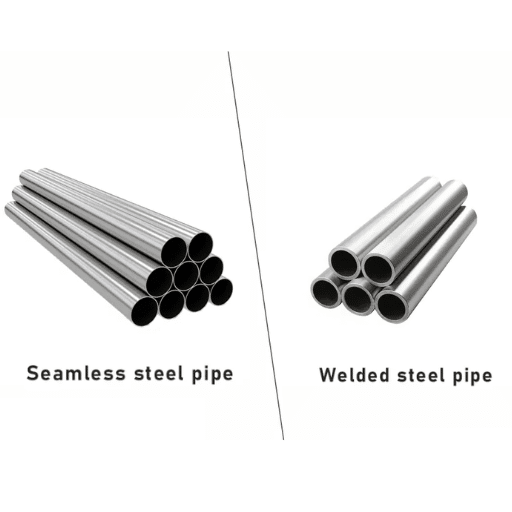
When uncertain about the type of tube required, inappropriate dimensions could cost more than expected. On the other hand, it is also very common to distinguish between two types of tubes used on the production lines; seamless tubes and welded tubes. In that regard, when do you choose any of these tubes or pipes with respect to the application intended? This article will help you in identifying the basic comparisons between the applications of a seamless and a welded tube especially for understanding the operation of these two in making crucial decisions. The distinctions in explanations are sure to be advantageous in the field of production, construction and even engineering by minimising breakages and wastages. You will now get an opportunity to learn key basics of arguments for and against the usage of Seamless Pipe vs. Welded Pipe. Here we go!
Definitions and Manufacturing Processes

Seamless Tubes
This type of tubes production is a direct consequence of a process through which a solid metal bar is made hollow by heating and piercing, without any welding involved. It is a system which yields a product with an even character enhancing the capacity of the tube, particularly in relation to pressure and stress.
Welded Tubes
This tube manufacturing process begins with a following strip of metal, which is rolled to a round shape and the edges are then welded free to form a tube. These types of tubes tend to be very cost effective and are mostly suitable where the pipes will not enforce very high pressures or loads.
What are Seamless Tubes?
Focusing on the physical appearance of Seamless Pipe vs. Welded Pipe, seamless tubes refer to the material that is produced by making a hole in a round heated steel bar. The strength of these tubes does not depend on the seam; therefore, they can withstand high pressures, end coloring, and special applications.
Production Process of Seamless Tubes
There are several areas that use seamless tubes, the manufacture of which involves complex algorithms, enduring practical processes as one aims at precision, construction with longevity amongst other aspects. Below, the phases of production of those elements are explained:
CHOICE OF RAW MATERIALS
This marks the beginning of the whole manufacturing process which employs solid round steel billets of high grade. The billets are handpicked for their chemical properties and fitness for the end use. The most common of which are carbon, alloy and stain less steels.
TEMPERING/HARDENING
After that, they carry out thermal treatment of the billet, that is, the billet is placed inside a rotary kiln and heated up to 1,200 °C – 1,300 °C. At elevated temperatures, steel can comfortably enable the mechanization process through hot forming without the risk of fracturing.
Perforating
The red hot billet is subsequently worked on a punch press bashing or rotating it until an opening is attained at the center. This approach helps in the formation of a pipe with the material remaining in stable form. At this method, metonymy Executive Bar is applied since the internal diameter is worked on and safely shaped.
Elongation and Sizing
The shell or pierced billet as it is also known assists in advancing the diameter of the raw material and its length until the required tube diameter is achieved using a number of rolling mills like the mandrel, cross rolling plug mill, or cold pilger mill when the manufacture of parts of such a size is implanted. Machining of this operation provides to a positive reduction of these parameters and (exactly) which relates to the tolerance within the limits.
Heat Treatment
After expanding length of the walls, some other procedures of heat treatment like annealing, normalizing Quenched or other process can be applied to tubes if the material and the work demands. These procedures lead to improvement in properties equivalent to hardness, ductility and strength or these are appli ed.metamorphosis of animals and becoming dinosaurs is also present in other works.
Straightening and Cutting
Instead of cutting then stripping stripes, tubes are aligned in specific lines by proper leveling devices which do the straightening, after that they are dressed and sized as required by the customer.
Exterior Treatment and Examination
There is a yearning not only for, for instance, coated welded pipes but such pipes welded inside out or so cause options such as; seamless pipe vs. welded pipe pipes coated inside out for good finish, and protection of the pipes to some extent from contamination or corrosion, and any other methods for example radiographic inspection. Also use advanced techniques to check and control items that should not have any defects on the surface of the skin for example ultrasonic inspection, eddy current testing and some gauges.
Shipping and Over Packing
After testing and verification, the pipes undergo aggressive wrapping to ensure that they do not get damaged during transit. These are then taken for application to various areas like oil and gas transportation, automotive fabrication, or building construction among other sectors.
Production Figures and Technology
Reports from the industry suggest that the value of the worldwide seamless tubes industry was approximately $53 billion in 2022 with a growth rate of about 6.5% annually set for 2023 to 2030. Thanks to advancement in technology such as the automatic piercing machines and laser inspection systems, the seamless tubes have improved in the yields and in quality. There is also a need for seamless tubes in energy, construction, and aviation sectors, which further increases the demand for innovation. This is due to the fact that help manufacture these products in the best and the most cost effective ways.
In most of the industries, where seamless tubes are applied, it has been observed that the consistent performance and versatility of such tubes are enhanced by the modern processes and the stringent requirements placed by the manufacturers from time to time.
Understanding Welded Tubes
Due to the fact that these tubes are usually not as strong as the seamless tubes due to the weld joint which is unavoidably there, certain more contemporary forms of inspections-such as ultrasound and radiography- and quality control schemes have raised the risk table to critical structural elements. Welded tube design offers flexibility, fast pace of completion of work and does not cost a lot, therefore welded tubes find application as a preeminent material in certain or all industrial practices.
Manufacturing Method of Welded Tubes
The initial stage of process includes uncoiling and flatting of steel strip or coiled steel sheet (known as skelp in the engineering world) to prepare and shape them into straight lines. This is followed by inserting the edges of the skelp into a forming mill to wrap the material tooback into a cylindrical form stage by stage with the use of these rolling operations. By using these cycles of operations, the designed structures’ edges are perfectly formed and aligned.
Having formed a tube, the edges of the tube are then joined in either of the two most commonly used methods mainly known as High Frequency Welding (HFW) and Electric Resistance Welding (ERW). The former method applies an ac power for heating of the edges and their welding together whereas the latter method utilizes resistance heating in addition to pressure for formation of well fusing welds with good repetition. This makes all types of joints fabricated by these techniques free from weld defects with no compromise on the strength of the pipes.
Finishing processes are also performed on welded tubes, as finishing requirements in terms of dimensions and surface quality have to be met. Such operations include, but are not limited to, facing weld seams, reducing manned with an extra pass of rolls and further improving the structure of the tube through heat treatment only when necessary. Non-destructive testing involves performing ultrasound or X-ray to confirm no cracks are present in the weld and particularly passive cases account for the strict limitations imposed.
Advanced production processes allow for high efficiency at scale manufacturing. For example, it has been reported that welded tube mills in the propulsion industry seamlessly produce tubes at the rate of above 120 m/min, which is considered to be very efficient. The worldwide market for welded tubes has witnessed growth till the tune of USD 57 billion in 2021 and is projected to grow at compound annual growth rate of 4.2% as per the information provided in the report. This figure proves that there is an availability of a wide range of applications of welded pipes in many sectors like automobile, construction and energy.
Using both extreme optimization assembly and other productive equipment, and also basic engineering principles of design, welded tube production today is a widespread technology without any quality issues of the appropriate end-use applications.
Seamless Pipe vs. Welded Pipe: Key Differences

Physical Differences Between Seamless and Welded Tubes
How Are They Made
Seamless Tubes:
These tubes are made using extrusion processes and come out as one seamless tube without a weld on any seam. Because of that, the structure of the tubing remains evened out across its entire length.
Welded Tubes:
The tube is created from a flat sheet of metal that is rolled into a cylinder shape, and edges are welded. This method leads to a seam along the care of the tube.
Quality of Finish
Seamless Tubes:
Generally, the surface finish is uneven in these types of tubes owing to exageration methods and requires additional operations for plunging the surface to smoothness.
Welded Tubes:
Possess a clean surface finish, since polishing and similarly comes along with it after the welding, finish, and treatment.
Wall Job
Seamless Tubes:
Their wall thickness is more naturally consistent since they come in one solid metal shape.
Welded Tubes:
The wall thickness may slightly change around the seam for some welded tubes; however, this problem is one of the last considered due to mass scales.
Limits
Seamless Pipes:
Like seamless refers to pipes which are made from continuous solid metal without any usage of a welding seam. They are generally small in diameter as well as thick walled as their limitations during the extrusion process can only allow fabrication of short lengths of tubes.
Seams:
These are optional and they can be designed to cater for any diameter or thickness, public among others.
Strength and Enterita
Seamless pipe vs welded pipe:
The seam and weld in the welded pipe or seamless pipes has an average strength and in fact welded pipes or butt welded pipes has limitations at high pressures or temperatures as there exist no weld seam.
Welded pipes:
Strength is more dependent on how proficient the fabricator is, and while overseas may have better welding, the pressure integrity is not comparable to seamless tubes.
Structural Differences: Strength and Durability
An examination of welded tubes and seamless tubes in terms of their strength and durability features will involve quite a number of aspects and there are quite a number of factors in the list. A list of these factors is provided below:
Uniformity of the material
Seamless tubes do not have any welds and as such the properties of the material used in the tube is equal and the strength of the tube as well is quite great. In welded tubes however, there tends to be a minimal amount of inconsistency towards the welded part of the pipe.
Structural Deformation
Seamless tubes have a more cohesive structure and hence tend to resist deformation a lot more than other types of tubes. This property makes the tubes much more applicable in situations that entail huge amounts of force or wear.
Against Corrosion
At the weld seam of welded tubos there is more danger of corrosion, particularly when the environment is as they say, adverse, however, due to the omitting of any such areas in seamless tubos, corrosion is less likely.
Fatigue Resistant
Typically, seamless piping is more resistant to fatigue, which is usually an issue in cases of cyclic loading. Axially loaded welded pipes may be subject to fatigue at the location of the welding.
Performance for High Working Pressure
In the absence of any seam, seamless tubes are more suitable for the working environments that involve higher working pressure as a weak spot is not there. With seam welded, they are able to withstand pressure but has to be fully tested to guarantee the performance.
Performance Aspects: Pressure Handling
Advantages and Disadvantages
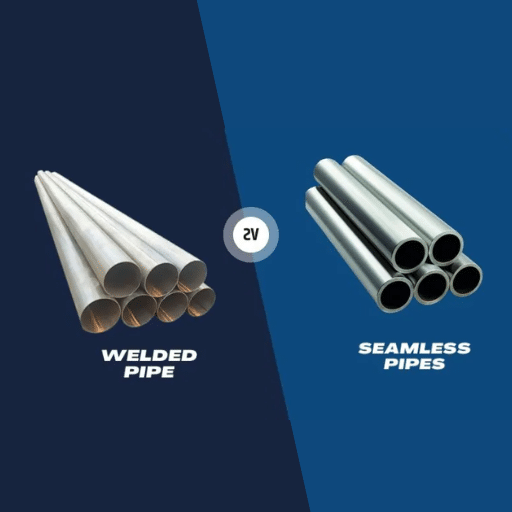
Benefits of Seamless Tubes
Enhanced Limitation to Pressure
The seamless design also allows the tube to withstand excessive pressure because it is not cut borders and edges or space filled. For example, according to the internet threads, seamless pipes are used when most of the pipes are able to leak pressure up to 50,000 psi, when used in oil and gas and nuclear industries.
Extra Durability and Mechanical Properties
Post-fabrication, seamless tubes come without any flaw and therefore provide higher strength and stability than welded tubes. This increased strength, in turn, allows them to work under high stress, where most pipes would give way.
Increase in Resistance against Corrosion
As there are no welding seams to speak of, seamless pipes are not easily subjected to local or weak structures. This helps prevent their failures for longer time, especially when subjected to the abrasive and the corrosive solutions.
Smoother Convection Process
The answer to this concerns the immunity and the acceptance of the mechanism to carry out activities without regarding pressure limits. In this respect, Seamless Pipe vs. Welded Pipe (Lidestri, 2015) should be assessed.
Seamless tubes take the lead in fitting virtually every situation as there is no welding joint which may introduce imperfections inside of the tube. This promotes swift and even flow important for any given process handling fluids or gases of high pressure.
Advantages of Seamless Pipe vs. Welded Pipe
Seamless tubes find applications in all industry sectors such as aerospace, petrochemical, automotive, and power industries due to their unbeatable operational dependability and effectiveness. Their adaptability supports different applications that require high level performance.
Drawbacks of Seamless Tubes
Even though it has numerous beneficial aspects, seamless pipes also do have certain weak points that are very disadvantageous for the industrial potential uses. The most significant downsides of the seamless tube include the following:
Increased Cost of Manufacturing
Unlike welded tubes, making a seamless pipe is quite advanced with a lot more processes involved. Consequently, this increases the cost of production making such tubes plausible for only a few projects.
Restriction on Dimensions
The range of diameters and thicknesses for seamless tubes is usually small. Hence, in cases where large diameters are required, the use of welded tubes is more appropriate because they can be made in line with several specifications.
Limitation of Length
The manufacturing process of seamless tubes also limits their length. Thicker and longer pipelines or constructions needs more joints or even welding which was normally not the case when horizontal seamless pipes are the ones used. This could lead to an increase in costs and reduced efficiency in some cases.
Possible variations of wall thickness
The processes of extrusion and rolling may cause some slight differences in wall thickness, especially in seamless tubes of big diameters and often rigid tolerances could be hard to achieve.
Limited Supply
Compared with seamless tubes, welded tubes are easier to get a hold of as seamlesstubes require a complex manufacturing process and there is less demand for them in certain industries. This translates into longer waiting times and restricted stock for on-hand projects.
Benefits of Welded Tubes
Affordable Option
In most situations, welded tubes are easier to obtain and cheaper to manufacture in comparison with seamless tubes. Since the flat-rolled steel used in production is much cheaper and often sourced from readily available materials, material costs are significantly reduced.
Uniformity in the Tube Wall Thickness
Progressing with the tube construction, nothing changes and the walls are the same. It creates an almost dimensional stability. Seamless Pipe vs. Welded Pipe – the latter has a huge advantage that is its uniformity or consistency thanks to its manufacturing process.
Stock of Welded Pipes is Ample
Given their simpler, faster manufacturing, welded pipes are available in most markets. Most vendors hold substantial stocks thereby reducing the lead time and making it very convenient in case of emergency requirements.
Downloads – Widths and Length Adjust maintainjointly:
The production of welded pipes and tubes can be customized in terms of radius and length to suit the intended purpose. This is a notable advantage over seamless tubes in that they are easy to fabricate to any dimension and provides customization for various uses.
Good Quality Weld
Recent advances in welding technology have improved weld strength, preventing the pipes from losing strength. This makes welded tubes suitable for a wide range of applications, including high-pressure installations.
Drawbacks of Welded Tubes
Lower Structural Strength than the Seamless tubes
Despite improvements in welding technology, the joint weld can still be the weakest link. In case of extreme pressure exertion on the pipe, the weld fails more than the constant-pressure-infused seamless pipe.
Tendency of Welds to Get Corroded
Corrosion may occur at the weld area due to material property differences introduced by the weld. This means that even after applying coating, the region might deplete faster than the others owing to exposure to aggressive media
Poor performance in use under high pressure
For welded tubes, handling high pressures is more challenging than for seamless tubes. This occurs due to weld weaknesses and stress concentration; thus, some applications cannot be performed with these types of tubes.
Defects More Likely to Occur in the Manufacturing Process
When a welding process is used, other factors that further increase the chances of defects, such as unfused areas and gas pockets, or even off-centeredness, join in. These defects normally demand tedious testing and inspection in order to guarantee quality, which of course results in increased production expenses.
Aesthetics are the Other Problem.
Weldbores can exhibit slight rotation or accommodation in the seam, which is unsuitable for applications requiring perfect presentation. This is the reason wat improvement of both appearance and strength necessitates additional processes, What means more time as well as money.
Applications
Rolled steel products, including various welded tubes, are widely used across industries for their cost-effectiveness and flexibility. Five of these are:
Application in the Automobile Industry
There is a need for exhaust pipes, fuel lines, and other weldable components, so steel tubes are useful. In this environment, welded connections ensure reliable vehicle operation, given their durability and ability to withstand high pressure.
Installation and Construction
Such tubing is used in a range of applications, from scaffolding to framework and piping. They possess the necessary strength and design versatility to provide proper, consistent support for erecting buildings, bridges, and other structures.
Energy Industry
Welded tubes are used to construct pipelines and petroleum-handling equipment that transport oil, gas, and other fluids at high pressure. They are suitable for use in corrosive and harsh working conditions without failure.
Soft Furnishings
Seamless metal tubes find the broadest application in furniture manufacture, such as chairs, tables, and shelving units, as it is light but durable. Furniture design that contemporizes industrial trends offers quite inexpensive functionality because of the tubes versatility.
Some Applications in the Installation of HVAC And Plumbing
The tubes are indispensable in heating, ventilation, air conditioning and plumbing systems. Regardless of differences in features and advantages among types, tube dimensions are designed to ensure that neither fluid capacity nor the rising flow parameter is compromised in any network.
Industries That Prefer Seamless Tubes
Oil and Gas Industry
Throughout the oil and gas industry, seamless pipes are heavily used. This is because the pipe can withstand very high pressure and harsh conditions. Most seamless pipes are used in pipelines that transport oil, gas, or other fluids. In certain insights, seamless pipes account for 60% of the pipelines used in the industry.
Automotive Industry
Most car assemblers use seamless pipes to manufacture engine components, including fuel injection and hydraulic systems. That is because these tubes are known to have high strength and performance accuracy, and thus can withstand high stresses in automotive applications.
Power Generation Industry
In this sector, seamless pipes are used in power stations, specifically in boilers and heat exchangers. The mechanism allows for higher temperatures and pressure handling, so it will help in generation and maintenance without breakdowns.
Aerospace Industry
The aviation industry makes use of those seamless pipes also for building aircraft frames and engine unit parts as well as hydraulic systems. In this case, the seamless pipes have assumed an important role, with their light weight, strength, and corrosion resistance becoming evident.
Process Industry and Chemical Industry
In addition to chemical processing facilities, seamless pipes and tubes are widely used to transport hazardous chemicals, helping preserve the structure even under high-temperature conditions. The corrosion resistance and dimensions of the tubes in pipe form are sufficient for reactants, even over long periods, in applications such as tank and pipe system repairs.
Common Use Cases for Welded Tubes
Structural Applications
Examples of construction applications for welded tubes include buildings, bridges, and foundations. These items are very strong, durable, and applicable in most load-bearing segments.
Automotive Industry
Automotive exhaust systems, as well as chassis and fuel lines, use welded tubes. This is aid type of products has both light weightages and are price-efficient, so most suppliers utilize this product more often than not.
HVAC Systems
The heating, ventilation, and air conditioning industries use welded tubes to transport air, water, and refrigerants. Designed to transfer heat efficiently and sustain high pressure, these tubes are preferred.
Furniture Manufacturing
Another primary application of welded tubes is furniture manufacturing, including tables, chairs, and shelving. The evenness of the available material and ease of joining present greater opportunities for creative, cost-effective designs.
Agricultural Equipment
Farmlands also require different forging options such as welded tubes for making various equipment. These tubes are used in the design of machine frames, irrigation systems, and piping, among other applications. They are designed to withstand harsh conditions for extended periods before they wear out.
Selection Criteria
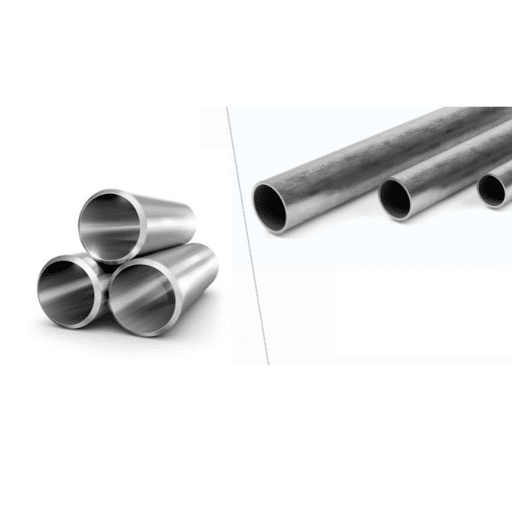
Choosing the best-welded tubes for a given task requires a comprehensive understanding of the functions they are to perform. All that helps to consider the several points discussed below:
Composition of Material
One of the biggest determinants is the tube material. The most common materials are carbon steel, stainless steel, and aluminum, used for different applications. For example, stainless steel is commonly used in wet conditions because it does not corrode. As per emerging market forecasts, about 70% of stainless steel tubes used in construction and industrial sectors for their durability and hardness.
Size Consideration
This includes the sizes (diameter, wall thickness, and length) of the welded tube as well. They should be congruent with the specifications set out by the project. Standardized manufacturing of products ensures consistency; it serves not only industrial purposes but also the use of various parts, such as pipes and structural elements, as in machinery. However, such a Transformation would help determine where a given pipe can be utilized and where not.
Tensile Properties
Check the pipe’s tensile strength and modulus of elasticity to ensure it meets the required conditions for its intended use. Based on the application requirements, some kinds of tubes with high-yield stress-welded joints are attractive , for instance, in construction or farm machinery. Test data showed that the use of high-strength tubes may allow an increase in the maximum admissible load up to 25% above that by standard-grade tubes of the same class.
Anti-corrosive property
Most applications operate in hostile environments, such as irrigation, freshwater distribution systems, and the marine and pole industries; therefore, corrosion-resistant tubes are required. In such tubes, the provision of coatings or the use of materials such as galvanized steel increases the useful life of the tubes and thus reduces the TCO. Recent industry research indicates that the service life of galvanized steel tubes in wrought-iron environments is 40% longer than that of untreated steel tubes.
Economics and other Factors
While quality is crucial, Cost is also an important variable to consider. Such variables include, but are not limited to, materials, the manufacturing process, and the finish applied to the tube. Several developments in welding processes, especially in laser welding, have been shown to reduce production costs by approximately 15%, thereby lowering the cost of high-standard welded tubes, making them more affordable.
Cognizance to Standards
Make sure that the welded tubes adhere to the respective standards in the relevant industry such as ASTM, ISO, or EN. This is because these standards and tests help give an assurance of its quality and safety within a system as well as compatibility with some of the components of other systems. An example of this is in the US where the prevalent standard for construction is ASTM A500, which specifies the fittings for structural steel tubing.
Because these selection requirements are considered and the newest industry information and technology is available, simple and quick evaluation of the best welded tube for any particular function is possible now more than ever.
How to Choose Between Seamless and Welded Tubes
The decision on whether to use a seamless or welded tube is largely informed by the intended purpose of the tube, its mechanical properties, its cost and performance in its working environment. A comparative evaluation is provided below based on the information available as of today in the sector.
Process of Production
The Seamless Pipe is manufactured by using a solid piece of steel, which is then expanded to form a hollow tube. This eliminates the need for weld seams thereby giving the structure a more consistent and enhanced strength.
The Welded Tube is produced by rolling a flat steel strip into a tube and joining the seam. Suitable welding processes such as laser beam and tube to tube (TIG) give strong welds.
Mechanical Properties
In general, seamless sections can be bigger, are more regular, and can withstand pressure and stress more effectively. Such tubes can be used in the oil and gas industry, boiler steels and other applications involving high temperature and high pressure.
The welded tube, on the other hand, may have slightly lower pressure capacity due to the welded seam. However, advances in modern welding techniques have largely addressed this.
Precision and Variability
Welded tubes offer greater precision and consistent wall thickness along the length of the part, since they are produced from standard control sheets. They are often cheaper in such areas where large-clearance activities are of utmost importance.
Manufacturing seamless pipes, on the other hand, tends to result in walls of a component, having relatively little thickness control.
Economics
Seamlessly welded tubes can be produced economically due to the simple manufacturing steps, minimum material losses and the ability to make large quantities smoothly. In such instances, they are more preferred for non-critical use.
On the other hand, seamless pipes are more costly because of their complicated nature that is also precise to a great extent; this makes the pipes a prime candidate in areas with high utilization and high stress.
Corrosion Resistant
The corrosion protection in both cases is determined by the metal grade used. In stainless steel welded tubes, corrosion and wear at a joint is much less of a problem due to advancement in welding processes.
Industry Dynamics (2023)
In 2023, MarketWatch reported that the seamless pipe market is expected to grow at a 5.2 percent CAGR, driven by rising demand in the aerospace, defense, and energy sectors. By contrast, growth in the welded tube segment is expected to remain stable relative to the construction and automotive segments, given their low cost and ease of use.
Most Important Figures
Smooth-surface pipes are typically used instead of welded pipes at high pressures or flow rates, such as in oil and gas, aerospace, and power generation, due to their smoother walls. On the other hand, in applications that are not so severe, for example, the fabrication of frameworks and structures or even automotive components, these welded tubes are good enough to be used, and much cheaper to do so. Which one should be used, Seamless Pipe vs. Welded Pipe? It is all about making sure that the correct product is used for the product it serves in terms of significance, cost and utilisation improvements.
Cost Considerations for Seamless vs Welded Tubes
Project Specifications for Tube Selection
Upon reviewing all details, I am convinced it is also necessary to narrow the tube type selection to the requirements of that particular task. Therefore, in this case, where anti-corrosion properties and cost-cutting are required, I recommend using the more expensive pipes, as they have a longer lifespan. However, for cost-effectiveness, where pipe selection may not be specific and welding may not be complex, I would definitely prefer the less costly pipes.
References
ResearchGate:
Title: WELDED STAINLESS STEEL TUBES & PIPES VS. SEAMLESS
This article discusses the performance and requirements of welded versus seamless tubes, providing a detailed comparison.
ASM International Handbook:
Title: Steel Tubular Products
This chapter from the ASM Handbook provides insights into the manufacturing, chemical composition, and applications of seamless and welded tubes.
ScienceDirect:
Title: An Examination of Seamless Ferritic Tube and Austenitic Alloy Tube Plate Joining by Friction Welding Process
This research paper explores the performance and stress conditions of seamless and welded tubes in critical applications.
Frequently Asked Questions (FAQ)
Seamless pipe. How is the difference between seamless pipe and welded pipe?
A seamless pipe is produced using rotary piercer or extrusion of a steel billet or hot rolled steel billet without a weld seam whereas welded pipes are produced by forming a flat or flat strip in cylindrical structures and welding the lateral seams formed (for instance ERW or submerged arc welded pipe). Due to this, the uniformity present in the seamless pipe is always higher since it does not have any weak points. A welded pipe is relatively cheaper thana seamless pipe but is suitable for applications that not require much integrity like structural components and non critical industrial purposes.
Seamless pipe vs welded pipe. At what point would one need to go for seamless steel?
Select seamless pipe whenever the specifications include high requirements on corrosion resistance faced by pipes, very elevated pressures than the traditional conditions, or tight specifications on the wall thickness and externally applied dimensions – these are features in pipes intended for high pressure oil and gas, API 5L, pipes for critical applications, or seamless steel medical tubing. The steel tubing without a seam will be preferred for production of larger diameter adventurers which are extruded or solid. In such circumstances where a seam cannot be rolled flat and is welded it would make it vulnerable as it could be seen as gold lining along the pipe work.
Steel pipes: is it true that seamless pipes are more resistant to corrosion than welded pipes?
Rebuff is also determined by the material (stainless steel vs carbon steel) and the processes adopted after manufacture, it is not solely found in the technique of manufacture. Seamless pipe needs its own weld bead or even perhaps a heat affected weld zone treated with corrosion enhancing techniques so as to provide equal resistance to corrosion as does the seamless pipe of similar thickness but different shapes, although welded stainless steel, when fabricated following a standard and concluding the welding by a stainless steel brushing, has ameliorating effect against corrosion degradation. The grade of material, quality of welding, coatings and whether it will be used in high temperature environments or corrosive media should be taken into account.
Welded and seamless steel: what role do diameter and wall thickness play in selection?
Available diameter and wall thickness ranges differ: seamless tubing is generally used for smaller to medium diameters with tight tolerances and uniform wall thickness, while welded tubing can be more cost effective for larger diameters and long lengths since it is made by rolling a flat strip and welding the seam. For schedule 80 pressure ratings or certain ASME/ASTM standards, check which process will allow the necessary outside diameter, wall thickness and tolerances to be achieved.
Seamless Pipe vs. Welded Pipe: Which Standards and Specifications Apply?
Typically used standards include ASTM, ASME, and API; for pipelines, API 5L is common. Note that both welded and seamless pipes are addressed by ASTM and ASME, and the tests and tolerance limits are specified for each. For more demanding or specialized applications, applicable code and inspector ruled out construction certain methods i.e. welded to be either permissible or acceptable while seamless was the qualification.
Seams in welded tubes: Any concerns on weak spots in these tubes?
Weak areas or stress focus points can occur in welded tubes where a longitudinal seam or weld bead exists if these are not done properly or heating treatment was not done to the weld/longitud. Today, developments in Electric Resistance Welding (ERW) technicques and advanced processes make the above concerns redundant. Seamless pipe has no longitudinal weld seams or weld beads; for this reason, it is most commonly used in high-pressure lines where welding stress is a key factor to consider.
Welded steel: is welded tubing more cost-effective than seamless?
It is because seamless pipe and produce welded tubing and therefore from the production cost point of view, welded is cheaper than seamless as the mixing stick is spent most of its intensity on the outer circumferential segment posing less intensity because of the rolled strip and welded joint to the specified tube thus the production of a seamless tube from solid billet or extrusion is not as costly as the latter one. Welded pipe finds its application in various industries and even in building construction due to its low cost because the advantages of seamless steel pipe such as perfect uniformity are not needed in most of the cases.
Choose seamless: which applications require seamless stainless steel tubing?
Stainless steel is only available in seamless pipes for applications that are high pressure, medical devices, high temperature or severe service in oil and gas where perfect uniformity and no weld seam are a must because of corrosion. Seamless pipe is also used in exhaust, hydraulic applications and other industrial operations where weak points or seams may be a problem.