High Standard Stainless Steel With Strict Inspection



Aerospace Titanium Plate: AMS 4911 Specs & Procurement Guide

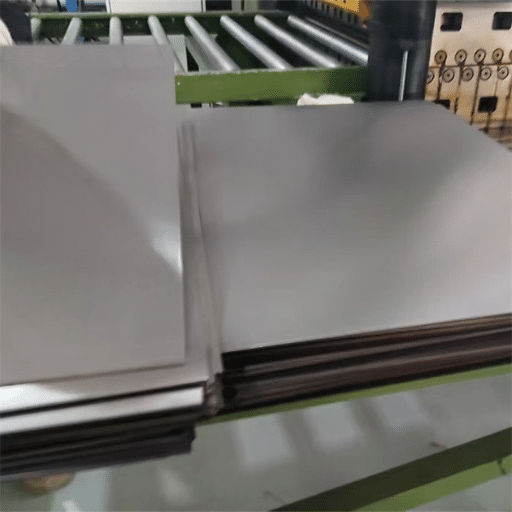
The primary regulation in relation to aerospace titanium plate is AMS 4911, which is a standard from SAE International specification of Ti-6Al-4V annealed sheet, strip and plate. This is the material that is specified in flight structures and not commercial metal structures, and the one that all procurement directors have to check before approving any request for purchase.
In March 2026, upon receiving a quotation dated March 2026 for “aerospace grade titanium plate”, Elena Voss, a Procurement Manager working for Tier-2 Aero Structure Company based in Hamburg, came across a situation where neither specification number nor heat treatment nor melt origin could be traced back to the supplier. Further investigation revealed that the price is $28 per kilogram which was rather alluring. She sent in the purchase requisition.
Material appeared six weeks later. Positive material identification, PMI, was carried out by her quality team. The oxygen content reading was a value of 0.24 percent. This is higher than 0.20 percent of the AMS 4911 maximum limit. The whole cargo was rejected at the reception inspection. The opening slipped by eight weeks. The cost of getting the alternate material on time was more than $40,000. Her team’s faith in the supplier vanished.
The mistake was not about titanium. The problem was a lack of procurement specifications.
This article helps you understand the relevant standards, grades and buying requirements of aerospace titanium plate. Its content includes the enabling of AMS 4911 for eligible materials, Boeing and Airbus enhancement of the material with their own conditions, and the best grades for each purpose as well as preparation of the request for quotations (RFQ), including means of avoiding unnecessary events.
Key Takeaways
- AMS 4911 is the definitive specification for Ti-6Al-4V aerospace plate, sheet, and strip. It is distinct from AMS 4928, which governs bar and forgings.
- Plate thickness ranges from 0.250 inch (6.35 mm) to 4.000 inches (101.6 mm). Sheet is thinner. Strip is narrower. The distinction matters for tolerances and mechanical properties.
- Boeing BMS 7-247 and Airbus ABS 5125A/B/C are OEM-specific supplements to AMS 4911 that Tier-1 suppliers must meet for airframe programs.
- DFARS compliance for U.S. defense applications requires verifying the country of melt, not just the country of final processing.
- Certified aerospace titanium plate lead times in 2026 range from 8 to 16 weeks. Pricing for Grade 5 plate runs 22to22to45 per kilogram depending on certification level and order volume.
What Is Aerospace Titanium Plate?
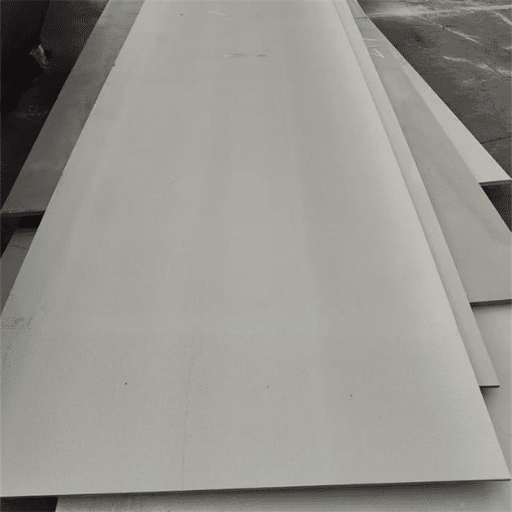
Plate vs Sheet vs Strip
The aerospace industry employs definitions of titanium plate, sheet, and strip in terms of thickness and width, which have procurement implications. Plates commence at 0.250 inch (6.35 mm) and may be as thick as 4.000 inches (101.6 mm), and sometimes more. A sheet has a thickness that varies between 0.016 inches (0.4 mm) and 0.187 inches (4.75 mm). On the other hand, strip is a narrow coil of sheet, typically a partial coils of about 24 inches (610 mm) in width or less.
These distinctions are important as structural properties vary with thickness. In rolling and heat treatment, diffusion is more sluggish in a thicker plate. This, in turn, is influencing the performance of the material in terms of grain structure and ductility across the thickness.
This is well accounted for in AMS 4911, which specifies all the elongation minimums accordingly. Sheet material up to 0.187 inch in thickness should comply with a 10% elongation. 0.187 to 2.0 inch plate thickness should be 8%. A 2.0 to 4.0-inch plate should be 6%. Anticipate providing structural member properties when required for a plate option but order thin sheet stock instead to achieve a cost saving.
Why Titanium Dominates Aerospace Structures
The density of titanium alloys is in the range of about 4.43 to 4.51 grams per cubic centimeter, while the ultimate tensile strength is above 900 MPa. This means that it is almost 40 percent lighter than steel with the same strength performance. With a working life of 20 years, titanium can offer a return on investment via fuel burn savings for commercial
Beyond weight savings, titanium offers exceptional fatigue resistance and compatibility with carbon fiber reinforced polymer composites. Galvanic corrosion between aluminum and carbon fiber has driven Boeing and Airbus to specify titanium at composite interface points on the 787 and A350 programs. For a broader comparison of titanium against alternative metals, see our guide on titanium vs stainless steel.
Contact our metallurgical engineers to verify which titanium form, plate or forged billet, best suits your component geometry.
AMS 4911: The Primary Specification for Aerospace Plate
Scope and Material Designation
AMS 4911 is an Aerospace Material Specification published by SAE International. It covers titanium alloy sheet, strip, and plate in the annealed condition. The material is Ti-6Al-4V, commonly called Grade 5 titanium or UNS R56400. The latest revision is AMS 4911T, issued in November 2025. The specification scope covers products with thicknesses up to 4.000 inches (101.60 mm).
Ti-6Al-4V accounts for approximately 50 to 70 percent of all titanium used in aerospace applications. It is an alpha-beta alloy containing 6 percent aluminum and 4 percent vanadium. The aluminum stabilizes the alpha phase, improving strength and reducing density. The vanadium stabilizes the beta phase, enhancing ductility and toughness. For a detailed technical reference on this alloy, see our Ti-6Al-4V properties guide.
Chemical Composition Requirements
AMS 4911 imposes tighter chemical controls than commercial standards like ASTM B265. The composition limits are:
| Element | Requirement (Weight %) |
|---|---|
| Titanium | Balance |
| Aluminum | 5.50 – 6.75 |
| Vanadium | 3.50 – 4.50 |
| Iron | 0.30 max |
| Oxygen | 0.20 max |
| Carbon | 0.08 max |
| Nitrogen | 0.05 max |
| Hydrogen | 0.015 max |
The hydrogen content also requires close monitoring. Since titanium tends to absorb hydrogen at high temperatures, too much hydrogen leads to embrittlement. Everything else will be in place, yet the aerospace titanium plate still contains more than 0.015 percent of hydrogen, which will lead to cracks or fatigue failure. Many distinguished vendors perform hydrogen measurements by using inert gas fusions every time they work on one hundred tons or a certain heat run.
Mechanical Properties in the Annealed Condition
AMS 4911 specifies minimum mechanical properties using A-basis values, meaning 99 percent of samples from a lot must meet the requirement with 95 percent statistical confidence. This is the safety margin that allows engineers to design airframe structures with predictable performance.
| Property | Minimum Requirement |
|---|---|
| Tensile Strength | 130 ksi (895 MPa) |
| Yield Strength (0.2% offset) | 120 ksi (825 MPa) |
| Elongation (sheet <= 0.187″) | 10% |
| Elongation (plate 0.187″ – 2.0″) | 8% |
| Elongation (plate 2.0″ – 4.0″) | 6% |
In the annealed state, these values hold. There are other specifications, like AMS 4967 and 4965, that address solution-treated and aged variants since they are stronger. Ensure that the condition specified on the order is the condition that was used in the stress calculation.
Mandatory Testing and Documentation
The standards of AMS 4911 require that the material be qualified by the provisions of yield testing, chemical composition, tensile and bend tests, microstructure and apparent surface analysis. Whenever mentioned in the purchase requisition or in those cases where interior integrity is essential, then ultrasonic evaluation shall be undertaken.
Documentation must include a Mill Test Report (MTR) certifying heat number, chemical composition, mechanical properties, and compliance with the specified standard. Full material traceability from sponge through melting, forging, rolling, and heat treatment is mandatory for aerospace acceptance. Contact our team to request sample MTRs and verify our traceability protocols.
Other Grades and Specifications for Aerospace Plate
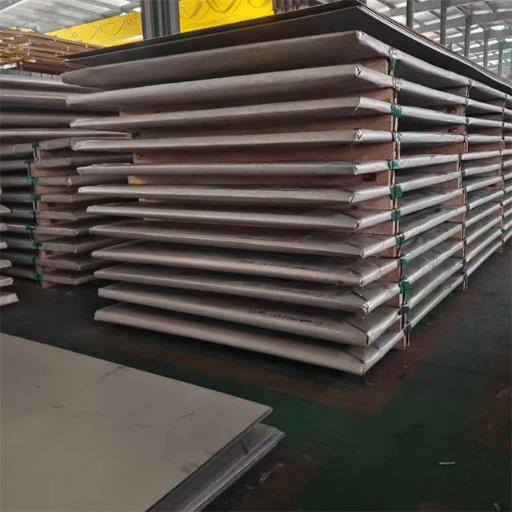
While Ti-6Al-4V dominates, other titanium grades serve specific aerospace roles. Choosing the correct grade ensures the component performs without excess cost or weight. For a comprehensive overview of the titanium alloy family, see our titanium alloys complete guide.
Commercially Pure Grade 2
CP Grade 2 offers excellent corrosion resistance and formability at moderate strength. Tensile strength is approximately 345 MPa, far below Ti-6Al-4V, but its ductility and ease of forming make it suitable for non-structural panels, ventilation ducts, and interior hardware. For a deeper look at titanium’s corrosion performance, see our guide on titanium corrosion resistance. It is specified under ASTM B265 Grade 2 and is rarely used for flight-critical primary structure.
Grade 23 (Ti-6Al-4V ELI)
Grade 23 has less interstitial elements, specifically iron and oxygen, compared to Grade 5. Therefore, the chemistry for low interstitial is indicated to provide enhanced fracture toughness and fatigue crack development resistance. Most commonly, it has become a norm for very critical members, hubs of rotors, wheel hub sections, or any structure, in which damage tolerance response is more important than the ultimate strength of the material itself. AMS 4930 and AMS 4931 are some of the aerospace titanium plate sheets’ standards while ASTM F136 is applicable for orthopedic products.
Beta Alloys
Examples of beta titanium alloys are Ti-10V-2Fe-3Al (Grade 19) and Ti-15V-3Cr-3Al-3Sn offering a higher strength and a greater hardenability. These are employed in modern military aviation and space platforms where “weight is gold” and where quantities of production make the higher cost of material, kilos of which cost no less than 66-132 or even more, acceptable.
AMS 4911 vs ASTM B265
| Feature | AMS 4911 | ASTM B265 |
|---|---|---|
| Industry Focus | Aerospace / Defense | General industrial, marine, chemical |
| Composition Controls | Stricter interstitial limits | Standard commercial ranges |
| Melting Requirements | Multiple melt (VAR) typically required | Less prescriptive |
| Heat Treatment | Detailed annealing parameters | General guidance |
| Microstructure | Explicit acceptance criteria | Less stringent |
| Traceability | Full aerospace MTR, heat lot | Standard mill certification |
If your application is aerospace or defense, AMS 4911 is the minimum acceptable specification. ASTM B265 alone does not provide the composition controls, testing rigor, or traceability that airframe manufacturers demand.
OEM Specifications: Boeing, Airbus, and Defense Requirements
Boeing Material Specifications
When it comes to AMS 4911, Boeing has some more Material Specifications. For a Ti-6Al-4V aerospace titanium plate or sheet material used in Boeing programs, BMS 7-247 shall be applied. It includes, among other practices, stricter acceptance criteria (as applicable), additional markings, and potential inclusion of other tests that are not provided in AMS. Companies Walley Peterson employ need to be equipped with an AS9100 certified quality system, and in many instances rely solely on approved suppliers for special processes such as heat treatment and NDT.
Specifications of Airbus
ABS 5125A/B/C (Airbus Björn Spec) is the reference designated for the titanium plate for this purpose, whereas ASNA 3304 and LN 9297 enable testing and acceptance. Additionally, all Airbus “Projects” are EN 9100, or the regional equivalent of AS9100, certified, and their materials fully accountable from production up to the end user.
DFARS and Defense Procurement
The U. S. defense industry adds yet another dimension of compliance – the DFARS 252.225-7009 section, commonly known as the specialty metals clause. This regulation provides limitations on the use of titanium produced in certain countries in defense articles. The important limitation in the DFARS is that it deals with the country of melt of the plate as opposed to the country of its manufacture in a plate form only. Pure joking, a plate that is rolled in the United States, but the sponge within was manufactured in a country that is on the DFARS list, is compliant.
The sourcing and acquisition executives who are in defense programs will need to check the melt source on the material test report, and not only of the place of the process. Because of the complexities of trading companies that use underground or layered supply networks, such documents cannot be issued easily, so for this kind of defense jobs, one has to deal with mills directly or suppliers that can provide full melt-to-part traceability.
As an illustration, a steel or aerospace titanium plate manufactured in America but made using sponge exported from a controlled country is non-compliant.
In 2026 early January, an establishment that supplies construction elements in Dallas dispatched AMS 4911 plates to a Wichita subcontractor for Boeing. There was a purchase order with a specific mention of BMS 7-247 compliance. There was also another requirement for the performance of additional ultrasonic testing in accordance with AMS-STD-2154.
The supplier had simply delivered an AMS 4911 material, which was their standard. They had not read the Boeing supplement. The shipment was rejected at the point of receiving inspection. Scrap and costs for expediting came out to $80,000 all in.
Although very injurious, the lesson was still memorable. Pay attention to and read the entire purchase order. The donor supplements of the OEM must be taken seriously.
Aerospace Applications for Titanium Plate
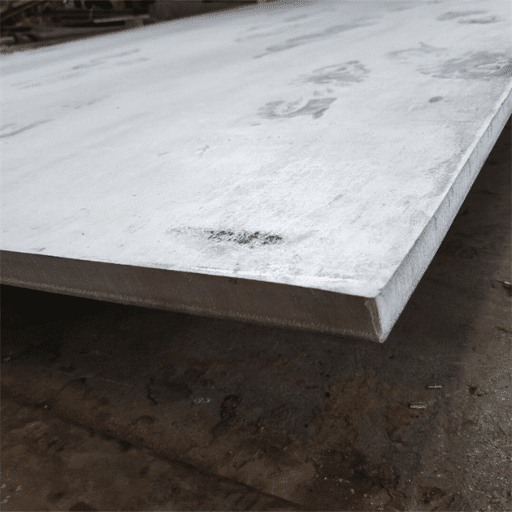
Airframe Structures
Titanium plates are also used as skins for fuselages, spars for wings, bulkheads, and frames for commercial and military planes alike. Galvanic corrosion is avoided in cases of Boeing 787 and also the Airbus A350, which make use of titanium on areas that form joints between composites and other elements. Additionally, fatigue resistance of the material aids designers in ensuring the structural thickness is minimized without compromising its longevity.
Engine Components
Compressor discs, fan blades, seals, and casings in jet engines rely on Ti-6Al-4V plate and forgings. The alloy maintains strength and creep resistance at temperatures up to approximately 400 degrees Celsius. For components requiring even higher damage tolerance, Grade 23 ELI plate provides superior fracture toughness. For components better suited to forging than plate, see our guide on custom titanium forgings.
Landing Gear and Structural Fittings
The final construction of the landing gears involves the use of high-performance connection elements and frames manufactured out of thick plates of titanium. Machined plate elements buy-to-fly ratio of 5:1 to 10:1, materials and supplier selection plays an essential role in controlling costs.
Armed Forces and Space
In space, titanium plates help make propellant containers, housing shells, and parts of satellites. Cryogenic properties of this metal are very good so that properties other than steel, such as brittleness and failure to tear, are not shifted by the temperature of the cryogenic steel. This ensures that once launched, the lawnmower will work properly in zero gravity conditions for space enhancement purposes.
Quality Assurance: What Buyers Must Verify
Documentation Requirements
It is necessary to provide a Mill Test Report (MTR) for every delivery of aerospace titanium plate, which should contain the heat number, the chemical and mechanical composition within determined limits, and conformance with the given standard. Certificate of Conformance (CoC) aids to be noticed on whether all the specifications and requirements of the drawing are in conformance. In case of brand projects, the First Article Inspection (FAI) assures confirmation of the dimensions and the material in the first batch of mass production.
Heat treatment reports should include furnace temperatures, soak, cooling datum temperatures and hold times and atmosphere. Reports from ultrasonic testing must include, among other essentials, the standard of acceptance, the technique employed in the examination, and the inspector’s level of qualification.
Physical Verification
Upon receiving inspection, there is an X-Ray Fluorescence (XRF) device, which is able to identify the metallic elements and confirm that the composition is according to the material test report (MTR). Thickness dimensions, in addition to flatness and straightness inspection, are also conducted so as to ensure compliance with the drawings. The surface finish is also controlled, for example, it is left unfinished as rolled, pickled, abrasive blasted, or as a machined finish.
Supplier Qualification Checklist
Before placing an order, verify that your supplier maintains:
- AS9100 certification as the minimum baseline for aerospace
- NADCAP accreditation for heat treatment and special processes
- In-house rolling mill capabilities or documented partnerships with qualified mills
- Full traceability from raw material procurement through rolling, heat treatment, and final inspection
- DFARS compliance documentation for defense applications
Suppliers who cannot provide sample MTRs, CoCs, or FAI documentation during qualification should be removed from consideration. Lack of a defined inspection plan before production begins is a warning sign that quality is reactive rather than systematic.
How to RFQ Aerospace Titanium Plate
What to Include in Your RFQ Package
An incomplete RFQ produces incomplete quotes, change orders, and rejected first articles. Include these elements:
- Grade and condition: “Ti-6Al-4V (Grade 5), Annealed” or “Solution Treated and Aged” as required
- Material standard: “AMS 4911” plus any OEM supplement such as “BMS 7-247” or “ABS 5125B”
- Dimensional requirements: Thickness, width, length, and critical tolerances. Aerospace plate often requires plus/minus 0.005 inch or tighter.
- Surface finish and flatness: Mill finish, pickled, ground, or polished. Specify flatness in inches per foot.
- Certification level: EN 10204 3.1 or 3.2 certificates, MTRs, and CoCs
- Testing requirements: Ultrasonic testing per AMS-STD-2154, PMI, mechanical test coupons
- Traceability: Heat numbers and lot numbers marked on material and documented
- Delivery and packaging: Clean, dry, contamination-free packaging with material segregation
- Delivery schedule: Account for 8 to 16 week standard lead times, plus customs clearance if importing
Red Flags to Avoid
- Suppliers who quote “aerospace grade” without referencing a specific AMS, ASTM, or OEM specification number
- Inability to provide sample MTRs or CoCs during the qualification phase
- Heat treatment or NDT performed by unidentified subcontractors with no traceability linkage
- Vague responses about melt origin when DFARS compliance is required
- Missing inspection plans or undefined acceptance criteria before production begins
Cost and Lead Time Benchmarks (2026)
The costs for material in terms of Ti-6Al-4V plate affixed with the aerospace certifications usually cost about 22-45 per kg, and the price mainly depends on the certification tier of the material, the plate thickness, and the order in supply. The certification charges for AMS are about twenty to forty percent over the normal ASTM B265 certification costs. When it comes to CP Grade 2 plate, the price is about 13-22 per kilogram. In advanced applications, beta alloys will be priced at 66 to about 132 or more.
Typically, the anticipated duration from order confirmation to delivery of the normal aerospace titanium plate is between eight to sixteen weeks. If any non-standard thicknesses or widths are required, expect this time to be longer than expected. Everyone directly involved in the military industrial sector in 2026 is aware that there is a structural shortage of materials such as sponge and melting capacity, as some original equipment manufacturers have increased their output rates. Therefore, it is recommended to purchasers that the goods are ordered way before the production is scheduled.
An engineer leading a project from Singapore allocated $25/kg for the purchase of a titanium plate. He did so by looking at ASTM B265 price levels. Halfway into the project, he found out that the defense specification necessitated the use of AMS 4911 according to DFARS. Instead of costing $25/kg as previously estimated, the price turned out to be $42/kg. Lead time was 14 weeks.
The material cost doubled while the production timeline was extended by three months. It was an invaluable but demanding learning curve. One should always verify the entire chain of specifications in advance of any budget commitment.
Frequently Asked Questions
What is the difference between AMS 4911 and AMS 4928?
The specifications for titanium and titanium alloys within AMS 4911 and AMS 4928 are noticeably different. While the first standard uses titanium in the form of sheets, strips and plates, the second standard uses it in the form of bars, wires, forgings and rings. While both standards are used for the Ti-6Al-4V alloy, the forming process, the dimensional tolerances and the testing requirements will all vary, where by plate is rolled and bar is extruded or forged. Do not forget to identify the correct AMS for the form of the product always.
How thick is aerospace titanium plate?
AMS 4911, for aerospace titanium plate, ranges from . 250 in in thickness up to 4.0 in in thickness. Sheet is thinner starting from 0.016 inches to not exceeding 0.187. The sheet type strip is a rolled shape of the flat bar called strip and comes in narrow coils.
Can titanium plate be welded?
Yes, but titanium welding requires strict inert gas shielding using argon or helium to prevent contamination by oxygen and nitrogen. Post-weld heat treatment may be required to restore mechanical properties in the heat-affected zone. For detailed welding guidance, see our guide on titanium machining and welding.
What relevance does DFARS compliance have to titanium buyers?
DFARS 252.225-7009 bans usage of foreign metals in US defense materials. The buyers should check the MTR to ensure ‘country of melt’. Even if the material was purpose rolled or processed in another country, materials from restricted countries cannot be used.
How can I check if my supplier is AS9100 certified?
Ask for the certificate number and validate its authenticity using the IAQG OASIS database or through the issuing registrar’s website. Ensure that the products and processes purchased from the organization fall under the certification scope.
Can we use a titanium plate from China in the aerospace industry?
Even if a titanium plate originates from suppliers in China, it will be permissible provided that it fulfills the conditions for either one of AMS or ASTM standards and the manufacturer is certified accordingly. Check the melt origin compliance with DFARS in cases of US military usage. Further to commercial aircraft industry, check if the manufacturer has been included in OEM’s recommended list suppliers or if appropriate two-step sourcing is practiced by the prime.
Conclusion
Aerospace titanium plate is not a generic product. It is a specialized product that is specification sensitive, and the difference between specifications AMS 4911 and ASTM B265, or annealed or solution-treated conditions, or traceable to the source rather than untraceable, is significant as it allows an airframe to operate successfully and a production line to run without interruptions.
The procurement managers and material technologists who succeed in avoiding costly misadventures are similar in some ways. They include precise grades and standards in every final RFQ. They confirm the presence of the AS9100 and the NADCAP certifications before issuing orders. They require MTRs, including heats and melts origin information, prior to moving further. They quality check the receipt of the material through PMI and dimensions rather than relying on the paperwork alone.
If your project requires aerospace titanium plate, whether for commercial airframe structures, engine components, or defense applications, our metallurgical team is available to review your specifications, confirm AMS 4911 or OEM compliance, and deliver fully certified material with complete traceability. Contact an expert or request a quote today.