High Standard Stainless Steel With Strict Inspection



Custom Titanium Forgings: Process, Benefits & Procurement Guide

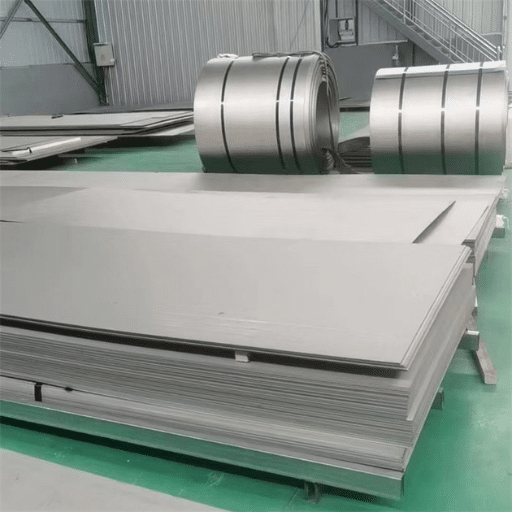
Custom titanium forgings provide structural components with aligned grain flow, delivering superior fatigue resistance and achieving 3:1 efficiency when compared to solid bar stock machining, which results in 8:1 or lower efficiency. The procurement directors and materials engineers require knowledge of the forging process, supplier qualification criteria, and RFQ requirements to manage expenses, production duration, and product quality when selecting manufacturing methods for their critical titanium components.
The Toulouse aerospace procurement manager used her material budget to pay for chips when she received quotes that showed that machining-from-solid would take up 82% of her budget for a new landing gear bracket. A custom closed-die forging alternative cut material waste by 70% and reduced final machining time from 14 hours to 4 hours per part. The forging route showed higher expenses because it produced lower-quality products. The manufacturing decision resulted in lower costs because it selected the most suitable production method.
The guide provides complete information about the titanium forging process which starts from billet material and ends with finished components, while it describes the situations that require open-die versus closed-die method specifications and it outlines the quality documentation that buyers must request and it supplies an RFQ framework that prevents any unexpected events.
Key Takeaways
- Custom titanium forgings achieve buy-to-fly ratios of 3:1 to 5:1, slashing material waste versus machining from solid by 60–80% at production volumes.
- Open-die forging suits large simple shapes and prototypes with 4–6 week lead times; closed-die forging delivers near-net-shape precision parts with tighter tolerances but requires 4–8 additional weeks for die manufacturing.
- All forged titanium surfaces require alpha case removal (0.1–0.3 mm chemically milled or machined) to eliminate the brittle oxide layer formed during heating.
- Buyers must demand MTRs, COCs, FAI reports, and NDT evidence (UT/PT/RT) before accepting any custom titanium forging delivery.
- A complete RFQ package includes technical drawings with GD&T, material specifications, CTQ lists, volume projections, and acceptance criteria referenced to ASTM or AMS standards.
Why Forge Titanium Instead of Machining or Casting?
The Buy-to-Fly Advantage
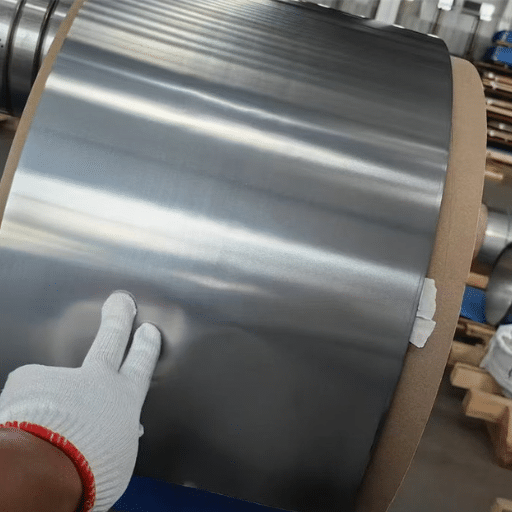
The buy-to-fly ratio calculates the amount of purchased raw materials compared to the quantity of materials that exists in the completed product. The typical ratio for complex aerospace brackets that use Ti-6Al-4V solid bar material usually falls between 8:1 and 20:1. You purchase 20 kilograms of titanium bar to deliver 1 kilogram of finished component. The remaining 19 kilograms turn into waste materials, which costs between $20 and $50 for each kilogram of waste.
The process of closed-die forging creates components that achieve their final design more efficiently than other methods. The typical buy-to-fly ratio presents values which range from 3:1 to 5:1. The same 1-kilogram finished part now requires only 3–5 kilograms of starting billet. The material savings we achieve through this process will enable us to recover our forging tooling costs after we complete our first production lot.
Mechanical Integrity Through Grain Flow Alignment
The process of forging metal produces deformations through compressive stress which affects the metal’s internal grain structure to match the shape of the forged component. The aligned grain flow pattern provides components with superior fatigue resistance and impact toughness and ductility, which these components achieve through their casting or machining processes. The grain structure of forged titanium compressor disks in jet engines enables them to endure millions of load cycles because it follows the stress path.
The casting process produces a solidified material that contains random grain orientation while creating a possibility of defects through porosity and shrinkage. The natural grain flow of machining from solid material gets interrupted when the process starts from a solid block which leaves the item with the original bar grain structure that does not suit its required loading conditions.
When Machining or Casting Wins
Forging is not always the answer. For prototypes and one-off components, machining from solid eliminates tooling costs and lead times. For geometries with extremely complex internal passages that no die can produce, investment casting remains the only viable route. The decision depends on volume, geometry, and performance requirements. For a deeper comparison of manufacturing methods, see our guide on titanium vs stainless steel material selection.
Contact our metallurgical engineers to evaluate whether forging is the optimal route for your component geometry and volume.
The Titanium Forging Process: Step by Step
Step 1: Material Selection and Billet Preparation
The process begins with the right billet. Grade selection determines everything that follows. For a comprehensive overview of available alloys, see our titanium alloys complete guide. The default material for aerospace structural components stands as Ti-6Al-4V (Grade 5) which makes up 70 percent of total titanium forgings. The material Grade 23 (Ti-6Al-4V ELI) delivers improved toughness to medical implants while meeting the more demanding requirements of ASTM F136. Commercially Pure Grade 2 provides chemical processing and marine industries with exceptional corrosion protection and ability to shape into various forms.
Each billet needs to come with a Mill Test Report (MTR) which verifies its heat number and chemical composition and mechanical properties. The absence of this documentation renders all traceability efforts impossible. Reputable suppliers verify incoming billet chemistry through independent spectral analysis before committing it to production.
Step 2: Heating in a Controlled Atmosphere
Titanium reacts with nitrogen and oxygen at temperatures above 650°C, which produces a brittle surface layer that scientists call alpha case. The process requires heating billets inside protective environments, which include argon atmosphere furnaces, vacuum furnaces, and protective coating systems.
The forging temperatures for Ti-6Al-4V alpha-beta alloys range between 800°C and 950°C. The window is narrow. The mechanical properties experience degradation when the temperature exceeds 950°C because of grain coarsening. The forging process becomes extremely difficult at temperatures below 800°C because of increased resistance which leads to internal cracking and incomplete die filling. Qualified forge shops follow the standard practice of maintaining temperature control within a range of ±15°C. (Process parameters referenced from ASM International.)
Step 3: Forging and Deformation
The heated billet is deformed using one of three methods:
The process of open-die forging uses its flat dies, which contain basic shapes to perform multiple workpiece rotations during production. The method offers operational flexibility since it needs only basic equipment to create various industrial products, which include large bars and discs and rings, and prototype shapes. The process allows extensive tolerances, which are accompanied by substantial machining requirements.
The process of closed-die forging restricts billet movement through two die halves which contain precisely machined surfaces that create the final product shape. The system yields near-net shapes which maintain precise dimensions because of its reduced machining requirements and enhanced surface quality. Tooling expenses generate substantial costs because die production costs range from 5,000to5,000to50,000plus according to the complexities which involve their specific dimensions. The cost savings from each produced unit at higher production levels create a quick return on investment.
The process of isothermal forging uses constant high temperatures to maintain both die components and workpieces during the entire deformation process. The specialized technique creates intricate aerospace parts which achieve optimal microstructural consistency and diminished internal thermal stress. The manufacturing process requires 12 to 16 weeks for completion yet the superior fatigue performance of critical rotating equipment makes the waiting period necessary.
Titanium exhibits sensitivity to changes in strain rate. When an object undergoes excessive deformation because of excessive speed friction creates heat which leads to localized overheating and internal cracking. Qualified forge shops control their strain rates through software that enables them to adjust hydraulic presses for specific ram speeds while they operate their equipment.
Step 4: Cooling and Heat Treatment
The component goes through controlled cooling and heat treatment after forging to achieve its target mechanical properties. The Ti-6Al-4V alloy undergoes Solution Treating and Aging (STA) process through which technicians first heat the alloy to 900-950°C before performing water quenching, followed by aging at 480-595°C to reach maximum strength. CP Grade 2 undergoes annealing treatment at 650-760°C, which helps the material reach its highest level of ductility and corrosion resistance. Stress-relieving process at 480-650°C is necessary for complex geometries which have high risk of distortion.
The heat treatment records need to track all details, which include furnace temperatures and hold times, cooling rates and atmosphere conditions. The records serve as essential components of the quality documentation package, which buyers need to receive with each delivery.
Step 5: Final Machining and Surface Treatment
All forged titanium surfaces exposed to air during heating develop alpha case, a brittle oxygen-enriched layer that requires complete removal. Standard practice removes 0.1–0.3 mm from all surfaces through chemical milling or machining. Failure to remove the alpha case creates a crack initiation site that can cause catastrophic failure under cyclic loading.
Final machining brings the part to print dimensions. The dimensional inspection process uses Coordinate Measuring Machines CMM to confirm whether the part meets its specified tolerances. The specified surface finishing process includes passivation, anodizing, and polishing.
Open-Die vs Closed-Die vs Isothermal Forging
| Factor | Open-Die | Closed-Die | Isothermal |
|---|---|---|---|
| Best For | Large parts, simple shapes, prototypes | Complex geometries, mid-to-high volumes | Complex high-performance aerospace components |
| Tooling Cost | Minimal | 5,000–5,000–50,000+ | Very high |
| Tolerances | Loose, generous machining allowance | Tight, near-net-shape | Very tight |
| Lead Time | 4–6 weeks | 8–14 weeks | 12–16 weeks |
| Buy-to-Fly Ratio | Moderate (5:1 to 8:1) | Excellent (3:1 to 5:1) | Excellent (3:1 to 5:1) |
| Typical Equipment | Hydraulic hammers, open presses | Mechanical/hydraulic presses | Specialized constant-temp presses |
How to Choose
Specify open-die forging when producing fewer than 50 pieces annually, when the geometry is simple (bars, discs, rings), or when you need prototype parts quickly without investing in dedicated tooling.
Specify closed-die forging when volumes exceed 100 pieces annually, when the geometry is complex, when tolerances are tight, or when reducing machining time and material waste justifies the tooling investment.
Specify isothermal forging only for the most demanding aerospace or defense components where fatigue life and microstructural uniformity are non-negotiable and lead time flexibility exists.
Grade Selection for Forged Titanium Components
Choosing the correct grade ensures the forging delivers the performance your application demands.
Ti-6Al-4V (Grade 5) dominates aerospace and industrial applications. With tensile strength around 950 MPa and a density of 4.51 g/cm³, it offers the best strength-to-weight ratio of any structural metal. After STA heat treatment, it meets AMS 4928 for aerospace and ASTM B348 for general engineering. For a detailed technical reference, see our Ti-6Al-4V properties guide.
Grade 23 (Ti-6Al-4V ELI) contains lower interstitial elements (oxygen, iron, carbon), improving toughness and fracture resistance. It is the standard for permanent medical implants, meeting ASTM F136 requirements for surgical applications.
CP Grade 2 provides excellent formability and corrosion resistance at moderate strength. It is the workhorse for chemical processing equipment, marine hardware, and heat exchangers where corrosion immunity matters more than peak strength. For a deeper look at how titanium performs in aggressive environments, read our guide to titanium corrosion resistance.
Grade 9 (Ti-3Al-2.5V) offers a middle ground between CP titanium and Grade 5, with better formability than Grade 5 and higher strength than CP grades. It is frequently specified for tubing and applications requiring cold forming after forging.
All forged titanium components must conform to the relevant standard: ASTM B381 for forgings, AMS 4928 for aerospace bar and forgings, or ASTM F136 for medical implants. (Standards referenced from ASTM International.)
Quality Assurance: What Buyers Must Verify
Non-Destructive Testing (NDT)
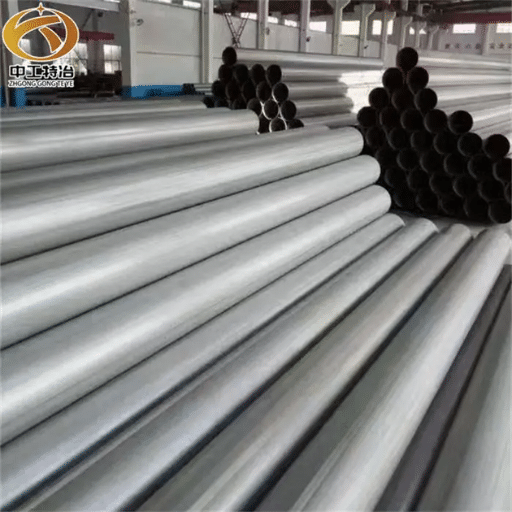
Forged titanium for critical applications requires systematic NDT to verify internal and surface integrity:
- Ultrasonic Testing (UT): Detects internal discontinuities such as cracks, voids, or inclusions. Aerospace forgings typically require UT per AMS-STD-2154 or equivalent.
- Penetrant Testing (PT): Identifies surface-breaking defects after final machining. Essential for fatigue-critical surfaces.
- Radiographic Testing (RT): Used for complex geometries where UT access is limited.
- Metallographic Analysis: Verifies grain flow alignment, microstructure, and absence of alpha case remnants.
Mechanical Testing
Mechanical test coupons, typically cut from prolongations or separately forged test bars, must demonstrate:
- Tensile strength and yield strength per ASTM E8
- Elongation and reduction of area
- Hardness per ASTM E18
- Fatigue testing for rotating components or cyclic load applications
Documentation Requirements
Every delivery of custom titanium forgings must include:
- Mill Test Report (MTR): Heat number, chemical composition, mechanical properties, and compliance with specified standards
- Certificate of Conformance (COC): Supplier certification that the parts meet all drawing and specification requirements
- First Article Inspection (FAI): For new designs, dimensional and material verification of the first production part
- Heat Treatment Records: Furnace charts showing temperatures, hold times, and cooling rates
- NDT Reports: Ultrasonic, penetrant, or radiographic test results with acceptance criteria
How to RFQ Custom Titanium Forgings
What to Include in Your RFQ Package
An incomplete RFQ produces incomplete quotes, change orders, and rejected first articles. Include these elements:
- Technical drawings with Geometric Dimensioning and Tolerancing (GD&T), datums, and critical surfaces clearly identified
- Material specification including exact grade, standard (ASTM B381, AMS 4928, etc.), and desired condition (annealed, STA, etc.)
- Annual volume and batch size to help the supplier optimize tooling and process planning
- Critical-to-Quality (CTQ) list identifying sealing faces, fatigue fillets, machining allowances, and surfaces requiring NDT
- Required evidence: FAI requirements, MTR needs, hardness reports, NDT method and acceptance class
- Acceptance criteria referenced to specific industry standards
- Packaging and labeling requirements for export traceability and customs documentation
Supplier Qualification Checklist
Before placing an order, verify that your forging supplier maintains:
- ISO 9001:2015 certification as a minimum baseline
- AS9100 certification for aerospace applications
- NADCAP accreditation for heat treatment and special processes
- In-house NDT capabilities or accredited subcontractor relationships with full traceability
- Equipment range appropriate to your part size: hydraulic presses, mechanical presses, or hammers with sufficient tonnage
- Full traceability from raw material procurement through forging, heat treatment, and final inspection
Red Flags to Avoid
- Suppliers who cannot provide sample MTRs, COCs, or FAI documentation during qualification
- Lack of a defined inspection plan before production begins
- Heat treatment or NDT performed by unidentified subcontractors with no traceability linkage
- Inability to confirm forging route (open vs closed die) after engineering drawing review
- Vague responses about alpha case removal protocols or acceptance criteria
Submit your drawing for a forging feasibility review and quote.
Cost, Lead Time, and Total Value
Lead Time Benchmarks
- Open-die forging, simple geometry: 4–6 weeks after billet receipt
- Closed-die forging: add 4–8 weeks for die design and manufacturing
- Specialty grade billet procurement: add 2–4 weeks for aerospace or medical certified material
- Isothermal forging: 12–16 weeks total
Cost Drivers
The material cost for Ti-6Al-4V billet, which needs certification, runs between 20to20to50 per kilogram based on its required certification level and product form. The initial cost of closed-die tooling requires high investment, but it recovers costs quickly through multiple production runs. The essential functions of NDT machining and surface treatment create extra expenses that need to be paid for their use in vital functions.
The Total Value Equation
The initial impression of forging shows it to be a costly process. The total operational costs become evident through the expenses of tooling, extended production intervals and specialized equipment requirements. The total value calculation changes completely when products reach their production thresholds. A medical device manufacturer switching from machined to forged hip stems reduced material consumption by 65% and machining cycle time by 40%. The forging tooling paid for itself within the first 2,000 units. The aligned grain flow pattern diminished implant failure rates during fatigue testing because of its measurable impact on testing results.
For a broader view of titanium manufacturing methods, including machining and additive manufacturing, explore our guides on titanium machining and welding and titanium additive manufacturing.
Frequently Asked Questions
What is the alpha case in titanium forging?
Alpha case develops through titanium’s interaction with oxygen and nitrogen at high temperatures which creates a brittle and hard surface layer. The component requires complete removal of alpha case, which requires 0.1 to 0.3 millimeters to be removed through chemical milling or machining before it can enter service. Alpha case remains intact as a crack initiation site which develops under cyclic loading conditions.
How long does custom titanium forging take?
The process of open-die forging begins 4 to 6 weeks after the receipt of raw materials for basic shapes. The process of closed-die forging requires an additional 4 to 8 weeks because it needs time to develop the necessary dies. The process of isothermal forging requires materials to be in inventory for a period of 12 to 16 weeks. The process of specialty grade billet procurement requires an additional two to four weeks.
Is titanium forging more expensive than machining?
For prototypes and low volumes, machining from solid is usually cheaper because it avoids tooling costs. The production process becomes more cost-effective through forging after a company produces between 50 and 100 units annually because this process reduces material waste and decreases the time needed for machining operations.
What certifications should a titanium forging supplier have?
The minimum requirement for certification, ISO 9001:2015, must be fulfilled. For aerospace purposes, the organization needs to acquire AS9100 certification together with NADCAP accreditation for its heat treatment processes. The medical field requires organizations to obtain ISO 13485 certification and demonstrate their ability to meet ASTM F136 standards. Organizations require verification of their internal NDT testing capabilities together with their complete material tracking systems.
Can you forge titanium to custom chemical compositions?
Yes. The main titanium grade used in industry, Ti-6Al-4V, can be modified through custom melting processes which allow specific changes to aluminum and vanadium and interstitial element contents. The process of obtaining custom compositions requires extended time periods because it involves both billet material acquisition and testing procedures.
Conclusion
The choice to use custom titanium forgings establishes a manufacturing decision that extends beyond simple procurement selection. The aligned grain structure, superior fatigue resistance, and efficient material utilization make forging the optimal route for critical components at production volume. Success demands explicit grade selection together with appropriate forging method selection and correct documentation requirements, and supplier evaluation using strict standards.
The engineers and procurement directors who achieve the best outcomes approach custom titanium forgings with the same precision they apply to the components themselves. They provide complete RFQ packages with GD&T drawings and CTQ lists. The verification of supplier certifications occurs before order placement. The company requires MTRs, NDT reports, and heat treatment records to accompany all deliveries.
If your project requires custom titanium forgings—whether for aerospace structures, medical implants, or corrosion-resistant marine hardware—our metallurgical team is available to review your drawings, recommend the optimal forging route, and deliver fully certified components with ISO 9001 quality assurance. Contact an expert or request a quote today.