


Blog
Magnetic vs Non-Magnetic Alloys Guide


Understanding the differences between magnetic and non-magnetic alloys is critical in all aspects of life, from manufacturing to scientific research. These materials have a strong influence, as they are used in applications ranging from electronic devices to heavy-duty machines, yet most people remain unaware of the differences that distinguish them. This comprehensive article takes the reader on a fascinating journey through the world of alloys, explaining why some materials are magnetically attracted, the underlying scientific principles that govern their behavior, and the possible applications of both types of materials. If you are an expert wanting to refresh your knowledge or simply a reader who is curious about the invisible properties of everyday metals, then this piece will definitely provide you with the necessary, simple, and enlightening definitions that will help you understand the fundamentals.
Definition and Properties
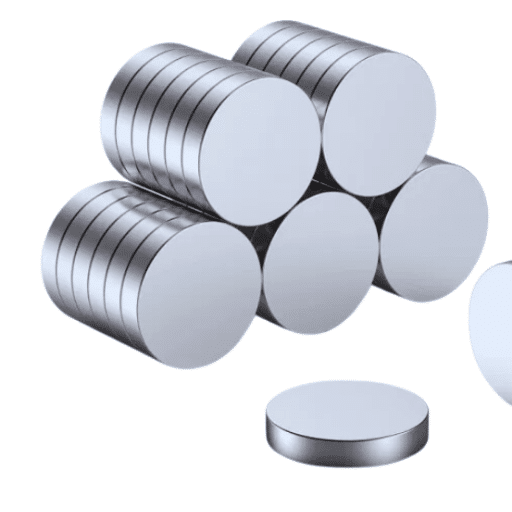
Alloys, which are composed of two or more elements, at least one of which is a metal, are created primarily to improve their properties. The metals are blended to achieve desired characteristics, such as increased strength, durability, and corrosion resistance. A good example is steel that is composed of iron and carbon, where the resulting product is stronger and more versatile than pure iron. Alloys are generally classified as ferrous (iron-containing) and non-ferrous (iron-free), and each offers distinct advantages depending on the application.
What are Magnetic Alloys?
Magnetic alloys are materials composed of different metals, often including iron, nickel, or cobalt, that exhibit magnetism; their primary applications include data storage, motors, and transformers.
Characteristics of Non-Magnetic Metals
Non-magnetic metals are the materials that do not exhibit any magnetic properties and, hence, magnetic neither attract nor get magnetized. Most of the time, these metals are used in applications where magnetic fields may disrupt equipment operation, for example, within electronic components or medical devices. Non-magnetic metals often exhibit high corrosion resistance, high electrical conductivity, and good thermal stability as common properties.
Below are five non-magnetic metals along with their specifications:
Aluminum
- Lightweight and very malleable
- Excellent against rusting
- Highly conductive for electrics
- Mostly used in the construction, transportation, and packaging industries
Copper
- The best for both electrical and thermal conduction
- Extremely resistant to corrosion
- Predominantly used in electric wires, plumbing, and heat exchangers
Titanium
- Very strong yet light
- Wonderful against corrosion, especially in seawater
- Engaged in aerospace, medical implants, and industrial applications
Lead
- Very dense with good sound-insulating and radiation-shielding properties
- Has rusted areas that are almost impossible to detect
- Usually found in batteries, weights, and safety equipment
Gold
- A very good conductor that is not easily tarnished
- Very soft and ductile
- Usually found in electronics, jewelry, and dental restorations
Key Differences Between Magnetic and Non-Magnetic Alloys
Common Types of Magnetic Alloys

Many industries employ magnetic alloys, which can generate and maintain magnetic fields, the primary reason for their use. The alloys are classified into two major groups based on their composition and resulting magnetism. Therefore, in most cases, they are made to suit the particular application. In the next part of the text, we are going to cover some of the most common magnetic alloys and their properties, along with the details of their applications:
Alnico Alloys
Composition: Mainly consists of aluminum (Al), nickel (Ni), and cobalt (Co); iron (Fe) is present, along with small amounts of either copper (Cu) or titanium (Ti).
Properties:
- Very powerful magnetic field.
- Stable at high temperatures with the capability to retain magnetism even in very harsh conditions.
Applications:
The very strong and stable magnetic characteristics among others made them useful for sensors, electric motors, loudspeakers, and guitar pickups.
Performance Data: Magnetic energy product varies from 1 to 10 MGOe depending on the grade (Megagauss Oersted).
Ferrite (Ceramic) Alloys
Composition: The mixture contains both iron oxide (Fe₂O₃) and ceramic materials, where the latter mostly consists of barium (Ba) or strontium (Sr).
Properties:
- Cheaper and highly rust-proof.
- High electrical resistance, which, in turn, reduces the creation of eddy current losses.
Applications:
Used primarily in the production of transformers, inductors, antennas, and consumer electronic products’ magnets.
Performance Data: Ferrite magnets typically yield a magnetic energy product of 1 to 4.5 MGOe.
Samarium-Cobalt (SmCo) Alloys
Composition: Contains both samarium (Sm) and cobalt (Co) with some trace elements such as Fe and Cu.
Properties:
- Excellent magnetic strength and high resistance to demagnetization.
- Usable temperature (up to 300°C).
Applications:
Good for aerospace, medical, and high-performance motors industries.
Performance Data: The magnetic energy product is reported to be in the range of 16 to 32 MGOe.
Neodymium-Iron-Boron (NdFeB) Alloys
Composition: The primary materials are neodymium (Nd), iron (Fe), and boron (B), Usually, Dysprosium (Dy) or Praseodymium (Pr) are used for improving thermal stability.
Properties:
- Presently, they are the strongest among the permanent magnets available.
- Their tendency to rust necessitates coating with materials that provide a barrier.
Applications:
Their primary application fields are electric vehicles motors, wind turbines, hard drives, and MRI equipment.
Performance Data: The product of energy varies between 35 and 55 MGOe making it one of the most powerful magnetic materials.
Permalloy (Nickel-Iron Alloys)
Composition: Predominantly 80% nickel (Ni) and 20% iron (Fe) but there are also mixtures available.
Properties:
- Exceptional magnetic permeability and low coercivity.
- Ability to protect sensitive electronic elements from the influence of external magnetic fields.
Applications:
They are commonly used in the making of transformer cores, magnetic shielding, and inductors.
Performance Data: Some alloys exhibit very high magnetic permeability, up to 100,000.
The trends in the field of material science are such that they will always be the ones that will support the growth of the magnetic alloys or provide them the power of next-gen applications like renewable energy, AI-based technologies, and space exploration systems.
Examples of Ferrous Metals
Ferrous metals are primarily iron-containing metals. The term “ferrous metals” alone indicates that their main constituent is iron. In addition, they are typically recognized for their high strength, wear resistance, and magnetic susceptibility. The various applications and performance characteristics of the ferrous metals that follow are described in detail along with their varying features, uses, and performances.
Cast Iron
Composition: It contains carbon between 2 and 4%, the rest including silicon and other elements in extremely small quantities.
Properties:
- Compressive strength is outstanding.
- Wear resistance is acceptable.
- Tensile strength is quite low and ductility is restricted.
Applications:
- It is used to produce various types of heavy-duty cookware, engine blocks, and pipes.
- It is found in the form of columns and facades in buildings.
Carbon Steel
Composition: Carbon content level varies (low, medium, high).
Properties:
- Very high strength and toughness.
- Low carbon steel has the best ductility and can be welded without difficulty.
- High carbon steel is tough but not very ductile.
Applications:
- These steels are utilized to construct bridges, buildings, and railroads.
- They are also used for tools, car parts, and pipelines.
Alloy Steel
Composition: Steel is composed of iron, carbon, and other alloying elements, such as chromium, nickel, and manganese, added to improve its properties.
Properties:
- Some types are resistant to corrosion (like stainless steel).
- The alloy exhibits high strength and low density.
Applications:
- The alloy is widely used in the aerospace, power generation, and heavy machinery industries.
- Stainless steel is common in kitchen utensils, medical devices, and construction materials.
Stainless Steel
Composition: It contains at least 10.5% chromium, which is typically combined with nickel, molybdenum, and other elements.
Properties:
- The steel is highly resistant to corrosion and therefore has a longer service life due to the protective chromium oxide layer formed on its surface.
- The steel has strength and life but also an appealing finish that is attractive.
Applications:
- Stainless steel is considered to be a must-have material in the fields of medical, kitchen equipment, and the construction industry.
- The material is sometimes used in the solar power generation and in electric vehicle batteries through lessening systems.
Wrought Iron
Composition: Carbon content is very low; slag inclusions give it a fibrous texture.
Properties:
- Its main features are ductility, malleability, and corrosion resistance.
- Also, it is easily welded and forged.
Applications:
- Wrought iron was mostly used in ornamental gates, fences, and railings in the past.
- However, modern steel is now more commonly used, as it is less expensive than wrought iron.
Electrical Steel
Composition: Silicon is added to steel to enhance magnetic properties, thereby producing steel with improved magnetic properties.
Properties:
- The material has an extremely high magnetic permeability.
- Materials with this property suffer minimal energy loss during electromagnetic applications.
Applications: Transformers and electric motor cores.
Recent developments in ferrous metals underscore their continued importance in future technologies, particularly in renewable energy systems and electric vehicle components. Studies have confirmed their role in energy waste reduction and minimizing environmental impact. For instance, silicon electrical steels are designed to enhance the output of wind turbines and smart grids. Hence, these innovations underscore the ever-changing yet constant significance of ferrous metals in engineering and technology.
Properties of Cobalt and Nickel Alloys
The remarkable properties of cobalt-nickel alloys have led to their extensive use in various industries such as aerospace, power generation, and medical implants. The following are the top five properties that make cobalt and nickel alloys worth to be mentioned:
1. High-Temperature Strength
The mechanical strength of cobalt and nickel alloys does not get affected by very high temperatures, which usually exceed 1,000°C. Thus, they can be installed in extremely difficult and challenging situations such as turbine blades and jet engines.
2. Corrosion Resistance
Also, these alloys are very much resistant to corrosion and oxidation even in the most challenging situations and therefore are used in chemical and underwater processes to perform the necessary tasks.
3. Magnetic Properties
Some of the cobalt-nickel alloys possess good magnetic properties while others have been applied in the production of high-performance magnets, sensors, and even in the area of advanced electrical installations.
4. Wear Resistance
In terms of wear and abrasion resistance, cobalt-nickel alloys are extremely tough and strong, making them ideal for cutting tools and valves that require durable, prolonged service life.
5. Biocompatibility
The biocompatibility of cobalt and nickel alloys is so great that their use in medical implants such as orthopedic and dental devices is regarded safe for the human body since no adverse reactions occur.
Applications of Magnetic Materials in Industry
Magnetic materials are essential elements in various industrial areas and their operations are critical in a wide range of applications. The following are the five most important areas where magnetic materials are needed:
1. Electric Motors and Generators
Electric motors and generators are the primary applications of magnetic materials for electrical energy to mechanical energy conversion and vice versa. The efficiency and power density of these devices are significantly increased by using high-performance magnets, such as neodymium-iron-boron (NdFeB) or samarium-cobalt (SmCo).
2. Transformers and Inductors
Soft-magnetic materials, such as silicon steel and amorphous alloys, are used in transformers and inductors to ensure the uninterrupted flow of electrical energy in power grids and electronic circuits. The high permeability and low coercivity of these materials lead to less energy wastage.
3. Data Storage Devices
Magnetic materials are indispensable in data storage technology including hard disk drives (HDDs) and tape drives. Their ability to hold magnetization facilitates reliable writing and reading of vast amounts of data.
4. Magnetic Sensors and Actuators
Magnetic materials are fundamental components of the structures of current and future magnetic sensors, including Hall-effect and magnetoresistive sensors. These sensors are widely adopted in automobiles, industrial settings, and consumer markets.
5. Medical Equipment
Magnetic materials, particularly rare earth magnets and soft magnetic alloys, are very important in medical applications like magnetic resonance imaging (MRI), the manufacture of components for medical implants, and hearing aids. They are a force of trust in the delicate healthcare sector.
Common Types of Non-Magnetic Alloys
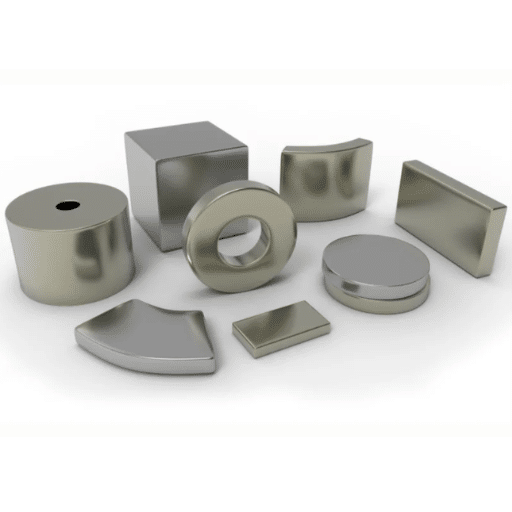
Non-magnetic alloys are materials that have a very minimal to no magnetic response and are thus used in various applications where the magnetic effect needs to be suppressed. Their use in such applications as medical devices, aerospace systems, and precision instruments is the most common type of non-magnetic alloys and their characteristics are described below:
1. Austenitic Stainless Steels
Among the austenitic stainless steels, 304 and 316 are the leading non-magnetic alloys today. The alloy’s high chromium and nickel content ensures retention of the austenite phase and completely eliminates magnetism.
Composition: The usual specification of the 18-20% (Cr) and 8-12% (Ni) refers to the proportions of the elements.
Properties: Mostly resistant to all sorts of corrosion, very ductile, and still non-magnetic at absolutely any cryogenic temperature.
Applications: This class of materials is used in surgical instruments, cryogenic storage tanks, and food-processing equipment.
2. Copper-Nickel Alloys (CuNi)
Copper-nickel alloys are an optimal solution in situations where one seeks both good thermal conduction and corrosion resistance in seawater.
Popular Grades: CuNi 70/30 (with 30% nickel and 70% copper) and CuNi 90/10.
Properties: Non-magnetic, bacteria-repelling, and keeping the thermal properties intact.
Applications: Their deployment is evident in marine heat exchangers, desalination plants, and offshore piping systems.
3. Aluminum Alloys
Aluminum alloys from the 3000 and 5000 series are often considered non-magnetic and lightweight, and they are widely relied upon for this reason. Sturdy in nature, with high corrosion resistance and good workability, they are still essential for delicate applications.
Composition: These are various aluminum alloys having manganese, magnesium, and silicon as major constituents.
Properties: Non-magnetic, with a very high strength-to-weight ratio thus a very long-lasting effect.
Applications: Their use ranges from aerospace structures and non-magnetic housings for electronics to transportation equipment.
4. Monel Alloys
Monel remains a family of copper-nickel alloys recognized for its nonmagnetic properties and practically unlimited corrosion resistance.
Composition: The highest content is nickel (63-70%), while the other minerals, like copper, iron, and manganese, are present in trace amounts.
Properties: Magnetism is inaccessible, extraordinarily tough in high-pressure scenarios, and is not affected by either acid or saltwater.
Applications: Primarily used in chemical processing equipment, oil and gas exploration, and marine engineering.
5. Titanium Alloys
Titanium alloys are naturally nonmagnetic and provide the best compromise among strength, corrosion resistance, and biocompatibility.
Composition: For example, Grade 5 titanium is an alloy of titanium, aluminum, and vanadium.
Properties: They possess low density, extremely high tensile strength, and compatibility with harsh environmental conditions.
Applications: Mainly for medical implants, aerospace fasteners, and power plant parts.
6. Cobalt-Based Alloys
These alloys are used in harsh environments due to their nonmagnetic properties and excellent wear resistance.
Composition: Cobalt, chromium, and a tiny amount of either tungsten or molybdenum are present in all of them.
Properties: All of them are strong, able to resist wear and tear, and non-magnetic.
Applications: They are used in dental implants, turbine blades, and parts for high-performance valves.
Data and Advancements
The latest industry statistics indicate a dramatic increase in the global market for non-magnetic alloys, driven by the integration of medical technology and renewable energy solutions. Just the MRI systems are anticipated to have a huge impact on the non-magnetic alloy market, which will grow at the rate of 6.2% during the period of 2023 to 2030. This trend underscores the crucial role these materials play in ensuring accuracy and reliability in the deployment of state-of-the-art technologies.
These non-magnetic alloys, with their property sets, have not only been a source of innovations across sectors but also enabled those innovations in environments where magnetic interference is not present.
Examples of Non-Magnetic Metals
Aluminum (Al)
Aluminum is the lightest of the corrosion-resistant metals and has the best nonmagnetic properties. Moreover, it is a high-conducting material for both heat and electricity and is highly ductile, making it suitable for electrical-industry enclosures, aircraft manufacturing, and non-magnetic tool manufacturing.
Copper (Cu)
Copper is the metal that has the highest electrical and thermal conductivity, and besides that, it is a natural non-magnet. Thus, it is widely used in the manufacture of wiring, piping, and precision electronics, where magnetic interference is prohibited.
Titanium (Ti)
Titanium is said to be a metal that combines strength and lightness, has a great resistance to corrosion and it is also non-magnetic. It is used in medical implants, aerospace components, and chemical-processing equipment.
Beryllium (Be)
Beryllium is a metal that is not quite common but still, it is a non-magnetic metal that is highly prized for its rigidity, lightness, and excellent thermal conductivity. Its application areas include aerospace, telecommunications, and X-ray.
Stainless Steel (Specific Grades)
Not all stainless steels are non-magnetic; however, certain grades, such as austenitic stainless steels (304 and 316), become non-magnetic upon annealing. The medical industry, kitchen equipment, and sensitive scientific instruments are the most common settings in which these grades are found.
Non-magnetic metals, aside from their non-magnetism, exhibit distinct characteristics that make them unique and, consequently, attractive to industries seeking non-magnetic materials. This, in turn, has made operations possible and trustworthy even in the most challenging applications.
Properties and Uses of Non-Ferrous Alloys
Non-ferrous alloys are a class of materials that are not only one of the most expensive ones but also the most beneficial ones. Their remarkable properties, such as anticorrosion, high electrical and thermal conductivity, low density, and high machinability, make them attractive for applications across industrial, commercial, and specialized domains. Below is a detailed presentation of five major non-ferrous alloys along with their identified properties and usual fields of application:
Non-Ferrous Alloys, especially the metals described above, are ubiquitous in contemporary technology and infrastructure, thereby playing a vital role in driving technological advancement and performance improvements across multiple industries.
Advantages of Using Non-Magnetic Alloys
Non-magnetic alloys are widely used across industries and offer numerous advantages. Their properties have made these alloys of paramount importance in the field of performance standards. Below are the five major advantages:
-
1
Non-Interference with Magnetic FieldsNon-magnetic alloys are well-suited for applications where magnetic interference is prohibited. As with MRI machines and other medical imaging equipment, as well as sensitive electronic devices.
-
2
Corrosion ResistanceAluminum, titanium, and some non-magnetic alloys are famous for their excellent corrosion resistance property. Because of this, they are preferred in marine environments, chemical processing, and outdoor exposure.
-
3
High Strength-to-Weight RatioTitanium is a nonmagnetic alloy that is lightweight yet strong, leading to its use in the aerospace and automotive industries, where it contributes to fuel efficiency and durability.
-
4
Thermal and Electrical ConductivityThe non-magnetic alloys, such as copper alloys, are characterized by high thermal and electrical conductivity. As a result, they are major players in power transmission, electric components, and heat exchangers.
-
5
Enhanced Durability in Extreme ConditionsNon-magnetic alloys that can withstand high temperatures or chemical corrosion are highly durable and are therefore used in turbine engines, nuclear reactors, and many other critical applications where high durability under stress is required.
The aforementioned properties not only emphasize but also affirm the enduring versatility and significance of non-magnetic alloys in enhancing technological applications and infrastructure development.
Applications in Industry

Non-magnetic alloys are used across various industrial sectors because of their exceptional properties, such as high strength, chemical degradation resistance, and non-magnetic conductivity. The following are the five applications of non-magnetic alloys with their details:
1. Aerospace Engineering
Non-magnetic alloys are widely used in jet engine turbines and structural components. They are corrosion-resistant, which ultimately leads to longer aircraft operations. Titanium-based alloys are among the most preferred materials because of their combination of light weight and durability.
2. Medical Devices
Cobalt-chromium and titanium, for example, have the non-magnetic and biocompatible property which makes these non-magnetic alloys very suitable for medical implants, surgical instruments, and imaging machines. These materials cause minimal interference with magnetic imaging techniques such as MRI and, consequently, ensure the material’s durability in the human body.
3. Energy Production
Non-magnetic alloys play a significant role in the energy sector, as they are key components of nuclear reactors and wind turbines. Their properties make them invulnerable to radiation and wear which means non-magnetic alloys will always be there to provide safe and efficient energy. One example is the use of nickel-containing alloys to fabricate heat exchangers and reactor components to improve energy conservation.
4. Electronics and Communication
Non-magnetic alloys are essential in electronic systems where preventing magnetic interference is paramount. Major application areas for these metals include connectors, circuits, and shielding technologies for high-performance devices ranging from smartphones to satellite systems.
5. Marine Engineering
Non-magnetic alloys resist seawater to a great extent and do not alter the magnetic field; therefore, these metals are primarily used in the construction of ships, submarines, and undersea cables. Copper-nickel alloys are nonmagnetic and are used for durability in seawater piping and marine hardware.
These applications highlight that non-magnetic alloys are not only catalysts for industrial innovation but also assist in overcoming the most demanding operational challenges.
Use of Magnetic Alloys in Electric Motors
The development of electric motors cannot do without magnetic alloys, as these are the materials on which the industry relies to produce motion via electromagnetic induction. Thus, the selection of such alloys would be determined by the maximum motor efficiency, minimum energy loss, and the changing operating conditions to be met. The following are the five commonly used magnetic alloys in electric motors with specifications and features mentioned:
1. Silicon Steel
Low hysteresis losses are the main reason for the selection of silicon steel in electric motor applications along with outstanding magnetic permeability. Hence, the energy dissipation can be minimized. It is typically applied to the cores of both the stator and rotor of motors to improve energy efficiency. The silicon content ranges from 1.5% to 3.5%.
2. Alnico (Aluminum-Nickel-Cobalt Alloy)
Alnico is acknowledged for its superior to high-temperature stability along with the strongest properties of magnetism. It is generally regarded as the material for the magnets that possess permanent properties in the motor fusion assembly. The situation is that the performance of alnico is particularly effective in high-temperature conditions.
3. Ferrite (Ceramic Magnets)
Ferrite materials can be termed as the low-cost magnetic alloys and at the same time, they have good resistance to corrosion. They are often the choice for small electric motors because of their low cost and magnetic stability. Ferrite magnets are mainly composed of iron oxide with either barium or strontium.
4. Samarium-Cobalt (SmCo)
The strong magnetic alloy samarium-cobalt is also temperature- and corrosion-resistant. It is mostly used in motor applications where extreme conditions are encountered, and consistent performance is crucial. Today’s SmCo magnets are recognized for having great magnetic strength despite their small size.
5. Neodymium-Iron-Boron (NdFeB)
NdFeB is the strongest commercially available magnetic material and thus can generate a powerful magnetic field even for very small motors. Its use is common in motors for high-performance applications such as electric vehicles and robotics. Such magnets require surface treatments that reduce corrosion and thereby prolong their service life.
The utilization of these magnetic alloys in manufacturing electrical motors ensures not only superior efficiency but also reliability and adaptability which in turn consolidates their position as essential in modern industry.
Non-Magnetic Alloys in Generators
The generators’ performance and their production are entirely based on non-magnetic alloys. Nonmagnetic alloys used in generators are specifically designed to eliminate magnetic field effects, ensuring consistent and efficient operation. They are widely used in applications requiring high electrical conductivity, mechanical strength, and resistance to wear and corrosion.
The following is a list of non-magnetic alloys that are used frequently in generators with their respective properties:
Copper-Nickel Alloys
- Superb resistance to corrosion, especially in seawater.
- Excellent electric and heat conduction.
- Alloy is primarily used in rotors and stators.
Austenitic Stainless Steel (e.g. 316 Series)
- Corrosion resistance and non-magnetic properties are sufficiently high.
- Very suitable for structural and fasteners and very strong too.
- The robustness and at the same time being able to take the hardships of operation are just right for these alloys.
Aluminum Alloys (e.g., 6061, 7075)
- Hefty, bulky, or heavy? None of these applies, as it is lightweight and exhibits good corrosion resistance.
- Brilliant thermal and electrical performance.
- Often found in housings and other non-structural components.
Titanium Alloys (e.g., Ti-6Al-4V)
- No magnetic and extremely corrosion resistant.
- Light and robust, with considerable strength to play with.
- Mostly seen in critical structural parts.
Bronze Alloys (e.g., Phosphor Bronze)
- Exceptional wear resistance along with durability.
- Moderate electrical conductivity along with non-magnetic property.
- Friction is reduced by using them for bearings and contact components.
The usage of the mentioned alloys in generators ensures that complications in the system are minimized due to non-magnetic properties that are essential for keeping the system under no-downtime conditions, and the varying operating conditions do not affect the functioning of the system overall.
Industry Sectors Utilizing Both Types
Power Generation and Energy
Alloys made of copper-based materials and bronze are used in the energy sector, accounting for more than 30% of this industry thanks to their reliability and conductivity properties.
Automotive Sector
They are used in electrical systems and wiring through the end, along with bearings, to ensure durability and optimal performance. A report today states that more than 40% of modern car wiring harnesses rely on copper and its alloys.
Marine Sector
Alloys of copper, such as bronze, are well-suited to the marine industry because they are highly resistant to seawater corrosion. It is estimated that 20% of marine equipment, including propellers and pumps, is composed of these materials.
Aerospace Sector
These materials are highly recommended for aircraft components, such as bushings and bearings, that require lightweightness, strength, and wear resistance. It is also reported that copper-based alloys are used in at least 15% of structural components in aerospace applications.
Telecom and Electronics
The use of copper alloys in electrical components is inevitable due to their excellent electrical conductivity and minimal signal loss. Statistics indicate that more than 50% of high-end electronics use copper alloys, which facilitates efficient flow.
Factors Influencing Alloy Selection

The selection of an alloy for industrial or engineering applications is generally based on several key criteria. In fact, the aforementioned aspects ensure that the selected material will at least meet specific requirements regarding performance, cost, and the environment. Here are five major elements that greatly influence the alloy selection process.
Mechanical Properties
The mechanical properties encompass strength, ductility, hardness, and fatigue resistance. The collapse of an alloy would constitute a massive failure in an industry where demand increases for ever more mechanical properties to resist stress. For example, the building sector extensively uses high-strength steel alloys, as they can sustain large loads without failure.
Corrosion Resistance
Moisture, chemicals, and environmental conditions degrade the alloy’s resistance, and the marine and chemical industries consider this aspect a primary factor in alloy selection. One reason for the widespread use of stainless steel is its high corrosion resistance.
Thermal and Electrical Conductivity
The electronics and power industries require conductive materials. Copper is the most commonly used metal in electrical wiring owing to its excellent electrical and thermal conductivity, with a conductivity of 5.96 × 10⁷ S/m.
Cost and Availability
In addition to performance, the cost of an alloy is another major factor in its selection. For example, aluminum alloys are selected over other materials not only for their properties but also for their lower cost and greater availability.
Environmental Impact and Sustainability
Increasingly, the use of recycled materials and the adoption of low-impact materials are becoming prevalent. Moreover, the use of aluminum in many sectors is considered environmentally friendly, as nearly 90% of the total annual aluminum produced is recycled.
Considerations for Magnetic Strength
When assessing materials for magnetic strength, several considerations and data points must be taken into account to tailor the materials to their particular application. The following are the five key points that need to be taken into account as the most significant:
Material Composition
The magnetic behavior of a material is enormously influenced by the different elements that it consists of. For instance, the ferromagnetic elements iron, nickel, and cobalt can produce wires with very strong magnetic fields, whereas nonmagnetic elements such as aluminum and copper cannot.
Magnetic Permeability
The magnetic permeability quantifies a material’s ability to induce a magnetic field. Soft-magnetic materials, such as silicon steel, typically exhibit high permeability and are used in transformers and inductors.
Coercivity
It is the amount of magnetic material that can resist demagnetization. Low-coercivity materials, such as soft iron, can be magnetized and demagnetized readily, whereas high-coercivity materials, such as neodymium magnets, require a long time to lose their magnetic properties.
Saturation Magnetization
Saturation magnetization is a big factor in determining the maximum magnetic moment per unit volume that the material can reach. Materials with high saturation magnetization, such as certain iron alloys, are the only ones that can work with very powerful magnetic fields.
Temperature Stability
Magnetic properties are temperature-dependent. For instance, ferromagnetic materials completely lose their magnetic properties at the Curie point. On the other hand, neodymium magnets have a relatively low Curie temperature and, therefore, are more easily demagnetized due to thermal stress than samarium cobalt magnets, which have a higher Curie temperature.
These factors are very crucial in magnetic applications, and they also help in selecting the right material that will not only operate efficiently but also last for a long time.
Choosing Between Ferrous and Non-Ferrous Alloys
Before making a decision, it is essential to be aware of the special properties and applications of ferrous and non-ferrous alloys. The primary ferrous alloys are steel and cast iron, which have iron as their primary element, and they are characterized by their strength, durability, and magnetism. These materials have found their way into construction, automotive parts, and manufacturing tools, among other applications. For example, the tensile strength of mild steel is about 400–550 MPa; thus, it is entirely appropriate for use in structures. Carbon-rich cast iron exhibits high compressive strength, typically 200–1100 MPa, and is widely used in large machines and pipes.
By contrast, non-ferrous alloys such as aluminum, copper, and titanium do not contain significant amounts of iron. Therefore, they exhibit the opposite properties, which include corrosion resistance, lightness, and non-magnetism. For example, aluminum alloys have a density of approximately 2.7 g/cm³, which is significantly lower than that of steel at 7.85 g/cm³, making them an excellent choice in the aerospace and transportation industries, where weight reduction is critical. Copper alloys are preferred for their high thermal and electrical conductivities; pure copper has an electrical conductivity of 59.6 × 10⁶ S/m, which partially explains its use in electrical wiring and the production of electrical components. Although titanium alloys are much more expensive, they still possess the desirable attributes of low weight, high strength, and corrosion resistance, thus making them fit for use in medical implants or the aerospace sector.
Ultimately, the decision depends on the combination of operating conditions, mechanical requirements, and environmental factors. To illustrate, ferrous alloys are the most appropriate selection for applications where high strength and low cost are the main concerns, whereas non-ferrous alloys are the most appropriate selection for moisture, chemicals, or weight-sensitive designs.
Impact of Alloy Properties on Application
The properties of alloys are the most critical determinants of their applications. The following five properties of alloys, together with their impact on different sectors, are presented in the list below:
1
Corrosion Resistance
When it comes to resisting corrosion, alloys such as stainless steel and aluminum-based alloys definitely lead the list; thus, they are the majority in marine engineering, chemical processing, and medical implants.
2
Strength-to-Weight Ratio
Light metals such as titanium and magnesium are being used in the production of fuel-efficient and high-performance designs because of their incredible strength-to-weight ratio, thus they are favored by the aerospace and automotive industries.
3
Thermal Conductivity
Copper and copper alloys are the best materials for thermal applications due to their extremely high thermal conductivity; hence, they are practically used in electronics, heat exchangers, and cooling systems, where heat transfer efficiency is very crucial.
4
Electrical Conductivity
Copper and aluminum alloys are the best electrical conductors, and their use in power transmission and electronic manufacturing is common to minimize energy loss.
5
Hardness and Wear Resistance
Alloy steels and tungsten carbide are the materials that are high-tech for making high-quality tools and parts, and they will also ensure long-lasting performance even in extreme conditions.
References
Room-Temperature Ferromagnetism in Nanostructured Titanium Nitride Superconductors
This article discusses the magnetic properties of materials traditionally considered non-magnetic, focusing on structural defects.
Structure, Magnetic and Magnetothermal Properties of Non-Stoichiometric ErCo2Mnx Alloys
This research examines the magnetic and magnetothermal properties of specific alloys, providing insights into their behavior in magnetic fields.
A Nickel Short: Rethinking Element Scarcity in Pursuit of a Fusion-Powered World
This source discusses the use of nonmagnetic materials, such as nickel, in critical applications, offering authoritative insights.
Frequently Asked Questions (FAQ)
What is the characteristic that makes a magnetic metal different from a non-magnetic one?
The simplest explanation is the presence of a few chemical elements. The most important factor is that a magnetic metal contains iron, nickel, or cobalt, and the formation of corresponding regions of magnetic force, where the electrons are aligned, is still very much under control, and the forcing of the latter into the direction of an external field, thus attracting the metal, has the related ferromagnetic properties. The non-magnetic metals include some austenitic grades of stainless steel and non-ferrous metals like aluminum and copper because they either lack the necessary unpaired electron configurations or the alloying elements, such as chromium, that make them non-magnetic; thus, the latter three metals are not magnetic at all. Iron is the most common element in all kinds of metals, whether it be carbon steel or cast iron or alloy steel, which gives metals the property of magnetism, but the type of microstructure (ferritic, martensitic, and austenitic) also plays an important role in determining the magnetism of the steel and stainless steel alloys.
What are the factors differentiating the magnetism of one alloy from another?
The diversity of magnetism—ferromagnetic, paramagnetic, and diamagnetic—depends on the electron configuration and the interaction between the magnetic dipoles. The only representatives of metals and their alloys in which magnetic domains prevail even at room temperature are the ferromagnetic group, which comprises plain carbon steel, tool steel, ferritic and martensitic stainless steels, cast iron, etc. The strong magnetic character of these metals is due to the alignment of magnetic moments within these regions. Austenitic stainless steels are most of the times considered non-magnetic because they do not permit domain alignment; however, they still might show a very localized type of magnetic behavior, especially in the case of cold-rolled or heavily worked forms. The addition of chromium not only enhances the alloy’s corrosion resistance but also plays a significant role in determining its magnetism.
Can stainless steel be magnetic and what are the magnetic stainless steel alloys?
Yes, certain stainless steels are magnetic, whereas others are not. Ferritic and martensitic stainless steels are magnetic and are widely used in applications requiring magnetic interaction or high strength; they contain iron and thus behave similarly to alloy steel. Austenitic stainless steel—often chosen for its corrosion resistance and medical uses—generally has very low magnetism but can be affected by low-temperature processing or deformation which results in localized magnetism. Consequently, the stainless steel alloys that are meant for corrosive environments present a dilemma of either using increasing amounts of chromium that will enhance corrosion resistance at the expense of additional elements that will determine the magnetism or the opposite.
What is it that makes a magnet attract ferromagnetic metals such as iron and steel?
When all the arguments are put forward, ferromagnetic metals are predominantly iron, almost all types of steel, and some alloy steels, which give rise to their typical unpaired electrons and spins, thereby creating magnetic moments. These moments coalesce to form the magnetic domains; the application of an external magnet or magnetic field makes the domains align in a certain direction which leads to the production of strong attraction or magnetization. Permanent magnets are formed when the domains are kept aligned without an external field; in comparison to the magnetism of non-ferrous and ferrous, only the ferromagnetic metals are still able to maintain that strong attraction and become the candidates for permanent magnet material.
What are the effects that the combination of chromium or other elements with metal alloys has on the magnetism of the metals and their resistance to corrosion?
The most prominent chromium-containing alloys, primarily stainless steels, owe their remarkable corrosion resistance to chromium as the principal constituent, which forms a passive oxide layer. Moreover, the combination of chromium and other alloying elements not only alters the crystallographic structure but also the electron motion; therefore, it can impart non-magnetic properties to some metals (e.g., austenitic stainless steels), whereas others acquire magnetic properties (e.g., ferritic stainless steels). Furthermore, factors such as carbon content, heat treatment, and alloy composition are critical in determining the properties of steel alloys, including magnetic and electrical conductivity, and thus their suitability for high-temperature or corrosive environments.
What types of magnets and materials for the industrial sector are linked with metal products?
The range of magnets used in industry includes permanent magnets (neodymium, ferrite, alnico) and electromagnets, among others. The use of permanent magnets is extensive across electronic devices, motors, sensors, and magnetic separation, among other applications. The materials selected for magnets depend on four main criteria: the required magnetic field strength, temperature stability (for high-temperature applications), corrosion resistance, and compatibility with metal products, such as steel, cast iron, and special metals. Moreover, ferromagnetic metals are, for the most part, those that manufacturers use to fabricate cores intended to collect magnetic fields and form localized magnetic dipoles in devices.
Is the metal still magnetic at high temperatures and to what extent does temperature impact magnetism?
High temperatures can disrupt magnetic domains; each ferromagnetic metal has a Curie temperature, the upper limit above which the metal loses its ferromagnetism. The metal in question is paramagnetic. Thus, this feature is critical in high-temperature applications, where magnetic performance is paramount; materials and alloys must withstand the operating temperature while remaining magnetic. Some alloy steels and special-purpose magnets are designed for high-temperature stability, whereas others lose their magnetism or effectiveness when exposed to heat.
In a practical sense, how do I find out if a metal contains iron and classify it as ferrous or non-ferrous?
The magnet approach is very practical and simple; ferrous metals that contain iron—iron and steel, carbon steel, cast iron, and many steel alloys—will be magnetically attracted strongly, and this is an effective way to tell them from the rest. On the other hand, non-ferrous metals, such as most austenitic stainless steels, aluminum, copper, and brass, are magnetically inactive; they do not show any attraction to a magnet. In industrial sectors or electronic devices where properties like electrical conduction capability, corrosion resistance, or magnetic response are of utmost importance, it is better to verify the specifications of alloys that indicate whether the metal is ‘ferrous,’ ‘non-ferrous,’ ferritic, or austenitic thus, whether it contains iron and possesses any magnetic properties.