High Standard Stainless Steel With Strict Inspection



Hot Rolled vs Cold Rolled Steel: Understanding the Differences and Applications

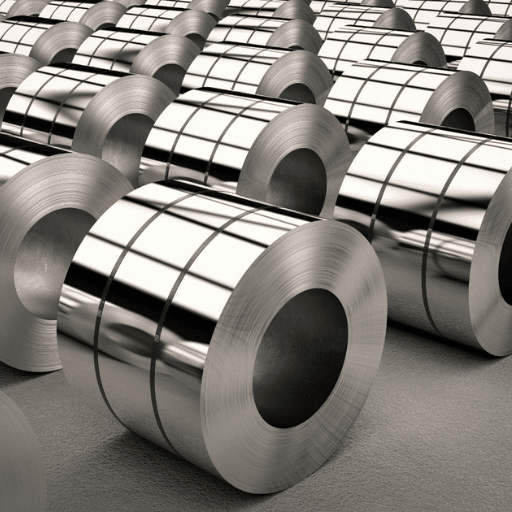
Steel, as one of the most versatile materials, is applied in the whole range of construction and manufacturing; nevertheless, the production method can be a determining factor that affects the properties and performance of steel. Hot and cold rolling are the most commonly used methods to process steel. The terms used may suggest a mere temperature difference, but the reality is far from that. The differences between hot-rolled and cold-rolled steel include changes in strength and surface texture, cost variations, and different fields of use. This is why a steel selection process based on project requirements requires a clear understanding of the two steel types and their properties. Thus, we outline the key differences, advantages, and typical applications of each type, providing you with the information needed to select the steel that best meets your specific needs.
Introduction to Hot Rolled and Cold Rolled Steel
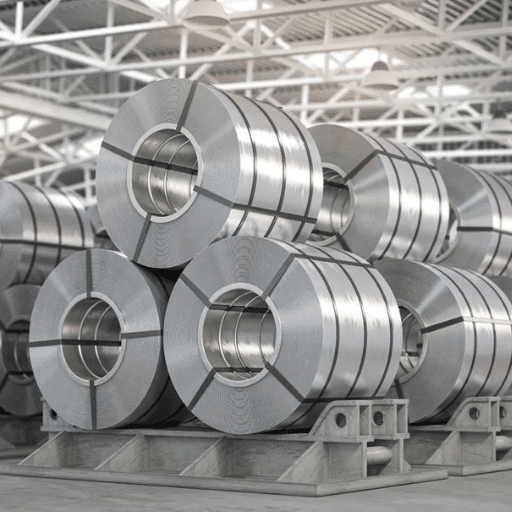
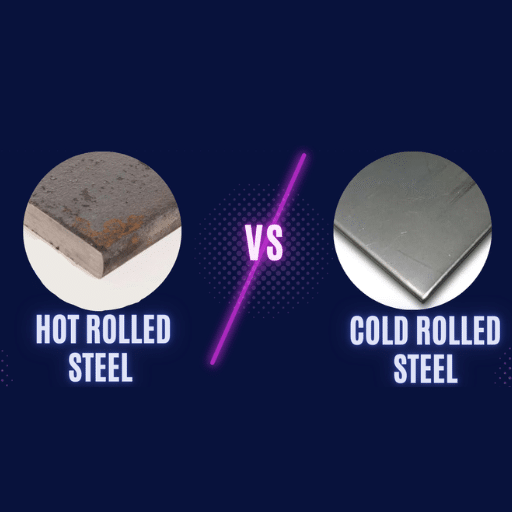
Hot-rolled steel and cold-rolled steel are two distinct steel processing methods with different production methods, properties, and applications. Hot-rolled steel is produced by rolling steel at extremely high temperatures, typically above 1700°F, making it easier to mold and shape. The process imparts a rough surface to the steel and yields less precise dimensions, but it remains a less costly option and a good choice for projects where tolerances are not very strict. On the contrary, cold-rolled steel is produced at or near room temperature, which is why it acquires a glossy surface finish, very tight tolerances, and increased strength. Cold-rolled steel, although more expensive, is an ideal material for applications that require both accuracy and aesthetic polishing. Acknowledging these differences is a key factor in selecting the right steel type for a project, given its cost, durability, and requirements.
What is Hot Rolled Steel?
Hot-rolled steel is a term for steel that has been made through heating and very high temperature processing, mostly above the recrystallization temperature, so it is still easier to work and pour, but the surface is coarser, and the measurements are less precise.
What is Cold Rolled Steel?
Cold-rolled steel is steel that has undergone additional processing in cold-reduction mills at room temperature; thus, it has a smoother surface, tighter tolerances, and higher strength than hot-rolled steel.
Relevance in Today’s Industry
Hot-rolled as well as cold-rolled steel are the most important materials for modern industry due to their outstanding properties and their use in various sectors. Hot-rolled steel, particularly due to its high workability and lower cost, is widely used in the construction and infrastructure industries, used to fabricate beams, rail tracks, and bridges. According to a recent market report, the global hot-rolled steel market was valued at over $910 billion in 2022 and is expected to grow at a CAGR of 3.2% from 2023 to 2030, primarily driven by increasing demand in the construction and automotive sectors.
On the contrary, cold-rolled steel is used in the opposite way: it is the first choice for industries that require high precision and the best surface finish for their products, such as electrical appliances, cars, and precision instruments. In addition to very tight tolerances, the finish of cold-rolled steel is visually pleasing and therefore the choice of industries where precision and aesthetics are of utmost importance. The global market for cold rolled steel was more than $300 billion in 2022, and it is expected that around 4% annual growth rate will continue being the case, especially due to the demand from industrialization and high-end manufacturing of components.
Moreover, both hot-rolled and cold-rolled steels are more sustainable and greener, driven by innovations in production techniques. To meet global environmental targets, companies invest heavily in research to develop processes, such as electric arc furnaces and recycling systems. Such advancements ensure that steel production remains as crucial as ever to the strategies of the modern industrial sector as it moves towards a more sustainable future.
Production Processes of Hot Rolled and Cold Rolled Steel
The production of hot- and cold-rolled steel differs significantly. Thermally heated rolling, and finally the various iron and steel applications can be mentioned as predominant factors that differentiate the methods of production, while each has its own peculiar advantages as well.
Hot Rolled Steel Manufacturing Process
The temperature at which the steel is rolled is extremely high, about 1,700 °F (926 °C), or even above, which is also the temperature where steel starts to lose its hardness. The process commences with slabs of steel being heated to the very high temperature. The hot metal is then conveyed through large rollers to obtain required thickness and shape. The heated steel is then cooled to ambient temperature to produce a product that is less accurate in size but more flexible and cheaper than cold-rolled steel.
Main Features:
- Heat: Higher than 1,700 °F/926 °C, which is the threshold of recrystallization.
- Areas of use: In all sectors where strong and durable materials are required like construction beams and railway tracks.
- Benefits: The process is cheaper and quicker than cold rolling.
A recent investigation finds that the adaptability of furnace designs and energy-efficiency improvements have led to roughly a 20% reduction in the carbon footprint of hot-rolled steel production over the last decade. For instance, among the equipment used in some plants, electric arc furnaces are considerably reducing the energy demand.
Cold Rolled Steel Production Process
Cold-rolled steel is produced from hot-rolled steel through a series of processing steps, primarily rolling at room temperature. After hot rolling, the steel is cooled and then subjected to another heavy-pressure rolling operation. This second operation improves the surface finish, achieves close tolerances, and produces a visually attractive product.
Main Features:
- Heat: Same as or closely to ambient temperature.
- Areas of use: The process is widely used in industries where precision is essential, such as automotive parts, household appliances, and metal furniture.
- Benefits: Higher surface quality, greater strength owing to deformation hardening, and precise dimensions.
The current figures indicate that approximately 30% of the world’s steel is produced by cold rolling, and the technology is expected to continue to grow with increasing demand for high-quality steel. Modern cold rolling mills are also equipped with high-tech sensors and monitoring systems that guarantee both quality and material efficiency.
Energy Consumption and Sustainability Comparison
Steel production techniques are regularly innovated, with new technologies that help to save energy and reduce waste. A study estimates that steel plants that integrate recycling and energy recovery can reduce material waste by up to 35%. Moreover, the adoption of renewable energy sources in the production process has greatly improved the sustainability scorecard and enabled the meeting of global environmental targets.
The steel industry is still gradually encouraged to adopt state-of-the-art methods while simultaneously walking a tightrope in balancing performance requirements with environmental responsibility. Moreover, industries will find it easier to select the right steel for their needs if they understand the differences in the characteristics of various production processes.
Hot Rolled Steel Production Process
Hot-rolled steel’s production process consists of a series of operations commencing with the heating of steel to a point where it is already malleable and can be easily rolled. This method is primarily used to produce large quantities of sheet metal, beams, and other structural components. The hot rolled steel production flow comprises five main stages as follows:
- Heating: Steel slabs, billets, or blooms are put in a reheating furnace, where the temperature is maintained most of the times between 1,100°C and 1,300°C (2,000°F to 2,372°F).
- Descaling: Before proceeding with hot steel processing, the steel is cleaned with high-pressure water jets to remove scale and impurities.
- Rough Rolling: The hot steel then goes to rough rolling mills for a major reduction in thickness, and the steel’s cross-sectional area becomes less variable and more uniform to some extent.
- Finishing Rolling: The steel is sent through finishing mills to receive the exact thickness, surface quality, and shape.
- Cooling and Coiling: The hot steel is cooled either through cooling beds or water quenching and then either coiled or cut into lengths that are required for distribution.
The above-explained short but precise series of operations ensures that the steel produced keeps its mechanical properties so that hot rolled steel becomes a material that can be used in a great number of different industrial applications.
Cold Rolled Steel Production Process
The path to producing cold rolled steel involves a sequence of precise operations to manufacture materials with great smoothness and tight limits. The five main stages are described as follows:
- Pickling: The removal of the oxide layer from hot rolled steel takes place in an acid bath procedure. This guarantees a sleek surface that is fit for more processing.
- Cold Reduction: The steel thickness is reduced using high-pressure rollers; however, its mechanical properties are simultaneously improved.
- Annealing: The steel is heated in a controlled atmosphere, which releases internal stresses and makes the steel more ductile and soft.
- Skin Passing: The final light rolling treatment enhances the surface quality, uniformity, and the final dimensions.
- Inspection and Finishing: The cold-rolled steel undergoes stringent quality checks, and only after passing these is the required surface treatment or coating applied before packing.
This series of operations produces steel with phenomenal surface quality, higher strength, and exact dimensions; thus, cold-rolled steel is always the first choice for very demanding tolerances and aesthetics.
Comparison of Production Techniques
| Key Point | Hot Rolled Steel | Cold Rolled Steel |
|---|---|---|
| Processing Temperature | Above 1,700°F | Room temperature |
| Initial Material | Heated billet | Cooled hot rolled steel |
| Rolling Process | Single high-temperature rolling | Additional rolling at room temperature |
| Surface Finish | Rough, scaly | Smooth, shiny |
| Dimensional Precision | Less precise | Highly precise |
| Strength | Lower strength | Up to 20% stronger |
| Stress Tolerance | Higher stress tolerance | Lower stress tolerance |
| Cost | Lower cost | Higher cost |
| Applications | Structural components, rail tracks | Aerospace, appliances, precision parts |
| Post-Processing | Minimal | Annealing, tempering |
Key Differences Between Hot Rolled and Cold Rolled Steel
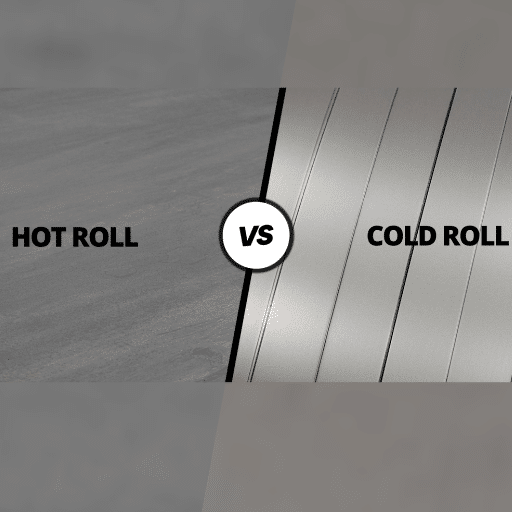
| Key Point | Hot Rolled Steel | Cold Rolled Steel |
|---|---|---|
| Processing Temperature | Above 1,700°F | Room temperature |
| Surface Finish | Rough, scaly | Smooth, shiny |
| Dimensional Precision | Less precise | Highly precise |
| Strength | Lower strength | Up to 20% stronger |
| Stress Tolerance | Higher stress tolerance | Lower stress tolerance |
| Cost | Lower cost | Higher cost |
| Applications | Structural, rail tracks, heavy equipment | Aerospace, appliances, precision parts |
| Post-Processing | Minimal | Annealing, tempering |
| Workability | Easier to shape | Requires more pressure |
| Shrinkage | Shrinks during cooling | Minimal shrinkage |
Mechanical Properties Comparison
| Key Property | Hot Rolled Steel | Cold Rolled Steel |
|---|---|---|
| Strength | Lower strength | Up to 20% stronger |
| Hardness | Lower hardness | Higher hardness |
| Ductility | Higher ductility | Lower ductility |
| Stress Tolerance | Higher stress tolerance | Lower stress tolerance |
| Surface Quality | Rough, scaly | Smooth, shiny |
| Dimensional Accuracy | Less accurate | Highly accurate |
| Tensile Strength | Moderate tensile strength | Higher tensile strength |
| Yield Strength | Lower yield strength | Higher yield strength |
| Workability | Easier to shape | Requires more pressure |
| Internal Stresses | Minimal internal stresses | Higher internal stresses |
Dimensional Tolerances
Dimensional tolerances define ranges of variation that are allowed in any physical dimension of a material or component. The setting of tolerances dictates that the parts are neither too loose nor too tight and that they would possess all the allotted characteristics during the assembly and operation. The five tolerances listed below are the most significant ones:
Linear Tolerance
With this, the maximum and minimum acceptable changes in the part’s length or width are indicated. The range is ±0.1 mm to ±0.5 mm, depending on the application.
Angular Tolerance
This indicates the maximum angular deviation from the specified angle allowed for a part. For example, for standard parts, the tolerance range may be ±0.5° to ±2°.
Flatness Tolerance
It quantifies the smoothness of an area. Flatness is critical for mechanical parts designed to contact each other at only one point. For instance, the flatness might be set to 0.03 mm for machined surfaces.
Circularity (Roundness) Tolerance
In this case, it is a matter of how much the shape can be to a non-perfect circle. The limit for ultra-precise parts is ±0.02 mm.
Parallelism Tolerance
This shows the amount to which one surface should be parallel to the given plane or surface. The example numbers are from 0.05 mm to 0.1 mm for most critical components.
Surface Finish and Appearance
The concept ‘surface finish’ refers to the texture and quality of the manufacturing surface which are major determinants of functioning, longevity, and appearance of the final products. It is generally categorized by three characteristics: roughness, waviness, and lay. Different methods are used to measure the parameters, and the most common are Ra (Arithmetic Average Roughness), Rz (Maximum Height of Profile), and Rt (Total Height of Profile).
1. Surface Roughness Values
Surface roughness is a property that determines the component’s suitability for applications, such as accurate fit, low friction, or high wear resistance. Here are the average Ra values for various processes:
- The grinding finishes range from 0.1 to 0.8 µm, depending on final requirements.
- Polished and lapped surfaces can exhibit roughness as low as 0.01-0.05 µm.
- Machined surfaces may have a range between 0.8 to 3.2 µm; however, this also depends on the process as well as the material used.
2. Importance of Surface Finishes
A smooth surface finish may increase component lifespan by lowering stress concentrations and reducing wear and tear. For example:
- A Ra ≤ 0.4 µm finish is commonly applied to hydraulic components to prevent fluid leakage and ensure efficient operation.
- Optical surfaces would necessitate estimating the roughness in the order of Ra ≤ 0.01 µm, thus, it would be passively facilitating the use of very bright and clear images by making sure high light power is not reflected and as well.
3. Comparison Based on Application
The requirements for surface finish vary greatly depending on the applications specific demands and the industry:
- The aerospace industry trends towards parts of low roughness as they improve the drag and thus the aircraft`s aerodynamic performance.
- The medical devices manufacturing sector requires state-of-the-art finishes (Ra ≤ 0.25 µm) to ensure compatibility with the human body and sterility.
4. Advanced Surface Treatment Technologies
The cosmetics among the technologies that are used to achieve high-gloss finishes are electropolishing, precision grinding, and state-of-the-art coatings like PVD (Physical Vapor Deposition) or CVD (Chemical Vapor Deposition), among others. In fact, these methods not only alter the surface of the part but also boost its performance and look along with resistance to rust and wear indifference.
Understanding and controlling the parameters of surface finish is crucial in a wide range of industries as it would allow one to not only meet technical specifications but also obtain the best outcome from the product use.
Advantages and Disadvantages of Each Type
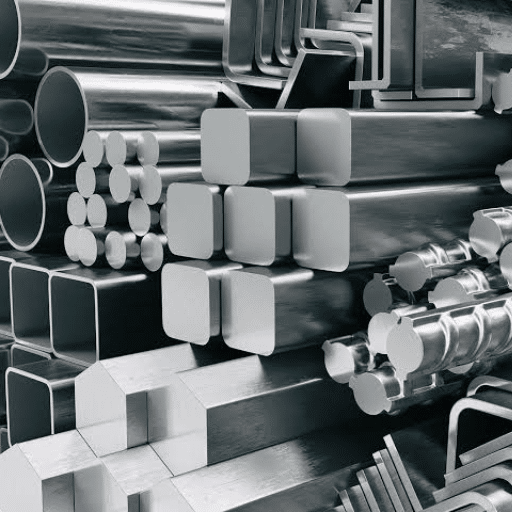
| Aspect | Hot Rolled Steel | Cold Rolled Steel |
|---|---|---|
| Advantages |
|
|
| Disadvantages |
|
|
Benefits of Hot Rolled Steel
Cost-Effective Production
The production of hot-rolled steel is more cost-effective than cold-rolled steel because hot rolling creates a simpler manufacturing process. That’s why many industries adopt this option due to the cost savings.
Improved Manufacturability
At high temperatures, the steel’s ability to be easily shaped and formed into different structures and sizes increases. Thus, the metal is very easy to process, and different manufacturing ways can be applied.
Reduced Internal Stresses
Hot-rolled steel has fewer internal stresses than cold-rolled steel because it undergoes less processing. Thus, hot-rolled steel is likely to retain its original shape during machining or fabrication and even afterward when in use, making it more durable and cost-effective.
Large Tolerances for Custom Applications
Hot-rolled steel is typically produced with larger tolerances in size and shape, which is an advantage for applications where precision is not critical and larger parts are required.
Significant Strength for Structural Applications
Hot-rolled steel production gives a very powerful material to society, which can be seen in the strength needed for the construction of industrial and building materials like beams, rail tracks, and structural frameworks. Its great advantage of a high-strength-to-cost ratio makes it widely used for heavy-duty applications in many industries.
Drawbacks of Hot Rolled Steel
Surface Finish
The surface of hot-rolled steel is typically coarse and covered with scale, and grinding or sanding may be required to achieve a smooth finish. The rolling process cooling is responsible for the rough surface, which may present parts and also for the layer of oxides covering the metal itself.
Lower Dimensional Precision
Hot-rolled steel is a less accurate material when it comes to the tolerances of its shape and size in comparison to cold-rolled steel. This deviation can be problematic in high-precision applications, as they would require additional machining or resizing.
Scaling and Oxidation
The oxidation and scaling of the steel surface are due to the direct exposure of the material to the high temperatures during the rolling process. Thus, these together can adversely affect the metal’s service life and may require the manufacturer to apply costly treatments or coatings to prevent corrosion.
Reduced Strength-to-Weight Ratio
Despite the fact that hot-rolled steel has strong properties, its microstructure is rougher than that of cold-rolled steel, which results in a lower strength-to-weight ratio. Therefore, such a material is not suitable for weight-sensitive applications requiring strength.
Limited Aesthetic Appeal
Due to its coarse surface and low precision, hot rolled steel is generally the least appealing material in situations where the visual aspect is important. As a last resort, the roughness may be hidden by a coating (painting or polishing) which is actually more expensive than the initial one.
Benefits of Cold Rolled Steel
Increased Sturdiness and Toughness
Cold rolled steel is the process of rolling steel below its recrystallization point which results in denser and stronger material. The hardness and toughness obtained from this process make it well-suited for industries that require high durability and non-deformation.
More Beautiful Surface Finish
The surface of cold-rolled steel is smoothly and uniformly finished to the point that it won’t require any polishing or coating. Hence, it is the preferred material for applications where the product’s aesthetic is of major importance, such as home appliances and automotive parts.
Better Dimensional Accuracy
The cold rolling method improves dimensional accuracy and allows tighter tolerances than hot-rolled steel. So, that enables high-precision parts for aviation, construction, and engineering.
Increased Ability to Shape
Cold-rolled steel can be drawn, bent, and reshaped to a greater extent without cracks or breaks; thus, it becomes the most suitable material for the complex manufacturing processes in the furniture industry and machine fabrication.
Better Performance in Specific Applications
With its greater tensile strength and better mechanical properties, cold-rolled steel is the preferred material in harsh conditions, such as in lightweight construction or areas that require high stress resistance. Thus, it is not only cost-effective but also durable for specialized industrial applications.
Drawbacks of Cold Rolled Steel
Increased Production Costs
Cold rolling is more expensive because of the complexity of its production process compared to hot rolling. The cost of the whole process involves the energy and labor used for accurate finishing; thus, the large-scale application of it sometimes becomes unfeasible.
Milled Steel’s Limited Thickness Range
During the manufacture of cold-rolled steel, the limit is reached when the production of steel plate cannot exceed that limit. Thus, for instance, the cold-rolled steel is usually not used in the production of components that require heavy-duty structural properties, hence, thicker materials.
Residual Stresses
The cold rolling process can induce residual stresses that lead to dimensional instability during machining or welding in steel. Such stresses can cause the material to shrink or distort under certain conditions, which, in turn, makes it unreliable for some projects.
Corrosion Proneness
Cold-rolled steel gets a high-quality finish, but still, it will rust more than the other steels unless it is coated or treated. The steel becomes more sensitive to rusting because it loses its protective oxide layer and thus, it is particularly susceptible to rust in warm places or where chemicals are used.
Less Malleability
Cold rolled steel’s hardness and strength are increased; however, it is simultaneously less ductile. Thus, it is not very suitable for applications that require considerable twisting or bending, as it is more likely to crack or even break in such conditions.
Common Applications of Hot Rolled and Cold Rolled Steel
Hot Rolled Steel Applications
Construction Industry
It is undeniable that the construction sector is one of the most important uses of hot rolled steel. Hot rolled steel is used in various items, such as I-beams, rebar, and other materials for structural support in building, as well as in the construction of bridges and large infrastructure projects.
Automotive Industry
The steel is utilized to manufacture not only robust frames and wheel rims that would need to be strong enough and yet, small surface defects could still be hidden, but also for the making of parts and components such as bumpers and dashboards.
Railroad Tracks
The main properties of hot rolled steel are its high durability and low price, which make it a very attractive industrial material for making railroad tracks and components.
Pipe and Tube Manufacturing
Hot rolled steel is used mainly in the production of pipes and tubes for the oil, gas, and water transport sectors, and it is also the basic raw material for the pipe and tube production industry.
Agricultural Equipment
Thanks to its strong nature and low price, hot rolled steel is an absolute must-have for agricultural machines, tractors, plows, and harvesters.
Cold Rolled Steel Applications
Home Appliances
Cold rolled steel gets preference for its nice and smooth surface as it is the top material for making refrigerators, washers, and ovens.
Automotive Components
It is widely preferred for the construction of parts that need to be highly precise and good looking, such as interior panels, gears, and fuel tanks.
Furniture and Storage
Furniture made of cold rolled steel is sleek and durable, and cabinets and shelving units made of cold rolled steel need to look polished.
Electrical Panels
The combination of strength and a high-quality surface finish makes it the preferred material for electrical enclosures, panels, and other housing components.
Metal Fabrication
Cold rolled steel is the material of choice for precision components in industries such as aerospace and electronics that depend heavily on detailed metal parts.
Where Hot Rolled Steel is Used
Construction and Infrastructure
The construction and infrastructure industry widely uses hot rolled steel because of its strength and flexibility as well. The main use of this material was in making structural elements like I-beams, H-beams, and sheet piles. The global demand for structural steel, which includes hot-rolled steel, is predicted to grow at a compound annual growth rate (CAGR) of 4.1% from 2023 to 2027, as stated in the latest industry statistics. This growth is partly caused by urban infrastructure projects and industrial construction.
Automotive Industry
Mainly the automotive industry uses hot rolled steel in the production of the bodyshell, wheel rims, and parts of the undercarriage. The combination of the steel’s high mechanical strength and low cost has been a major factor in this and has made it the top choice for such applications. It’s indicated in reports that more than 20% of hot rolled steel is present in an average vehicle as steel plates and sheets thus signifying its major role in the car manufacturing process.
Pipelines and Energy
Due to its durability, the hot rolled steel is very often related to oil, gas, and water transport and is used in pipelines. It is also frequently applied in the construction of wind towers, boilers, and other energy-related applications. As per the latest figures, the pipeline steel market will be worth over $16 billion by 2025 with hot rolled steel having a large share of the market.
Heavy Machinery and Equipment
Hot rolled steel is one of the main components in the production of heavy machinery like bulldozers, cranes, and tractors used in agriculture, mining, and construction among other industries. The property of withstanding extreme stress without breaking makes hot rolled steel the number one choice for heavy machinery. The current global demand and the sector’s growth has been pushing hot rolled steel production to keep pace with the demand for machinery across the world.
Shipbuilding and Marine Applications
Hot rolled steel plates are the basic material that the shipbuilding industry uses for hull structures, decks, and bulkheads. In addition to its ability to withstand marine conditions, another reason for its use in shipbuilding is its weldability. This application accounts for a significant share of hot-rolled steel production, especially in countries such as South Korea and China, which are leading in shipbuilding.
The flexibility and low cost of hot rolled steel are the primary causes of its continued dominance as a material in many industries.
Where Cold Rolled Steel is Used
Cold-rolled steel is gaining popularity across various sectors for its fine surface quality and dimensional accuracy. It is a strong product, with a smooth surface and more precise finishing than hot rolled steel thus it is used in many different ways. The following are the five major industries and applications where cold rolled steel is still being used today:
Motor Vehicle Industry
The production of cold rolled steel is a key component for vehicle manufacturers in one of the most important markets. The material’s quality and strength make it suitable for stamping and processing auto body parts, assembling interior elements, and producing precise components.
Household and IT Equipment
The high smoothness and uniformity of cold-rolled steel are other reasons it is a must-have for the manufacture of household appliances such as refrigerators, washing machines, and enclosures for other electronic devices.
Building and Civil Works
Cold rolled steel is perfect for the toughest projects that require accuracy and high-strength materials, e.g., steel structures, roofs, and buildings reinforced by steel.
Metal Furniture
Due to its aesthetic properties and the aforementioned durability, cold rolled steel has been the material of choice for producing metal office and home furniture such as filing cabinets, desks, and shelving units, among others.
Machine Parts
In the component and machinery manufacturing requiring absolute accuracy and uniformity, cold rolled steel finds itself being widely used. Thus, it is a key factor in the industrial fabrication and assembly processes.
The flexibility and durability of cold rolled steel in these various industries are also confirmed by their participation in the current manufacturing and infrastructure development.
Industry-Specific Applications
Car Manufacturing
Cold-rolled steel is the primary material used in the automotive industry, which accounts for nearly one-fifth of its global production. This is because cold-rolled steel is a highly adaptable material with excellent strength, surface finish, and low weight. All these properties improve fuel economy and the vehicle’s overall performance.
Building Industry
The construction sector, the main consumer of cold drawn steel, has also considerable demand for the metal. Cold-drawn steel is widely used in modern buildings and civil engineering projects for its reliability and durability. The construction industry accounts for approximately 25% of global cold-rolled steel production, according to recent data.
Cold Rolled Steel in Appliances and Home Products
Apart from refrigerators, washing machines, and air conditioners, cold-rolled steel is also an important factor in the home appliance industry. Its smooth surface and corrosion resistance are features that make these devices last longer and look better. Reportedly, this sector accounts for about 15% of global cold-rolled steel production.
Steel in the Furniture Industry
Cold-rolled steel is widely used in the production of office furniture, as it not only offers aesthetic appeal but also durability. Nowadays, manufacturers can make modern, space-saving furniture. The furniture industry’s share of cold-rolled steel consumption is approximately 5-10%.
Industry Production
The manufacturing of precision instruments, equipment panels, and complex machinery often depends on cold rolled steel due to its dimensional accuracy and strength. Thus it becomes a must for the production of industrial machinery and equipment. From surveys, it can be inferred that nearly 10% of cold-rolled steel goes to industrial manufacturing requirements.
References
-
Mechanical properties of hot-rolled and cold-formed steels after exposure to elevated temperature: A review
Published on ScienceDirect, this paper provides a comprehensive review of the mechanical properties of hot-rolled and cold-formed steels after exposure to high temperatures.
-
Hot rolled and cold rolled medium manganese steel: Mechanical properties and microstructure
This study, also on ScienceDirect, explores the mechanical properties and microstructure of hot-rolled and cold-rolled medium manganese steel.
-
Comparative experimental study of hot-rolled and cold-formed rectangular hollow sections
This research compares the structural behavior of hot-rolled and cold-formed sections, highlighting their differences in imperfections and performance.
Frequently Asked Questions (FAQ)
Hot rolled steel vs cold rolled: how does hot rolled steel differ from cold rolled steel?
The difference between hot-rolled and cold-rolled steel is considerable, and the most significant difference is their manufacturing process. Steel that is subjected to hot rolling is firstly heated before being rolled to shape and is thus termed rougher than its counterpart. On the other hand, cold-rolled steel is finished working and stored in a cold environment, as suggested by its name, ‘cold rolling’. Moreover, working in a cold setting like a basement, making furniture kitchen cabinets can achieve a fine surface finish with tight hole tolerance tight mm or inch precisio,n which was not possible before due to cold rolling and thus no pressing of the machine is needed because the cold rolled steel work at ambient temperature better than the hot rolled sheet. Consequently, cold-rolled steel is generally more expensive than hot-rolled steel because it is denser, has a better finish, and is therefore stronger than hot-rolled counterparts. One of the elements influencing the choice of steel products is the product itself, alongside the tolerances, and the application finally.
Rolled steel and cold-rolled steel: when is it appropriate to use hot-rolled or cold-rolled steel?
The type to use, rolled steel or cold rolled, depends on the purpose. Hot rolled vs. cold rolled: when will diameter accuracy and surface callback not concern each other and the structure allows it; hot rolled is more suitable, for example, in construction works with steel projections, welding, and construction when the scale and mill signs become irrelevant. However, use cold rolled (rolled steel) in scopes that require a higher surface finish, and the desired size and capacity will be attained due to internal strain, components, steel sheets, mild steel products for home appliances, or decorative purposes in vehicles.
Carbon steel, hot rolled vs cold rolled: what are the mechanical property differences?
In the case of carbon steel, cold rolling typically yields lower elongation and higher tensile and yield strength than hot rolling, due to the deformation induced by cold rolling. On the contrary, hot-rolled carbon steel is generally more pliable and workable. Cold-rolled carbon steel is mainly employed where the tolerances are less and the surface is better. Hot rolled carbon steel, on the other hand, is applied where strength and price are the determining factors.
Difference between hot rolled steel: what are visual and dimensional differences in steel sheet?
The main difference between hot-rolled and cold-rolled steel sheet is appearance and precision. Hot rolled steel sheet usually features a rough, scaly surface and looser dimensional tolerances, while cold-rolled steel sheet is smoother, shinier, and available to tighter thickness and flatness specifications. If surface finish and exact dimensions matter for the final product, cold-rolled sheet is often the steel option of choice.
Hot-rolled or cold-rolled steel: Is mild steel better hot-rolled or cold-rolled?
Mild steel is classified into two types: hot-rolled and cold-rolled. Hot-rolled mild steel is typically the least expensive and most practical option for welding and working on large structural projects. Cold-rolled mild steel, on the other hand, offers a pristine surface and better size control, enabling its use in finished parts where aesthetics and tight tolerances are of great importance. Choose according to whether cost, finish, or accuracy are the main priorities.
Cold rolled or hot rolled: how do their differences affect welding and fabrication?
The chief difference between cold-rolled and hot-rolled steel is welding and fabrication: hot-rolled steel is preferred for heavy-duty welding and fabrication because of its superior ductility, whereas the residual scale is less of a problem. Cold-rolled steel can be distortion-prone due to its greater tensile strength and tighter tolerances. Cold-rolled parts generally require less machining and polishing after forming which in turn lowers the total processing steps for precision parts.
Hot-rolled steel use: when is hot-rolled steel sheet the best material?
Hot-rolled steel sheet is the best choice when cost and ease of forming are the main considerations, rather than surface finish or precise dimensions. Hot-rolled sheet is ideal for structural beams and frames, railroad tracks, and similar applications where the material will be painted or coated and a rough surface is acceptable. Hot-rolled steel is almost always the most cost-effective choice for heavy-duty applications because its heating makes processing faster.
Steel professionals: Which factors should steel professionals consider when selecting between cold-rolled or hot-rolled steel?
Steel professionals weigh factors such as mechanical properties (tensile strength, yield), surface finish, dimensional tolerances, cost, and the intended manufacturing processes. They also consider whether an application can benefit from cold-rolled steel’s cold-finished properties—such as enhanced surface and strength—or from the affordability and malleability of hot-rolled steel. Additionally, environmental conditions, coating requirements, and downstream processing determine whether to select cold-rolled or hot-rolled steel products.