High Standard Stainless Steel With Strict Inspection



Titanium Alloys in Aerospace: A Complete Material Specification Guide

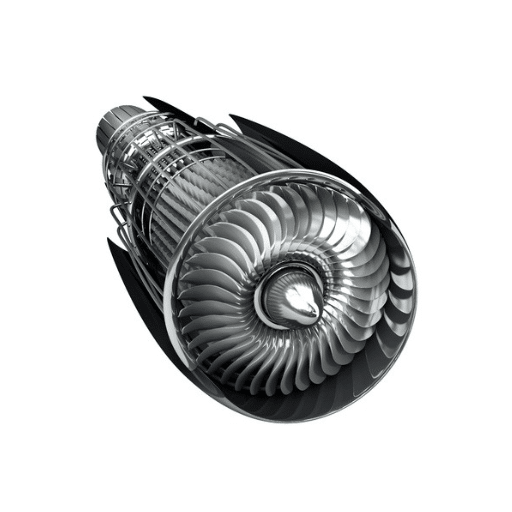
The aerospace industry operates through its dedication to innovative research work which requires precise execution and continuous improvement efforts. The material selection process serves as the fundamental element in scientific research because it involves choosing materials which can endure extreme conditions while providing outstanding performance capabilities. The introduction of titanium alloys into the market brought a revolutionary change to various industries. The exceptional strength-to-weight ratios of these alloys together with their capability to withstand high temperatures and corrosion make them essential materials for constructing aircraft spacecraft and advanced aerospace systems. This guide dives into titanium alloys by showing all their essential properties and various types and their different aerospace engineering uses. The article provides essential information about titanium alloys which control aviation operations to both industry experts and materials enthusiasts and people who want to understand modern flight and space exploration. The materials under discussion possess specifications which demonstrate their capacity to generate extraordinary advancements for aerospace research development work.
Introduction to Titanium in Aerospace
Aerospace engineering depends on titanium as an essential material because of its outstanding material properties. The material serves as a lightweight element which delivers high strength capabilities to aircraft designers who must reduce aircraft mass for optimal fuel efficiency. Titanium provides outstanding corrosion resistance which allows components to operate effectively in harsh environmental conditions for extended time periods. The material shows strength retention at elevated temperatures which enables its application in essential components for jet engines and exhaust systems. The combination of these properties establishes titanium as a basic material which enables aerospace technology development.
Importance of Titanium in Modern Aerospace Engineering
Titanium functions as an essential material for contemporary aerospace engineering because of its outstanding properties. The following presents five main advantages that titanium provides when used in aerospace missions.
⚖️
Lightweight Structure
Titanium possesses strong attributes that make it more advantageous than steel because its weight is substantially lower than steel. Lighter aircraft improve fuel efficiency and decrease operational costs. Titanium alloys provide an ideal substitute because their density of about 4.5 g/cm³ makes them almost half as dense as standard steel.
💪
High Strength-to-Weight Ratio
Titanium displays superior strength-to-weight ratio which allows it to bear heavy structural loads while maintaining its lightweight character. This property is especially important for components such as landing gears, structural frames, and joints, where both durability and reduced weight are essential.
🛡️
Corrosion Resistance
Titanium’s natural resistance to corrosion in various environments, including saltwater and high humidity, makes it particularly advantageous for aerospace parts that are exposed to harsh atmospheric conditions. This results in longer component life cycles which require less maintenance work.
🔥
Heat Resistance
Titanium alloys maintain their strength at high temperatures which makes them the preferred material for exhaust systems, jet engine components, and other critical parts that encounter extreme heat. They can endure operating conditions that reach up to 600°C (1,100°F) which guarantees both safety and reliability.
⚙️
Enhanced Mechanical Performance
The titanium components possess exceptional fatigue resistance which combines with their fracture toughness to ensure reliable operation during challenging aerospace missions. Aircraft and spacecraft require materials that can endure repeated stress without failure, and titanium’s mechanical properties address this need effectively.
The advantages of titanium materials drive aerospace engineering progress through their innovative applications and performance capabilities.
Overview of Titanium Alloys
Multiple material categories exist because titanium alloys display different aerospace properties through their microstructure and composition. The materials function as essential components for industrial applications because they provide outstanding strength-to-weight ratios together with corrosion resistance and capabilities for high-temperature operating conditions.
Categories of Titanium Alloys
- Alpha Alloys:
The alloys contain aluminum, which serves as an alpha stabilizer, and they demonstrate excellent capacity for detecting corrosion and making welding connections. The materials supply perfect performance for tasks which need both exceptional strength and resilience. - Near-Alpha Alloys:
The near-alpha alloys which belong to alpha alloys operate with a small beta phase percentage which improves their high-temperature performance together with their maintenance of effective welding capabilities. - Alpha-Beta Alloys:
The alloys contain alpha and beta stabilizers which enable them to exhibit multiple properties that include strength and formability and heat treatability. - Beta Alloys:
The alloys contain high amounts of beta stabilizers which include vanadium and molybdenum. The materials show outstanding capacity to be shaped and maintain toughness which makes them ideal for use in advanced aerospace systems. - Titanium Matrix Composites (TMCs):
Advanced composite structures incorporating titanium for next-generation high-performance applications requiring both exceptional mechanical properties and reduced structural weight.
Common Titanium Alloys & Their Applications
| Alloy | Type | Key Characteristics & Applications |
|---|---|---|
| Ti-6Al-4V (Grade 5) | Alpha-Beta | The “workhorse” alloy; widespread use due to strong structural abilities, lightweight, and corrosion resistance. |
| Ti-3Al-2.5V (Grade 9) | Alpha-Beta | Aerospace tubing solutions with high fatigue endurance and complete corrosion protection. |
| Ti-6Al-2Sn-4Zr-6Mo | Near-Alpha | Exceptional high-temperature performance with creep resistance; suitable for jet engine production. |
| Ti-10V-2Fe-3Al | Beta | Outstanding strength; suitable for high-toughness and fatigue-resistant components. |
| Ti-15Mo-3Nb-3Al-0.2Si | Beta | Ideal for aerospace fasteners; exceptional strength, mechanical performance, and corrosion protection. |
The aerospace engineering field requires each of these alloys because they provide solutions to critical problems from extreme temperatures, stress loads, and environmental challenges.
Properties of Titanium Alloys
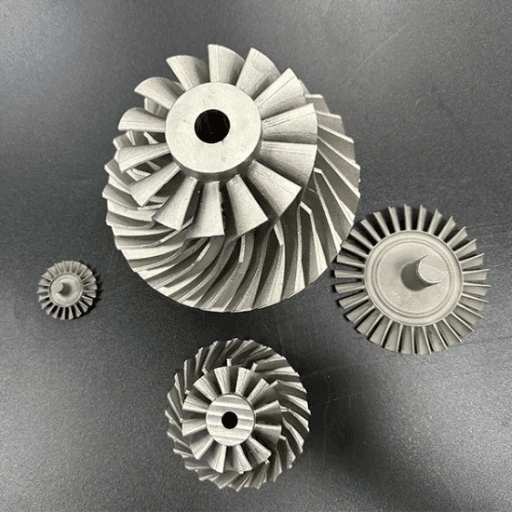
Multiple engineering applications across various industries benefit from titanium alloys because of their diverse properties which scientists recognize as especially critical for aerospace engineering purposes. The five main characteristics of titanium alloys are presented below.
Mechanical Properties of Titanium
Titanium has emerged as an industrial material because of its outstanding mechanical properties which make it suitable for various industrial applications. The five main mechanical properties of titanium include these following characteristics:
Property 01
High Strength-to-Weight Ratio
Titanium displays an exceptional strength-to-weight ratio which enables it to exceed the strength capability of most metals while maintaining a much lighter weight.
Grade 5: ~950 MPa tensile strength | 4.43 g/cm³ density
Property 02
Excellent Corrosion Resistance
The natural oxide layer of titanium protects it from corrosion through seawater and acidic environments which lets it function properly for many years.
Effective in saltwater & acidic environments
Property 03
Low Elastic Modulus
Titanium shows an elastic modulus value of 110 GPa which enables its use in various applications and improves stress absorption capacity for both biomedical and structural applications.
Elastic Modulus: 110 GPa
Property 04
Exceptional Fatigue Resistance
The metal maintains its functionality during repeated loading cycles because it can operate without developing fatigue failures. This property makes titanium highly suitable for aerospace and engineering applications.
Ideal for long-lasting strength demands
Property 05
High Melting Point
Titanium has a melting point that exceeds 1,668°C (3,034°F) which allows it to withstand high-temperature conditions while preserving its structural strength in extreme environments found in jet engines and spacecraft.
Melting Point: 1,668°C (3,034°F)
Heat Treatment Specifications
The mechanical properties of titanium alloys improve through heat treatment because this process boosts their strength and toughness while enhancing their fatigue resistance. The process needs specific heating and cooling methods for each alloy type which will be applied during the procedure. The following section presents essential heat treatment techniques along with their complete information:
-
1
Annealing
The process of annealing reduces residual stresses while also enhancing ductility and machinability. The titanium heating process occurs between 538°C and 704°C (1,000°F and 1,300°F) which depends on the grade of titanium being used and the subsequent process requires slow cooling through either air or controlled atmosphere methods.
Temperature Range: 538°C – 704°C (1,000°F – 1,300°F) -
2
Solution Treatment and Aging (STA)
The process enhances strength through the alteration of the alloy microstructure. The solution treatment process requires heating titanium alloys to a temperature range between 815°C and 955°C which results in rapid cooling through water quenching. The aging process starts with reheating to a temperature range between 480°C and 650°C and the process requires several hours to complete because it needs to develop strengthening phases through the precipitation method.
Solution: 815°C – 955°C | Aging: 480°C – 650°C -
3
Stress Relieving
The process of stress relieving helps decrease residual stresses that occur during machining and forming operations. The material undergoes heating at it reaches a temperature range between 480°C and 595°C which permits it to cool down naturally in air.
Temperature Range: 480°C – 595°C | Air Cooling -
4
Beta Annealing
Beta annealing creates a consistent beta grain structure in beta-alloyed titanium. The material undergoes heating through controlled cooling which uses a temperature range between 790°C and 1,040°C to create a refined beta phase structure.
Temperature Range: 790°C – 1,040°C -
5
Hot Isostatic Pressing (HIP)
The process of HIP helps to remove internal porosity which results in increased material density. The process applies high temperatures along with isostatic gas pressure to titanium at temperatures ranging from 900°C to 1,200°C and pressures that can reach 100 MPa which produces exceptional mechanical properties.
Temperature: 900°C – 1,200°C | Pressure: up to 100 MPa
Note: The choice of heat treatment process depends on the final application requirements, alloy grade, and desired mechanical properties. Modern advancements have further refined these techniques, enabling titanium components to meet the stringent demands of industries like aerospace, medical devices, and automotive engineering.
Weight and Strength Considerations
Engineers and manufacturers highly value titanium because it combines exceptional high strength with low weight. The density of titanium measures approximately 4.5 grams per cubic centimeter which constitutes about 60% of steel’s density. The lightweight nature of titanium enables it to maintain exceptional tensile strength which varies between 240 MPa and 1,400 MPa depending on the alloy and processing methods. The material achieves its strength-to-weight ratio which makes it suitable for applications that need to maintain structural strength while decreasing weight.
The weight of titanium exceeds aluminum by 40% yet the metal offers greater strength compared to the lightweight metal which industries widely use. Grade 5 titanium (Ti-6Al-4V) serves as one of the most commonly used alloys because it provides a tensile strength about 1,000 MPa which exceeds the 310 MPa strength of industrial-grade aluminum.
The aerospace industry uses titanium because its unique properties enable aircraft and spacecraft designers to achieve weight reductions that improve fuel efficiency and performance. Beyond aerospace titanium serves as the preferred material for sports equipment and biomedical implants and automotive manufacturing because it delivers strong yet lightweight components which enhance durability and performance. The adoption of 3D printing and advanced heat treatment systems for titanium manufacturing has resulted in modern innovations which create essential capabilities for advanced industries.
Types of Titanium Alloys
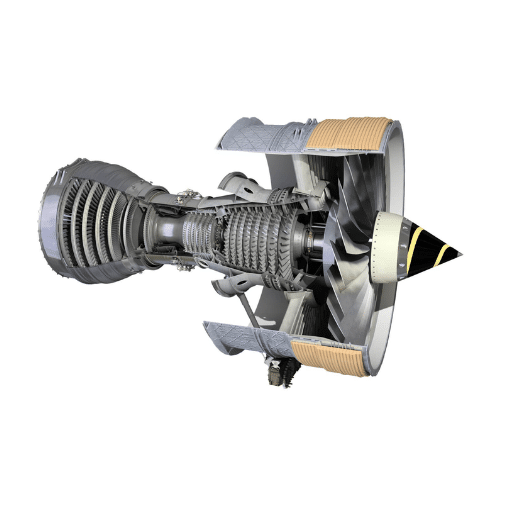
Classification of Titanium Alloys
Titanium alloys are commonly classified into three primary types based on their crystal structure and the alloying elements used to stabilize their phases:
1
Alpha Alloys
Alpha alloys develop their hexagonal close-packed HCP crystal structure which results in outstanding mechanical strength and protection against corrosion. The alloys primarily utilize aluminum and tin as alpha-phase stabilizers which form the alloy base. The materials remain non-heat treatable but they function effectively in high-temperature environments which include jet engine components.
Key Characteristics
High strength with low weight; excellent protection against oxidation up to 800°F (427°C).
High strength with low weight; excellent protection against oxidation up to 800°F (427°C).
Applications
Aircraft parts, spacecraft structures, and chemical processing plants.
Aircraft parts, spacecraft structures, and chemical processing plants.
Example
Ti-5Al-2.5Sn — used in aerospace applications.
Ti-5Al-2.5Sn — used in aerospace applications.
2
Beta Alloys
The beta alloys maintain a body-centered cubic BCC structure due to their high content of beta-phase stabilizers which include vanadium and molybdenum and chromium. The alloys possess heat-treatable capabilities which enable them to achieve exceptional formability and strength attributes.
Key Characteristics
High fracture toughness and excellent weldability; usable up to ~600°F (316°C).
High fracture toughness and excellent weldability; usable up to ~600°F (316°C).
Applications
Sports equipment, biomedical implants, and automotive component manufacturing.
Sports equipment, biomedical implants, and automotive component manufacturing.
Example
Ti-15V-3Cr-3Sn-3Al — used in high-performance applications.
Ti-15V-3Cr-3Sn-3Al — used in high-performance applications.
3
Alpha-Beta Alloys
Alpha-beta alloys develop a hybrid structure which combines alpha and beta phases to create a material that provides sound strength and corrosion protection and high impact resistance. The titanium alloys show their greatest flexibility because heat-treatment processes enable property adjustments for these materials.
Key Characteristics
Moderate strength with effective corrosion resistance; outstanding design flexibility for complex systems.
Moderate strength with effective corrosion resistance; outstanding design flexibility for complex systems.
Applications
Aerospace industry and marine environments; wide-ranging structural applications.
Aerospace industry and marine environments; wide-ranging structural applications.
Example
Ti-6Al-4V — the “workhorse” alloy; accounts for over 50% of global titanium alloy usage. Tensile strength: 900–1200 MPa.
Ti-6Al-4V — the “workhorse” alloy; accounts for over 50% of global titanium alloy usage. Tensile strength: 900–1200 MPa.
Latest Trends & Data
The most recent developments in titanium processing establish new methods for creating titanium components through additive manufacturing (3D printing) which use substantially less material than traditional techniques. The methods show their greatest effectiveness when applied to alpha and alpha-beta alloys which require expensive raw materials. New beta alloys have been developed to provide better fatigue resistance which enables their use in advanced aerospace applications.
The global demand for titanium alloys continues to grow, with the aerospace sector accounting for 60% of consumption, followed by the medical field at 20%. The market for alpha-beta alloys maintains its dominance because these materials deliver high performance through their flexible design options, yet beta-rich alloys used in high-stress situations are becoming increasingly important.
Common Titanium Grades in Aerospace
The aerospace industry depends on titanium as a critical material because it outperforms all other materials through its combination of lightweight strength and corrosion resistance and ability to function in high-temperature environments. The industry utilizes multiple titanium grades which provide distinct characteristics for different applications:
| Grade | Tensile Strength | Temp. Resistance | Primary Applications |
|---|---|---|---|
| Grade 5 (Ti-6Al-4V) | 120,000 psi (827 MPa) | Up to 400°C (752°F) | Airframes, fasteners, engine components. Accounts for 50%+ of aerospace titanium usage. |
| Grade 2 (CP Titanium) | 50,000 psi (344 MPa) | Moderate range | Hydraulic systems, pipelines; excellent weldability. |
| Grade 9 (Ti-3Al-2.5V) | Mid-range strength | Moderate temperatures | Fuselage elements, heat exchangers; combines strength of Grade 5 and flexibility of CP titanium. |
| Ti-10V-2Fe-3Al (Beta) | 200,000+ psi (1,380+ MPa) | High stress environments | Landing gear; exceptional strength with impact resistance. |
| Grade 12 (Ti+Mo+Ni) | High | Oxidizing environments | Chemical processing equipment in aerospace systems. |
Specific Titanium Alloys: Ti-6Al-4V and Others
| Key Point | Ti-6Al-4V | Other Titanium Alloys |
|---|---|---|
| Type | Alpha-beta alloy | Varies (alpha, beta, alpha-beta) |
| Strength | High specific strength | Varies by alloy type |
| Corrosion Resistance | Excellent in seawater | Varies, often high |
| Thermal Conductivity | 6.7 W/m-K | Varies by alloy |
| Melting Point | ~1,660°C | ~1,600–1,700°C |
| Applications | Aerospace, marine, medical | Aerospace, industrial, chemical |
| Density | ~4.43 g/cm³ | ~4.4–4.7 g/cm³ |
| Weldability | Good | Varies by alloy |
| Heat Treatment | Annealing, aging | Varies (annealing, solution treating) |
| Common Grades | Grade 5 | Grade 2, Grade 9, Grade 23 |
Applications of Titanium Alloys in Aerospace
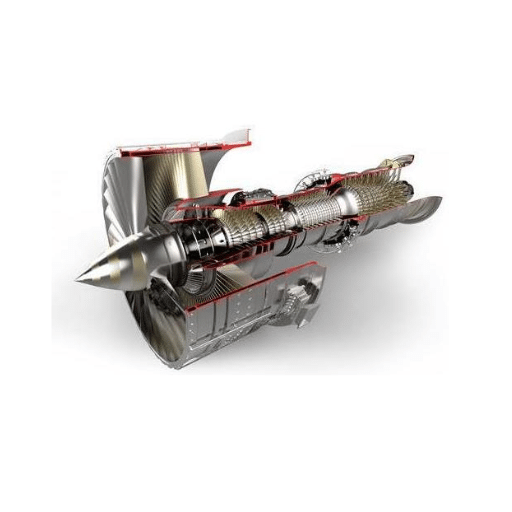
Aerospace engineering depends on titanium alloys because they provide superior strength-to-weight ratios and outstanding resistance to corrosion and their capability to endure extreme temperatures. The following examples demonstrate how titanium alloys function in aerospace applications:
✈️ Aircraft Structures
Airframe components require titanium alloys because they provide necessary strength and weight reduction benefits. The alloys enable the aircraft to achieve reduced weight while maintaining strength and fatigue resistance which improves fuel efficiency.
⚙️ Engine Components
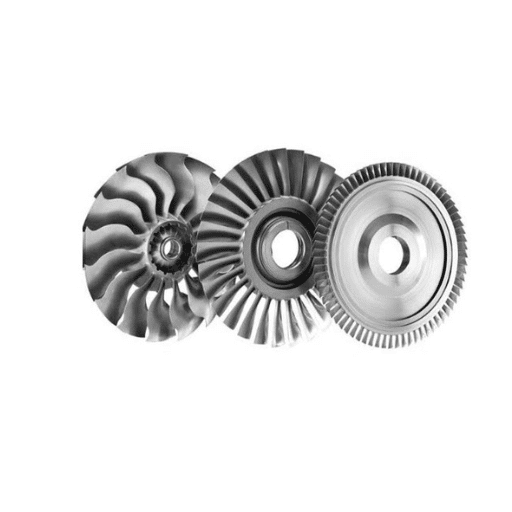
Titanium is extensively used in jet engine components which include fan blades and compressor blades and casings. The material’s high-temperature endurance and erosion resistance make it suitable for essential components which boost engine output and operational stability.
🛬 Landing Gear
Landing gear components use titanium alloys because these materials provide high strength and durability while maintaining lightweight characteristics. The materials provide resistance to corrosion which decreases the need for maintenance work.
🔥 Exhaust Systems
Titanium serves as the primary material for exhaust ducts and systems because it maintains its lightweight properties while withstanding extreme heat. This development benefits aircraft performance while establishing long-term reliability across demanding operating environments.
🔩 Fasteners
Airplanes use titanium fasteners which combine lightweight properties with exceptional strength to securely connect different structural parts. The fasteners provide significant weight reduction when compared to standard materials which leads to decreased fuel consumption throughout the aircraft.
Use of Titanium in Engines
Aircraft engines depend on titanium alloys as their primary material because these alloys deliver exceptional strength and lightweight properties while maintaining their structural strength during high-temperature and rigorous operational requirements. The exceptional properties of titanium make it suitable for vital engine parts which require both performance and enduring strength.
- →
Fan Blades and Discs: Titanium is commonly used in the manufacture of fan blades and discs in jet engines. The components need to have lightweight properties but they must also be able to withstand the powerful forces that occur in their operational state.
- →
Compressor Components: Titanium alloys are extensively used in the compressor section of engines. The high-pressure compressor blades and stators use this material according to industry standards. The material maintains engine efficiency and reliability through its capacity to endure extreme pressure and temperature conditions without undergoing deformation.
- →
Casing and Housing: Manufacturers build engine casings and housings from titanium alloys because these materials create robust yet lightweight designs which help reduce engine weight while maintaining peak performance and operational safety.
- →
Exhaust Systems: Titanium is utilized in specific parts of exhaust systems which need outstanding heat resistance to endure the extreme temperatures produced during engine operation.
- →
Connecting Rods: Engine designers use lightweight titanium connecting rods to reduce reciprocating mass which results in improved engine performance and reduced engine wear.
Titanium Applications in Airframes
Titanium serves as a fundamental material in contemporary airframe design because of its lightweight attributes combined with its ability to resist corrosion and endure high-temperature conditions. The military and commercial aviation sectors use titanium because it strengthens airframe construction while increasing operational performance and reducing fuel expenses and maintenance requirements.
Fuselage Components
Titanium functions as the essential material for crucial fuselage components which demand both strong structural integrity and protection against fatigue damage that occurs during pressurization cycles.
Empennage Structures
Titanium functions as the primary material for both horizontal and vertical stabilizers because it delivers stability and control together with exceptional corrosion resistance needed for these exposed sections.
Wing Spars and Skins
Wing spars and skins use lightweight titanium alloys which help preserve structural strength while decreasing weight thus improving aerodynamic efficiency.
Landing Gear
The combination of strong yet lightweight properties in titanium makes it suitable for producing landing gear parts which must withstand heavy aircraft weight during takeoff and landing activities.
Fasteners and Joints
Titanium fasteners serve as the connecting elements between airframe components because these fasteners maintain mechanical strength under extreme conditions while resisting corrosion damage.
Role of Titanium in Fasteners
The aerospace industry depends on titanium to develop fasteners because the metal has essential properties that make it suitable for this purpose. The following section presents essential information about titanium fasteners together with their various applications:
● Corrosion Resistance
Titanium fasteners show strong resistance against corrosion in extreme weather conditions which include both saltwater and high humidity environments. The properties of these materials make them suitable for marine and aerospace applications because they provide both extended service life and dependable performance.
● High Strength-to-Weight Ratio
Titanium fasteners deliver exceptional strength while maintaining a lightweight construction. Aerospace engineering requires this ability because engineers need to decrease aircraft weight without decreasing their structural strength to achieve better fuel efficiency and improved performance.
● Heat Resistance
Titanium fasteners maintain their functionality at high temperatures which makes them appropriate for high thermal stress applications that occur in jet engines and exhaust systems. The design prevents significant shape changes which improves operational safety.
● Non-Magnetic Properties
Electromagnetic interference should be prevented in sophisticated avionics systems and equipment which utilize non-magnetic titanium fasteners for their applications.
● Durability and Long-Term Performance
Titanium fasteners maintain their functionality during lengthy periods of operation under demanding environmental conditions. The materials possess inherent durability which results in decreased requirement for replacement items that ultimately reduce maintenance expenses.
Technical Comparison of Titanium Alloys
| Key Point | Alpha Alloys | Beta Alloys | Alpha-Beta Alloys |
|---|---|---|---|
| Composition | Pure titanium + stabilizers | High beta stabilizers | Mix of alpha and beta stabilizers |
| Strength | Moderate | High | High |
| Corrosion Resistance | Excellent | Good | Excellent |
| Weldability | Excellent | Poor | Good |
| Heat Treatment | Not heat-treatable | Heat-treatable | Heat-treatable |
| Applications | Aerospace, marine | Medical, aerospace | Aerospace, industrial |
| Density | ~4.5 g/cm³ | ~4.7 g/cm³ | ~4.4–4.5 g/cm³ |
| Machinability | Good | Poor | Moderate |
| Thermal Conductivity | Moderate | Low | Moderate |
| Common Grades | Grade 2 | Grade 19 | Grade 5, Grade 23 |
Weight vs. Strength-to-Weight Ratio
| Key Point | Alpha Alloys | Beta Alloys | Alpha-Beta Alloys |
|---|---|---|---|
| Weight | Light (~4.5 g/cm³) | Slightly heavier (~4.7 g/cm³) | Moderate (~4.4–4.5 g/cm³) |
| Strength-to-Weight Ratio | High | Very High | Excellent |
| Applications | Lightweight structures | High-performance components | Balanced applications |
| Trade-Off | Lower strength | Higher density | Best of both worlds |
Temperature Resistance of Various Alloys
The properties of titanium alloys make them suitable for high-temperature applications which include aerospace and power generation industries. The following lists common titanium alloys which demonstrate their ability to withstand high temperatures:
Performance Metrics in Aerospace Applications
The testing of materials used in aerospace applications requires multiple critical performance standards which evaluate the material’s ability to maintain safety and operational reliability and work under extreme conditions. The following performance metrics include five essential measurements which describe their testing methods and testing results: