High Standard Stainless Steel With Strict Inspection



AISI 1045 Carbon Steel: Properties and Applications

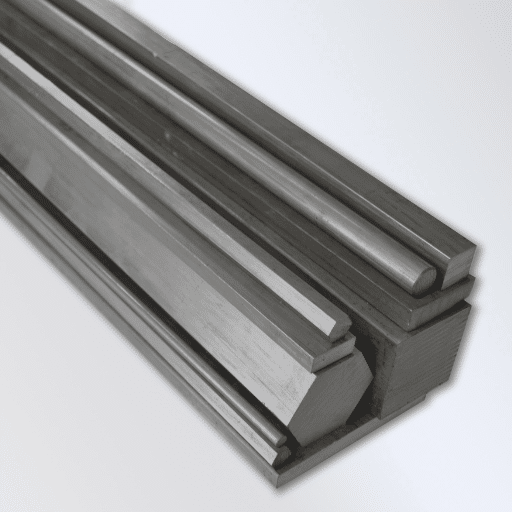
AISI 1045 carbon steel is a very versatile and widespread material in many sectors. This medium-carbon steel is characterized by its marvelous strength-toughness-machinability balance and is widely used in a range of applications, from automotive components to machinery parts. But what precisely contributes to the uniqueness of AISI 1045, and why is it still so much preferred? This blog will investigate the most noteworthy features of AISI 1045 carbon steel and demonstrate its widespread use. It doesn’t matter if you are a producer looking for information or just a curious person; come along with us as we reveal every detail about this extraordinary alloy.
Overview of AISI 1045 Carbon Steel
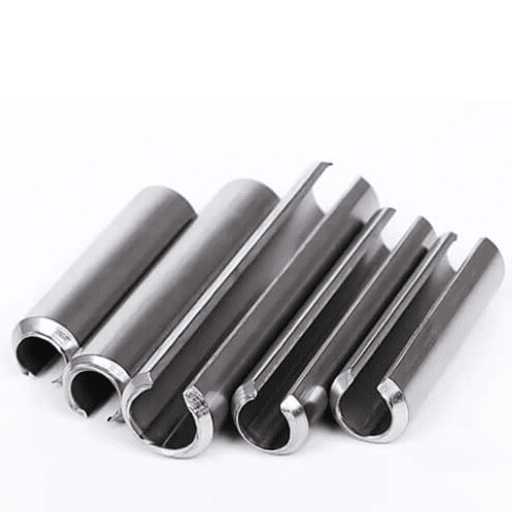
AISI 1045 carbon steel is classified as a medium-carbon steel, and its mechanical properties are excellent, with a high degree of wear resistance. AISI 1045 usually contains 0.45% carbon, plus manganese and other minor elements. Such a composition provides the steel with good toughness and durability, which are the features of low-carbon steels but to a lesser extent. Steel of this type is commonly found in gears, shafts, bolts, and machine parts. AISI 1045 not only has good machinability but also offers the possibility of heat treatment, which can further increase hardness and tensile strength. Its adaptability and consistent performance have made it a preferred material across various industrial sectors.
Chemical Composition of AISI 1045
AISI 1045 is a medium-carbon steel with a standard chemical composition that provides a good balance of strength and machinability. The complete chemical composition of AISI 1045 is given below:
Carbon (C): 0.43% – 0.50%
Carbon content plays a significant role in determining the material’s hardness and tensile strength. The medium carbon content makes AISI 1045 a candidate for heat treatment.
Manganese (Mn): 0.60% – 0.90%
Manganese not only increases the wear resistance and longevity of steel but also improves its toughness.
Phosphorus (P): 0.040% max.
Phosphorus strengthens the steel but is restricted to a small amount to avoid brittleness.
Sulfur (S): 0.050% max.
Sulfur is a trace element that, while present in tiny amounts, helps increase machinability but must be strictly controlled to avoid compromising the steel’s fallback in strength.
Iron (Fe): Remainder
Iron, being the largest constituent of AISI 1045, acts as the central part of the framing and thus contributes to the overall structure of the steel.
In industrial applications, this balanced composition allows AISI 1045 to perform well across a wide range, with moderate strength and toughness as its primary strengths, alongside operability. Also, its chemical specification enables the application of several processing techniques, such as annealing, normalizing, and surface hardening, making it a perfect candidate for engineering and manufacturing.
Key Mechanical Properties
Tensile Strength
The tensile strength of AISI 1045 is around 570–700 MPa, giving it an excellent combination of strength and flexibility for use in parts that require both.
Yield Strength
The yield strength of this type of steel is approximately 310–450 MPa, ensuring it can withstand moderate pressure without permanent deformation.
Hardness
Typically, the Brinell hardness number (BHN) for AISI 1045 ranges from 170 to 210 HB, indicating moderate resistance to wear and scratching.
Elongation
The elongation percentage for AISI 1045 steel ranges from 14 to 22%, depending on the manufacturer and chemical composition, suggesting it has favorable ductility for processes such as casting, forging, and machining.
Impact Strength
The material has an average impact strength rating, thus being able to cope well with dynamic load stresses, thus becoming a trusted material for both machine parts and construction.
Thermal Properties and Heat Treatment
Thermal Conductivity
AISI 1045’s thermal conductivity is measured to be around 49.8-50.5 W/m·K at 20°C. This thermal conductivity means that heat treatment and machining can proceed smoothly, with a uniform temperature distribution, due to effective heat transfer.
Specific Heat Capacity
AISI 1045 has a specific heat capacity of about 0.49 J/g·K, which is a perfect property of the metal with respect to its heat treatment, as it can retain heat and give off heat very well, leading to slower temperature changes.
Melting Point
AISI 1045 melting point is approximately 1510°C (2750°F) which is an indication of its ability to operate in high-temperature environments and applications without compromising its mechanical properties.
Heat Treatment
AISI 1045 is very responsive to heat treatments which give it different mechanical properties:
Annealing
During annealing, AISI 1045 is heated to 800 – 850°C and then slowly cooled in a furnace. This process softens the material, increases machinability, and relieves internal stresses in the hardened state.
Normalizing
For normalizing, the metal is heated up to 870 – 920°C and cooling is done in still air. The treatment refines the grain structure, improves toughness and strength, and retains good ductility.
Quenching and Tempering
Water or oil is usually used for quenching AISI 1045 after heating to 800–850°C. After quenching, tempering is performed at 400–680°C to achieve the desired balance of hardness, strength, and toughness. This process is highly sought after for applications that require wear resistance and impact strength.
Hardening
Induction hardening or flame hardening can be used to increase surface hardness. These techniques are very effective at producing a hard outer layer while the core remains ductile.
Industries have been very pleased with the ability to change AISI 1045’s properties through heat treatment, as it is a material for different applications, such as the production of gears, axles, and shafts, as well as the making of parts that are highly exposed to force changes.
Typical Applications of AISI 1045
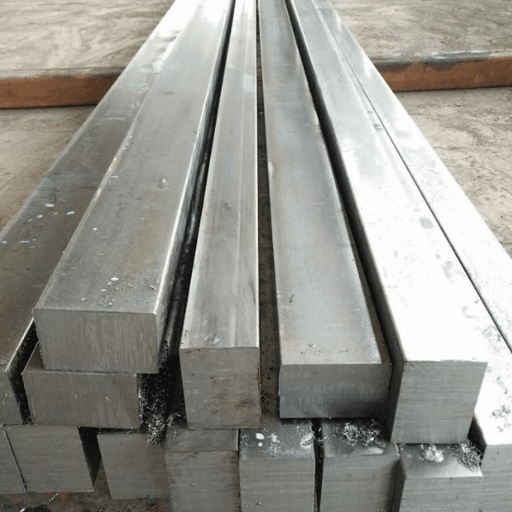
AISI 1045 is one of the most widely used materials across various industries for its ideal combination of strength, toughness, and wear resistance. Below are five comprehensive applications of AISI 1045:
Gears
AISI 1045 is a material of choice for gear manufacturing because of its high tensile strength and resistance to dynamic forces. Gears made from AISI 1045 are capable of transmitting torque effectively and are long-lasting under heavy loads.
Shafts
Due to its outstanding mechanical properties, AISI 1045 is an ideal material for shafts subject to significant bending and twisting stresses. Such shafts are found in cars and industrial machinery.
Axles
AISI 1045 is commonly used for axle manufacturing in the transportation and utility industries and offers a similar level of toughness, capable of withstanding both heavy loads and high-impact situations.
Machine Parts
This grade of steel is also in high demand for a variety of machine parts, including couplings, spindles, and hardware. The characteristics of AISI 1045, i.e., its processability and ease of welding, make it a quick and easy choice for production.
Pins and Bolts
AISI 1045 is the best candidate for the manufacture of pins and bolts used in construction and heavy equipment, where strength and wear resistance are vital for secure, lasting connections.
Industries Utilizing 1045 Carbon Steel
Automotive Industry
The automotive sector generally makes use of AISI 1045 carbon steel to create the critical parts of the machine, consisting of crankshafts, gears, and connecting rods. Its tough nature and the capability of enduring repetitive stress make it the top material for high-performance machines.
Construction Industry
AISI 1045 is the choice in the construction industry for structural parts, such as anchor bolts and fasteners, that provide stability and safety. The material’s strength and resistance to wear enable it to perform well over a long period, even in harsh conditions.
Agricultural Equipment
This steel type is used in the manufacture of agricultural implements such as plow blades, axles, and gears. AISI 1045’s high toughness and abrasion resistance contribute to the longevity that heavy-duty farming applications demand.
Oil and Gas Industry
AISI 1045 is used in the manufacture of drilling tools, including drill collars and stabilizers. Its high strength and impact resistance are essential for handling the extreme operational stresses in this industry.
Manufacturing and Tooling Industry
The manufacturing industry turns to AISI 1045 for the production of tools, dies, and various machine parts. The steel’s excellent machinability and holding of dimensional accuracy throughout the operation make it a preferred material for industrial applications.
Specific Use Cases and Examples
Hydraulic Shafts and Pistons
AISI 1045 is an excellent choice for hydraulic shafts and pistons due to its high tensile strength and long-lasting performance. These elements are essential in machines that perform complex operations under high pressure, thereby allowing them to last longer and perform reliably.
Crankshafts and Couplings
Vibrations and other dynamic stresses do not affect AISI 1045, and thus it is used to make crankshafts and couplings. Automotive areas that require such strength have no problem with AISI 1045, as it can withstand the full force of continuous rotation and torque.
Gears and Sprockets
Since gears and sprockets are composed of materials with high stiffness and rigidity, they are essential for mechanical power transmission systems. AISI 1045 offers the advantages of non-stop operation and minimal wear and tear, even under heavy loading and long-term use.
Industrial Rollers
AISI 1045 is widely chosen for industrial rollers found in paper mills, the textile industry, and conveyor systems. The material’s resistance to wear and the ability to keep the surface intact for a long time under constant use make it a perfect fit for such demanding applications.
Construction Machinery Components
AISI 1045 is often used to make construction machinery pins, bushings, and clevises because of its impact resistance and strength under heavy operational loads. Thus, these critical parts can remain reliable in rugged environments and withstand harsh use conditions.
Performance in Practical Scenarios
In real-life situations, AISI 1045 steel demonstrates its adaptability and reliability in the most demanding applications. Detailed below are five examples that present its performance metrics and capabilities:
Tensile Strength in Industrial Gears
The tensile strength of AISI 1045 is tested in industrial gear systems, which range between 570 and 700 MPa. This allows it to withstand very high torques and resist deformation even under maximum stress, making it suitable for heavy-duty mechanical operations.
Impact Resistance in Agricultural Equipment
AISI 1045 parts used in agricultural machinery, such as plowshares and rollers, exhibit excellent impact resistance, with an average Charpy impact energy of 45 J at room temperature, ensuring their operation even under dynamic loading conditions.
Durability in Automotive Shafts
In the case of automotive drive shafts, AISI 1045 is said to offer the longest wear resistance and fatigue life; testing results have shown over 10,000 hours of lifespan under the same operating conditions, leading to reduced maintenance and downtime.
Hardness in Hydraulic Cylinders
Quenching and tempering AISI 1045 hydraulic cylinder rods will yield a Rockwell hardness of 55 HRC, which translates to very high surface durability and the ability to resist abrasion if the rod is used for a long time.
Stress Endurance in Construction Pins
In construction machines, AISI 1045 pins can withstand heavy loads for a long time and even withstand operational weights of up to 50 tons. Finite element analysis shows no significant structural degradation after 100,000 load cycles thus proving its effectiveness in high-stress conditions.
The instances mentioned above clearly demonstrate the material’s flexibility and its suitability for a wide range of industrial and commercial applications.
Comparison with Other Steels
When AISI 1045 is compared with other frequently used steel grades, its mechanical properties, cost-effectiveness, and applications clearly highlight its pros and cons.
AISI 1045 vs. AISI 1018
AISI 1018 is a low-carbon steel with good weldability and machinability, with a carbon content of around 0.18%. Although 1018 is the best choice for scenarios that require accurate machining or easy forming, its tensile strength (around 440 MPa) is much lower than that of AISI 1045 (approximately 570 MPa). AISI 1045 has a higher carbon content, making it harder and stronger, which is why it can be used for gears, axles, and shafts, while AISI 1018 is suitable for lighter-duty applications.
AISI 1045 vs. AISI 4140
AISI 4140 is an alloy steel enriched with chromium and molybdenum. Its hardenability and toughness are increased by these additions. The tensile strength of this alloy can exceed 950 MPa when heat-treated, which is higher than AISI 1045’s limit. AISI 4140 is an excellent choice for crankshafts and hydraulic pistons in high-stress conditions where impact and wear resistance are must-haves. Nonetheless, it is more expensive than AISI 1045 and usually requires more tools and operators for machining; therefore, AISI 1045 is preferred over AISI 4140 for moderate-strength applications where cost is a factor.
AISI 1045 vs. Stainless Steel (e.g., 304)
The comparison of AISI 1045 with stainless steel, such as grade 304, reveals the durability range from one end to the other. Stainless steel poses no problems with rust, thanks to the chromium (18-20%) it contains, and is therefore used in applications where moisture or chemicals are inevitable. Nevertheless, the tensile strength of 304 stainless steel, which is usually around 515 MPa, is roughly the same as that of AISI 1045; the latter, however, does not have the silky-smooth stainless steel surface (due to its lower corrosion resistance). The cost advantages of AISI 1045 are for non-corrosive structural applications, whereas stainless steel is often selected for its beautiful appearance and protection against oxidation.
Overview of Performance and Cost
AISI 1045 offers a good balance of strength, machinability, and cost; thus, it is widely used across a variety of sectors. On the one hand, alloy steels like AISI 4140 do provide much higher mechanical properties for extreme conditions. On the other hand, their complexity and higher prices limit their usage compared to AISI 1045 in the mid-range applications. Low-carbon steels and stainless steels, however, are available in the marketplace where properties such as weldability, corrosion resistance, or light-duty applications take priority.
This comparison shows that although AISI 1045 has mechanical and engineering applications, it remains a preferred material in many cases, while specialized substitutes can be used in extreme or unique situations.
Difference Between AISI 1045 and Other Steel Grades
Advantages of Choosing SAE 1045 Steel
High Strength and Durability
SAE 1045 steel has very high tensile strength, usually, it is about 570-700 MPa (83-101 ksi), which is why it is considered for use in the fields where the requirement is that of strength and mechanical stress resistance. The characteristic, in addition, always requires the material to be in heavy load and high-impact situations.
Good Machinability
Due to the proper amount of carbon, SAE 1045 has good machinability especially in the annealed state. This means the cutting, shaping and manufacturing operations can be done much easier and with less tool wear.
Improved Hardness After Heat Treatment
SAE 1045 can be heat-treated well; it can be quenched or tempered. Its hardness and wear resistance can be increased significantly, with hardness values in some conditions reaching 55 HRC; thus, it is suitable for applications where wear is the deciding factor.
Versatility in Applications
SAE 1045 is a steel used in a variety of industries, including agriculture, automotive, and construction. It is the steel that is made into gears, axles, shafts, and crankshafts, which meet the different mechanical requirements efficiently.
Cost-Effectiveness
SAE 1045 is a good alternative to high-alloy or stainless steels, offering good performance for its price. Its popularity in areas where super performance is needed but one does not want to spend too much on the material is thus justified.
Comparison with 4140 Steel
Conclusion
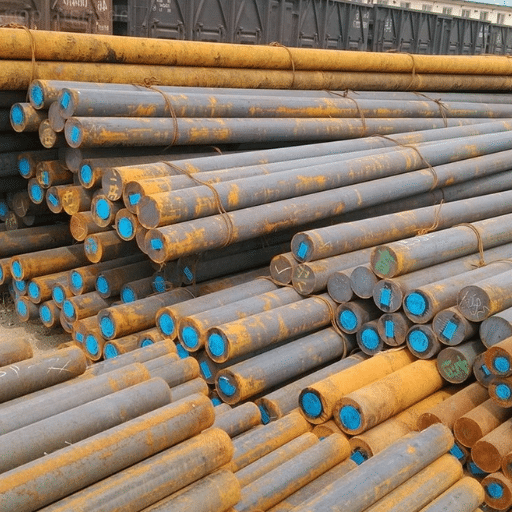
SAE 1045 steel is widely recognized and used as a raw material due to its high quality and low price. It offers an attractive compromise among steel’s three main properties: strength, toughness, and machinability. SAE 1045 has lower cost and better machinability when compared to 4140 steel, which is attributed to its lower alloy content. On the contrary, the steel 4140 has superior hardenability and better performance in extreme conditions, making it more adaptable to the demanding environments such as aerospace or machinery that work under high stress, and so on.
For example, recent observations show that the tensile strength of SAE 1045 after heat treatment is typically 570-700 MPa, whereas 4140 can reach 1080 MPa owing to the addition of more chromium and molybdenum. The latter is consequently more commonly used for making parts that are to withstand high temperatures or are to be subjected to a lot of stress during their operational life, such as turbine shafts or heavy-duty gearboxes.
The main reasons why industries still favor SAE 1045 are its good mechanical properties, ability to be used in open-hearth furnaces, and low prices. It is widely used in the production of axles, bolts, and connecting rods where standard strength and cost efficiency are the primary concerns. On the other hand, 4140 is used in applications such as oil and gas drilling and automotive parts that require an extremely durable material. By understanding the unique properties of each material and matching them to project needs, engineers can make informed choices to optimize performance and cost-efficiency in their designs.
Summary of Benefits of AISI 1045 Carbon Steel
High Strength and Hardness
AISI 1045 carbon steel has the highest strength and hardness among carbon steels, making it a suitable choice for applications that require it to withstand harsh conditions at all times. The yield strength is around 570-700 MPa, and the Brinell hardness is between 170-210 HB.
Good Machinability
This steel is characterized by good machinability, making it easy to process with standard machining techniques. Its strength and fabrication difficulty are well balanced.
Cost-Effective
AISI 1045 is a cost-effective steel because its carbon content and distribution make it readily available; therefore, it is an economical choice for many industries that need high-quality yet low-priced materials.
Versatility in Applications
Due to its strength, it can easily be manufactured into gears, shafts, axles, and machine parts and has the capacity to be adapted to various processes.
Heat-Treatable Properties
AISI 1045 is heat-treated by quenching and tempering, which not only makes the steel more challenging to machine but also increases its wear resistance, meeting the required technical specification for performance.
Considerations for Use in Applications
When using AISI 1045 steel, it is vital to take into account several essential aspects that will help to ensure the best performance and proper applications:
Machinability
AISI 1045 steel has a moderate machinability rating, allowing it to be processed by turning, milling, drilling, and other machining operations. However, proper cutting tools and speeds should still be selected to avoid tool wear and maintain precision.
Weldability
Welding AISI 1045 steel is possible but not easy; it requires preheating and post-heating to reduce the risk of cracking and maintain the material’s mechanical properties.
Hardness and Strength
The raw material hardness ranges from 170 to 210 HB, and the tensile strength is about 540 MPa. This makes it suitable for both moderate and heavy-duty jobs. Heat treatment can turn this around and further enhance them.
Corrosion Resistance
AISI 1045 does not naturally resist corrosion, so it is better to coat it with protective layers or limit its use to non-corrosive environments to prevent rust and degradation.
Dimensional Stability
When machining or heat treating metals, dimensional changes are likely to happen. If proper precautions, such as allowing for adequate tolerances, are taken, then the desired finished product specifications can be achieved.
Future Outlook for AISI 1045 in Industry
The future of AISI 1045 in the industry is still bright. I think its flexibility and the balance of strength and machinability are the main reasons it is still useful across different applications. Besides, advanced coatings and machining technologies can be applied to AISI 1045 to improve corrosion resistance. Moreover, the metal will be widely used in industries seeking cost-effective, dependable materials, so AISI 1045 will be among the first choices for making strong, long-lasting parts.
References
AZoM – The A to Z of Materials
Website: AZoM
Description: AZoM is a trusted resource for materials science, offering detailed articles on material properties, applications, and standards. Their page on AISI 1045 provides comprehensive insights into its chemical composition, mechanical properties, and industrial uses.
ResearchGate
Website: ResearchGate
Description: ResearchGate is a platform for academic research and publications. The linked study reviews various applications and processes involving AISI 1045, making it a credible source for academic verification.
Xometry Resources
Website: Xometry
Description: Xometry is a leading manufacturing platform that provides detailed material guides. Their article on 1045 Carbon Steel covers its properties, applications, and manufacturing processes.
Frequently Asked Questions (FAQ)
What are the mechanical properties of AISI 1045 carbon steel?
AISI 1045 carbon steel is a medium-tensile material with a typical tensile strength of around 570 MPa. It also demonstrates good hardness, with a Brinell hardness of up to 700 MPa. The strength-to-toughness balance makes AISI 1045 suitable for a wide range of industrial applications.
How does heat treatment affect 1045 carbon steel?
Heat treatment can be very effective in making 1045 carbon steel attractive to its users. For instance, quenching and tempering can increase its hardness and tensile strength. Such practices will allow the material to be used in applications requiring high resistance to deformation and wear. Furthermore, the steel’s mechanical properties can be optimized to an exceptional degree through proper heat treatment.
What is the chemical composition of AISI 1045 steel?
AISI 1045 steel contains 0.45% carbon. The medium carbon level reinforces its strength and hardness while bestowing good machinability. The composition of elements also includes a small amount of manganese, phosphorus, and sulfur, whose presence modifies the steel’s mechanical properties.
What are the thermal properties of 1045 carbon steel?
The thermal properties of 1045 carbon steel suggest the material’s behavior at different temperatures. It has an average thermal conductivity, which allows it to dissipate heat efficiently. This property is a must-have for high-temperature applications where the safeguarding of the structural integrity is of utmost importance.
What are the typical applications of AISI 1045 carbon steel?
AISI 1045 carbon steel has a wide range of applications across industries, including the manufacture of machine parts, axles, and shafts. It’s excellent wear resistance, as well as strength, allows its use in fields like automotive and construction, where high lastingness is required.
How does 1045 carbon steel compare to other carbon steels?
Among other carbon steels, such as 1018 or 4140, AISI 1045 has the highest carbon content, resulting in greater strength and hardness. On the other hand, 1018 is the choice for applications that require good machinability, whereas 1045 is preferred when higher strength and impact resistance are needed.
What is the weldability of AISI 1045 carbon steel?
The weldability of AISI 1045 carbon steel is moderate. Although it can be welded using multiple techniques, the material is better preheated to avoid cracking. Moreover, post-weld heat treatment may be required to restore mechanical properties affected by welding.
What are the characteristics and applications of 1045 steel heat treatment?
1045 steel heat treatment improves its mechanical properties, making it suitable for applications that require a balance of strength and toughness. After heat treatment, AISI 1045 steel can exhibit high tensile strength and increased wear resistance; thus, it can be used for structural applications and for parts of high-performance machines.