


Blog
4140 Alloy Steel: Complete Material Guide

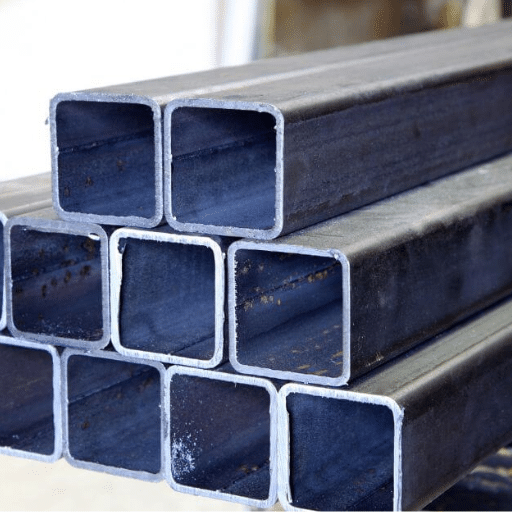
When discussing industrial applications of high-strength, versatile materials, 4140 alloy steel is an undeniably strong option. This steel grade is highly regarded for its unique combination of hardness, toughness, and durability and is therefore used in many industries, including manufacturing, automotive, aerospace, and construction. Even if you are an engineer, a machinist, or just someone interested in materials engineering, the properties and applications of 4140 alloy steel will provide you with a lot of knowledge. This guide will focus on 4140 alloy steel and cover its main features, heat-treatment methods, typical applications, and practical benefits. Be prepared to explain why this alloy has been a vital part of many creative projects and how it can improve your applications.
Introduction to 4140 Alloy Steel
4140 alloy steel is a low-alloy steel known for its high strength, toughness, and excellent wear resistance, making it a very versatile and widely used material. It consists of chromium, molybdenum, and manganese as its main elements, which, in turn, increase its durability and resistance to creep. This alloy is often referred to as a miracle material in industries such as automotive, aerospace, and manufacturing, where its adaptability and reliable performance are valued. Besides, heat-treating 4140 alloy steel enables one to attain desired mechanical properties, thus it is the most commonly used material in applications that require strength and durability.
Significance in Various Industries
Due to its versatility, strength, and ability to withstand demanding applications, 4140 alloy steel is a major player in many industries. A thorough examination of five notable sectors in which 4140 alloy steel is extensively applied is given below:
Automotive Industry
In the manufacture of gears, shafts, and axles, 4140 alloy steel is a key material that provides toughness and reliability in the high-load components of the car. Moreover, its excellent machinability and resistance to wear and tear make it a critical material in the automotive production sector.
Aerospace Industry
Apart from the military, the civilian aerospace industry also relies on 4140 alloy steel for crucial parts like aircraft landing gear and engine components, which are tougher than usual. The steel’s capacity to withstand high tension, plus its heat resistance, are among the leading advantages of using it in such demanding applications.
Oil and Gas Industry
4140 alloy steel is one of the hardest materials used in oil/gas mining and drilling applications, as it can withstand the rigorous conditions of a full drilling operation. Apart from its toughness, the alloy has excellent corrosion resistance, extending its lifespan even in the extreme conditions of an offshore drilling site.
Tool and Die Manufacturing
This steel is ideal for the production of precision industrial tools, molds, and dies, thanks to its easy heat treatment and dimensional stability after repeated use. Its hardness and wear resistance contribute significantly not only to manufacturing but also to the productivity and lifespan of the tools used.
Construction Industry
4140 alloy steel is a material of choice in construction, ranging from structural parts to reinforcement bars. Its superior strength-to-weight ratio and resistance to deformation allow the construction of long-lasting infrastructures.
Chemical Composition of 4140 Alloy Steel
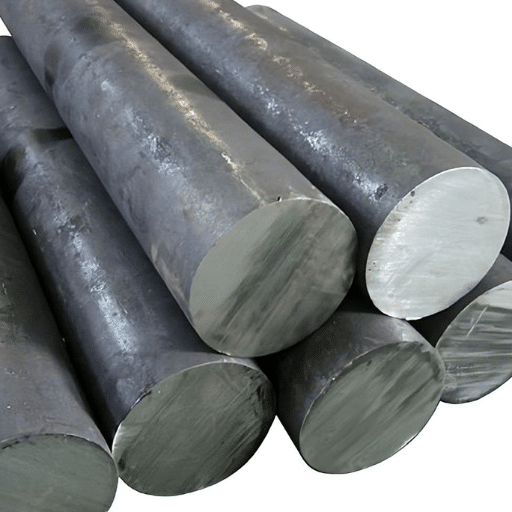
4140 alloy steel is made of specific elements, which have made it famous for its strength, toughness, and versatility. The elements are combined in a perfect way and this leads to the enhancement of mechanical properties, making it highly suitable for a wide range of industrial applications. The chemical composition of 4140 alloy steel is indicated below in detail:
Note: The above percentages are indicative of the typical ranges of elements in 4140 alloy steel, however, little variations can be expected due to particular processing or specifications. The precise ratio of various elements gives the metal a perfect combination of strength, ductility, and resistance to wear, making it well-suited for heavy-duty applications across multiple sectors.
4140 Alloy Steel Properties
4140 alloy steel is well known for its remarkable mechanical properties. Because of that, it can be used for many different intake types across different fields. A comprehensive list of its fundamental physical and mechanical attributes is below:
Tensile Strength
After normalization, the tensile strength of 4140 alloy steel typically falls in the range of 950 to 1,150 MPa (138,000 to 167,000 psi) and thus possesses a very high resistance to tension-induced deformations.
Yield Strength
Undergoing stress ranging from 700 MPa (101,000 psi) to 1,050 MPa (152,000 psi) created by the heat treatment process, which is responsible for the structural reliability of the steel.
Hardness
About 197-241 HB hardness is measured under annealing and can reach 54 HRC with proper tempering and hardening.
Elongation at Break
Around 15-20% in annealed conditions is the average value, indicating a combination of strength and ductility.
Impact Strength
Excellent toughness is demonstrated, especially in the tempered material, allowing it to absorb repeated impacts without risk of cracking.
Thermal Conductivity
The value is around 42.6 W/m·K at 200°C, which is low compared with other alloy steels but high enough for most mechanical uses.
Machinability
Considered to be on the same level as medium carbon steel and thus has a machinability rating of about 70% relative to B1112 steel.
Corrosion Resistance
Good to Fair corrosion resistance; working in corrosive environments will generally require surface treatments like nitriding or plating to improve performance.
4140 Alloy Steel Applications
The composition and the properties of 4140 alloy steel are such that it can be applied in almost every industry:
- Automotive Industry:
Heavy truck crankshafts, connecting rods, gears, and axles are its major applications due to their strength and resistance to fatigue. - Oil and Gas Industry:
Its hardness and wear resistance are the main reasons it is used to make tools, drill collars, and components that undergo very high stress. - Construction Equipment:
It is ideal for components such as shafts, spindles, and tie rods, which are constantly under heavy loads. - Tool and Die Industry:
It is a standard material for making molds, dies, and punches, where it is essential that the tool maintain its shape and that the cutting edge last longer, so wear resistance and toughness are critical. - Machine Tooling:
Components in heavy machinery, such as hammers, roller bearings, and high-strength fasteners, are made of this material.
4140 Alloy Steel Heat Treatment
Heat treatment is an essential factor in determining the properties of 4140 steel for the designated use. The typical treatments consist of:
Annealing
Done at 830-850°C (1,526-1,562°F) and accompanied by slow cooling to enhance machinability and toughness.
Quenching and Tempering
The process involves heating to 845-900°C (1,553-1,652°F), followed by rapid cooling in oil. The next step is tempering at 200-650°C (392-1,202°F) depending on the level of hardness and toughness required.
Nitriding
Acts on the surface by enhancing its hardness and resistance to wear without affecting the toughness of the core, which is the main benefit of this method, commonly performed at 500-550°C (932-1,022°F).
These specific characteristics, together with its powerful chemical composition, are the reasons why 4140 alloy steel is still a widely used material in engineering and industrial applications around the globe.
Comparison with Other Alloy Steels
Quality of 4140 Alloy
The remarkable mechanical properties and wide-ranging performance of 4140 alloy steel set it apart and make it suitable for various applications. The following five attributes provide a clear indication of its superior quality:
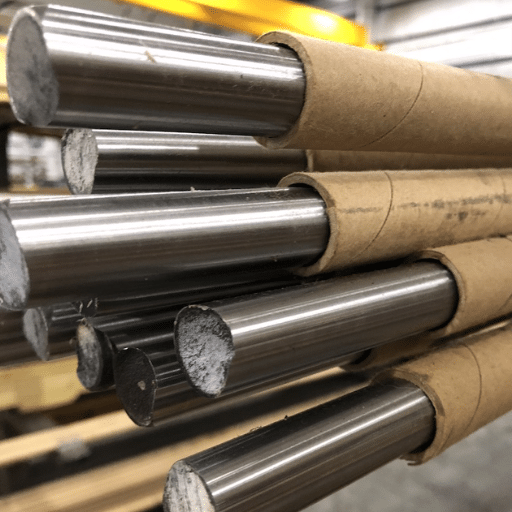
Mechanical Properties of 4140 Steel
Tensile Strength
The tensile strength of 4140 steel is very high, ranging from 655 MPa (95,000 PSI) in the annealed condition to beyond 1080 MPa (156,000 PSI) in the quenched-and-tempered condition. Thus, it is already considered very demanding.
Yield Strength
The yield strength of 4140 steel is about 415 MPa (60,000 PSI) in the annealed condition and 930 MPa (135,000 PSI) in the heat-treated condition on average. This feature enables the metal to withstand high-stress areas without undergoing plastic deformation.
Hardness
The hardness of 4140 steel can vary significantly with heat treatment, ranging from about 150 Brinell (annealed) to more than 300 Brinell (quenched and tempered). Hereby, the material possesses both wear-resistant and tough characteristics.
Impact Resistance
Its toughness is the main reason for the excellent impact resistance of 4140 steel, which also makes it the material of choice for various applications involving such conditions like gears and crankshafts.
Elongation
The percentage elongation of 4140 steel varies from 10% to 25% depending on the heat treatment. This property gives the metal good ductility, enabling it to elongate or deform slightly before breaking, which is essential in dynamic applications.
Strength and Hardness
4140 steel is one of the leading materials due to its properties, including high strength and hardness. It is a standard material across various sectors due to its remarkable ability to withstand a wide range of conditions. The tensile strength range of about 655 MPa (95 ksi) in the annealed condition to 1,600 MPa (230 ksi) after heat treatment makes it a rigid, strong material suitable for heavy-duty applications. In the heat-treatment process, it can also become robust, with a yield strength as high as 1,500 MPa (217 ksi), meaning that even under such high-stress conditions, the steel will not lose its shape.
In terms of Brinell Hardness, 4140 steel in its annealed form usually ranges from 197 to 235 HB while if it is completely heat-treated and quenched, it can rise to 540 HB. Hardness levels like these tend to be very durable and wear-resistant, which is why they are used in the production of parts such as tools, crankshafts, and heavy-duty fasteners that are subject to constant wear or repetitive forces.
Heat treatments, such as quenching and tempering, that alter the strength and hardness of 4140 steel can also enhance its versatility for various engineering tasks. The unique combination of hardness and ductility has been the main reason for the continued preference for 4140 steel in many of the most critical applications in the construction, automotive, and tooling industries.
Impact Resistance
4140 steel has earned an outstanding reputation for its exceptional impact resistance, making it suitable for applications that require sudden shocks or heavy loads. The impact resistance of this grade of steel is due to its well-balanced chemical composition which consists of chromium and molybdenum that give the steel the quality of sonority and at the same time reduce brittleness. When subjected to Charpy V-Notch impact tests, 4140 steel has been found to absorb between 20 ft-lbs (27 Joules) and over 70 ft-lbs (95 Joules) of energy, depending on the treatment and testing conditions, which are impressive.
The impact resistance of steel is significantly enhanced by heat treatment processes such as quenching and tempering. After tempering at about 600°F (316°C), 4140 steel displays the best combination of toughness and strength, making it a popular choice among the automotive and manufacturing industries for applications such as gears, axles, and shafts.
Hardness and service temperature primarily determine specific impact resistance. For instance, at a high hardness level (HRC 28-32), 4140 steel offers just enough toughness to handle the most demanding tasks in heavy machinery. Its consistent, uninterrupted performance under dynamic stress strengthens its claim as a material of choice for critical engineering applications.
Machinability Rating of 4140 Alloy
The machinability of 4140 alloy steel is moderate, rated at about 50% of standard 1112 steel’s machinability, which is the benchmark at 100%. This rating means that 4140 alloy steel, despite the greater effort and precision required in its machining, remains a material well-suited to a wide range of industrial applications. Some critical points and figures regarding the machinability of 4140 alloy are as follows:
Cutting Speeds
Standard cutting speeds range from 80 to 110 surface feet per minute (SFM), depending on the hardness and tool material.
Tooling Requirements
The use of high-speed steel (HSS) or carbide tools is recommended for fast machining and long tool life.
Coolant Usage
Having a good coolant application is very vital in cooling the area, thus controlling the heat and the dimensional accuracy during machining.
Preheat Treatments
Heating the steel before machining can make it easier to work with, especially if it is hard or tempered.
Chip Formation
Due to its moderate machinability, 4140 produces relatively long, continuous chips, which require practical chip-breaking tools.
Important: These are the factors professionals need to consider and plan for during machining operations to achieve the desired tolerances and surface finishes.
Applications of 4140 Alloy Steel
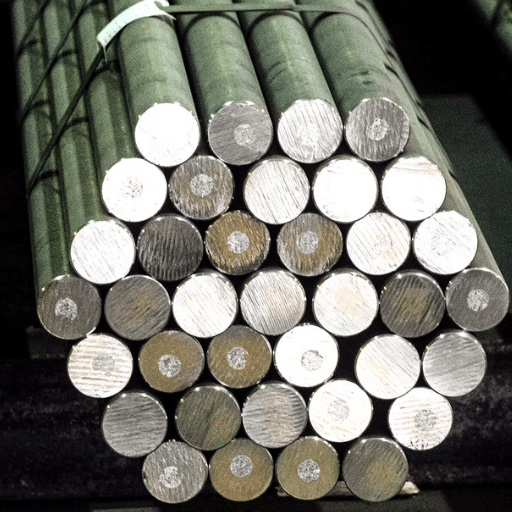
4140 alloy steel is known for its flexibility and excellent mechanical properties, making it suitable for many industrial applications. Some of the most critical areas where 4140 alloy steel is usually applied are listed below:
Automotive Parts
Among the different types of steel, 4140 steel is mainly used for the production of high-stress parts in the automotive sector, such as crankshafts, axles, gears, and connecting rods, due to its outstanding strength and wear resistance.
Oil and Gas Sector
This material is used in drill collars, tool joints, and other equipment used during oil and gas exploration, as it is fatigue-resistant and can withstand high temperatures and challenging conditions.
Tool and Die Making
The hardness and machinability of 4140 give it a part of the reason why it is such a widely used material in the manufacture of tools, dies, and molds, e.g. stamping dies and injection molds.
Heavy Machinery Parts
In heavy machinery, components such as shafts, spindles, and couplings often use 4140 steel because it can withstand high mechanical stress and loads.
Manufacture of Fasteners
The use of 4140 alloy steel in the production of high-strength fasteners such as bolts and studs is mainly due to its excellent combination of properties, including toughness, wear resistance, and performance.
These various applications clearly demonstrate the 4140 alloy steel’s adaptability, which underpins its importance across industries.
Common Uses in Industry
Automotive Industry
Crankshafts, gears, and axles are made of 4140 steel in the automotive industry primarily for its superior tensile strength and wear resistance. The performance of these parts will ultimately be prolonged, even in complex environments with high stress and fatigue.
Oil and Gas Industry
Thanks to its high resistance to corrosion and its ability to withstand high pressure, 4140 alloy steel is often used to fabricate drill collars, oil rig components, and pipes. It guarantees reliability even in extreme conditions, thereby boosting the efficiency of the operation.
Tool and Die Industry
The manufacturers of tools, dies, and molds made from 4140 steel appreciate its superb hardness and machinability. These traits position it as the material of choice for the very accurate tools applied in the demanding processes of mass production.
Aerospace Industry
Steel 4140 is in high demand for aerospace applications, especially for the production of critical parts such as landing gear, shafts, and fasteners. Its high-fatigue resistance is why these crucial aviation parts have longevity and safety.
Construction and Infrastructure
In addition to its durability and toughness, 4140 steel’s advantages have made it a strategic choice for the construction sector. Besides, it is widely used in bridge reinforcements, support beams, and heavy machinery components, which together ensure stability and safety in large-scale projects.
Comparison of Applications with Other Materials
When comparing 4140 steel to other materials used in the same applications, several distinctions and advantages emerge. Below, we elaborate on the 4140 steel’s properties in comparison with five other materials that differ across industries:
1 4140 Steel vs. Aluminum Alloys
- Strength: The tensile strength of 4140 steel is about 950 MPa, which is much higher than that of aluminum alloys (200-600 MPa).
- Durability: Aluminum is light and it has good resistance against corrosion but 4140 steel offers better wear resistance and durability in applications requiring heavy-duty.
- Applications: Aluminum is commonly used in light parts, such as aerospace fuselages, while 4140 steel is used primarily in heavy-load components, such as tooling, shafts, and gears.
2 4140 Steel vs. Stainless Steel
- Corrosion Resistance: 4140 steel is less corrosion-resistant than stainless steel, which is the steel of choice due to its chromium content.
- Strength and Toughness: The hardness and toughness of 4140 steel make it even more suitable for applications that require high fatigue strength, such as automotive axles and gears, as with its counterpart.
- Cost: Stainless steel is, on the whole, more costly than 4140 steel, particularly for large-scale components in industry.
3 4140 Steel vs. Cast Iron
- Toughness: The 4140 steel has superb toughness and fatigue resistance, while cast iron is brittle, and so its toughness is low.
- Machinability: Cast iron is easier to machine and hence more cost-effective, but 4140 steel has higher strength and durability for dynamic and critical applications.
- Applications: Cast iron is used to make engine blocks and pipelines, whereas 4140 steel is employed in even more demanding roles, such as transmission shafts and drilling tools.
4 4140 Steel vs. Carbon Steel (e.g., A36 Steel)
- Strength and Hardness: A4140 steel has a significantly higher tensile strength and hardness than A36, a ubiquitous carbon steel.
- Heat Treatment: The heat treatment of 4140 is more versatile, whereas that of A36 is very limited in terms of customization of mechanical properties.
- Applications: A36 is used in the production of carbon steel components for general-purpose structural applications, while 4140 is selected for parts that require specialized strength and fatigue resistance.
5 4140 Steel vs. Titanium Alloys
- Weight vs. Strength: Titanium alloys are lighter than 4140 steel yet retain excellent strength; hence, they are the best choice for aerospace and medical applications.
- Cost and Availability: Titanium is much more expensive than 4140 steel, and its availability is limited, factors that together prevent its use in projects sensitive to price.
- Applications: Titanium is used only in areas where weight savings and biocompatibility are crucial, whereas 4140 steel is the choice for wear-resistant, high-impact environments.
The comparison presented here demonstrates the various ways in which 4140 steel maintains its high-tech properties and versatile applications, making it a preferred choice in industries where strong, durable, and cost-effective materials are top priorities.
Case Studies and Examples
Benefits and Limitations of 4140 Alloy Steel
Advantages Over Other Steel Grades
High Tensile Strength
4140 alloy steel is recognized for its high tensile strength, which is above average for most alloy steels, and is thus the preferred material for heavy-duty applications such as machine parts and support structures. The tensile strength is highly dependent on the heat treatment used and can range from 850 to 1000 MPa.
Superior Hardness and Wear Resistance
The material has a high hardness and a low wear rate, especially when properly heat-treated and surface-hardening processes such as carburizing or nitriding are applied. Thus, it can be used in very demanding abrasive environments with very little maintenance.
Enhanced Toughness
4140 steel offers a perfect combination of strength and toughness, which is why it is very common among grades that fracture when subjected to impact or vibration, as is often the case in dynamic operations.
Heat-Treatability
When compared with lower-grade steels, 4140 alloy steel is highly heat-treatable. This facilitates customization of mechanical properties to meet specific engineering requirements, thereby providing versatility across various industrial applications.
Corrosion Resistance When Treated
4140 steel is not corrosion-resistant, but it can still be coated or treated (e.g., with chromium plating) to significantly extend its lifespan in corrosive environments, making it even more versatile and better suited to different conditions.
Limitations to Consider
In my opinion, 4140 alloy steel offers excellent flexibility, but there are a few limitations worth mentioning. The very fact that it is not resistant to rust and corrosion makes its use in highly corrosive environments more expensive and time-consuming, as additional treatments or coatings will be needed. Moreover, if one wants to realize the steel’s full mechanical potential, it must be heat-treated with great care; any mistake at this stage may affect its performance. Lastly, it would not be a good idea to use it in applications that demand very high resistance to wear or in extreme-temperature environments unless it is further modified.
References
Austenite Grain Growth Behavior of AISI 4140 Alloy Steel
Published in a peer-reviewed journal, this study explores the grain growth behavior of AISI 4140 steel, highlighting its strength, toughness, and wear resistance.
An Investigation on the Microstructure and Mechanical Properties of Direct-Quenched and Tempered AISI 4140 Steel
This research focuses on the microstructure and mechanical properties of AISI 4140 steel produced by continuous casting.
Microstructure and Wear Behavior of TIG Surface-Alloyed AISI 4140 Steel
This paper examines the effects of surface alloying on AISI 4140 steel using tungsten inert gas (TIG) welding.
Frequently Asked Questions (FAQ)
Q
What are the mechanical properties of 4140 alloy steel?
4140 alloy steel has been recognized for its excellent mechanical properties, including high tensile, yield, and fatigue strengths. Low-alloy steel, which usually offers improved hardness and toughness, is used in a wide range of industrial applications. The specific mechanical properties depend on the conditions and processes the steel undergoes.
Q
What is the chemical composition of 4140 alloy?
Generally, the chemical composition of 4140 alloy steel consists of carbon, manganese, chromium, and molybdenum. The carbon content is typically between 0.38% and 0.43%, while chromium and molybdenum are present at 0.8% to 1.1% and 0.15% to 0.25%, respectively. The specific composition in question is crucial to the steel’s strength and hardness.
Q
What are the applications of 4140 steel?
One of the most common applications of 4140 steel is in the manufacture of gears, shafts, and axles, as well as components for the aerospace and automotive industries. It is widely used in various applications because of its toughness, heat-treatment capabilities, and strength, which help steel endure extreme conditions.
Q
How does the heat treatment of 4140 affect its properties?
Heat treatment of 4140 alloy steel significantly improves its mechanical properties. Heating the material followed by quenching and tempering will give it higher strength and toughness. The process alters the steel’s microstructure, improving hardness and fatigue resistance.
Q
What is the machinability rating of 4140 alloy steel?
4140 alloy steel is said to have a machinability rating of about average. Even if it is readily accessible for machining, the hardness acquired through heat treatment makes the process more difficult than with lower-carbon steels like 1045. The use of the right cutting tools and methods is crucial to achieving the desired results during machining.
Q
How does 4140 compare to other alloy steels like 4130 and 8620?
4140 is an alloy steel known for its high strength and toughness compared to other steels, such as 4130 and 8620. Due to its lighter weight and reduced carbon content, 4130 steel may be used for applications that demand weight savings, while 8620 steel is more easily hardened. These characteristics differ among alloys and are why they are designated for particular applications.
Q
What are the common forms of 4140 alloy steel?
There are various forms of 4140 alloy steel, such as sheets, bars, and tubes, available on the market. The plate form is the most widely used and is marketed as 4140 steel plate when extensive durability, strength, and toughness are required for the application. This variety also allows diverse manufacturing processes to be used and the choice made based on the conditions and needs of the application.
Q
What advantages does 4140 alloy steel offer?
High strength, marvelous toughness, and decent wear resistance are the main advantages of using 4140 alloy steel. A material with these properties is an ideal choice for applications that require resistance to high levels of stress and fatigue. Moreover, heat treatment is an additional factor in 4140’s properties that many industries favor.