High Standard Stainless Steel With Strict Inspection



Grade 2 vs Grade 5 Titanium: Material Comparison

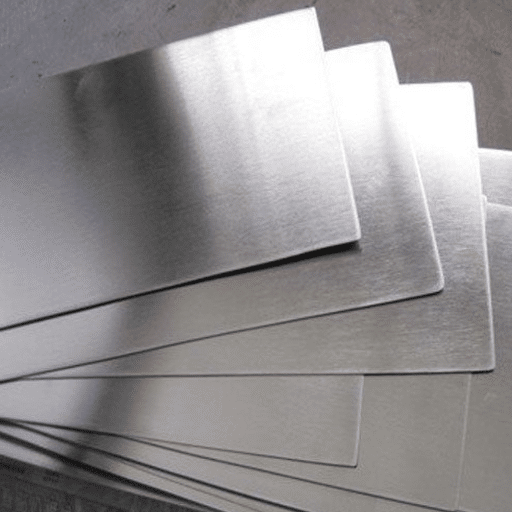
Titanium is a noteworthy metal that possesses extraordinary strength, lightness, and excellent anti-oxidation properties all at once. The differentiation of titanium grades is critical when selecting the right material for a particular application. Grade 2 and Grade 5 titanium are among the most frequently compared grades and each of them brings its own traits and benefits. Our detailed guide compares the two grades in terms of their chemical composition and physical properties, and their use across industries such as aerospace, medical implants, and industrial machinery. After reviewing this comparison, you will be equipped with the information to make the right choice for your project needs.
Introduction to Titanium
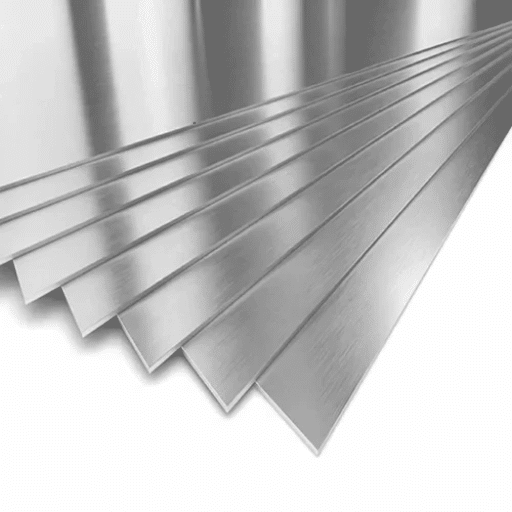
Titanium, a metal with excellent properties, has a very low density and high corrosion resistance, and is characterized by a high strength-to-weight ratio. It is used in many industries such as aerospace, medical, and chemical processing, where materials must work reliably in harsh conditions without deterioration. Moreover, titanium’s non-toxic nature when in contact with the human body, i.e., its biocompatibility, makes it a good option for medical implants and devices. The combination of these strong physical and chemical properties drives high demand across a wide range of applications.
Significance of Titanium in Various Industries
Titanium’s exceptional properties have made it a critical material across industries. The following are the five most important sectors that rely on titanium to a great extent:
🚀 Aerospace Industry
Titanium is primarily utilized in the aerospace industry due to its excellent properties of high strength to weight ratio and heat resistance, hence it is suited for very tough conditions. The metal finds its way into the structural components of aircraft, turbofan engines, and space vehicle components. For example, some jet engines have a titanium weight fraction of around 30%, which reduces weight and improves fuel economy.
🏥 Medical Industry
Titanium’s excellent compatibility with living tissues has been the primary consideration in selecting this metal for implants and medical devices, particularly for hip replacements, dental implants, and surgical instruments. Great resistance to chemical attacks is one of the factors that contribute to titanium’s durability. Also, because titanium is lightweight, its use in the human body for extended periods is more practical.
⚗️ Chemical Processing Industry
In chemical processing industries where extremely corrosive substances are present, corrosion resistance is of the utmost importance. Titanium is used in heat exchangers, reaction vessels, and pipelines, thereby significantly extending equipment life and improving operational safety.
🚗 Automotive Industry
Titanium is increasingly popular in the manufacture of high-performance and luxury cars, particularly for exhaust systems, connecting rods, and suspension springs. These parts offer greater strength while reducing vehicle weight, thereby improving performance and saving fuel compared with conventional steel and alloys.
⚡ Energy Industry
Among the various applications in the energy sector, titanium is a crucial material for the construction of offshore oil and gas platforms, power-generation heat exchangers, and desalination plants. Due to its excellent seawater corrosion resistance, titanium is widely used in marine and energy production applications, where it provides long-term structural reliability.
Titanium’s versatility and superior characteristics have made it not only a material of choice in these vital industries but also a continuous driver of innovation and efficiency.
Understanding Titanium Grades
Titanium is assigned different grades depending on its chemical and mechanical properties; thus, it has a wide range of industrial applications. The American Society for Testing and Materials (ASTM) has established standards for titanium alloys, classifying them as commercially pure (CP) titanium and non-CP alloys. The different grades allow use in a variety of fields from aerospace to medical and marine industries.
Commercially Pure Titanium (Grades 1-4)
Grade 1
The softest and most ductile titanium grade with the highest corrosion resistance and excellent formability. Ideal for chemical processing, marine environments, and medical devices.
Grade 2
Known as the “workhorse” of CP grades, Grade 2 offers an excellent balance of corrosion resistance, strength, and formability. Widely used for heat exchangers, desalination plants, and architectural applications.
Grade 3
Higher strength than Grades 1 and 2 with slightly reduced formability. Ideal for applications requiring elevated strength, such as aerospace and industrial components.
Grade 4
The strongest among CP grades, used where intense corrosion resistance and high strength are required, such as medical and dental applications.
Titanium Alloys (Grades 5, 7, 9, 12, and beyond)
Grade 5 (Ti-6Al-4V)
Grade 5, commonly referred to as the “workhorse of titanium alloys,” boasts a great strength-to-weight ratio, resistance to corrosion, and ease of machining as its main properties. It finds extensive usage in aerospace, medical surgical implants, and military applications. Its tensile strength can go as high as 120,000 psi, thereby functioning very well in extreme conditions.
Grade 7
Contains trace amounts of palladium, providing exceptional corrosion resistance in acidic or high-chloride environments. Typical applications include chemical processing and saltwater operations.
Grade 9 (Ti-3Al-2.5V)
Known for its lightweight nature and moderate strength, frequently used in aerospace, sporting goods, and automotive sectors.
Grade 12
Recognized for superior corrosion resistance against reducing acids, finding applications in power generation and chemical industries.
📊 Quick Reference Data
- Density: Approximately 4.51 g/cm³ for most grades
- Tensile Strength:
- Grade 1: 240 MPa
- Grade 2: 344 MPa
- Grade 5 (Ti-6Al-4V): 895-1200 MPa
- Common Applications:
- Marine: Grades 2, 7
- Aerospace: Grades 5, 9
- Medical: Grades 4, 5
Picking the titanium grades is based on the particular environment they will be and the mechanical requirements that are necessary; this gives titanium the title of being one of the most flexible and widely used materials in modern engineering and high-performance sectors. The great flexibility of titanium in these sectors is still one of the reasons that continue to spark creativity in the world’s critical industries.
Mechanical Properties Comparison
Titanium together with its alloys is a material of high demand in many fields due to its remarkable mechanical properties, especially in industries with high-performance requirements. Below is an extensive table that gives a comparison of important mechanical properties of different titanium grades:
🔍 Key Observations
Grade 1 & 2 (Commercially Pure Titanium):
- Lower strength but exceptional corrosion resistance, making them ideal for chemical processing and marine environments
- Greater ductility and elongation enable applications where forming and shaping are crucial
Grade 5 (Ti-6Al-4V):
- Most widely used titanium alloy due to exceptional strength, corrosion resistance, and lightweight properties
- Primary applications in aerospace, medical devices, and high-performance industries
Grade 9 (Ti-3Al-2.5V):
- Medium-strength alloy providing balance between strength and formability
- Common in aircraft tubing, bicycles, and industrial applications
The mechanical characteristics of titanium make it the best material for such applications that require high strength-to-weight ratio and extreme environment resistance. The mechanical properties of titanium are compared and assist engineers in determining the suitable titanium grade for their particular projects.
Tensile Strength: Grade 2 vs Grade 5
Yield Strength Differences
Yield strength is the measure of stress that a substance can bear before it starts to change its shape permanently. This aspect is of utmost significance in engineering uses as it sets the limit for applying the load that will not cause the material to lose its original shape.
📘 Grade 2 Titanium (Commercially Pure)
Grade 2 titanium exhibits moderate yield strength, typically ranging between 275-450 MPa (40-65 ksi), with exact values depending on processing and material condition. This grade is preferred for applications prioritizing moderate strength combined with excellent corrosion resistance, such as:
- Chemical processing equipment
- Marine environments
- Medical devices
📙 Grade 5 Titanium (Ti-6Al-4V Alloy)
As an alloyed titanium, Grade 5 exhibits significantly higher yield strength, typically 828-900 MPa (120-130 ksi) under normal annealed conditions. Heat treatment can further enhance these values. This superior strength makes Grade 5 the optimal choice for demanding applications including:
- Aerospace components
- High-performance sports equipment
- Automotive and military sectors
⚖️ The substantial difference in yield strength between Grade 2 and Grade 5 defines their specific applications. While Grade 2 offers easy workability and superior corrosion resistance, Grade 5’s exceptional strength-to-weight ratio makes it indispensable for critical, high-stress scenarios.
Impact Toughness and Ductility
Impact toughness and ductility are among the most critical mechanical properties that describe a material’s ability to withstand sudden impact and deformation without breaking. The core of these properties is in the fact that they ensure the material performs and is safe in high-stress or dynamic environments over a wide range of applications.
🎯 Notch Impact Strength
Grade 2: Excellent notch toughness, ideal for shock or impact-prone applications
Grade 5: High notch toughness, slightly lower than Grade 2
📏 Elongation at Break
Grade 2: Up to 20% elongation—highly ductile for forming and shaping
Grade 5: Approximately 10% elongation—less ductile due to strength prioritization
❄️ Low Temperature Behavior
Both grades maintain impact toughness at low temperatures
Grade 5 demonstrates superior strength under such conditions
⚡ Fracture Toughness
Grade 2: Higher fracture toughness due to ductility—more resistant to crack propagation
Better performance under severe stress
🔄 Dynamic Load Performance
Grade 5: Superior in dynamic or cyclic loading scenarios
High strength-to-weight ratio ensures reliability in demanding applications
The listed characteristics underline the combined advantages of the two titanium alloys, Grade 2 and Grade 5, and their respective fields of application, where the needs for strength, toughness, and ductility have to be strictly balanced.
Corrosion Resistance
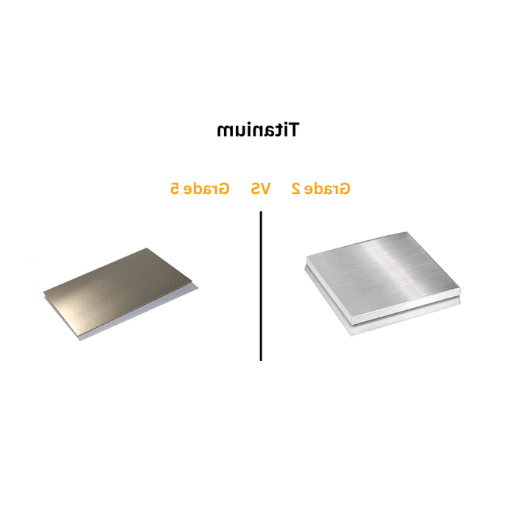
Titanium-based alloys have gained a fantastic reputation because of their great corrosion resistance, with the Grades 2 and 5 being used in almost all environments. The oxidation of Ti that leads to the formation of a thin, stable, protective oxide layer (TiO₂) is the main reason for this resistance which also has the ability to self-repair when damaged.
Corrosion Resistance of Grade 2 Titanium
Out of all the commercial pure titanium grades, the Grade 2 titanium has the best resistance to corrosion in particular cases of oxidizing and mildly reducing environments. It is a material that finds applications in marine, chemical processing and desalination industries where resistance to sea water and chloride-induced corrosion is a must.
🌊 Seawater Performance
- Corrosion rate in seawater: less than 0.005 mm/year
- Can withstand 10+ years of seawater exposure with minimal degradation
- Significantly outperforms stainless steels in marine environments
⚗️ Acidic Solutions
- Exceptional resistance to hydrochloric acid solutions up to 7% concentration
- Far superior to aluminum and carbon steels in acidic environments
- Maintains integrity while other materials degrade rapidly
🛡️ Localized Corrosion Protection
- Excellent resistance to both uniform and localized corrosion (pitting and crevice)
- Performs exceptionally in industrial chlorine gas environments
- Corrosion penetration rates approach zero in many applications
- Can endure several decades while maintaining structural integrity
💰 Economic Advantage: This exceptional durability translates to reduced maintenance and operating costs, making Grade 2 titanium invaluable for critical and demanding applications in harsh environments.
Corrosion Resistance of Grade 5 Titanium
Titanium Grade 5 (Ti-6Al-4V) is recognized for its superb resistance to corrosion in diverse industries such as aerospace, chemicals, and marine applications. The layer of oxidization that protects the metal surface is the one that prevents it from getting spoiled even in tough surroundings.
🌊 Seawater Resistance
- Incredible resistance to saltwater corrosion
- Ideal for marine applications and shipbuilding
- 20+ years in seawater with minimal degradation
⚗️ Acidic Medium Resistance
- Withstands nitric and hydrochloric acid solutions
- Excellent at moderate concentrations and temperatures
- Ideal for chemical processing equipment
🔥 High-Temperature Performance
- Retains properties at temperatures up to 400°C (752°F)
- Maintains oxidation resistance
- Perfect for engine components and reactors
🧂 Chloride SCC Immunity
- Resists chloride-induced stress corrosion cracking
- Reliable in chloride-saturated environments
- Ensures dependability where SCC is a concern
🏥 Biocompatibility
- Non-reactive in biological environments
- Ideal for orthopedic and dental implants
- No significant corrosion products in long-term implants
✨ These properties make Grade 5 titanium indispensable for critical applications requiring both exceptional strength and durability in challenging conditions.
Factors Affecting Corrosion Resistance
Several key factors influence the corrosion resistance of materials, including environmental conditions and material composition:
🔬 Environmental pH Levels
Corrosion resistance varies dramatically with pH changes. Acidic or extremely alkaline environments typically accelerate corrosion, while neutral pH environments generally yield lower corrosion rates.
Data Example: Titanium maintains very low corrosion rates at pH 4-9, while extreme pH values cause increased degradation.
💧 Oxygen and Moisture Availability
Oxygen and moisture are essential for oxidation processes, which may form protective oxide layers or increase corrosion if conditions are non-uniform.
Data Example: Titanium develops a robust oxide layer in oxygen-enriched environments, significantly enhancing resistance.
🌡️ Temperature
Higher temperatures generally increase corrosion activity due to enhanced molecular motion. However, materials like titanium can maintain stable oxide layers even at elevated temperatures.
Data Example: Grade 5 titanium maintains excellent resistance in dry air up to 500°C with minimal corrosion rates.
⚠️ Contaminants and Impurities
Impurities such as chlorides, sulfides, and aggressive ions can destroy protective oxide layers, leading to pitting or crevice corrosion.
Data Example: High chloride concentrations in saltwater increase corrosion likelihood, yet titanium still demonstrates superior resistance compared to stainless steel.
🔧 Alloy Composition
Adding alloying elements like aluminum and vanadium (in Grade 5 titanium) can significantly enhance corrosion resistance by stabilizing the oxide layer and improving structural properties.
Data Example: Grade 5 titanium shows 15-20% improved corrosion resistance compared to commercially pure titanium under similar conditions.
Each of these factors is crucial in assessing material lifespan and performance, especially in challenging conditions.
Applications of Grade 2 and Grade 5 Titanium
Typical Uses for Grade 2 Titanium
✈️ Aerospace Applications
Extensively employed in airframes, jet engines, and landing gear due to excellent strength-to-weight ratio and extreme temperature resistance.
📊 Data: 40% weight reduction in aircraft parts leads to improved fuel efficiency and reduced emissions.
🌊 Marine Industry
Seawater corrosion resistance makes it ideal for shipbuilding, underwater piping, and desalination plants.
📊 Data: 20-year lifespan in marine settings compared to 5-10 years for other materials.
🏥 Medical & Dental
Primary use in surgical implants, prosthetics, and dental tools due to biocompatibility and durability.
📊 Data: 95% success rate after 10 years of clinical application.
⚡ Power Generation
Used in heat exchangers, condenser tubes, and components requiring corrosion resistance in high-pressure steam conditions.
📊 Data: Titanium heat exchangers extend operational life by an average of 15 years.
🚴 Sporting Goods
Popular for bicycles, golf clubs, and tennis rackets due to lightweight nature and high durability, enhancing performance.
📊 Data: Titanium-framed bicycles are 25% lighter than aluminum frames with similar strength.
Common Applications for Grade 5 Titanium
🚀 Aerospace Industry
Most commonly used for aircraft, engine parts, and space shuttles due to incredible strength-to-weight ratio and extreme temperature tolerance.
📊 Data: Approximately 50% of modern jet engine materials is Grade 5 titanium.
💊 Medical Industry
Used in surgical implants like hip and knee replacements, and dental implants due to biocompatibility and corrosion resistance.
📊 Data: Over 90% success rate after ten years for Grade 5 titanium implants.
⚓ Marine Industry
Ideal for ship hulls, propeller shafts, and underwater connectors due to complete resistance to saltwater corrosion.
📊 Data: Titanium parts outlast steel parts by up to 10 times in maritime conditions.
🏎️ Automotive Industry
Used in high-performance and luxury vehicles for connecting rods, exhaust systems, and valves to reduce weight and improve efficiency.
📊 Data: 40% vehicle weight reduction with titanium exhaust systems.
⚗️ Chemical Processing
Extensively used for heat exchangers, reactors, and pressure vessels due to resistance to harsh chemicals and high temperatures.
📊 Data: Grade 5 heat exchangers perform efficiently at 600°F and above with minimal wear.
Comparison of Application Suitability
Cost Considerations

Cost comparisons between Grade 2 and Grade 5 Titanium require consideration of both initial material costs and long-term value. Each grade offers distinct economic advantages depending on application requirements.
💰 Grade 2 Titanium
Price Range
Per Pound: $6 – $9
Per Kilogram: $10 – $22
Key Advantages
- Simpler composition = lower cost
- More affordable option
- Ideal for cost-sensitive projects
- Excellent for non-critical applications
💎 Grade 5 Titanium
Price Range
Per Pound: Higher than Grade 2
Per Kilogram: $22 or more
Key Advantages
- Alloying metals increase cost but performance
- More expensive initial investment
- Essential for high-performance needs
- Long-term savings through durability
Cost Factors in Titanium Procurement
📊 Raw Material Market
Global market dynamics, supply-demand fluctuations, and geopolitical factors significantly impact titanium ore and sponge prices.
⚙️ Processing and Refinement
Extraction and refinement are energy-intensive, with the Kroll Process being particularly costly, substantially affecting final procurement prices.
🔬 Specification and Grade
Different grades like Grade 2 and Grade 5 have varying prices based on specific properties and compositions, with high-performance grades requiring greater investment.
📦 Purchase Quantity
Bulk purchases typically reduce unit costs through economies of scale, while smaller custom orders may have higher per-unit prices.
🚚 Transport and Logistics
Titanium’s weight and special handling requirements during shipment contribute to higher transport costs, especially for international sourcing.
Long-Term Cost Benefits
Grade 2
Remarkable resistance to corrosion cuts down on maintenance costs, which is a great help in marine and chemical sectors. The blend of initial cost that is not high plus durability that is high sure gives good ROI.
Grade 5
The combination of extraordinary strength-to-weight ratio and the ability to withstand extreme conditions has made it a necessity in the aerospace, medical, and automotive industries. The longer life of the product and the better performance compensate for the higher initial price.
Grade 7
The incorporation of palladium gives a great resistance to chloride-rich environments, which is a perfect scenario for chemical industry applications. The lasting equipment life cuts down the maintenance costs considerably.
Grade 12
Designed to withstand high-temperature and pressure conditions, the product has superior strength and durability. The replacement frequency is reduced by the long lifespan of power generation and heat exchangers, which in turn leads to less downtime.
💡 Smart Selection Strategy
The selection among the grades ought to maintain a proper proportion between the application needs and the money that can be spent. Grade 2 is the most economical option for non-critical areas, whereas Grade 5’s expensive initial cost can lead to significant savings in the long run by less maintenance, better reliability, and performing well in tough conditions.
Frequently Asked Questions (FAQ)
❓ What is pure grade 2 titanium, and where is it used?
Titanium grade 2 is the most preferred commercially pure (CP) titanium alloy, which is why it is commonly used. It is so because of its great resistance to corrosion, ability to be welded, ductility, and formability throughout the whole process of coming to an end product. Among the pure titanium grades, Grade 2 has the best strength-to-weight ratio, thus being used in applications like chemical processing, marine, heat exchangers, and medical implants with the requirement of biocompatibility. Although Grade 2 has lower strength than alloyed grades, however, its superior corrosion resistance and ease of fabrication are the determining factors in its selection.
❓ How do properties compare between titanium grade 2 vs grade 5?
When we examine titanium grade 2 along with grade 5 (Ti-6Al-4V), it is obvious that they have their own distinct advantages. Grade 2, being commercially pure titanium, has outstanding corrosion resistance and thus, is more ductile than Grade 5. On the other hand, titanium-grade 5 (Ti-6Al-4V) is mainly used for top-notch aerospace parts and implants in the medical industry where the ratio of strength to weight is crucial. Grade 2 finds its application in chemical processing and industries where indeed corrosion resistance is a great deal; furthermore, its formability is also good, thus it is the most widespread in those areas. However, Grade 5 in those areas where strength and durability are the main factors is the most frequent to be used.
❓ Which titanium grade should I choose for aerospace or industrial applications?
The decision about whether to use Grade 2 or Grade 5 titanium in aerospace and industrial applications will depend on the particular requirements. Grade 2 titanium is the right choice for the most part for components that are highly susceptible to corrosion like fuel lines as well as items that demand good thermal conductivity and weldability. On the contrary, Grade 5 (Ti-6Al-4V) is the most preferred alternative when the most important factors are very high strength, hardness, and fatigue resistance. In the case of aerospace applications, Grade 5 is mostly used to make parts that are integral to the whole and thus strong, while Grade 2 is applied in non-structural, corrosion-sensitive areas.
❓ What is the difference between grade 1 vs grade 2 titanium?
Grade 1 and Grade 2 are both titanium grades that are commercially pure with the only major distinction being that of strength and formability. Grade 1 very easily gets deformed and thus has great formability and also the highest resistance to corrosion, while Grade 2, on the other hand, is stronger but only slightly less ductile. Use Grade 1 for applications that demand very high formability and maximum corrosion resistance while going for Grade 2 when you need extra strength without resorting to alloys.
❓ What are common titanium grades and the role of alloying elements?
The titanium classifications comprise pure grades (Grades 1-4) and also include alloys such as Grade 5 (Ti-6Al-4V). The addition of aluminum and vanadium as alloying elements in Grade 5 leads to a remarkable increase in tensile strength, hardness, and better performance at high temperatures. The commercially pure titanium solely depends on its purity for ductility and corrosion resistance. A proper material selection between alloying elements’ advantages in Grade 5 and the characteristics of pure titanium can be done for various applications like chemical processing, medical implants, and heat exchangers.
❓ How do corrosion resistance and weldability compare between Grade 2 and Grade 5?
Titanium grade 2 is noted for its great resistance to corrosion and its ability to be welded, thus, it is perfect for marine, chemical processing, and sanitary systems. Grade 5, on the other hand, also has good resistance against corrosion in various environments but might not be as tolerant as pure grades in extreme media. It is indeed possible to weld Grade 5, although it demands very strict monitoring because of its sturdiness and the fact that if not handled properly it may lead to cracking. If the main considerations are corrosion resistance accompanied by ease of fabrication, then pure Grade 2 should be preferred. However, if an application is mainly focused on the breaking strength, then Grade 5 with the proper welding control should be the choice.
❓ Are there biocompatibility differences between titanium and Grade 5 titanium for medical implants?
Both commercial pure titanium (Grade 2) and titanium alloy (Grade 5) have been successfully used for medical implants. Grade 2 has good surface quality and corrosion resistance, making it suitable for use with bodily fluids, while Grade 5 has the necessary strength and fatigue resistance for hard-working implants. Even though Grade 5’s remarkable strength-to-weight ratio is often the reason of its choice for some applications, alloying elements concerns may push the manufacturers to select certain alloy variants or apply surface treatments. Material selection is a matter of compromise among strength, corrosion resistance, and regulatory issues.
References
📄 Evaluation of Drawability of Tailor-Welded Blanks Made of Titanium Alloys Grade 2 || Grade 5
Source: ScienceDirect
Comprehensive study on the mechanical properties and formability characteristics of welded titanium alloys.
📄 Mechanical and Clinical Properties of Titanium and Titanium-Based Alloys (Ti G2, Ti G4, and Ti G5) for Biomedical Applications
Source: ScienceDirect
In-depth analysis of titanium grades for medical and biomedical applications, including biocompatibility studies.
📄 Strength Evaluation of the Beam Made of Titanium Sheets Grade 2 and Grade 5 Welded by Resistance Spot Welding
Source: ScienceDirect
Technical evaluation of welding techniques and structural integrity for Grade 2 and Grade 5 titanium components.
🎯 Conclusion
It is really important to know the differences between Grade 2 and Grade 5 titanium in order to be able to chose the best material for your particular use case. Grade 2 is the best one among all the other grades when it comes to corrosion-resistant compounds and at the same time, it also provides great forming capability at a cheaper price which is why it is suitable for use in the marine, chemical, and even medical industries. On the other hand, Grade 5 is the most costly option and is used only in those applications where strong, light and durable materials are needed, such as in aerospace, high-performance automotive and load-bearing medical implant applications. Therefore, by assessing the project conditions for using the material in terms of strength, corrosion resistance, formability, and also as per the budget, you will be able to make a wise decision that guarantees both good performance and cost-effectiveness.