High Standard Stainless Steel With Strict Inspection



304 vs. 316 Stainless Steel Tubes: A Comparison for Marine Use

Introduction
Marine applications use stainless steel because it provides both corrosion resistance and long-lasting strength. The key difference between 304 and 316 stainless steel tubes emerges when their corrosion resistance abilities are tested against various environmental conditions. The presence of molybdenum in 316 stainless steel provides superior resistance against saltwater and extreme marine conditions. The majority of marine projects that encounter salt and moisture throughout their operations use 316 stainless steel as their primary material. 304 stainless steel offers a budget-friendly alternative but its lower corrosion resistance limits its use to environments that do not produce severe hostile conditions.
Definition of 304 and 316 Stainless Steel
304 and 316 stainless steel serve as two of the most frequently utilized stainless steel grades which possess unique characteristics that enable their use across multiple industrial sectors.
Choosing the Right Stainless Steel
The selection process for 304 and 316 stainless steel requires evaluation of two key factors which include the particular environmental conditions of the project and the available financial resources. 304 stainless steel offers cost-effective performance for common uses which do not need protection against severe environmental conditions. 316 stainless steel provides superior performance and durability for environments that experience high moisture and chloride exposure.
Importance of Material Selection in Marine Environments
The material selection process for marine environments needs to achieve three essential requirements because the environment presents extreme conditions which impact material. Materials used in these environments face complete deterioration because of three elements which include high salinity and continuous moisture contact and the possibility of chemical or biological contamination. The choice of improper materials causes two main problems because it results in higher maintenance costs while endangering safety and reducing work productivity. The correct material selection establishes first requirements which engineers need to satisfy when they select materials for marine environments.
🛡️
Corrosion Resistance
Materials must withstand the corrosive effects of seawater which contains high levels of salt and instant deterioration results from this special condition. The superior resistance of 316 stainless steel which contains more molybdenum than 304 stainless steel makes it a better choice for chloride-induced corrosion protection.
💪
Mechanical Strength
The materials need to endure dynamic loads and stress from waves wind and other environmental forces. The need for essential structural stability under extreme environmental conditions leads engineers to select high-strength alloys or composites as their materials of choice.
⏳
Longevity & Maintenance
The process of maintaining materials used in marine environments requires significant financial resources and extensive human resources. Organizations decrease their total operational expenses through the selection of marine-grade aluminum and coated metals which need minimal upkeep and have extended lifespans.
🦠
Resistance to Fouling
Fouling occurs when marine organisms including algae and barnacles and mollusks attach themselves to surfaces which leads to decreased material efficiency. Anti-fouling coatings or bio-resistant materials provide the solution needed to address this problem.
🌡️
Thermal Properties
Materials exposed to fluctuating temperatures in marine environments must handle thermal expansion and conductivity without deforming or losing performance. The ability of composites and specialized metals to endure thermal changes makes these materials suitable for use in this application.
Ensuring that these factors are carefully evaluated during the material selection process helps achieve sustainable and cost-effective solutions for marine-based applications.
Overview of Key Differences Between 304 and 316
The distinct properties of 304 and 316 stainless steel enable their application in different industries. The two materials share austenitic stainless steel properties because their chemical makeup is nearly identical but 316 differs from 304 because its molybdenum content which improves chloride and saline water corrosion resistance.
Composition
304 Stainless Steel: Contains approximately 18–20% chromium and 8–10.5% nickel.
316 Stainless Steel: Includes 16–18% chromium, 10–14% nickel, and 2–3% molybdenum. The molybdenum content provides essential protection against corrosion in extreme environmental conditions.
Corrosion
316 stainless steel provides better protection against corrosion than 304 stainless steel because it withstands saltwater and chlorine exposures. 316 stainless steel protects against pitting and crevice corrosion through its molybdenum content, which makes it suitable for marine environments and chemical processing and areas with high salinity.
Strength
316 stainless steel provides better strength than both stainless steel grades because its chemical makeup creates stronger materials. The material shows exceptional performance in demanding applications that require strength beyond standard requirements.
Cost
The production expenses of 304 products rank lower than those of 316 products because 304 lacks the molybdenum component which raises manufacturing costs. 304 becomes the preferred choice for standard applications because of its cost advantage when users need to deal with regular conditions.
Applications
304 Stainless Steel: Commonly used in kitchen equipment, food processing equipment, and general industrial uses where exposure to harsh chemicals or marine environments is limited.
316 Stainless Steel: Preferred for marine environments, pharmaceutical applications, medical devices, and industries requiring exposure to harsh chemicals and saltwater.
Thermal
Both grades demonstrate excellent heat resistance, but 316 outperforms 304 in applications requiring exposure to high and fluctuating temperatures.
Summary Comparison Table
| Property | 304 Stainless Steel | 316 Stainless Steel ★ |
|---|---|---|
| Chromium Content | 18–20% | 16–18% |
| Nickel Content | 8–10.5% | 10–14% |
| Molybdenum Content | 0% (None) | 2–3% ✓ |
| Corrosion Resistance | Good | Superior, especially in chloride environments |
| Cost | Lower ✓ | Higher |
| Common Applications | Kitchenware, general equipment | Marine, pharmaceuticals, chemical processing |
★ Recommended for marine applications
The decision to select either 304 stainless steel or 316 stainless steel depends on the specific needs of the project. The installation of 316 stainless steel proves to be a valuable investment for projects which require protection against corrosion because of its ability to deliver extended service life.
Chemical Composition
The chemical composition of stainless steel varies depending on the grade. The composition of the material determines its operational characteristics which determine its performance capacity. The table below presents a detailed analysis of five essential elements that exist in stainless steel grades 304 and 316.
- Cr
Chromium (Cr) — Essential for corrosion resistance, chromium content typically ranges from 16% to 18% in 304 stainless steel and 16% to 18% in 316 stainless steel.
- Ni
Nickel (Ni) — The metal enhances strength while providing better protection against corrosion, as 304 contains 8% to 10.5% and 316 contains 10% to 14% of nickel.
- Mo
Molybdenum (Mo) — The presence of molybdenum in 316 stainless steel at a concentration range between 2% and 3% will enhance resistance against pitting and crevice corrosion that occurs in chloride environments, while 304 stainless steel does not contain this element.
- C
Carbon (C) — The maximum carbon content for 304 and 316 grades reaches 0.08% because this minimum carbon content enables welds to maintain corrosion resistance through carbide precipitation protection.
- Mn
Manganese (Mn) — The element supports deoxidation processes while it increases strength, as both grades contain up to 2% manganese.
The combination of these chemical elements creates unique characteristics which enable stainless steel to function optimally in diverse industrial uses.
Key Elements in 316 Stainless Steel Composition
The austenitic alloy 316 stainless steel achieves exceptional resistance to corrosion which performs better than most materials when exposed to marine and chemical environments. The distinct characteristics of the material result from its complete set of necessary alloying components. The following section presents an extensive account of all the main elements which make up 316 stainless steel.
- ▸
Typically chromium content in steel ranges between 16% and 18% because chromium produces a protective oxide film which prevents steel from oxidizing and corroding. - ▸
The steel material becomes more ductile and tough through 10–14% nickel content which also protects against both acidic and basic corrosive substances. - ▸
The alloy gains substantial capacity to resist both pitting and crevice corrosion through the introduction of 2–3% molybdenum which protects against chloride-based environments that include seawater and de-icing salts. - ▸
The maximum allowable carbon content for the material stands at 0.08% because it needs to maintain corrosion-resistant properties while controlling carbide growth. - ▸
The alloy contains 2% manganese which functions as a deoxidizing agent while it boosts tensile strength and enhances hot-working capabilities of the metal. - ▸
Silicon content needs to stay below 0.75% because it strengthens the material while providing protection against oxidation at elevated temperatures. - ▸
The presence of both elements must remain below their respective limits (P up to 0.045% and S up to 0.03%) because steel purity requirements mandate this restriction for maintaining steel purity throughout its operational performance.
The combination of these elements creates a material which maintains its strength and dependability for essential uses in chemical processing facilities and medical devices and marine equipment and food production operations. The stainless steel grade shows extensive durability which allows it to serve in all environments making it the most preferred stainless steel grade across the globe.
Impact of Molybdenum on Performance
Molybdenum serves as an essential element that improves both the corrosion resistance and overall durability of 316 stainless steel. The following five methods show how molybdenum enhances the material’s properties through its specific effects.
The combination of these features guarantees that 316 stainless steel with molybdenum addition will maintain its performance under extreme and demanding conditions.
Corrosion Resistance
The corrosion resistant properties of 316 stainless steel which contains molybdenum as an alloying element make it appropriate for use in extreme weather conditions. The material shows its best performance when it operates in environments that contain high levels of chlorides which occur in marine environments and chemical processing plants and areas that use de-icing salts. The addition of 2–3% molybdenum to the alloy increases its protection against pitting and crevice corrosion because these two forms of deterioration occur through chloride exposure which affects stainless steel materials.
Pitting Resistance Equivalent Number (PREN) Comparison
304 Stainless Steel
18–20
18–20
316 Stainless Steel ★
24–26
24–26
Higher PREN indicates superior resistance to pitting corrosion in chloride environments.
316 stainless steel maintains its structural integrity under various acid environments which include sulfuric acid hydrochloric acid and tartaric acid. This characteristic is crucial for equipment exposed to chemical processing operations where durability against corrosion is key to long-term operational reliability. The alloy maintains its exceptional resistance properties under neutral and alkaline conditions because its chromium oxide layer provides ongoing protection which prevents any surface deterioration from occurring.
The combination of molybdenum enhancements with 316 stainless steel creates a primary material selection for applications which require long-lasting performance combined with effective protection from corrosion to maintain safe operations.
Performance of 304 vs. 316 Against Chlorides
| Parameter | 304 Stainless Steel | 316 Stainless Steel ★ |
|---|---|---|
| Corrosion Resistance | Moderate, prone to pitting | High, superior resistance to pitting |
| Chloride Tolerance | Limited, vulnerable in salty environments | Excellent, withstands high chloride levels |
| Molybdenum Content | None | 2–3%, enhances chloride resistance |
| Applications | Freshwater, indoor use | Marine, coastal, harsh environments |
| Cost | Lower ✓ | Higher |
| Durability | Good for mild conditions | Excellent for extreme conditions |
| Lifespan in Chlorides | Shorter, requires frequent maintenance | Longer, minimal maintenance needed |
Salt Spray Test Results for Both Grades
The ASTM B117 test which people usually call the salt spray test functions as an official method to evaluate stainless steel grades which need to endure marine environments and high-salinity conditions. The study results show that grade 316 stainless steel performs better than 304 stainless steel when tested in environments which contain chloride. Although grade 304 demonstrates excellent resistance to corrosion it develops pitting and crevice corrosion damage when exposed to extended chloride contact.
The study results showed that 316 stainless steel serves as the best material choice for cases which require protection against chloride exposure in marine environments and chemical processing facilities and coastal infrastructure. The salt spray test shows that both grades produce dependable results but 316 stainless steel outperforms the other grade in resisting material degradation from chloride exposure.
Pitting Resistance in Marine Applications
The pitting resistance of 316 stainless steel exceeds that of 304 stainless steel because its molybdenum content reaches higher levels. The process of pitting begins when chloride ions reach the protective oxide layer of a material which creates localized corrosion that particularly affects areas exposed to saltwater. The following list presents five essential facts and numerical measurements which demonstrate how 316 stainless steel applies to pitting resistance research for marine environments.
- 1
Higher Molybdenum Content
316 stainless steel contains approximately 2–3% molybdenum which significantly decreases pitting risk when compared to 304 that lacks this element.
- 2
Critical Pitting Temperature (CPT)
The CPT for 316 stainless steel exists at a higher temperature of approximately 50°C (122°F) which enables better performance in warm marine environments than 304 that operates at a lower CPT.
- 3
Saltwater Immersion Testing
Research has demonstrated that 316 stainless steel endures extended exposure to saline conditions while developing only minor pitting which continues for over 500 hours during tests that simulate actual conditions but 304 begins to develop pitting at an earlier stage.
- 4
Chloride Threshold Levels
The chloride concentration threshold for pitting in 316 stainless steel exists at approximately 1000 ppm which doubles the 304 threshold making it a better option for high-chloride areas such as coastal docking facilities and maritime vessels.
- 5
Resistance Evaluation with ASTM G48
The ASTM G48 standard pitting test shows that 316 stainless steel maintains its original form through extreme corrosive testing because it withstands conditions that 304 stainless steel fails to control in chloride-rich environments.
The marine industry selects 316 stainless steel as its primary material because it provides essential protection against pitting corrosion which harms maritime operations.
Durability and Longevity
316 stainless steel demonstrates its superior strength because of its ability to withstand extreme environmental conditions. The material functions well in saltwater and industrial chemical and high salinity environments because it can resist both pitting and crevice corrosion.
20–25+
Years Lifespan
800°C
Max Temperature (1,472°F)
100K
PSI Tensile Strength
2×
Chloride Protection vs 304
The alloy becomes stronger through its nickel and molybdenum elements which provide strength under extreme temperature conditions that extend from cryogenic temperatures to 800°C (1472°F). Research indicates that 316 stainless steel can endure tensile strength up to 100,000 PSI (pounds per square inch) which enables it to function successfully in high-pressure industrial environments.
The self-healing chromium oxide layer that develops on its surface functions as an essential durability element for the material. The passive film creates an automatic oxidation protection system which enables the material to function for extended periods without needing any maintenance work. The studies show that 316 stainless steel provides almost double the protection against chlorides and acidic attacks when compared to 304 stainless steel, which results in better durability for the material.
The distinctive qualities of 316 stainless steel make it the ideal choice for marine engineering and chemical processing and wastewater management because these industries require materials that resist corrosion.
Lifespan of 304 Stainless Steel in Saltwater
⚠️
Important Limitation Notice
The limitations of 304 stainless steel emerge because it fails to perform well when used in environments that experience high levels of saltwater exposure despite its ability to resist corrosion and its affordable price.
Studies show that 304 stainless steel can begin to corrode or develop pitting when exposed to saltwater for extended periods. The presence of chloride ions in saltwater causes the metal surface to lose its passive oxide layer which normally protects the surface from damage.
The life expectancy of 304 stainless steel in saltwater ranges from multiple months to several years because its strength extends through water temperature variations and chloride ion concentration changes and continuous water contact. The visible signs of corrosion begin to appear within six months to one year after exposure starts in high-salinity tropical marine environments. Testing shows that 304 stainless steel experiences pitting corrosion in saltwater at rates exceeding 0.02 inches per year under extreme environmental conditions.
To extend the lifespan and performance of 304 stainless steel in these environments protective measures such as coatings and regular cleaning and limiting prolonged contact with saltwater are often employed. The application of 304 stainless steel works effectively in freshwater environments, but its use in marine and saltwater settings stays restricted because grade 316 stainless steel provides superior protection.
Maintenance Requirements for 316 Stainless Steel
316 stainless steel exhibits outstanding protection against corrosion which makes it suitable for use in ocean environments and areas with high chloride exposure. The material requires appropriate maintenance procedures to achieve both its extended lifespan and optimal operational capabilities.
🧽
Regular Cleaning
The surfaces of 316 stainless steel which possesses strong protection against rust and corrosion will develop unwanted materials when they come into contact with salt deposits and dirt and grease. Mild soap and warm water serve as an effective cleaning method which requires users to wipe their skin using a clean soft cloth to eliminate these unwanted materials. Users can use specialized stainless steel cleaners or a vinegar-and-water solution from their kitchen to remove tough stains.
🚫
Avoid Abrasive Materials
The cleaning process must not include steel wool together with abrasive scrubbers and chemical cleaners since these items will destroy the chromium oxide protective coating which protects against corrosion.
🔍
Inspection for Contaminants
Despite its strength 316 stainless steel develops pitting corrosion when it spends extended periods in waters with high chloride content. Regular inspections should be conducted to identify and address any visible marks or discoloration that may signal surface corrosion.
⚗️
Passivation Treatments
The corrosion protection of 316 stainless steel requires regular application of passivation treatments. The process removes surface contaminants while it creates an improved protective oxide layer. Passivation provides significant advantages in situations where materials experience frequent contact with substances that cause corrosion.
⚡
Galvanic Corrosion Prevention
When 316 stainless steel is used together with other metals, galvanic corrosion occurs. Dissimilar metals require proper insulation or coating between them to prevent this problem from happening.
✨
Surface Polishing
The polished or brushed finishes of 316 stainless steel materials provide better protection against surface corrosion than matte or rough finishes do. Users can maintain these finishes by conducting periodic polishing which will enhance their protective abilities while decreasing maintenance requirements.
Industry Data: According to industry data, properly maintained 316 stainless steel can exhibit a lifespan of 20–30+ years, even in challenging environments such as marine settings or industrial facilities. Following these maintenance guidelines ensures not only the long-term durability of the material but also its aesthetic appeal in various applications.
Comparative Lifecycle Analysis
The study of various materials through complete life cycle assessment shows researchers how to determine their environmental impact and their performance under various circumstances. The following section presents a precise assessment that compares essential materials based on their complete life cycle attributes:
Cost-Benefit Analysis
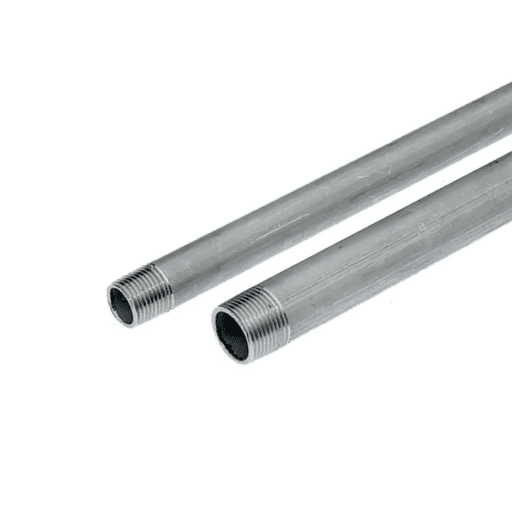
The cost-benefit analysis examines economic advantages and economic disadvantages of all mentioned materials. The following information presents three distinct cost estimates which depend on five essential elements:
| Factor | Concrete | Steel |
|---|---|---|
| Initial Cost | $100–$150 per cubic yard | $600–$800 per ton (varies by grade) |
| Durability | 50+ years with proper maintenance | 100+ years — resists tensile forces |
| Maintenance Costs | $3–$10/sq ft/yr (sealing & repair) | $6–$15/sq ft/yr (anti-corrosion treatment) |
| Environmental Impact | High CO₂ emissions in production | High energy use; recyclable multiple times |
| Versatility | Foundations, roads, load-bearing structures | Bridges, skyscrapers, lightweight structures |
The evaluation provides essential information about material trade-offs which helps stakeholders select suitable materials to match their available project resources.
Initial Investment for 316 Stainless Steel
Market Price
$3–$5
per pound
The evaluation of 316 stainless steel requires complete assessment of its initial investment costs together with its material characteristics and future advantages. The current market price of 316 stainless steel ranges between $3 and $5 per pound which varies based on market conditions and supplier choices and the amount purchased. The stainless steel grade maintains its value because of its ability to resist corrosion which makes it suitable for marine and pharmaceutical and food industry applications in environments that include saltwater and harsh chemicals.
The initial expense for 316 stainless steel is often higher compared to other materials like 304 stainless steel or mild steel. The product contains superior durability together with extended lifespan attributes which result in fewer replacement needs and maintenance requirements. The material durability produces operational savings which exceed initial expenses for projects of substantial scale. The overall investment for a project depends on its size because bulk purchases and custom manufacturing requirements result in different pricing arrangements.
The assessment of 316 stainless steel costs against performance benefits matters for both engineers and business professionals. The product requires higher initial funding yet its outstanding ability to withstand pitting and crevice corrosion together with total wear protection makes it dependable for extreme conditions which makes the product valuable for multiple industrial applications.
Replacement Frequency and Costs for 304 Stainless Steel
Market Price
$1.50–$2.50
per pound
The 304 stainless steel metal exhibits strength and rust protection, yet it requires more frequent replacements than 316 stainless steel under specific environmental conditions. The machinery replacement schedule depends on its operational patterns, which include contact with strong chemicals and water and extreme temperature conditions. The combination of high chloride environments with acidic environments will cause 304 stainless steel to develop pitting and crevice corrosion which will shorten its lifespan to 5 to 10 years when compared to superior materials.
The total costs of 304 stainless steel become less expensive than 316 stainless steel because 304 stainless steel has lower purchase costs which currently range between $1.50 and $2.50 per pound based on supplier and bulk order quantity. The product needs to be replaced more frequently because corrosive environments cause the material to deteriorate which results in increased total product costs throughout its operational lifetime.
The material 304 stainless steel will last between 10 and 20 years without needing replacement in kitchen equipment and interior structural applications which will reduce future maintenance costs. The food processing industries and residential water systems that require minimal contact with corrosive elements can benefit from 304 stainless steel because it delivers optimal performance at an affordable price. The companies need to analyze their particular operational requirements to determine how often they need to replace equipment while they calculate the expenses related to maintenance and initial cost savings.