High Standard Stainless Steel With Strict Inspection



Why Grade 5 Titanium (Ti-6Al-4V) is the Workhorse of Industrial Applications

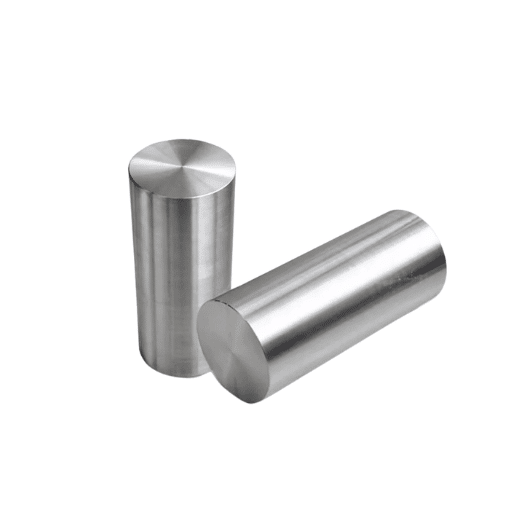
The worldwide procurement directors selected the same solution when your project needs a material which resists all pressure, withstands severe environmental conditions and does not increase the weight of your design. Grade 5 titanium has established itself as the industrial standard because it provides steel strength at half the weight and withstands decades of corrosive seawater exposure and maintains structural integrity through a temperature range of cryogenic to 500°C.
Most procurement directors and materials engineers encounter Ti-6Al-4V because it appears in product specifications. You have probably also questioned whether the premium price justifies the investment. This guide provides answers to your questions through technical information which helps you make decisions and procurement information which helps you acquire materials that match your certification and quality standards.
You will discover the following information when you read this material The essential characteristics of Grade 5 titanium make it necessary for aerospace and medical and industrial applications The material needs to be compared with other titanium grades and different alloys The critical quality assurance factors to verify when sourcing The initial cost premium usually results in better lifecycle value.
What is Grade 5 Titanium?
Chemical Composition and Classification
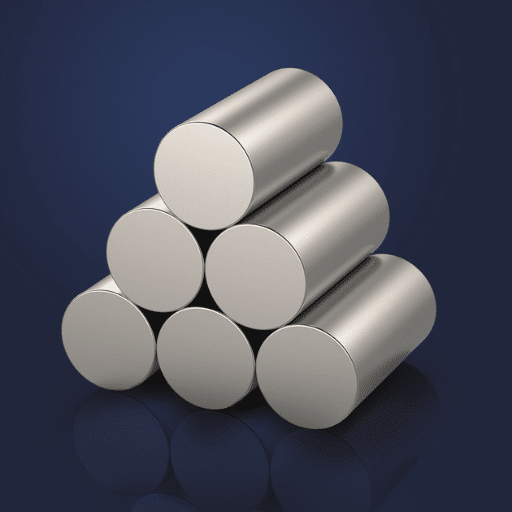
The material known as Grade 5 titanium with the chemical designation Ti-6Al-4V exists as an alpha-beta (α-β) alloy that contains approximately 6% aluminum and 4% vanadium which exists alongside trace amounts of iron and oxygen and carbon and nitrogen that combine to form titanium. This specific formulation earned the UNS designation R56400 because it meets ASTM B348 and B265 standards for bar and sheet products.
The presence of aluminum acts as an alpha stabilizer which improves both strength and creep resistance when temperatures rise. The vanadium acts as a beta stabilizer which enhances toughness and fatigue strength and formability. The dual-phase microstructure of Grade 5 titanium provides more versatile properties than commercially pure titanium grades.
Grade 5 titanium serves as the primary material which engineers use to create 50-60% of today’s global titanium requirements while commercially pure grades 1 through 4 together make up the remaining 50% of worldwide titanium consumption. Engineers use the term “titanium alloy” to refer specifically to Ti-6Al-4V when they do not provide any other details.
Why “Grade 5” and “Ti-6Al-4V” Mean the Same Thing
The dual naming convention creates confusion for procurement teams new to titanium sourcing. The ASTM (American Society for Testing and Materials) grade classification system uses Grade 5 to categorize titanium alloys based on their composition and properties. The chemical composition of Ti-6Al-4V consists of titanium with 6% aluminum and 4% vanadium.
The European specifications list this alloy under the names 3.7164 and 3.7165 according to DIN standards. The aerospace industry uses AMS 4928 as the standard specification for annealed bars and forgings. The designations help you choose the appropriate material for your international supplier quotes.
The Properties That Make Grade 5 Titanium a Workhorse
Exceptional Strength-to-Weight Ratio
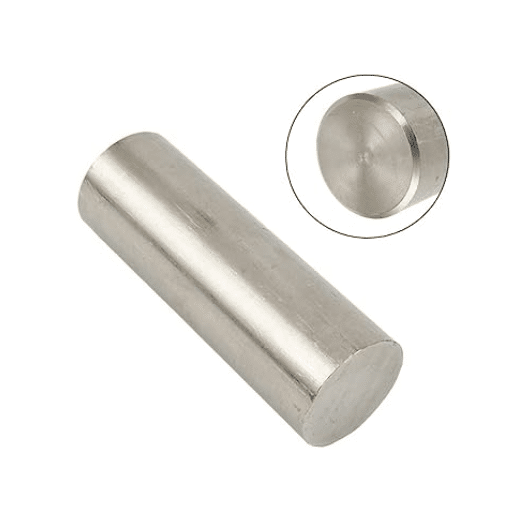
The defining characteristic of Grade 5 titanium is its unmatched strength-to-weight ratio among engineering metals. Ti-6Al-4V demonstrates tensile strength between 900 and 1,050 MPa which corresponds to 130,000 to 152,000 psi and it matches or exceeds performance standards of numerous structural steels while its weight remains 4.43 g/cm³ which makes it approximately 45% lighter than steel and 60% heavier than aluminum.
Grade 5 titanium demonstrates approximately 2.5 times stronger performance than Grade 2 commercially pure titanium because it increases strength without significant weight increase. Aerospace engineers use this material for critical structural components because saving weight brings major improvements in fuel efficiency.
Lead aerospace procurement specialist Marcus Chen encountered a satellite bracket design challenge which required his engineering team to select a material that could withstand 8,000 pounds of launch stress while meeting strict mass requirements. Aluminum alloys lacked the necessary strength. Steel exceeded weight limits. Grade 5 titanium provided the exact performance envelope required, and the brackets passed vibration testing without failure. The project launched on schedule.
Want to explore how Grade 5 titanium can solve your weight-critical engineering challenges? Consult our metallurgical engineers for application-specific recommendations.
Superior Corrosion Resistance
Grade 5 titanium forms a stable protective titanium dioxide TiO2 oxide layer which protects the metal as soon as it encounters oxygen. The passive film provides outstanding protection against corrosion because it recovers from any damage that occurs in environments which destroy stainless steel and other alloys.
Grade 5 titanium exhibits a seawater corrosion rate of less than 0.01 millimeters per year. Equipment manufactured from this alloy routine achieves 20 to 40 year service life in marine and offshore environments with minimal maintenance. The material protects against chloride-induced stress corrosion cracking and pitting and crevice corrosion because it outperforms stainless steels under identical environmental conditions.
Chemical processing applications benefit from Grade 5 titanium’s resistance to oxidizing acids which include nitric and chromic acids and its ability to withstand mildly reducing acids. This material exhibits corrosion immunity which makes it suitable for use in heat exchangers and pressure vessels and reactor components that handle aggressive process fluids.
Temperature and Fatigue Performance
The temperature range of Grade 5 titanium allows it to retain mechanical properties throughout its entire operational range. The material maintains its strength throughout its useful temperature range which extends from cryogenic temperatures to 400-500°C. The equipment can function in two distinct environments which include handling liquefied natural gas and operating jet engine compressor sections.
The alloy exhibits outstanding fatigue resistance, withstanding millions of deformation cycles without crack initiation. The property becomes essential for applications which involve rotating elements and systems that vibrate and cycles of repeated weight distribution. The fatigue endurance limit of properly processed Grade 5 titanium approaches 50-60% of its ultimate tensile strength—a higher ratio than most competing materials.
The materials exhibit better creep resistance than aluminum alloys and various steel types when exposed to continuous stress at high temperatures. Components maintain their original dimensions under load at temperatures which cause permanent deformation in other materials.
Heat Treatability and Formability
Grade 5 titanium exhibits heat treatment properties that differ from commercially pure titanium materials because it requires solution treating and aging (STA) process treatment. The capability enables engineers to design specific applications which achieve optimal strength combined with ductility and toughness characteristics.
The most common condition of Grade 5 material provides engineers with excellent strength and formability performance. Engineers can achieve tensile strength levels above 1,100 MPa for demanding applications through solution treating at 900-950°C followed by aging at 480-600°C process.
The alloy requires CNC machining which needs sharp tools and proper coolant and slower cutting speeds because its thermal conductivity stands at 7.1 W/m·K which is lower than aluminum or steel. The material achieves successful welding through TIG or MIG processes which operate in inert argon atmospheres although post-weld heat treatment restores original material properties. Custom forgings provide manufacturers with the ability to create complex geometries that standard mill products cannot deliver.
Industrial Applications: Where Grade 5 Titanium Proves Its Worth
Aerospace and Aviation
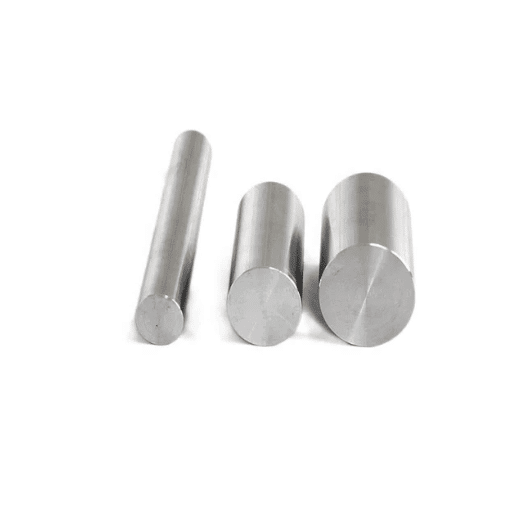
The aerospace sector utilizes 51% of total titanium production, with Grade 5 titanium serving as the main material for both structural and engine needs. The Boeing 787 Dreamliner uses 15% of its total weight as titanium which comes mainly from Ti-6Al-4V. The F-22 Raptor fighter aircraft increases this value to 36% titanium content.
Airframe applications include wing spars, fuselage frames, landing gear components, and fasteners. Pressurized cabins that undergo multiple flight cycles depend on the material’s fatigue resistance as an essential requirement. The material works perfectly for modern composite aircraft structures because it does not create galvanic corrosion with carbon fiber composites.
Grade 5 titanium provides jet engine components with a combination of high strength and low weight which allows operation under moderate temperatures. Compressor blades and discs and casings function at temperatures below 400°C, which matches the alloy’s optimal performance range. Airlines save approximately $1,000 in annual fuel expenses for each aircraft through every kilogram of weight reduction from their operations.
The original steel components used by Sarah Okonkwo’s team at an offshore helicopter operator needed replacement every 18 months due to salt-air conditions which caused their fleet’s landing gear pins to develop repeat corrosion failures. The team achieved complete corrosion protection after they switched to Grade 5 titanium pins. The inspection process detected no material deterioration after three years of service. The first maintenance cycle that did not involve replacement resulted in cost recovery for the higher initial material expense.
Medical and Dental Implants
The biocompatibility of Grade 5 titanium makes it the preferred material for use in orthopedic implants dental devices and surgical instruments. The alloy meets ASTM F136 and ISO 5832-3 standards for surgical implant applications. The material enables direct bone tissue contact with the implant surface, which leads to stable long-term joint development.
The field of orthopedic surgery uses its products for hip and knee replacements along with spinal fusion cages and trauma plates and bone screws. The material’s modulus of elasticity operates between 110 and 114 GPa, which provides a better match to human bone elasticity than stainless steel and cobalt-chrome alloys do. This match helps prevent stress shielding, which results in bone loss around implants.
Dental implants utilize Grade 5 titanium for root forms and abutments. The material’s non-magnetic properties ensure compatibility with MRI imaging. The material maintains its integrity through corrosion resistance, which protects against ion release that would result in allergic reactions and tissue irritation.
Grade 23 titanium (Ti-6Al-4V ELI) serves as the permanent implant solution that maximizes fracture toughness, while offering better ductility and crack resistance through its decreased oxygen and iron levels. The ELI specification is essential for critical implants in high-stress locations.
Oil, Gas, and Offshore Engineering
Offshore platforms, subsea equipment, and oilfield infrastructure operate in some of the most corrosive environments on Earth. Grade 5 titanium withstands seawater and sour gas and high-pressure conditions which destroy regular materials at a quick pace.
Subsea applications include pressure housings for instrumentation and connector components and valve bodies and pump parts. The material’s immunity to chloride stress corrosion cracking eliminates a major failure mode affecting stainless steels in deep-sea environments. Offshore platforms use titanium seawater piping systems which have operated for more than 30 years without any substantial loss of wall thickness.
Downhole equipment benefits from Grade 5 titanium’s strength and corrosion resistance in high-temperature, high-pressure wells containing H₂S, CO₂, and brine. Packers seals and tool components made from Ti-6Al-4V material lower the time needed to restore operations which equipment failures cause.
Desalination plants use Grade 5 titanium for heat exchanger tubes and evaporator components. The material maintains its performance for decades without maintenance in essential freshwater production facilities because it resists extremely salty and high-temperature brine conditions.
Chemical Processing and Power Generation
Chemical plants require Grade 5 titanium to construct equipment which operates with oxidizing acids and chlorine compounds and all other corrosive substances. The design of heat exchangers with titanium tube construction enables operational protection against process-side corrosion while achieving optimal heat transfer performance. The lasting performance of reactor vessels and pressure equipment depends on their ability to use the material’s strength and resistance to corrosion.
Power generation applications include turbine components, condenser tubing, and pollution control equipment. The alloy functions effectively in intermediate-temperature applications which require corrosion resistance but do not need higher-strength materials from the alloy.
Automotive and Racing
Grade 5 titanium is used in high-performance racing applications because its strength-to-weight ratio enables better performance in rotating and reciprocating components. The use of Ti-6Al-4V in manufacturing connecting rods valves and valve springs leads to decreased reciprocating mass which enables engines to rev higher and respond faster.
Turbocharger components exhaust valves and fasteners maintain their structural integrity during high-temperature periods and thermal cycling while achieving decreased weight. Grade 5 titanium serves as the primary material for the BMW M5 all Porsche models and Formula 1 racing cars because it provides them with a competitive edge.
Luxury vehicles increasingly use titanium exhaust systems because these systems reduce weight while providing protection against corrosion and creating unique sound profiles. The material maintains better resistance to thermal fatigue than stainless steel when exposed to high-temperature cycling conditions.
Emerging Applications
Additive manufacturing (3D printing) has expanded Grade 5 titanium’s commercial potential. Direct Metal Laser Sintering (DMLS) and Electron Beam Melting (EBM) processes enable the production of complex shapes which include internal lattice structures and topology-optimized components and custom medical implants that conventional manufacturing methods cannot create. The process of post-build heat treatment establishes complete mechanical characteristics in 3D printed components.
Grade 5 titanium has become a material choice for consumer electronics manufacturers who want to create high-end products that stand out from their competitors. The Apple iPhone 15 Pro and Apple Watch Ultra use Ti-6Al-4V frames for durability, light weight, and premium feel. This application demonstrates the material’s growing visibility beyond traditional industrial markets.
Sports equipment manufacturers—including those who make bicycle frames and golf clubs and tennis rackets and climbing gear—now use Grade 5 titanium to create top-quality products which dedicated fans purchase at higher prices because they want better performance.
Need Grade 5 titanium for a specialized application? Request a consultation with our engineering team to discuss custom specifications and manufacturing options.
Grade 5 vs. Other Titanium Grades: Making the Right Choice
Grade 5 vs. Grade 2 (Commercially Pure)
Grade 2 titanium functions as the most common commercially used pure metal because it delivers both superior corrosion resistance and formability at a lower pricepoint than Grade 5. The material shows tensile strength of approximately 345 MPa which is significantly lower than Grade 5’s 900 MPa strength.
Select Grade 5 when:
- The structure needs high durability
- The aerospace and racing industries benefit from reduced weight
- The situation needs resistance against repeated stress
- The situation needs to support 1.8 to 2.2 times the standard expense
Select Grade 2 when:
- The situation needs maximum protection against corrosion
- The situation needs both metal shaping and welding capabilities
- The situation requires less strength than the available budget
- The situation needs chemical processing without strong structural requirements
Grade 2 welding processes operate more smoothly than Grade 5 while the metal transforms into intricate designs. Grade 2 piping becomes the more affordable choice for chemical plants which need to maintain low pressure levels but need high corrosion protection.
Grade 5 vs. Grade 23 (Ti-6Al-4V ELI)
The Extra Low Interstitial grade 23 Ti-6Al-4V alloy has oxygen content of 0.13% maximum and iron content of 0.25% maximum which is lower than the standard oxygen and iron limits of 0.20% and 0.40% respectively. The changes in composition lead to better fracture toughness and ductility but they result in minor strength decreases.
Grade 23 excels for:
- Permanent orthopedic implants (hip, knee, spinal)
- Cryogenic applications requiring maximum toughness
- Any application where crack propagation resistance outweighs ultimate strength needs
Standard Grade 5 suffices for most aerospace and industrial applications where the ELI premium is not justified. Procurement teams should verify which specification their engineering requirements actually demand.
Grade 5 vs. Beta Titanium Alloys
The solution-treated condition of beta alloys Ti-10V-2Fe-3Al and Ti-15-3 shows improved strength which exceeds 1,200 MPa and enhanced formability. The material undergoes substantial hardening during aging which results in strength that surpasses Grade 5.
Beta alloys suit:
- Heavy-section forgings requiring hardenability
- High-strength applications which need more than 1,100 MPa
- Cold-formable applications which gain from beta-phase ductility.
The trade-offs include higher cost, reduced availability, and more complex heat treatment requirements. Grade 5 remains the default choice unless beta alloy properties are specifically required.
Procurement Considerations for Grade 5 Titanium
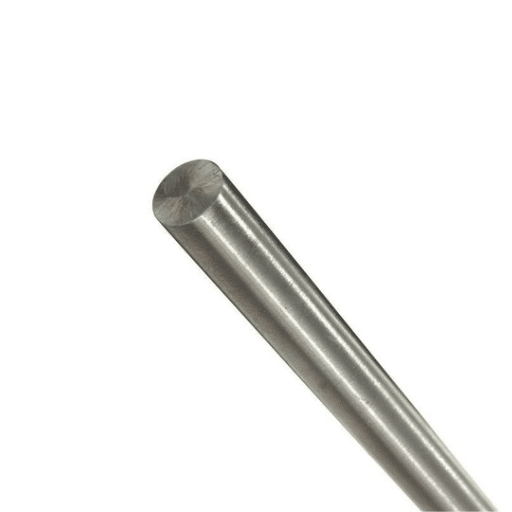
Quality Assurance and Certification
The process of sourcing Grade 5 titanium requires extensive material certification verification procedures. The procurement team needs to obtain documentation that proves products meet the required standards (ASTM B348, B265, AMS 4928, or others as applicable to the product form). Your supplier’s ISO 9001 certification establishes basic trustworthiness in their quality management system capabilities. However, for critical applications, demand material test reports (MTRs) which include the following elements:
- Chemical composition verification through spectral analysis
- Mechanical property test results (tensile strength, yield strength, elongation)
- Hardness measurements
- Microstructural examination results which are required under specified conditions
The process of establishing full traceability from raw material to final product allows organizations to maintain accountability and investigate problems. Reputable suppliers maintain records that connect each delivered product with its mill source and heat number and test results information.
At Jiangsu Zhonggongte, every titanium batch undergoes spectral analysis which achieves complete verification of the exact chemical composition. Our ISO 9001 certified processes ensure full compliance with your specifications, with complete documentation packages supporting your quality audits and regulatory requirements.
Forms and Availability
Grade 5 titanium is available in all standard mill product forms:
|
Product Form |
Typical Specifications |
Common Applications |
|---|---|---|
|
Bar/Rod |
ASTM B348, AMS 4928 |
Fasteners, shafts, structural components |
|
Plate/Sheet |
ASTM B265 |
Airframe skins, chemical vessel shells |
|
Seamless Tube |
ASTM B338 |
Heat exchangers, condensers, instrumentation |
|
Wire |
ASTM B863 |
Welding filler, fasteners, mesh |
|
Forgings |
ASTM B381, AMS 4928 |
Structural brackets, valves, fittings |
The production process of custom manufacturing products enables businesses to create products that exceed the limits of regular mill output. Custom forgings provide a material structure which directs strength through its grain flow patterns. Precision cutting services create components that achieve almost complete shape accuracy, which decreases both your machining needs and material waste.
The standard mill products lead times range between 2 and 8 weeks, which depends on the product form and product size and product market conditions. The custom forgings together with their special processing requirements will result in longer waiting periods. Businesses should develop partnerships with suppliers who maintain large inventory stockpiles to handle supply chain interruptions.
Global Supply Chain Factors
International procurement of Grade 5 titanium involves considerations beyond material specification. Export documentation requirements vary by destination and application. Export licenses for aerospace-grade material depend on both the intended use and the destination country.
The packaging used for international transport must provide protection to titanium surfaces from both contamination and mechanical damage. The moisture-resistant wrapping system protects against corrosion during ocean freight. The correct crating system prevents any deformation which might occur to thin sections. Supply professionals with extensive experience know the export packaging requirements which apply to international shipping.
David Park’s procurement team required Grade 5 titanium plate for their Middle Eastern desalination project when their first supplier provided materials which arrived contaminated because their packaging had failed to protect the product. The replacement materials from their global logistics expert supplier reached them in perfect condition with complete documentation which prevented a three-week work delay. The difference between the two parties stemmed from the superior international supply chain management capabilities possessed by one supplier.
The collaboration process with certified suppliers who possess knowledge about these complex factors leads to complete transparency during work execution. Your supplier needs to have expertise in international documentation and customs procedures and export compliance for your specific market.
Lifecycle Value: Why Grade 5 Titanium Delivers ROI
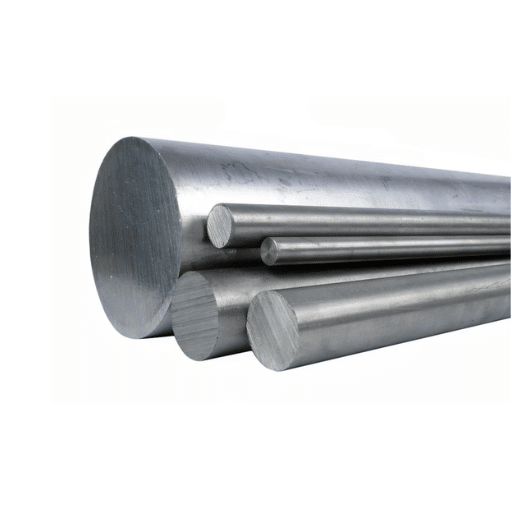
The initial cost premium of Grade 5 titanium—typically 1.8-2.2x the price of Grade 2 titanium and significantly more than steel or aluminum—gives procurement teams pause. The total cost of ownership benefits which Ti-6Al-4V delivers as a material solution make it the most cost-effective option for most applications.
The primary value proposition of the system exists through its extended service life. Materials that resist corrosion protect equipment from the replacement cycles which affect materials with lower resistance. A heat exchanger tube bundle in seawater service may last 30 years in Grade 5 titanium versus 5-7 years in Cu-Ni alloys or 10-12 years in super duplex stainless steel. When replacement requires shutdown of a billion-dollar production facility, material cost becomes irrelevant compared to operational continuity.
Transportation costs decrease directly because weight savings create lower expenses for operational activities. The titanium components of an aircraft generate fuel savings which return material costs throughout the entire service life of the aircraft. Reduced hull weight enables marine vessels to gain better speed and operational efficiency. Racing teams achieve a competitive edge through every kilogram reduction in their vehicle weight.
The process of reduced maintenance activities results in total removal of all costs associated with inspection and repair and replacement procedures. Titanium’s corrosion immunity eliminates the requirement for protective coatings and cathodic protection systems as well as the need for steel equipment to undergo frequent wall-thickness monitoring in aggressive environments.
Design flexibility enables lighter, more efficient structures. The strength-to-weight ratio allows engineers to reduce section sizes while maintaining load capacity, which results in greater weight savings and material efficiency.
The project requires you to assess the lifecycle expenses of Grade 5 titanium which include costs for acquiring equipment and installing it and operating the system and performing maintenance work and replacing items at their final disposal point. The material which requires higher upfront expenses proves more cost-effective during demanding employment because of its extended lifespan. The analysis results show that Grade 5 titanium has become popular among industries which require reliable products with long service life because they consider reliability to be more important than initial expenses.
Conclusion
The industrial sector uses Grade 5 titanium (Ti-6Al-4V) because its exceptional material properties make it unmatched by any other substance. The strength of steel at half the weight. The material protects against corrosion damage in extreme environmental conditions. The material enables safe use within the human body. The material demonstrates operational capabilities from cryogenic temperatures to 500°C. The single alloy accounts for 50% of global titanium use because these properties exist in both medical and industrial applications.
Understanding Grade 5 titanium enables procurement directors and materials engineers to make better specification choices. The information you learned shows when Ti-6Al-4V provides better performance than other materials while you now understand the methods to determine product quality and certification status and the reasons why equipment investment results in better financial benefits during its entire operational period.
Key takeaways:
- The weight-critical applications need Grade 5 titanium because it offers the highest strength-to-weight ratio.
- Maintenance and replacement cycles become unnecessary because the material resists corrosion in seawater and chemical environments.
- The combination of spectral analysis and ISO 9001 certification achieves quality assurance which guarantees delivery of required specifications.
- The analysis of lifecycle value proves that material premiums become justified through longer operational periods and decreased maintenance requirements.
- Global sourcing requires companies to manage their export compliance through proper handling of their documentation and packaging requirements.
The next time your project demands a material that will not fail, will not corrode, and will not weigh you down, you will understand why procurement professionals worldwide reach for Grade 5 titanium.
Ready to specify Grade 5 titanium for your next project? Our metallurgical engineers are available to discuss your exact requirements, from standard mill products to custom forgings with precise chemical compositions. Contact us for a detailed quote and material certification documentation.