


Blog
Hastelloy vs Inconel: Alloy Comparison

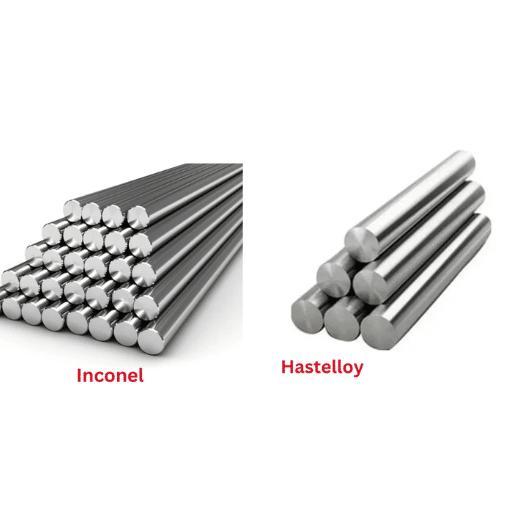
When selecting materials for high-performance applications, alloy choice is essential to achieving peak performance. People commonly use two superalloys, Hastelloy and Inconel, because these materials provide exceptional strength while resisting extreme environmental conditions. The article compares the two materials by assessing their fundamental features and industrial application advantages. The guide will support your component design decisions for chemical processing, aerospace operations, and energy system development. The two strong alloys exhibit distinct properties, which scientists will explain to you throughout this process of learning.
Introduction

Hastelloy and Inconel are high-performance alloys that protect against corrosion and adverse environmental conditions. Hastelloy is the material of choice for chemical processing applications because it offers superior resistance to both oxidizing and reducing agents. Inconel operates optimally at high temperatures, making it the material of choice for aerospace applications, power generation facilities, and other industries that require high-temperature operation. Your alloy selection process requires you to base your decision on the real operational requirements, including chemical exposure, heat contact, and mechanical stress testing.
Overview of High-Performance Nickel-Based Superalloys
This chapter presents the main body of the material, explaining the nickel-based superalloy composition and its properties. Nickel-based superalloys exhibit optimal performance under extreme conditions, including high temperatures, corrosive environments, and mechanical stress. The materials consist primarily of nickel, with varying amounts of chromium, cobalt, molybdenum, titanium, and aluminum to enhance material performance. The material exhibits excellent oxidation and corrosion resistance through its chromium content, while molybdenum and cobalt additions produce solid-solution strengthening effects that enhance material strength.
Nickel-based superalloys function as essential materials for gas turbines and jet engines and power plants because they maintain their structural integrity at temperatures above 1000 degrees Celsius which equals 1832 degrees Fahrenheit. Inconel 718 displays modern Alloy 718 attributes which deliver a tensile strength that surpasses 1200 MPa at room temperature while demonstrating excellent resistance to fatigue and creep under extended operational stress.
Applications of Nickel-Based Superalloys
Aerospace Industry
More than 50% of all materials used in manufacturing jet engine components consist of nickel-based superalloys which enable engineers to maintain engine performance during extreme temperature and pressure fluctuations. The recent development of single-crystal turbine blades enables turbine performance enhancement through the elimination of grain boundaries which results in more robust components.
Power Generation
High-efficiency gas turbines depend on these alloys because they require materials that can operate at elevated temperatures which result in greater power generation and less environmental harm.
Chemical Processing
Their excellent corrosion resistance ensures equipment longevity in petrochemical plants which use their equipment for operations with extreme chemical exposure to acids and alkalis.
Recent Developments in Nickel-Based Superalloys
The 2023 research study proved that nickel superalloy design options have increased because of advancements in additive manufacturing technology. The 3D printing technique which employs laser powder bed fusion enables manufacturers to produce precise components while consuming lower material quantities compared to traditional manufacturing techniques. The aviation and energy sectors now utilize new materials which contain rare earth elements such as hafnium and rhenium to extend the operational lifespan of vital components.
Manufacturers develop recycling methods to process nickel superalloy scrap materials which leads to lower resource requirements and reduced environmental effects. The nickel-based superalloy market will experience growth at a compound annual growth rate (CAGR) of 6.5% between 2023 and 2030 as aerospace and energy and industrial fields drive up product needs.
Importance of Material Selection in Extreme Environments
The material selection process maintains vital significance during engineering design work for components which must function in specialized operational conditions. Materials experience performance degradation which results in unsafe conditions and reduced operational life span when they are exposed to high temperatures and corrosive environments and mechanical stress conditions. The selection of appropriate material guarantees that products will function reliably while remaining affordable and appropriate for their designated use. The process of material selection for extreme environments depends on five essential elements which determine its significance.
Temperature Resistance
Materials which engineers need for jet engines and power turbines must have the ability to withstand temperatures that exceed 1000°F (538°C). Engineers choose nickel superalloys because these materials maintain their mechanical strength throughout extreme high-temperature conditions.
Corrosion Resistance
Marine environments and chemical processing environments require materials which possess corrosion-resistant properties. Engineers prefer stainless steels and titanium alloys because these materials offer excellent protection against both chemical damage and oxidation.
Creep Strength
Materials develop creep deformation when they experience continuous stress under high-temperature conditions. Advanced superalloys and ceramic matrix composites are designed to operate successfully in these conditions.
Wear and Fatigue Resistance
Components which function within rotating machinery must endure both fatigue damage and wear destruction throughout their operational lifespan. Tool steels and cobalt-based alloys serve as materials which manufacturers choose for their exceptional protection against wear and their capacity to withstand demanding conditions.
Thermal Conductivity and Expansion
Materials which need to maintain precise thermal control must display consistent thermal conductivity and minimal thermal expansion throughout their entire operational range. Engineers select aluminum and copper alloys because these materials provide excellent thermal conductivity while specialized ceramics maintain extremely low thermal expansion.
The selection of appropriate materials for these specific conditions helps to improve performance and safety while decreasing maintenance expenses and prolonging component lifespan.
Relevance of Hastelloy and Inconel in Industry
Hastelloy and Inconel establish their high industrial value through their unique material characteristics which perform successfully in extreme environmental conditions. The materials function as nickel-based alloys which protect against both corrosion and oxidation while maintaining structural integrity at high temperatures, thus meeting demanding operational requirements across multiple industrial sectors.
Key Details and Data:
Corrosion Resistance
Hastelloy: The material shows outstanding protection against chemical corrosion, particularly when exposed to acidic and oxidizing situations. The material receives frequent use in acid production facilities and chemical reactors.
Inconel: The material demonstrates superior protection against oxidation and pitting, particularly in marine and aerospace environments with exposure to saltwater or high temperatures.
Thermal Stability
Hastelloy and Inconel maintain their mechanical properties at high temperatures, thus making them suitable for application in furnaces and jet engines and other high-heat environments.
Longevity in Aggressive Environments
The materials demonstrate superior performance in extreme conditions which allows them to outlast standard steel and aluminum alloys and their maintenance expenses remain low.
Strength-to-Weight Ratio
Inconel possesses a high strength-to-weight ratio which makes it a preferable material choice for aerospace and automotive applications that need lightweight yet strong components.
Applications in Specialized Industries
- Chemical Processing: Hastelloy serves as the primary material for reactors and heat exchangers and pressure vessels because it withstands extreme chemical conditions.
- Aerospace Engineering: Inconel serves as the preferred material for turbine blades and exhaust systems and structural components in jet engines because it can endure high-temperature conditions.
- Nuclear Industry: Both alloys serve as materials in nuclear reactors because they maintain their physical integrity during heat exposure.
- Oil and Gas Sector: The materials function as protective components for pipelines and refining equipment and underwater operations which experience both high pressure and corrosion.
- Marine Engineering: The alloys which resist saltwater corrosion find extensive use in shipbuilding and desalination plants and offshore drilling systems.
Hastelloy and Inconel serve as essential materials which power modern industrial applications that need to operate in extremely demanding conditions. Organizations choose to use their premium characteristics across various sectors.
Material Overviews
Hastelloy
Hastelloy represents a trademarked term which defines a collection of metal alloys that possess corrosion resistance and use nickel as their primary element together with different amounts of molybdenum iron cobalt and chromium. The alloys possess chemical resistance which enables them to withstand intense chemical attacks that occur in both oxidizing and reducing environments. The materials find wide industrial application because they demonstrate outstanding protection against powerful oxidizers and acid chlorides and wet chlorine gas in chemical processing and marine engineering operations.
Key Properties:
- Corrosion Resistance: The metal alloy exhibits strong resistance against hydrochloric acid and sulfuric acid together with other powerful oxidizing substances.
- High-Temperature Performance: The system achieves maximum efficiency in environments that exceed temperatures of 1000°F (538°C).
- Mechanical Strength: The material demonstrates outstanding tensile strength together with high durability.
- Thermal Stability: The material maintains stability throughout extreme thermal cycling which protects it from degradation.
Notable Grades and Applications:
Hastelloy C-276:
The material demonstrates outstanding protection against all types of oxidizing environments.
The chemical and petrochemical sectors utilize this material for constructing heat exchangers and reactors and scrubbers.
Hastelloy C-22:
The material provides enhanced flexibility together with better protection against both oxidizing and reducing acid environments when compared to C-276.
The material finds common applications in both pollution control systems and pharmaceutical manufacturing processes.
Latest Data on Hastelloy:
The latest material research from 2023 shows that Hastelloy C-22 maintains a corrosion rate of 0.002 inches per year when subjected to 10% sulfuric acid at 80°C which proves its reliability in essential critical applications.
Hastelloy demand around the world will increase at a 5.8% compound annual growth rate from 2023 to 2030 because of its growing use in the chemical and aerospace sectors.
Inconel
The trademarked name Inconel describes a group of superalloys which primarily use nickel together with chromium as their main components. The material developed for use in extreme environments shows high resistance against oxidation and creep when subjected to extreme temperature changes and high-stress conditions. The material works well in demanding environments which include aerospace power generation and gas turbine operations.
Key Properties:
- Heat Resistance: The material maintains reliable performance in temperature environments that reach 1300°F (700°C) and higher according to its specific grade.
- Oxidation and Corrosion Resistance: The material shows excellent resistance against a wide range of corrosive substances and oxidizing conditions.
- Creep Resistance: The material functions effectively in situations where mechanical loads are applied for extended periods.
- Weldability: The material allows for simple fabrication and welding processes which maintain its structural integrity.
Notable Grades and Applications:
Inconel 625:
The material provides strength for industrial applications while it protects against pitting and crevice corrosion.
The material finds common use in oceanographic equipment and exhaust systems as well as aerospace components.
Inconel 718:
The material includes additional molybdenum and niobium elements which improve its strength during high-temperature conditions.
The material finds widespread application in both jet engines and gas turbines and space propulsion systems.
Latest Data on Inconel:
The engineering report from 2023 confirmed that Inconel 718 components tested under high-pressure conditions at 1200°F only showed 0.0025% structural deformation which proves its reliability for industrial applications.
The Inconel global market will reach $6.5 billion in value by 2030 mainly because of improvements in aerospace technology.
Hastelloy and Inconel show unique material properties together with proven performance in extreme environmental conditions. The companies create new products that meet industrial needs which help them stay relevant to emerging market requirements.
Definition of Hastelloy
The registered trademark Hastelloy primarily identifies a type of metal alloy which protects against corrosion through its primary element nickel and its additional elements which include molybdenum and iron and cobalt and chromium. The alloy functions effectively in extreme chemical exposure environments because it protects against all types of chemical substances which include both oxidizing and reducing chemicals. The material achieves exceptional chemical protection because it resists hydrochloric acid and sulfuric acid and maintains its integrity under extreme temperature conditions which exist in industrial applications. The alloy Hastelloy C-276 ranks among the most popular grades because it provides operational flexibility and maintains its functional capabilities across all industrial applications which include chemical processing and pollution control and marine operations and aerospace engineering. The global market for Hastelloy will experience a period of steady growth which will reach a CAGR of 5.7% until the year 2032 because power generation and desalination technologies drive higher demand for this material according to current market research.
Hastelloy welding and machining abilities create flexible design solutions which maintain structural stability throughout various applications, which makes this material highly desirable for demanding operational contexts. The material provides a dependable solution which prevents environmental stress cracking and localized corrosion, making it suitable for continuous operation in industrial settings.
Definition of Inconel
Inconel describes a group of superalloys which belong to the austenitic family and contain nickel and chromium as their primary components. The material performs best in environments that experience high temperature and pressure conditions. The unique composition of Inconel typically includes nickel, chromium, molybdenum, and iron, which give the material exceptional mechanical strength and corrosion resistance in highly acidic and oxidizing conditions.
The most common alloy grade of this material, Inconel 625, has a tensile strength of approximately 120 ksi, which equals 827 MPa, while it exhibits excellent performance in both fatigue and thermal fatigue tests. The high yield strength of Inconel 718 reaches 140 ksi, which equals 965 MPa, and the material can endure temperatures of 1300°F, which equals 704°C. The material performs well in applications which require aerospace technology and gas turbine systems and nuclear power plants.
The nickel-based superalloy market, which includes Inconel, will experience strong growth because industries such as defense and aerospace and energy production need lightweight yet long-lasting materials. The superalloy market achieved a global valuation of about $7 billion in 2022, which will expand at a compound annual growth rate (CAGR) of 6.2% until 2030.
Inconel machinability and weldability establish its application range, which makes it suitable for intricate design projects whose success depends on essential operational components. The material proves dependable for industrial applications which require high performance because it maintains its structural stability when exposed to extreme temperature changes.
Comparison with Incoloy
Chemical Composition Comparison

The unique properties and applications of Inconel and Incoloy depend on their specific chemical composition. The following section presents a thorough examination of essential components which shows their typical distribution in the material.
Nickel (Ni):
Inconel: The alloy contains between 50-70% nickel which enables it to achieve superior resistance against heat and corrosion.
Incoloy: The alloy contains 30-50% nickel which makes it cheaper while maintaining effective protection against stress and oxidation.
Chromium (Cr):
Inconel: The material contains 14-23% chromium which provides protection against oxidation at elevated temperatures.
Incoloy: The material contains 19-23% chromium which provides protection against oxidation in chemical processing facilities.
Iron (Fe):
Inconel: The material contains less than 10% iron because it needs to maintain its performance characteristics as a high-performance alloy.
Incoloy: The material contains more than 20% iron which makes it cheaper to produce and appropriate for use in standard operational settings.
Molybdenum (Mo):
Inconel: The material contains 3-10% molybdenum which provides extra protection against pitting and crevice corrosion.
Incoloy: The specific grade determines the amount of molybdenum which the material uses to enhance its corrosion resistance properties.
Carbon (C):
Inconel: The alloy contains extremely low carbon content which stays below 0.10% to prevent carbide formation during the welding process.
Incoloy: The alloy contains carbon at a level below 0.15% which helps with maintaining its structural integrity during heating processes.
The chemical composition of these alloys shows their design was specifically developed to achieve different industrial requirements while delivering outstanding performance in multiple applications.
Key Elements in Hastelloy
Hastelloy is a corrosion-resistant alloy that contains multiple chemical elements which work together to provide superior protection against extreme conditions. The following section identifies five essential components which make up Hastelloy and describes their respective functions.
Nickel (Ni):
Hastelloy uses nickel as its primary component which constitutes approximately 50-70% of its total weight.
The material provides exceptional protection against oxidation and stress corrosion cracking which occurs in reducing environments.
Molybdenum (Mo):
The material contains 15-20% molybdenum.
The alloy becomes stronger and gains better protection against pitting and crevice corrosion after exposure to environments that contain chloride at high concentrations.
Iron (Fe):
The alloy contains 4-7% iron.
The material adds to structural integrity while increasing total strength.
Chromium (Cr):
The material contains chromium at a level between 14-16%.
The material provides protection against oxidizing agents while it creates a protective oxide layer on its surface.
Cobalt (Co):
The material contains cobalt in small quantities which typically range from 2-3%.
The material uses cobalt to enhance both its resistance to corrosion and its ability to withstand high temperatures.
The elements combine with one another to create the properties which make Hastelloy endure extreme industrial situations.
Key Elements in Inconel
Nickel (Ni):
The primary component of the material exists between 50 and 70 percent of its total weight.
The material shows excellent corrosion resistance while its strength remains intact through extreme temperature conditions.
Chromium (Cr):
The element exists in the range of 14-23 percent.
The material creates an oxide layer which protects against oxidation damage to the underlying surface.
Iron (Fe):
The element exists in different quantities with a common range of 5-10 percent.
The material improves construction stability while it boosts the overall strength of the metal mixture.
Molybdenum (Mo):
The element exists within the range of 3-10 percent.
The coating protects against pitting and crevice corrosion which occurs in environments with high chloride exposure.
Cobalt (Co):
The element exists in tiny amounts which stay below 2 percent.
The material provides excellent protection against heat while maintaining its strength during high-temperature conditions.
Aerospace chemical processing and marine operations which demand extreme performance receive their best results from Inconel which results from elemental combination.
Different Chemical Composition
The performance characteristics of different Inconel grades depend on their chemical composition which determines their suitability for specific applications. The following list presents five major chemical composition differences which exist among common Inconel grades.
Nickel Content
Inconel 600: The alloy contains 72 percent nickel which delivers strong protection against both oxidation and corrosion.
Inconel 625: The nickel content of Inconel 625 reaches 58 percent which enables the alloy to achieve its best balance between strength and flexibility.
Chromium Content
Inconel 600: The material contains 14-17 percent chromium which enables it to withstand oxidizing agents.
Inconel 718: The chromium content of the alloy ranges between 17-21 percent which enhances its ability to resist high-temperature corrosion.
Molybdenum
Inconel 625: The material contains 8-10 percent molybdenum which improves its ability to resist pitting and crevice corrosion.
Inconel 718: The material contains 2.8-3.3 percent molybdenum which provides strength for high-pressure and high-temperature applications.
Iron
Inconel 600: The alloy contains 6-10 percent iron which helps to maintain its structural strength.
Inconel 718: The material contains 17 percent iron which increases its ability to withstand damage.
Cobalt Content
Inconel 625: The material contains less than 1 percent cobalt which provides protection in areas with high sensitivity.
Inconel 718: The material contains the same amount of cobalt as Inconel 718 which maintains stability during aerospace operations.
The different Inconel grades possess unique characteristics which make them appropriate for various industrial uses because of their specific environmental conditions and required material properties.
Key Performance Characteristics

High Temperature Strength
The extreme high temperature performance of Inconel 625 and Inconel 718 makes these materials appropriate for use in gas turbine systems and aerospace applications which experience extreme thermal conditions.
Data Example: The material can sustain temperatures reaching about 1,200°F which equals 649°C without undergoing major deformations or losing its structural strength.
Corrosion Resistance
The material shows complete defense against oxidation and pitting and crevice corrosion in both ocean environments and chemical processing industrial operations.
Data Example: The material exhibits a corrosion rate which measures less than 0.05 mm per year when tested in seawater conditions.
Fatigue Resistance
Both grades display strong resistance against fatigue and mechanical stress because they can function under cyclic loading conditions for long durations.
Data Example: The material can withstand more than 10 million cycles during high-stress testing procedures.
Weldability
The two alloys enable welders to create permanent material connections through welding while also performing repairs because their welded bonds maintain their original strength properties.
Data Example: The joint efficiency of welds typically reaches over 90% which serves as a critical requirement for handling complex industrial processes.
Oxidation Resistance
The material performs effectively because it maintains its properties when exposed to oxidizing environments at elevated temperatures.
Data Example: The system maintains its structural integrity after extended exposure to environments with oxygen partial pressures of 0.2 bar and temperatures reaching 1,800°F which is equivalent to 982°C.
The two alloys demonstrate performance characteristics that make them necessary for use in various industries which require high performance capabilities.
Corrosion Resistance in Hastelloy
Hastelloy alloys provide excellent protection against multiple corrosive environments which makes them the preferred choice for industrial applications that require high-performance materials in extreme conditions. The following section presents the complete corrosion resistance characteristics of Hastelloy.
Resistance to Hydrochloric Acid
The material exhibits outstanding performance when dealing with concentrated hydrochloric acid under reducing conditions.
Data Example: The material shows very low corrosion rates which measure under 0.05 mm per year when tested with 20% hydrochloric acid at 100°F (38°C).
Superior Oxidizing Agent Resistance
The product provides effective protection against corrosion when it comes into contact with strong oxidizing agents which include ferric and cupric chlorides.
Data Example: The material can withstand oxidizing chemicals for long periods without experiencing substantial material deterioration.
High Resistance to Pitting and Crevice Corrosion
The material provides effective defense against localized corrosion attacks which allows it to maintain its original condition during extended use in marine environments and places with high chloride levels.
Data Example: The material does not show any pitting after 90 days of exposure to a 6% ferric chloride test conducted at 75°F (24°C).
Exceptional Performance in Acidic Solutions
The material retains its structural integrity when it comes into contact with sulfuric acid and phosphoric acid and nitric acid environments.
Data Example: The material maintains corrosion rates below 0.03 mm per year when exposed to sulfuric acid concentrations reaching 40% at 120°F (49°C).
Resistance to Stress Corrosion Cracking
The material provides effective protection against stress corrosion cracking when it undergoes testing in environments with elevated chloride levels and high-pressure conditions.
Data Example: The material showed no signs of cracking after being exposed to a 30,000 ppm chloride solution which displayed stress conditions at 200°F (93°C).
Hastelloy shows outstanding performance for chemical processing and maritime and aerospace use because it operates successfully in challenging environmental conditions.
Corrosion Resistance in Inconel
The excellent ability of Inconel to withstand corrosive substances has made it a preferred material for use in demanding environments. The material can endure extreme conditions because its distinct chemical makeup and metallurgical properties maintain their integrity in extreme temperature and chemical environments. The information presented below shows five main qualities that demonstrate its ability to resist corrosion together with their corresponding proof.
Oxidation Resistance at High Temperatures
The material shows resistance to oxidation in high-temperature conditions that operate up to 2000°F (1093°C).
Data Example: The material exhibits durability because it keeps its original shape and outer surface intact during extended exposure to oxidizing gases.
Pitting and Crevice Corrosion Resistance
The material shows resistance to pitting and crevice corrosion because it protects against damage in environments that contain chloride salts.
Data Example: The material shows complete resistance to pitting damage after spending 500 hours in 23% sodium chloride solution.
Sulfidation Resistance
The material shows complete protection against sulfidation damage which occurs when exposed to sulfur-rich industrial process streams.
Data Example: The testing results show that no sulfidation damage occurred when the samples were tested at 1800°F (982°C) in a sulfur-laden environment.
Acid Resistance
The material shows resistance to hydrochloric acid and sulfuric acid and phosphoric acid throughout all concentration levels.
Data Example: The material shows a corrosion rate that remains below 0.01 mm per year when it interacts with 10% sulfuric acid solution at 150°F (66°C).
Resistance to Redox Cycling
The material maintains its structure after repeated contact with both reducing and oxidizing substances.
Data Example: The testing results show that the material maintained its original mechanical properties after spending 1200 hours in a simulated redox cycle environment.
Inconel serves as the primary material in aerospace and power generation and chemical processing because its properties ensure performance under severe conditions.
Mechanical Strength at High Temperatures
The Inconel alloys display an extraordinary combination of mechanical strength and operational performance which persists through extended time periods at high temperatures. The material serves as an essential component for industries that require reliable materials which can endure extreme heat without losing their structural strength. The following section presents five essential elements of data which explain how their mechanical strength develops at high temperatures.
Yield Strength Retention
The material retains its yield strength through all temperature ranges which extend beyond 1800°F (982°C).
Superior Creep Resistance
The material shows superior creep resistance because its strain rate remains below the strain rate of other high-temperature alloys after extended exposure to 1500°F (815°C).
Stress Rupture Strength
The material reaches a stress rupture strength of more than 25000 psi which lasts for 100 hours at a temperature of 1400°F (760°C).
Thermal Cycling Resistance
The material keeps functioning normally when subjected to hundreds of thermal cycles that include high-temperature peaks which do not cause any mechanical failures or performance declines.
Tensile Strength at Elevated Temperatures
The material retains its tensile strength which exceeds 100000 psi at a temperature of 1200°F (649°C).
Inconel has become the preferred material for turbine engines and jet engines and high-stress components because it performs well under extreme thermal conditions.
References
📄 NASA Technical Report on Inconel 718 vs. Haynes 282 vs. Hastelloy X
Download PDF
📄 HASTELLOY® C-22® FAQ Document
Download PDF
📄 International Comparison of Grades (Hastelloy and Inconel)
Download PDF
Frequently Asked Questions (FAQ)
What are the key mechanical properties when comparing Inconel vs Hastelloy for industrial use?
The basic mechanical properties of Inconel and Hastelloy materials create the standard industrial comparison framework. The mechanical properties of nickel-based alloys like Inconel 625 and various Hastelloy alloys determine their suitability for specific application and high-performance service. Inconel 625 achieves its strong high-temperature performance through solid solution strengthening which contains nickel, chromium, and niobium, while Hastelloy alloys such as Hastelloy X and Hastelloy C-276 provide different balances of strength, toughness and corrosion resistance driven by higher molybdenum or chromium content. The two alloys display different values for tensile strength, yield strength, creep resistance and hardness which require matching to particular applications that include heat exchangers and processing equipment and oil fields which need temperature resistance and strength and corrosion resistance capabilities.
What degree of corrosion protection does Inconel 625 provide compared to Hastelloy C-276 which protects against acidic and corrosive environments?
The nickel-based alloys Inconel 625 and Hastelloy C-276 both protect against corrosive environments, yet their different chemical compositions meet distinct industrial requirements. The chemical composition of Hastelloy C-276 contains high molybdenum and nickel content which enables it to protect against both sulfuric acid and other acidic conditions within reducing and oxidizing environments. Inconel 625 provides exceptional protection against oxidation and corrosion, yet Hastelloy C-276 shows superior performance against chlorine and strong acidic substances because of its alloying composition. The primary operational environment together with the presence of chloride or sulfuric acid determines which alloy to choose.
Which alloy between Inconel and Hastelloy provides superior performance for welding and fabrication processes?
The welding process of Inconel and Hastelloy alloys appears feasible, yet their different material compositions result in distinct ways that welds behave and perform after the welding procedure. Inconel 625 demonstrates excellent weldability with resistance to weld cracking because of its solid solution strengthening approach and its nickel-chromium-niobium composition. Users can weld both Hastelloy C-276 and Hastelloy X, but they need to manage the heat input and filler material selection to keep the materials safe from corrosion while stopping sensitization. The process of selecting appropriate welding methods and filler materials for every nickel alloy requires an investigation of different welding techniques and materials which will ensure safe protection from corrosion and oxidation during the work on processing equipment and piping in environments that have corrosive materials.
What is the tensile strength and high temperature strength comparison between Inconel alloy and Hastelloy x?
Inconel alloys such as Inconel 625 typically provide high tensile strength and high temperature strength due to solid solution strengthening and elements such as niobium. The material properties of Hastelloy X include high-temperature strength together with oxidation resistance, which enables its use in both gas turbine engines and high-temperature furnace systems. The yield and tensile strength of Inconel 625 shows superior performance at moderate elevated temperatures, while Hastelloy X maintains its strength across extremely high temperature ranges. The selection between these two options requires assessment of operational temperature and needed creep resistance and existing hazardous substances.
What are the main compositional differences between Inconel vs Hastelloy that affect corrosion resistance?
The difference between Inconel and Hastelloy mainly depends on their alloying elements which form the base of their composition. Higher chromium content improves oxidation resistance, whereas higher molybdenum content improves resistance to chloride-induced corrosion and sulfuric acid attack. The environmental chemistry of acidic environments and oxidizing environments and reducing conditions determines which alloy between Inconel and Hastelloy functions better for corrosion protection.
For high performance chemical environments, should I choose Inconel 625 and Hastelloy c-276 or another nickel-based alloy?
The decision to use Inconel 625 and Hastelloy C-276 or another nickel-based alloy for high performance chemical environments requires evaluation of the most suitable material. Inconel 625 and Hastelloy C-276 stand out as the top nickel-based alloys used for extreme performance in chemical applications. The optimal solution for applications requiring high strength and oxidation resistance at high temperatures in oxidizing environments needs Inconel 625 as its main material. The superior molybdenum and nickel composition of Hastelloy C-276 enables its use in extremely corrosive environments that contain acids and chlorides. The selection of alloy material for a specific application should be based on cost and temperature resistance and corrosion resistance evaluation. The right alloy material should be selected by comparing performance data from different alloys against variables present in their actual working environment which includes sulfuric acid and chlorides and mixed oxidizing and reducing conditions.
How do solid solution and solid solution strengthening influence the performance comparison of these two alloys?
The two alloys show different performance results because solid solution and solid solution strengthening methods exist. The strength of Inconel and various Hastelloy alloys derives from their core strength properties which solid solution and solid solution strengthening methods establish. Inconel 625 achieves solid solution strengthening through the dissolution of niobium and chromium elements into its nickel matrix which creates strong yet tough material across multiple temperature zones. The corrosion resistance for some Hastelloy grades depends more on their molybdenum and tungsten content which generates different methods of developing strength in those grades. The process of solid solution strengthening enables nickel alloys to achieve high-performance capabilities through their ability to create strength and corrosion resistance properties which remain intact during extreme temperature conditions and heavy workloads.
Which alloy is better for oil fields and sour service: Inconel vs Hastelloy or another alloy?
The evaluation of Inconel and Hastelloy requires analysis of their performance in oil fields and sour service applications which include hydrogen sulfide and sulfuric compounds. Hastelloy C-276 and select Inconel grades can perform well in oil fields and sour service which contains hydrogen sulfide or sulfuric compounds but their selection requires assessment of sulfide stress cracking and hydrogen embrittlement and sulfuric acid corrosion resistance. The high molybdenum and nickel content of Hastelloy C-276 provides strong protection against multiple corrosive acids and chloride environments, while specific Inconel variants display resistance to oxidizing conditions and high-temperature oxidation. The industry standards for sour service include specific grades which need testing, and the comparison between monel and incoloy 825 and the right Hastelloy or Inconel versions will help decide the best alloy for strength and corrosion resistance based on field conditions.
What practical factors determine the right alloy choice between Inconel 625 and Hastelloy for a specific application?
The right alloy selection process between Inconel 625 and Hastelloy for an application depends on several practical considerations. The selection process for Inconel 625 and Hastelloy requires the evaluation of three important factors which include corrosion resistance and strength and cost according to the specific application requirements. The evaluation process requires sharp focus on chemical environments which include oxidizing and reducing conditions and chloride and sulfuric acid presence. The evaluation process requires the assessment of temperature resistance and tensile strength and weldability for heat exchanger and processing equipment production and the long-term performance assessment of oxidation and pitting resistance. The decision process recognizes material availability and alloy products and industry expertise about Inconel and Hastelloy specific versions. The selection of high-performance alloy material should follow a process that uses corrosion data and mechanical property charts and application case studies.