Blog, Technical Guide

Metal Plate Thickness Standards and Tolerances: Understanding Tolerances and Thickness in Metal Sheet Applications

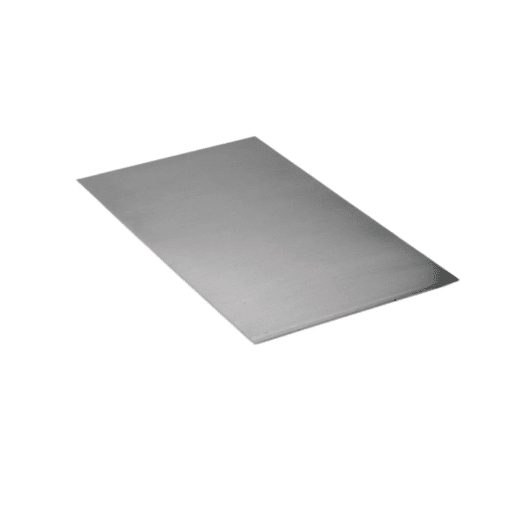
For metal fabrication and construction, understanding the metal plate thickness standards and tolerances is key to achieving proper structural integrity and precision in the end. In heavy machinery design or lightweight architectural components, even the smallest thickness differences can have a significant impact on performance, safety, and cost. This paper examines the key aspects of […]

Continue reading
Blog, Comparison Guide

Forged vs Cast Metal: A Comprehensive Manufacturing Comparison

As much as these are metal parts and more, they involve some engineering, design, and production, and embracing the idea of how to forge or cast these parts is one of the problematic questions. Both are beneficial and disadvantageous, hence it is necessary to differentiate between forging and casting to make the right choice. This […]
Continue reading
Blog, Comparison Guide

Hot Rolled vs Cold Rolled Steel: Understanding the Differences and Applications

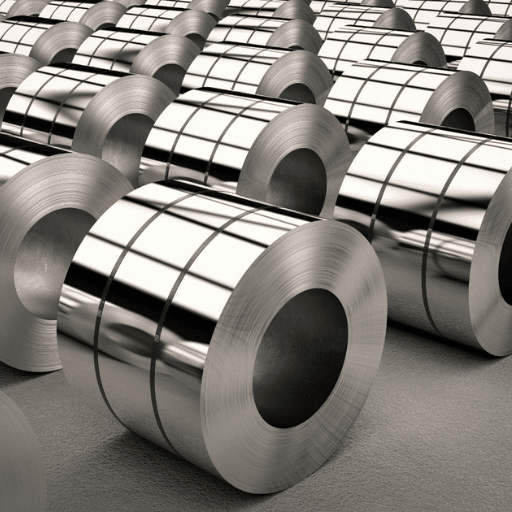
Steel, as one of the most versatile materials, is applied in the whole range of construction and manufacturing; nevertheless, the production method can be a determining factor that affects the properties and performance of steel. Hot and cold rolling are the most commonly used methods to process steel. The terms used may suggest a mere […]
Continue reading
Blog, Comparison Guide

Magnetic vs Non-Magnetic Alloys Guide

Understanding the differences between magnetic and non-magnetic alloys is critical in all aspects of life, from manufacturing to scientific research. These materials have a strong influence, as they are used in applications ranging from electronic devices to heavy-duty machines, yet most people remain unaware of the differences that distinguish them. This comprehensive article takes the […]
Continue reading
Blog, Technical Guide

Super Invar (4J32A): Ultra-Low Expansion Material

In situations where accuracy and stability are the primary concerns, it is essential to use materials with minimal dimensional changes due to temperature fluctuations. Super Invar (4J32A), an ultra-low-expansion alloy, is invariably the first choice for its remarkable ability to resist thermal expansion. Its astonishing properties have made it the key material in high-tech applications […]
Continue reading
Blog, Technical Guide

4J50 Alloy: Soft Magnetic Iron-Nickel Material

Alloy 4J50 is an advanced material used in precision industries and is of particular significance. The combination of its excellent magnetic characteristics with good thermal expansion properties makes this iron-nickel alloy a necessity for high-performance applications. Still, what exactly are the causes that make the 4J50 alloy critical and the areas where it is the […]
Continue reading
Blog, Technical Guide

Kovar (4J29): Glass-to-Metal Sealing Alloy

In the arena of unfailingly reliable and the art of glass-to-metal sealing, Kovar 4J29 alloy becomes renowned, and there is a reason for this. It has an impressive thermal expansion coefficient, which makes it compatible with standard soda-lime glass, and is therefore predominantly used in aerospace and electronic applications. This article will explain in detail […]
Continue reading
Blog, Technical Guide

Invar 36 (4J36): Low Thermal Expansion Alloy

Among the unique Materials, Invar 36, whose alloy designation is 4J36, is really hard to beat in terms of its wonderful properties. The nickel-iron alloy has a very low thermal expansion coefficient and is widely used in industries where dimensional stability is critical. The wonderful characteristics of Invar 36 result from cutting-edge aerospace technology, precision […]
Continue reading
Blog, Comprehensive Guide

Iron-Nickel Alloys: Low Expansion and Controlled Properties

Iron-nickel alloys are not only the result of scientific imagination but also the practice of excellent new materials. They are characterized by remarkably low thermal expansion and controllable properties, which are essential for modern technology and industry. These materials are thus prepared under very specific conditions to be utilized where their dimensional stability and reliability […]
Continue reading